
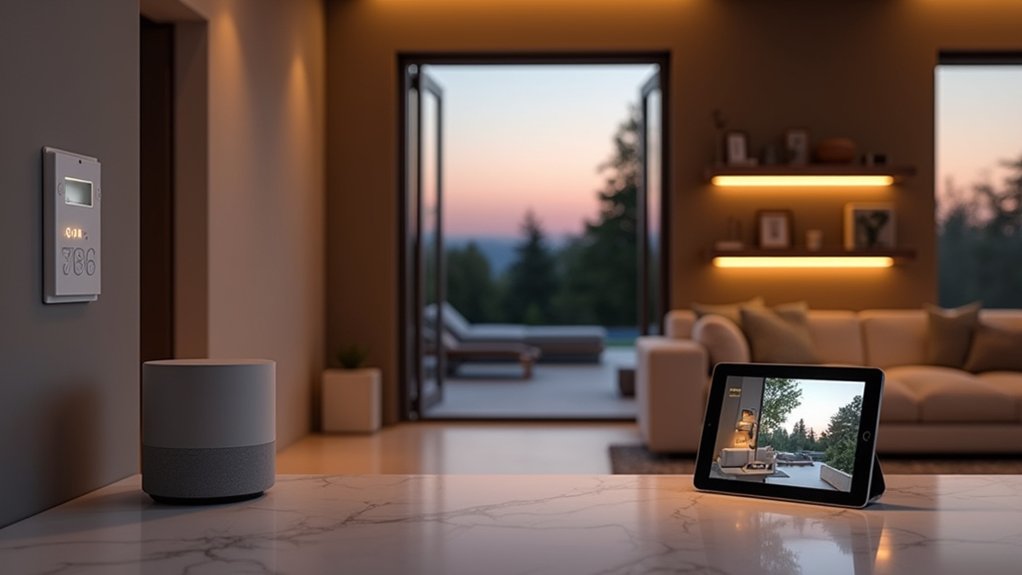

You can’t build a smart home that feels effortless unless you start with the right ecosystem and hub, ideally one that supports Matter so devices pair cleanly across brands. From there, you’ll get the biggest wins fast with a smart thermostat, a secure lock or video doorbell, adaptive lighting for routines and mood, and smart plugs that modernize “dumb” appliances in minutes. The key is how these five work together—and where most setups quietly go wrong…
Choose Your Smart Home Ecosystem and Hub
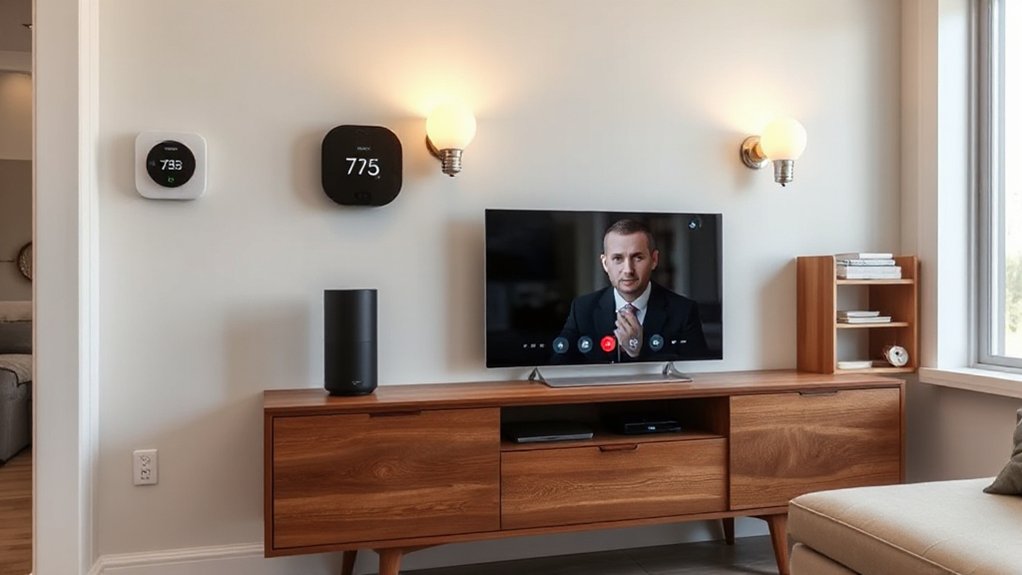
Before you buy your first smart bulb or lock, decide which ecosystem will run your home—Apple Home, Google Home, Amazon Alexa, or Samsung SmartThings—because that choice determines what devices work together, how you’ll control them (voice, app, automations), and how smoothly everything scales.
Next, check ecosystem compatibility before you tap “Buy”: look for Matter support for broader cross-brand control, and verify whether your must-have devices require proprietary bridges.
Then choose hub integration that matches your goals. A hub (SmartThings, HomePod, Nest Hub, Echo with Zigbee) reduces Wi‑Fi congestion, enables local automations, and connects Zigbee/Thread devices more reliably.
Prioritize hubs with strong routines, multi-user support, and backup options for internet outages.
Smart Thermostat to Automate Energy Savings
Why keep heating or cooling an empty house when a smart thermostat can learn your schedule, react to real-time occupancy, and trim energy use automatically? You’ll get tighter temperature control without constantly fiddling with settings, and you’ll often see measurable energy efficiency gains within the first billing cycle.
Pick a model that supports room sensors, geofencing, and your ecosystem’s voice assistant. Enable adaptive scheduling so it learns your patterns, then set a sensible comfort range and let it handle setbacks when you’re away or asleep.
Use utility time-of-use features to pre-cool or pre-heat before peak rates hit. Check monthly runtime reports to spot HVAC issues early, and fine-tune thresholds so it stays comfortable without short-cycling.
Smart Home Entry Security (Lock or Doorbell)
Even if you’ve already got an alarm, a smart lock or video doorbell tightens the security gap at the one place every intrusion starts: your front door. You’ll see who’s there, verify deliveries, and deter porch theft with motion-triggered clips and two-way talk.
Choose Video doorbells with package detection, HDR for backlit porches, and local storage or encrypted cloud options to match your privacy comfort.
Add a smart lock for keyless entry, auto-lock, and temporary codes for guests or contractors. With smart lock integration, you can link the lock to the doorbell so a verified visitor triggers a one-tap open, or you can require PIN plus phone proximity.
Prioritize ANSI/BHMA ratings, battery alerts, and a backup keyway.
Smart Lighting for Routines and Mood
When you treat lighting as part of your daily automation, it stops being a switch and starts acting like a reliable routine engine and mood setter. Schedule a gentle sunrise fade to pull you out of sleep, then shift to crisp white for focus during work hours.
At night, drop brightness and warmth automatically so your body winds down without you thinking about it.
Choose smart bulbs or switches that support scenes, color temperature, and app or voice control, then tie them to time, motion, or presence.
Use ambient lighting behind a TV, under cabinets, or in hallways for safer late-night navigation.
For mood customization, save presets like “Dinner,” “Movie,” and “Wind Down,” and trigger them with one tap or a spoken command instantly.
Smart Plugs to Upgrade Any Appliance Fast
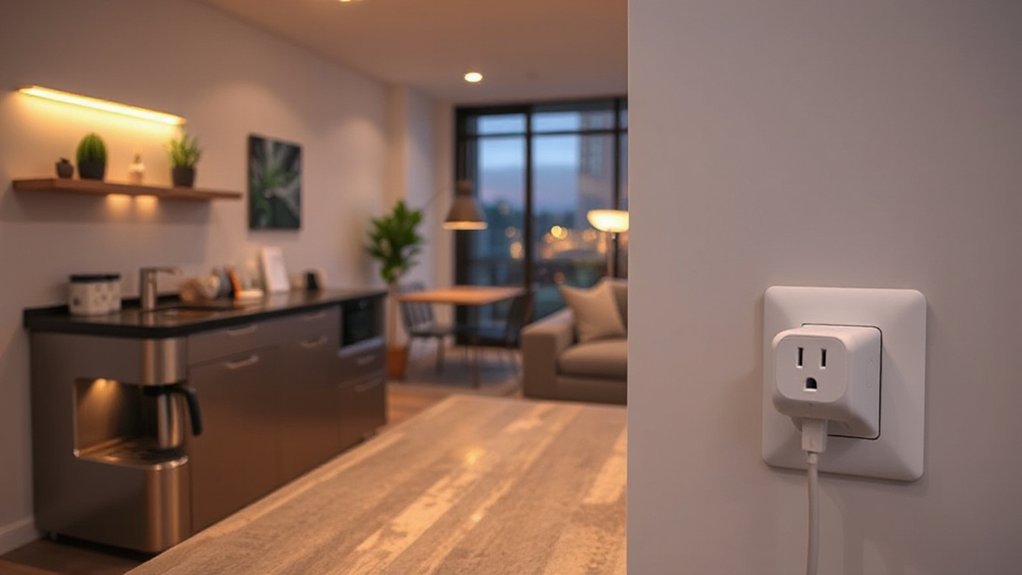
After you’ve dialed in lighting scenes, smart plugs let you bring the same hands-free control to everyday appliances without replacing them. Plug one into a wall outlet, connect it in your app, and you’ve got remote control for fans, coffee makers, air purifiers, and holiday lights—perfect for routines and quick voice commands.
Choose models with energy monitoring so you can spot power-hungry gear, verify standby drain, and set usage-based automations. Schedule a space heater to shut off after an hour, trigger a dehumidifier when humidity rises, or turn a desk lamp on at sunset.
Look for compact designs that don’t block adjacent outlets, reliable Wi‑Fi or Matter support, and solid on-device buttons for manual override when you need it.
Conclusion
Pick your ecosystem and hub, then watch your home snap into place like lights clicking on at dusk. You’ll feel the thermostat quietly shaving your bills, the lock and doorbell guarding the threshold, and lighting scenes shifting from focused white to warm evening glow. Add smart plugs, and that “dumb” lamp or coffee maker starts obeying schedules and voice commands. With Matter-ready gear, you’re building a flexible setup that stays current, not complicated.