
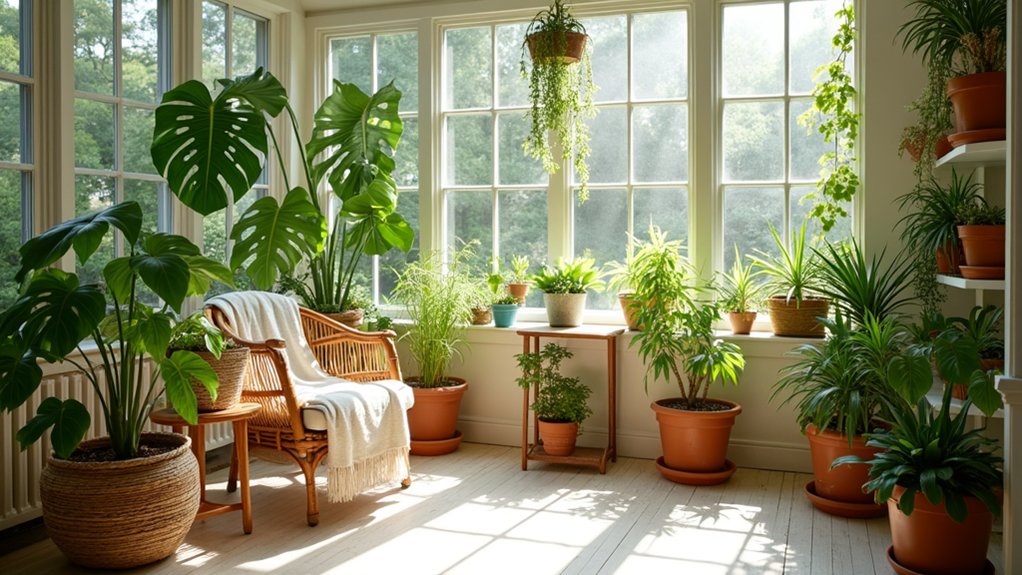

You can turn your sunroom into a cleaner, greener hangout fast, but you’ll need to match plants to your light and heat first. Start by spotting where you get harsh midday sun versus bright, filtered glow, then choose varieties that won’t scorch or sulk. Placement, pot choice, and a smart watering rhythm matter more than you think. Once you nail those basics, a few simple tweaks can double your growth rate…
Measure Your Sunroom Light and Heat
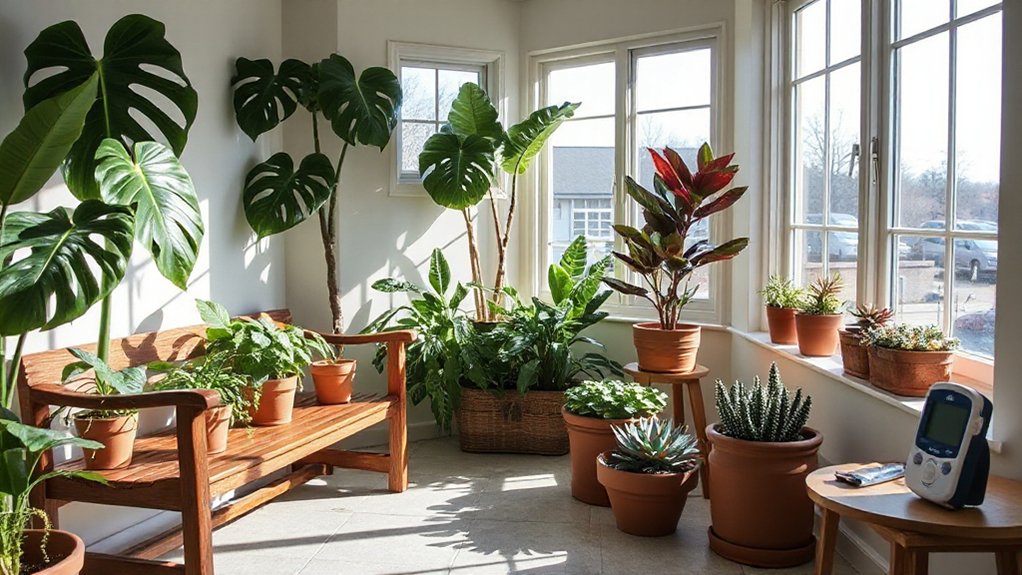
Before you buy a single plant, take a quick read on what your sunroom actually delivers—because “bright” can mean anything from gentle morning rays to harsh, leaf-scorching afternoon sun. Do a simple Sunlight measurement: note which windows face south, east, or west, then track light for a week at 9 a.m., noon, and 3 p.m. Use a light meter app or lux meter and record peaks and averages by plant-height.
Next, map heat. Check temps at floor, mid-level, and near glass; sunrooms stratify fast. For Temperature regulation, watch daytime spikes, nighttime drops, and vent/HVAC cycles. Add sheer curtains, insulating film, or a fan to smooth extremes. You’ll match plants to reality, not vibes.
Best Sunroom Plants for Direct Sun
If your sunroom gets hours of direct sun, you’ll want sun-lovers like cacti, aloe, jade, and bougainvillea that won’t scorch or sulk.
You’ll keep them looking sharp by using fast-draining soil, watering only when the mix dries, and rotating pots so growth stays even.
You’ll also prioritize heat- and drought-tolerant picks that handle hot glass, dry air, and weekend-forgetful watering.
Sun-Loving Plant Picks
When your sunroom gets blasted with hours of direct light, you can lean into it by choosing plants that thrive in bright, high-heat exposure instead of merely tolerating it. Start with cacti and sculptural euphorbia for a modern, low-fuss look, then add aloe and agave for bold rosettes that read designer.
For leafy impact, pick bird of paradise, rubber plant, or croton; they hold color and structure under intense sun. Want blooms? Go for hibiscus or bougainvillea in large pots for a resort vibe.
To keep indoor air feeling fresher, mix in a citrus tree or rosemary—both look chic and smell clean.
For plant arrangement, stagger heights: tall statement plants back, compact spikers front, trailing sedum at edges.
Care Tips For Bright Rooms
How do you keep “full sun” sunroom plants looking polished instead of crispy? Start with Sunlight optimization: watch where beams land across the day, then adjust. You’ll get better color and tighter growth when you rotate pots weekly and keep foliage from pressing against hot glass.
Nail Plant placement by grouping plants with similar light needs, and elevate smaller pots on stands so leaves sit in the bright zone, not the shadow line.
Water with intention: check moisture at the root zone, then soak thoroughly and let excess drain; don’t rely on quick sips. Use a gritty mix and pots with drainage to prevent soggy roots.
Wipe leaves monthly so light actually reaches them. Feed lightly during active growth.
Heat And Drought Tolerance
Although a sunroom looks serene, direct sun can turn it into a heat box, so “full sun” houseplants need real heat and drought tolerance—not just bright-light tolerance—to stay crisp-edged and glossy.
Choose plants that bank water and shrug off hot glass: succulent varieties like aloe, jade, echeveria, and haworthia, plus ponytail palm and snake plant for drought resistant foliage.
Use a gritty mix (cactus soil cut with perlite) and pots with drainage, then water deeply only when the pot’s light and the top inches are dry.
Rotate weekly so one side doesn’t scorch, and pull plants back a few inches if leaves bleach.
Skip misting; it won’t cool roots.
Best Sunroom Plants for Bright, Indirect Light
If your sunroom gets bright, indirect light most of the day, you can keep a lush, designer look without babysitting fussy plants.
You’ll get the best results with low-maintenance standbys like ZZ plant, snake plant, pothos, and Chinese evergreen that thrive a few feet back from the glass.
Keep growth steady by rotating pots weekly, watering only when the top inches dry, and using a sheer curtain to soften any hot midday glare.
Top Low-Maintenance Picks
When your sunroom stays bright without baking plants in harsh direct rays, you can lean on a handful of low-maintenance staples that thrive on steady, indirect light. Try a ZZ plant for glossy structure and slow growth, or a snake plant for upright, modern lines that suit minimalist décor.
Pothos and heartleaf philodendron trail beautifully from shelves, giving you that popular “green cascade” look with minimal fuss. Peace lilies add a polished, spa-like vibe and signal when they’re thirsty.
For texture, pick a cast-iron plant or Chinese evergreen; both handle bright shade reliably. You’ll still want light Plant pruning to keep shapes crisp, plus simple Pest prevention by choosing clean, healthy starters.
Care Tips For Success
Because bright, indirect light can still swing from gentle morning glow to intense afternoon glare, you’ll get better results in a sunroom by dialing in a few repeatable habits: rotate pots weekly for even growth, keep plants a foot or two back from the glass to prevent leaf scorch, and water by soil feel (top 1–2 inches dry) instead of a fixed schedule.
Use sheer curtains or a movable plant stand to fine-tune exposure seasonally. Boost humidity with a pebble tray or clustered grouping, but keep airflow moving to dodge fungus gnats.
For feeding, go light: half-strength liquid fertilizer every 4–6 weeks in spring and summer.
Build in Pest prevention by wiping leaves and checking undersides weekly.
Want more plants? Try Plant propagation with stem cuttings in water, then pot up once roots hit 2 inches.
Where to Place Sunroom Plants for Fast Growth
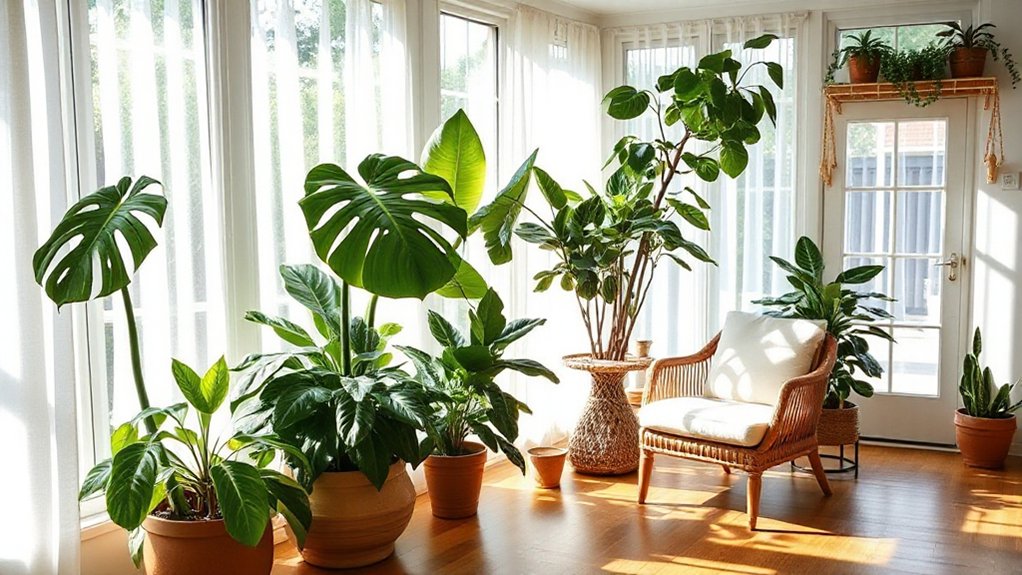
Although a sunroom gives you more light than most rooms, fast growth still depends on placing each plant in the right “light lane” and microclimate.
Start with plant placement: keep sun lovers (citrus, succulents, hibiscus) within 1–3 feet of south or west glass, but rotate weekly for even growth.
Put bright-indirect plants (monstera, philodendron, hoya) a step back or behind a sheer to meet light requirements without scorch.
Use east windows for gentle morning boost, and reserve north corners for low-light types or a reflective wall.
Group humidity-cravers away from heater vents and door drafts, and lift foliage off cold glass at night.
Track shadows at noon and adjust seasonally, since winter sun sits lower.
Best Pots and Potting Mix for Sunroom Plants
Even in a bright sunroom, the right pot and potting mix do more for fast, healthy growth than “more water” ever will. Choose a container with real Pot drainage: at least one large hole, not a token dimple, and pair it with a saucer or hidden cachepot for a clean, modern look.
Lightweight resin or fiberglass works well for big plants; terracotta suits smaller pots and helps curb soggy roots.
Skip garden soil. Use a fresh, peat-free indoor mix amended for your plant type: add perlite or pumice for airflow, orchid bark for a chunkier blend, or coco coir for structure.
Look for balanced Soil nutrients and avoid mixes loaded with slow-release pellets if you’re growing sensitive tropicals.
How to Water and Fertilize Sunroom Plants
When your sunroom swings from cool mornings to hot, glass-amplified afternoons, you can’t water on autopilot. Set a watering schedule by checking the top inch of mix: water when it’s dry, then soak until runoff and empty the saucer.
In summer, you’ll likely water more often; in winter, scale back and water earlier in the day so foliage dries before night. Use room-temperature water to avoid shocking roots.
Group thirstier plants together, and place drought-tolerant ones closer to the hottest glass.
For feeding, choose gentle fertilization methods: a half-strength liquid fertilizer every 2–4 weeks in active growth, or a slow-release pellet for steady, low-maintenance nutrition.
Flush pots monthly to prevent salt buildup.
Troubleshoot Common Sunroom Plant Problems
Because a sunroom behaves more like a greenhouse than a typical room, small shifts in light, heat, and humidity can trigger fast plant “drama”—crispy leaf edges, sudden yellowing, droop that doesn’t match your watering, or pests that appear overnight.
If leaves scorch, pull pots back from glass, add a sheer curtain, and rotate weekly. If you see pale new growth, bump light or swap to a grow bulb.
For unexplained droop, check the root ball: soggy means drainage and airflow, dry means a deep soak.
Spot a Plant pest (mites, thrips, scale)? Isolate, rinse, then treat with insecticidal soap every 5–7 days.
For Disease prevention, water at soil level, remove fallen leaves, sanitize pruners, and run a small fan.
Conclusion
Now you’re ready to turn your sunroom into a plant-powered retreat. Dial in light and heat, then match plants to direct sun or bright, indirect spots for steady, fast growth. Place taller plants where they won’t shade others, and rotate pots weekly so everything grows evenly. Use breathable pots and a chunky, well-draining mix to prevent soggy roots. Water only when the top inch dries, feed lightly, and you’ll be cooking with gas.