


Before you break ground, you’ll want to answer three questions that shape everything else. How will you actually use the deck—dining, lounging, grilling, container gardening—and what footprint supports that without wasting space? Where should it sit for the right mix of sun, shade, privacy, and smooth access from the house? And what will it cost now and over time, based on material, upkeep, and lifespan? Your choices here set the tone for what comes next…
How Will You Use Your Deck (and How Big Should It Be)?
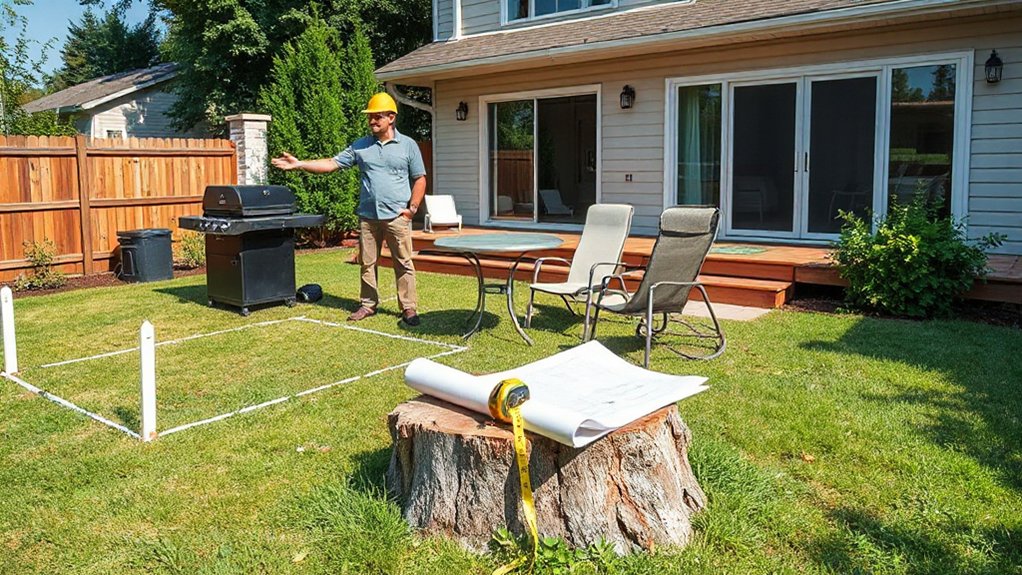
Before you sketch dimensions or pick materials, get clear on how you’ll actually use your deck, because that single decision drives everything from layout to cost. List your core activities: weeknight grilling, dining for six, lounging, a hot tub, kids’ play, or container gardening.
Then size for circulation: leave 36–48 inches for walk paths, 24 inches behind chairs, and room to open grills or storage lids.
Map zones instead of guessing square footage. A 10×12 works for a bistro setup; 12×16 handles a table plus grill; 16×20 fits multiple zones and traffic.
Match deck materials to use: composite for low-maintenance entertaining, wood for warmth and DIY repairs.
Align your design style with rail, lighting, and built-ins.
Where Should Your Deck Go for Sun, Access, and Privacy?
Once you know what your deck needs to handle, pick a location that makes those activities comfortable day to day. Track sun patterns: a south- or west-facing deck runs hotter, so plan shade from a pergola, canopy, or nearby trees; an east-facing spot suits morning coffee.
Keep access tight by aligning the deck with your kitchen or main gathering room, and avoid long stair runs that people won’t use. Check prevailing winds and nearby noise sources, then angle seating accordingly.
For privacy, sightline your neighbors’ windows from deck height and use layered solutions: railing planters, trellises, and modern privacy screens. Compare landscaping options like tall grasses, hedges, or small trees to soften views without blocking airflow. Confirm views too.
What Will Your Deck Cost Upfront and to Maintain?
Even if you’ve got a ballpark number in mind, you’ll want to price your deck in two parts: the build cost and the long-term upkeep.
Start with Budget planning: size, height, stairs, railings, lighting, and permits drive labor and inspection fees.
Then weigh Material options—pressure-treated lumber stays cheapest upfront, cedar and hardwood add cost, and composite or PVC trends higher but can reduce future work.
Next, estimate maintenance like you’d any exterior finish. Wood usually needs cleaning plus stain or seal every 1–3 years, and you’ll replace warped boards or corroded fasteners over time.
Composites need washing, but you may still budget for hidden-clip replacements and railing upkeep.
Don’t forget furniture, shade, and drainage, since they affect the total.
Conclusion
If you answer these three questions first, you’ll avoid deck regrets that feel a mile long. Plan how you’ll use the space so your layout fits dining, lounging, or planters without wasted square footage. Choose a spot that balances sun, shade, privacy screens, and easy flow from the house—today’s decks often double as outdoor “rooms.” Finally, price out materials, fasteners, and upkeep so maintenance matches your schedule and budget.