

If you’re eyeing a chimney cleaning log as an easy fix, you’ll want to know what it actually changes inside your flue. It can dry out light, flaky creosote and leave a looser residue that’s simpler to brush away, and you may notice a steadier burn. But it won’t touch hard, glazed buildup or hidden obstructions. The real question is where it fits in your routine—and what signs mean you shouldn’t wait.
Do Chimney Cleaning Logs Really Work: or Replace Sweeping?
Although chimney cleaning logs can make a noticeable difference, they don’t truly “clean” a chimney the way a professional sweep does. You’ll see some powdery residue fall, and your fires may burn a bit cleaner, but the log mainly conditions deposits rather than removing buildup from flue walls and the smoke shelf.
If you care about fire safety and a crisp, well-drafted fireplace, you still need routine sweeping and inspection. A sweep checks clearances, caps, liners, and how your chimney material is wearing—brick joints, clay tiles, or stainless seams.
You can use a log as a between-visits tool, especially during heavy burning, but don’t treat it as a reset button. Pair it with seasoned wood and regular maintenance for reliable performance.
What Creosote Type Can the Logs Actually Reduce?
Chimney cleaning logs work more like a conditioner than a scrub brush, so the kind of creosote you’re dealing with matters. You’ll see the best results on light, dusty soot and the flaky, matte-black buildup often called stage-one or stage-two creosote—fresh deposits from normal creosote formation that haven’t glazed over yet.
After a few fires, that layer can look drier and less clingy, leaving a cleaner visual line along your flue tiles.
If you’re facing hard, shiny, tar-like “glaze” (stage three), the logs won’t meaningfully reduce it; it’s bonded like varnish.
Your chimney material matters, too: clay tile and stainless liners show improvements sooner, while rough, older masonry tends to hold thick deposits in pits and joints.
How Chimney Cleaning Logs Loosen Creosote (Chemicals Explained)
When you burn a chimney cleaning log, you’re not “scraping” creosote off the flue—you’re releasing a small dose of active salts (commonly copper-based catalysts and ammonium salts) into the hot smoke stream that react with the sticky, unburned tars.
Those effective ingredients ride upward with the draft and trigger chemical reactions that shift creosote’s chemistry: they promote oxidation and salt formation, breaking long tar molecules into drier, more brittle residues.
As the flue cools, that treated film loses its glossy, tacky grip and turns more granular. You’ll often notice a lighter, dusty texture and small flakes at the firebox, a visual cue that the deposit’s binding structure has weakened.
For best results, burn the log on a hot, steady fire so the reactive vapors circulate evenly.
What Chimney Cleaning Logs Cannot Remove (Glaze, Nests, Soot)
Even if you burn a cleaning log perfectly, it won’t erase every kind of buildup or blockage in your flue. Glazed creosote, that hard, glassy sheen bonded to tile or liner, resists the powdery residue these logs create. You can’t expect a chemical smoke to scrape your chimney structure clean when the deposit has vitrified into a slick, dark shell.
Cleaning logs also won’t evict nests, leaves, or dead birds. Those vent blockages sit like packed insulation at bends and caps, and they need physical removal. Heavy, oily soot can cling in corners, smoke shelves, and rough mortar joints, dulling the interior surface and narrowing draft paths.
If you see shiny black patches or hear rustling overhead, don’t rely on a log alone.
When Chimney Cleaning Logs Help Most (Maintenance Schedule)
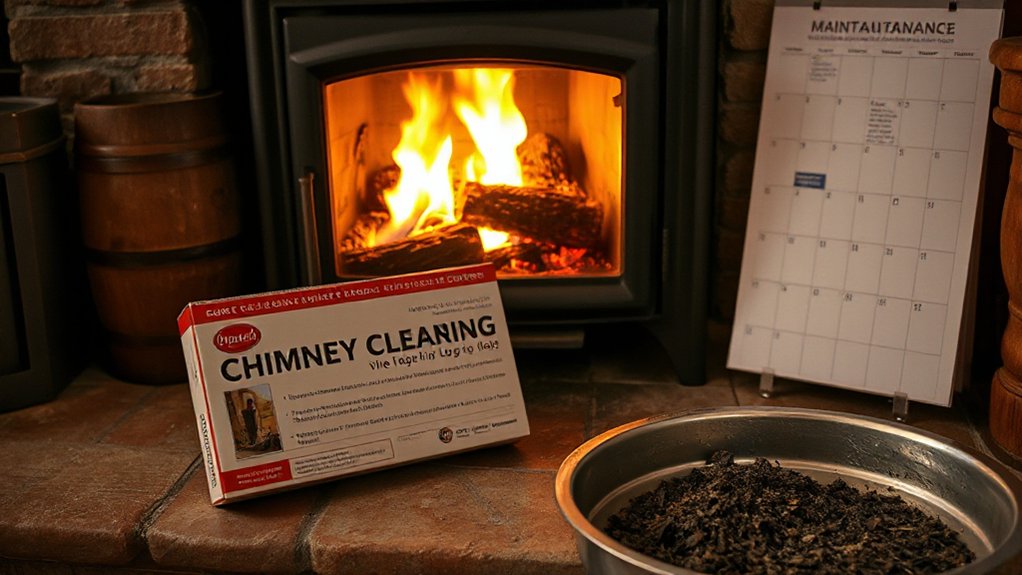
You’ll get the best results from a chimney cleaning log when you treat it as a steady maintenance step, not a last-minute fix—use it on a consistent cadence that matches how often you burn.
Time it with the seasons: run one before the heavy winter stretch to keep buildup light, then again toward the end of the burning season to leave the flue cleaner going into spring.
With the right frequency and timing, you keep the chimney’s interior looking sharper and functioning smoother between professional cleanings.
Ideal Use Frequency
Although chimney cleaning logs can’t replace a professional sweep, they work best as a light-touch maintenance tool used on a steady rhythm: run one log about every 20–30 fires (or roughly once a month during heavy-burning season) to help dry and loosen fresh creosote before it hardens into a glossy, stubborn glaze.
Keep your routine consistent: burn the log in a hot, well-established fire so the active log ingredients can circulate through the flue. You’ll get the cleanest results when you follow the package burn time and don’t smother the flames.
Afterward, let everything cool, then check the firebox, smoke shelf, and any accessible cleanout for fallen, flaky deposits and vacuum them up.
That simple reset supports chimney safety and keeps your hearth looking crisp instead of sooty.
Seasonal Maintenance Timing
A steady every-20–30-fires rhythm works well, but the calendar matters too because creosote behaves differently across the year.
In early fall, burn a cleaning log before your first long weekend of fires so the flue starts crisp, drafty, and less smoky for better Indoor air quality.
Midwinter, use one after a stretch of low, smoldering burns; colder stacks condense more tar, especially on rough chimney materials like older clay tile or cracked mortar.
In late winter, follow with hotter, cleaner fires to lift loosened flakes into the firebox for removal.
In spring, run a final log after your last burn, then schedule a sweep so humid summer air doesn’t set residue like varnish.
Always inspect cap, liner, and damper.
How to Use a Chimney Cleaning Log Safely: and When to Call a Sweep
Start with a cool, ash-cleared firebox, open the damper fully, and burn the chimney cleaning log exactly as the label directs while you keep a clear, steady flame and good airflow.
Once it’s finished, let everything cool, then check the firebox and flue opening for loosened, flaky buildup so you can clean up debris without spreading soot through the room.
Call a certified sweep if you spot glazed creosote, smell strong tar, notice smoke backing up, see damaged liner or masonry, or you haven’t had a professional inspection within the last year.
Safe Log Use Steps
Before you toss a chimney cleaning log into the fire, set yourself up for a controlled, clean burn: confirm your damper is fully open, pull excess ash so airflow stays steady, and burn only seasoned firewood until you’ve built a hot, established bed of coals.
Place the log on the coals, not directly against glass, and keep the screen or doors closed to prevent sparks. Follow the label’s burn time and don’t add other chemical starters.
Maintain a steady, medium-hot flame so the active salts can lift light creosote without smoking up the room.
After the fire cools, empty the ash pan and check the firebox for clean lines; touch up chipped chimney paint and inspect flue insulation edges for gaps.
When To Call Sweep
Even with a steady, clean burn and a log used exactly as directed, you still need to know when the job has outgrown a DIY fix and it’s time to call a chimney sweep. If you smell sharp, smoky odors at rest, see black flakes drifting into the firebox, or notice a dull, tarry sheen on the walls, stop burning and book service.
Any sluggish draft, puff-back, or persistent haze on your glass points to buildup deeper in the flue. Schedule an annual vent inspection regardless; it protects chimney safety and catches cracked liners, missing caps, and loose mortar.
Call immediately after a chimney fire, water leak, or animal nesting. A sweep’s camera and brushes finish what a log can’t.
Conclusion
Chimney cleaning logs can help, but you shouldn’t expect them to replace sweeping. Picture light, flaky creosote turning to dry ash that brushes away after a hot burn—that’s where these logs shine. They can’t melt hard, glossy glaze or pull out nests, soot slabs, or hidden blockages. Use them like a tidy-up between inspections, not a cure-all. If you see black glassy buildup, smell heavy tar, or draft worsens, call a sweep.