
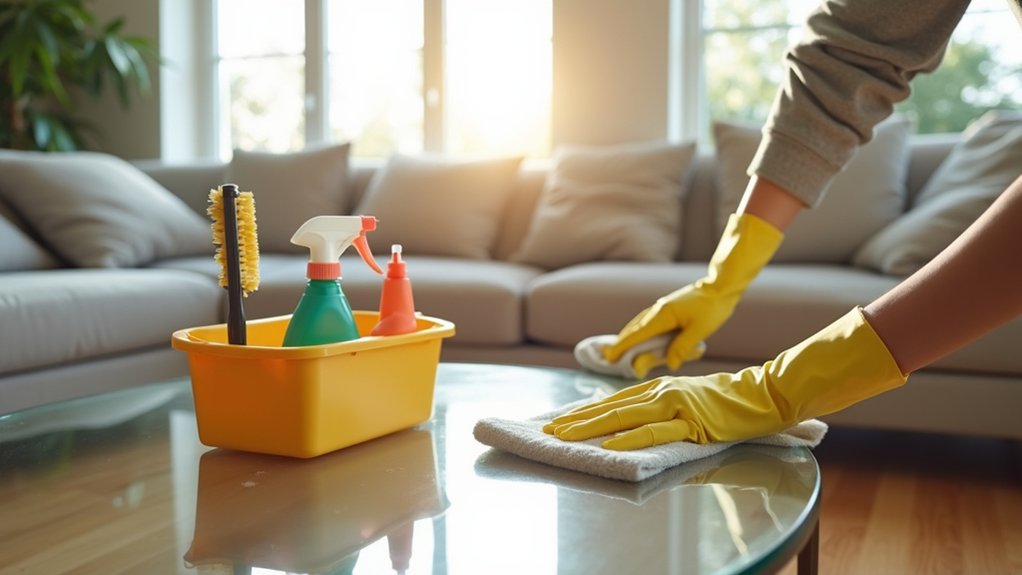

You probably don’t know that most “dust” is actually fabric lint and skin cells, so your cleaning order matters more than your products. If you start with a tight 10-minute daily reset, you’ll stop grime before it bonds to counters, floors, and fixtures. Add a simple weekly loop—top-to-bottom dusting, overlapping vacuum passes, and a quick bathroom wipe-down—and your home stays consistently sharp. Next, you’ll want the exact steps that make it stick when life gets busy…
10-Minute Daily Cleaning Reset (The Exact Steps)
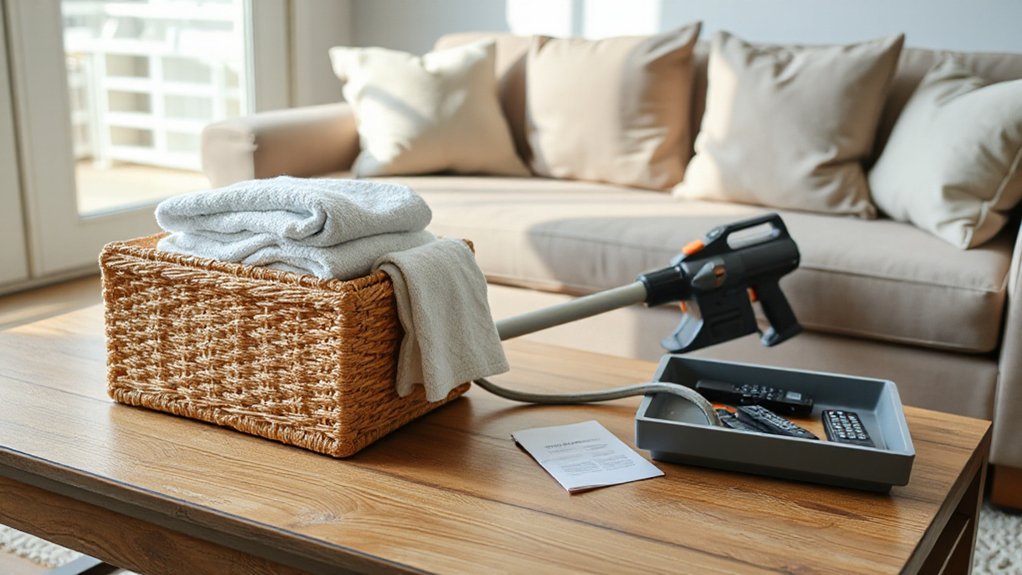
Even if your schedule’s packed, you can keep your home looking “reset” by running a simple 10-minute routine you’ll do the same way every day. Set a timer and start at the sink: load dishes, wipe the counter, and swap the towel.
Next, do a fast clutter sweep—return items to their “home” bins, then straighten pillows and throws.
Grab dusting tools (microfiber cloth and extendable duster) and hit high-visibility zones: TV stand, coffee table, and baseboards near traffic lanes.
Finish with a quick floor pass: spot-vac crumbs, then use a damp microfiber pad with an S-pattern mop technique, pulling grime toward you and rinsing often.
End by taking out small trash and resetting lights and scents.
Weekly Cleaning Checklist for Entryway and Living Room
When you handle the entryway and living room once a week, you stop dirt, clutter, and odors from spreading through the rest of your home. Start by emptying the drop zone: sort mail, return shoes to racks, and hang coats on hooks.
Shake out entry mats outside, then vacuum high-traffic paths and baseboards with a crevice tool. Wipe fingerprints from the front door, light switches, and railings using a damp microfiber and mild cleaner.
Clean glass on mirrors and coffee tables. Sanitize remotes, handles, and game controllers. Fluff cushions, fold throws, and reset decorative accents on trays so surfaces look intentional.
Swap or refresh seasonal decor, then remove stray items that don’t match the current vibe. Finish by deodorizing: empty small trash, and air out the room.
How to Dust Fast (and Keep It Away Longer)
With the entryway and living room reset, dust becomes the next thing that can quietly undo your work by settling on freshly cleared surfaces. Work top-down and dry-first: hit ceiling fans, vents, shelves, frames, and baseboards in one pass, then finish with a lightly damp microfiber to trap what’s left.
Keep a small caddy of Dusting tools where you’ll use them—extendable duster, microfiber cloths, and a soft brush for electronics. Don’t spray polish directly; mist the cloth to avoid residue that attracts more dust.
Cut re-settling by running an Air purifier on auto during and after dusting, and swap HVAC filters on schedule. Close windows on high-pollen days, and declutter surfaces so you can wipe in seconds.
Spotless Floors and Rugs (Vacuum + Mop Strategy)
Next, you’ll keep floors and rugs looking spotless by vacuuming with a consistent pattern (slow passes, overlap lines, hit edges first) and sticking to a frequency that matches your traffic and pets.
Then you’ll mop smarter—use the right solution for your surface, keep water minimal, and swap pads or rinse often so you’re not spreading grime.
For rugs, you’ll protect the pile with proper settings and quick spot-treating (blot, don’t scrub) to stop stains from setting.
Vacuuming Patterns And Frequency
Although your vacuum can’t fix every mess on its own, the right pattern and schedule will keep floors and rugs looking consistently “just cleaned” instead of briefly tidy. Start with slow, overlapping passes; you’re lifting grit, not just chasing crumbs. Use deliberate vacuuming patterns: run north–south, then rotate and go east–west to pull debris from carpet pile and floor seams.
Edge first with the crevice tool, then fill in the center so you don’t kick dust back onto clean lines.
Dial in vacuuming frequency by traffic: entryways and kitchens daily, living rooms 3–4 times weekly, bedrooms weekly, and low-use rooms every two weeks. After pets, parties, or construction, do an extra pass and empty the bin mid-session for consistent suction.
Mop Method And Solutions
Once you’ve vacuumed in tight, overlapping passes, mopping handles what suction can’t: sticky residue, fine dust film, and tracked-in grime.
Choose the right head—microfiber for most hard floors, sponge for textured tile—and wring until it’s barely damp to avoid swelling boards and hazing finishes.
Work in 3×3-foot sections, using an S-pattern, then rinse your pad frequently so you’re not redepositing soil.
Lean into Eco friendly solutions by skipping heavy fragrance and harsh disinfectants for routine cleans.
Try DIY mop mixtures: warm water plus a few drops of castile soap for sealed surfaces, or 1/2 cup white vinegar per gallon for tile and vinyl (not natural stone).
Finish by air-drying with good airflow.
Rug Care And Spot-Treating
Even if you keep up with vacuuming and mopping, rugs still trap oils, grit, and spills that dull fibers and leave lingering odors. Build Rug maintenance into your floor routine: vacuum high-traffic rugs twice weekly, slow passes in two directions, and lift the beater bar on delicate piles.
Rotate rugs every season to even wear, and use a rug pad to reduce friction and curling edges.
For fast Stain removal, blot—don’t rub—then test any cleaner on a hidden corner. Treat water-based spills with cool water and a drop of dish soap; follow with a clean-water rinse and thorough towel-drying.
For oily spots, sprinkle baking soda 15 minutes, vacuum, then spot-clean. Finish by air-drying with a fan.
Kitchen Habits That Stop Buildup Before It Starts
Because kitchen messes harden fast, the best way to keep your space looking “just cleaned” is to build a few micro-habits into your daily routine. Start with a two-minute reset after every meal: wipe counters with a damp microfiber, then dry to prevent water spots and sticky residue.
For Buildup prevention, treat heat and grease immediately. Deglaze your stovetop after cooking—warm surface, tiny drop of dish soap, quick wipe—so splatters don’t bake on. Run a sink rinse and swipe your faucet nightly to stop mineral rings.
Keep a small caddy under the sink for spray, cloths, and scraper; that’s Kitchen organization that actually gets used. Finally, load the dishwasher as you go and empty it first thing, so dirty dishes never pile up.
A Fresher, Shinier Bathroom in 15 Minutes
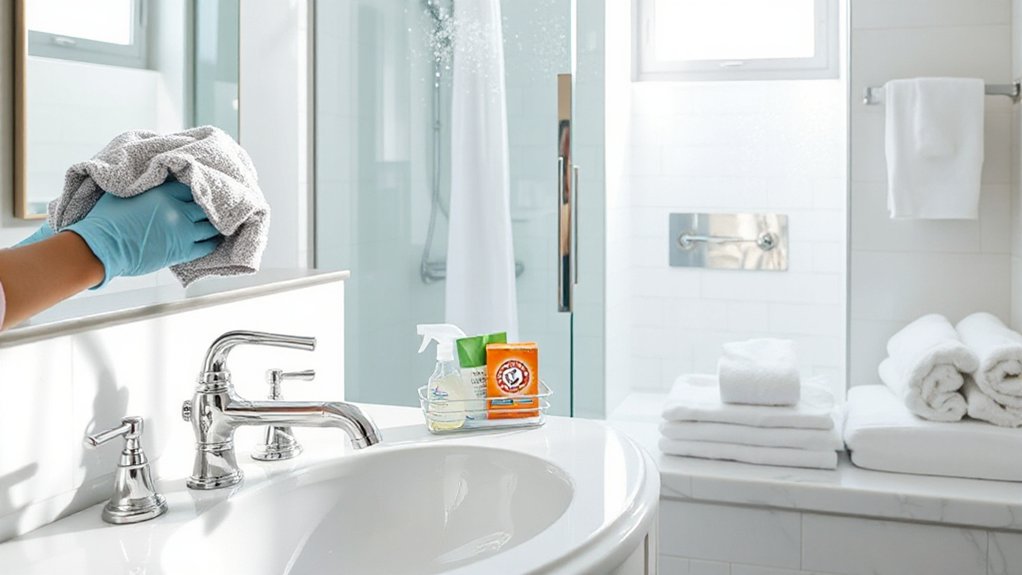
If you’ve got 15 minutes, you can make your bathroom look freshly detailed by working top-to-bottom and keeping products simple. Start by spraying mirror and faucet; wipe with a microfiber for a streak-free, hotel-gloss finish. Hit light switches and handles with a quick disinfecting wipe.
Next, tackle Shower cleaning: mist tile and glass with daily shower spray or a diluted vinegar mix, then run a squeegee top to bottom. Scrub the tub line and corners with a paste of dish soap and baking soda, then rinse.
Swish toilet bowl cleaner, wipe the seat and base, and finish with a dry cloth on chrome. Vacuum corners, then mop with a fast-dry solution.
Wrap up with Bathroom organization: restock soap, fold towels, and straighten countertop trays.
Simple Clutter Rules That Keep Rooms “Guest-Ready”
When life gets busy, a few simple clutter rules keep every room looking “guest-ready” without a weekend reset. Start with a 5-minute nightly sweep: grab a basket, scoop stray items, and return them to their zones. Keep surfaces 70% clear—today’s design trend is airy, not crowded.
For clutter control, set a one-in, one-out rule for mail, toiletries, and kids’ art, and unsubscribe from paper statements.
Create drop zones near entrances: a tray for keys, a hook rail for bags, and a slim shoe mat.
Use Organization strategies like labeled bins inside cabinets, a “pending” folder for decisions, and a donation bag that leaves every Friday. If something doesn’t have a home, assign one immediately or let it go.
Conclusion
You’ve got the routine—now here’s the secret: don’t wait for “cleaning day.” Hit your 10-minute reset tonight, then watch how the weekly checklist stops mess before it spreads. Dust top-down, vacuum in slow, overlapping passes, and mop only after debris is gone. Wipe kitchen counters as you cook, squeegee the shower as you finish, and follow one clutter rule: nothing lands without a home. Keep going… tomorrow feels easier.