
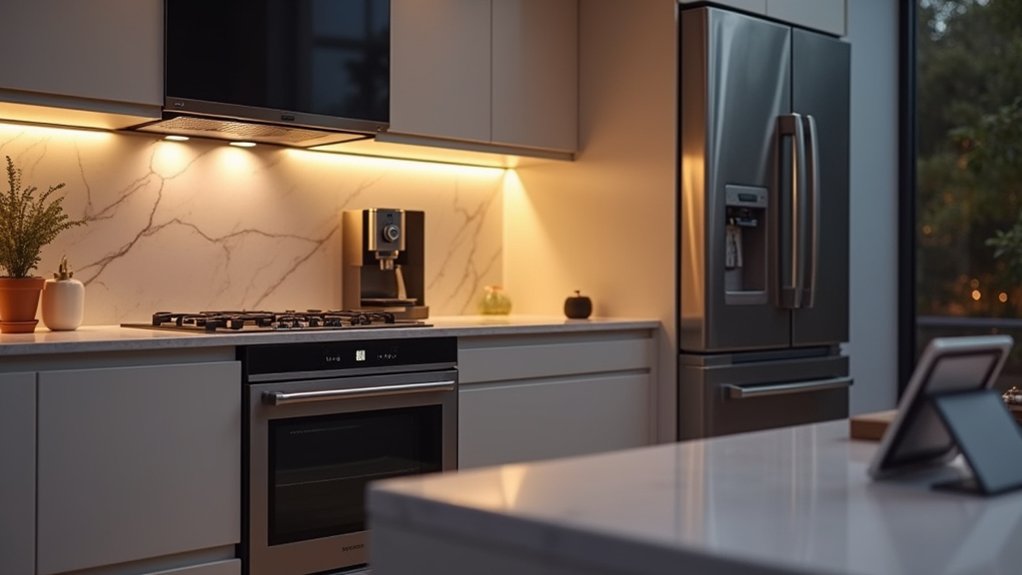

You walk into a UK kitchen where the oven preheats itself, the air fryer pings your phone, and a kettle won’t boil dry. You want smart gear that actually saves time, not gadgets that drop Wi‑Fi or hide basics behind an app. Focus on clear controls, Alexa/Google support, guided cooking, and easy-clean parts, then check real running costs and safety. The tricky part is spotting what’s genuinely worth it—before you buy.
How to Choose Smart Kitchen Appliances in the UK
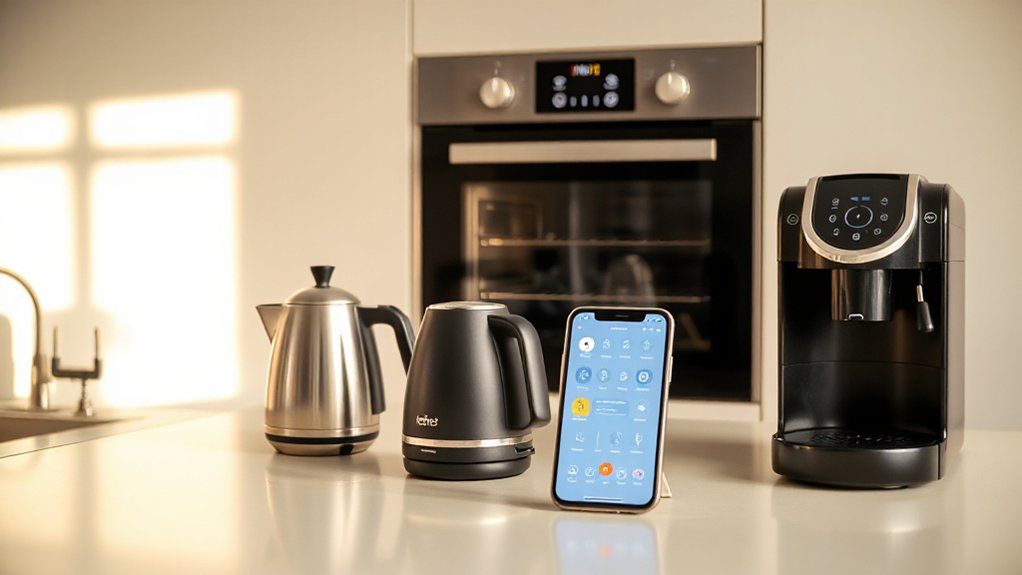
If you start with your routine instead of the spec sheet, you’ll pick smart kitchen appliances that actually earn their counter space in a UK home. Map your pain points: rushed breakfasts, batch cooking, or energy bills. Then match features to tasks—Cooking automation for timed oats, guided air-fryer programmes, or probe-controlled roasts that don’t overcook.
Check physical fit: plug type, wattage limits on older circuits, noise for open-plan flats, and whether parts are dishwasher-safe. Prioritise reliable sensors and clear on-device controls so you’re not stuck mid-recipe.
Look for appliance integration within your own kitchen workflow: compatible cookware, stackable footprints, and shared accessories like temperature probes. Finally, compare warranty length, spares availability, and realistic running costs under UK tariffs.
Ecosystems First: Alexa, Google, Apple, and Apps
Because your smart kettle or air fryer only feels “smart” when it fits the way you already run your home, pick the ecosystem first—Alexa, Google Assistant, or Apple Home—and then shop for appliances that play nicely with it.
Check labels for ecosystem compatibility, not just “works with Wi‑Fi,” and confirm the UK app supports your router band and account region.
If you want hands-free control, prioritise Voice integration: timers, temperature tweaks, and status checks should work reliably, not only start/stop. Look for routines (e.g., “Good morning” triggers boil + lights), multi-user permissions, and local control options if your broadband drops.
Apple Home suits privacy-first setups with HomeKit-certified gear; Alexa shines for breadth; Google’s great for natural commands.
Finally, scan app reviews for update cadence and bug fixes before you buy.
Smart Air Fryers: Best UK Picks for Busy Nights
While weeknights rarely leave room for “proper” cooking, a smart air fryer can turn dinner into a quick, repeatable routine—preheat alerts on your phone, guided programmes that actually hit the right crisp, and remote timer tweaks when you’re juggling kids, calls, or trains.
In the UK, buyers rate dual-drawer models for mixed mains and sides without flavour crossover, plus sync-finish so everything lands together. Look for app recipes you can edit (time/temp) and save as favourites, not locked presets.
A clear shake/turn reminder matters more than gimmicky voice control. If you batch-cook, choose 7–9L with a reliable keep-warm, and dishwasher-safe baskets.
These Smart kitchen trends show real appliance innovation: less guesswork, faster clean-up, predictable results.
Smart Ovens: Best for Even Bakes and Roasts
If you’re upgrading from an air fryer, a smart oven gives you precision temperature control so cakes rise evenly and roasts brown on schedule.
You can switch on humidity or steam modes to keep sourdough crusty, veg vibrant, and meats juicy without guesswork.
Look for multi-rack cooking consistency so trays of biscuits or a full Sunday spread finish at the same time, top to bottom.
Precision Temperature Control
When you want your sourdough, traybakes, or Sunday roast to come out consistent every time, precision temperature control in a smart oven makes the difference. You’re not guessing whether 180°C is really 180°C: the oven uses Temperature sensors to track heat at multiple points and adjusts power in real time to reduce hot spots.
Look for models that offer guided Thermostat calibration, either via an app prompt or a built-in test cycle, so your set temp matches the actual cavity temp.
You’ll notice tighter swings, faster recovery after you open the door, and more reliable browning from edge to centre.
If you batch-cook, this consistency matters even more—your timings stay predictable across shelves and repeated runs.
Humidity And Steam Modes
Because modern smart ovens can manage moisture as well as heat, humidity and steam modes give you noticeably better rise, crust, and colour without constant tray-turning. You’ll get bakery-style bread with a glossy, blistered finish, while cakes stay plush instead of drying at the edges.
Look for humidity control that auto-adjusts by programme, not just an on/off steam burst, so your roast chicken keeps its juices yet still browns properly.
For weekday wins, steam cooking speeds up salmon, veg, and reheats without that microwave rubberiness. Use a short steam phase at the start for oven spring, then switch to dry heat to set structure and crisp.
If the app lets you save custom humidity steps, you’ll repeat perfect results fast.
Multi-Rack Cooking Consistency
Although a smart oven can’t magically fix overcrowded trays, the best UK‑rated models stay impressively consistent across two or three racks by using stronger fan circulation, better airflow design, and smarter temperature sensing. You’ll notice fewer hot spots, so cookies brown evenly while a tray of veg crisps without constant swapping.
Look for multi-point probes, “true convection” fans, and rack-specific presets in the app. When you select “two trays,” the oven can automatically extend time slightly and stabilise temperature after door openings, boosting Cooking efficiency.
You’ll also get better Food presentation: risen sponge layers match, Yorkshire puddings pop uniformly, and roasts colour evenly. For real-world results, leave gaps between tins, rotate once mid-bake, and use matching trays to keep airflow predictable.
Smart Multicookers: Best for One-Pot Meals
If you want proper one-pot meals without juggling pans and timings, a smart multicooker makes it easy to get consistent results with minimal effort. You’ll pressure-cook stews fast, slow-cook chilli while you work, and switch to sauté to build flavour in the same pot.
UK buyers like app-guided presets that adjust heat and time for rice, dhal, pulled pork, and veggie curries, so you’re not guessing. Look for a removable, dishwasher-safe inner bowl, a clear lid seal, and a quick-release valve for safer steam management.
For weeknights, save Smart multicooker recipes to favourites and set delayed start for hands-off dinners.
Follow basic maintenance tips: rinse the valve, wipe the rim, and replace seals when they hold odours.
Smart Coffee Machines: Best for Daily Drinks
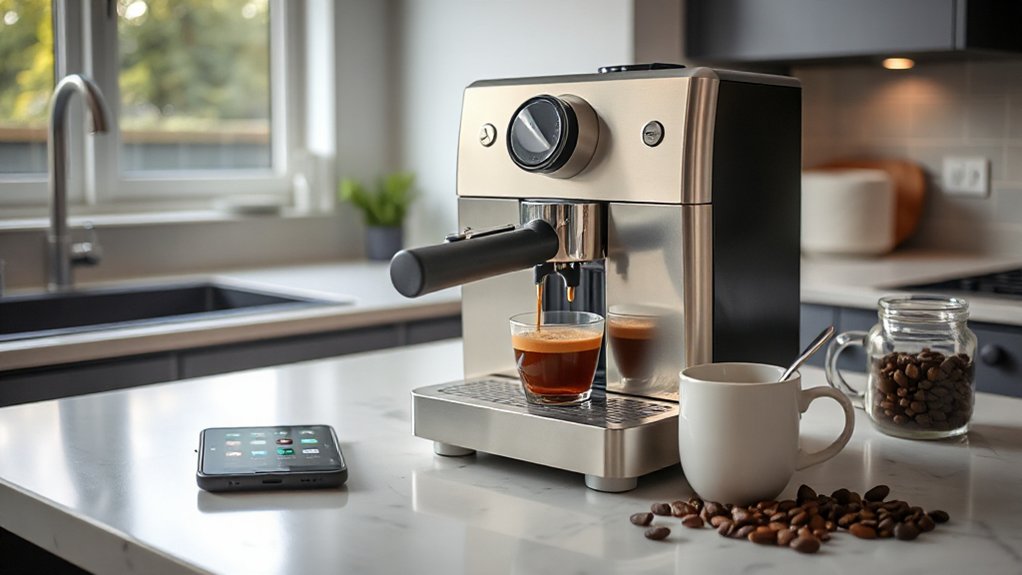
When you want café-quality coffee without the daily faff, a smart coffee machine turns your usual morning routine into a repeatable, one-touch workflow. You’ll dial in Coffee brewing parameters—grind size, dose, temperature, and shot length—then save them as profiles for weekdays, decaf evenings, or guests.
UK buyers rate machines that pair reliable hardware with useful smart features: app scheduling, remote start, bean and water level alerts, and guided cleaning prompts. Look for fast heat-up, consistent pressure, and an adjustable milk system if you do flat whites.
A proper burr grinder beats pods for freshness, but pod models win for speed and low mess. Prioritise easy descaling access, quiet operation, and dishwasher-safe parts so daily drinks stay effortless.
Smart Kettles: Fastest Boils and Safest Controls
If you’re upgrading your countertop setup, a smart kettle gets your brew-ready water boiling fast without wasting time or energy.
You can set precise temperatures for green tea, coffee, or baby formula, so you don’t end up scorching or underheating.
And with reliable auto shutoff and boil-dry protection, you’ll keep things safer even when you’re multitasking.
Rapid Boil Performance
Because nobody wants to wait around for a morning brew, rapid boil performance is where smart kettles really earn their counter space—especially in UK kitchens running on 3kW mains.
You’ll notice the best models hit strong cooking speed by pairing high-power elements with smart fill guidance, so you’re not boiling a full litre for one mug.
For boiling accuracy, look for real-time sensing that cuts power the moment a rolling boil is reached, not seconds later, and tight lids that trap heat instead of venting it.
You’ll also want dry-boil protection, auto shut-off, and a cool-touch double wall if you’ve got kids or tight worktops.
Check boil-time claims against reviews, because “fast” varies with water volume, limescale, and starting temperature in real homes.
Precision Temperature Settings
Although a full rolling boil suits instant coffee, precision temperature settings let you brew smarter—and they’re the feature UK buyers notice most once the novelty of app control wears off.
You can hit 80°C for green tea, 90–95°C for filter, or 60°C for baby-bottle warming, without guesswork or scorched flavours.
Look for 1°C increments, a clear real-time display, and a hold function that keeps water at your chosen temp while you prep mugs.
You’ll also want profiles you can edit on-kettle, not only in an app, for reliability.
For Smart kitchen security, stick to reputable brands with regular firmware updates.
For appliance maintenance, descale on schedule and rinse the spout filter, so sensors stay accurate and pours stay smooth.
Auto Shutoff Safety Controls
Why do UK buyers rave about smart kettles that “feel safer” day after day? Because auto shutoff safety takes the worry out of busy mornings. If the kettle hits boil, it cuts power instantly, so you don’t get that angry rolling boil or scorched base. If you lift it mid-pour, it stops heating. If it runs dry, boil-dry protection kicks in before the element cooks itself.
You’ll also notice smarter lid and sensor design: steam vents reduce spitting, and temperature probes prevent overshoot when you’re heating to 80–90°C for green tea.
The bonus is energy conservation: shutting off fast means you’re not paying to keep water bubbling. Pair it with “keep warm” limits and you stay safe and efficient.
UK Running Costs: Energy Use and Real Savings
When you’re weighing up smart kitchen appliances in the UK, running costs often decide whether the “upgrade” actually saves you money. Focus on energy efficiency first: look for A-rated models, inverter motors, and adaptive heating that trims wasted wattage.
You’ll see the biggest cost savings where heat is involved—smart ovens that preheat faster, air fryers that cook smaller portions, and induction hobs that respond instantly.
Next, make the maths UK-real. Check kWh per cycle in the spec sheet, then multiply by your tariff (standard or Economy 7). Use apps to schedule dishwashers and washing up off-peak, and set eco defaults so you don’t pay for “turbo” every day.
Track weekly usage, then adjust routines.
Smart Appliance Pitfalls UK Buyers Report
Lower running costs look great on paper, but UK buyers often find the real friction starts once the appliance hits your Wi‑Fi. You’ll run into flaky 2.4GHz-only setups, apps that refuse to pair after router updates, and push alerts that arrive late or not at all. If your kitchen sits at the back of a Victorian terrace, signal dropouts turn “smart” into manual workarounds fast.
Next come common user frustrations: subscriptions for basic features, firmware updates that change menus overnight, and voice assistants mishearing UK accents or room noise. Appliance integration issues also bite—your hob, extractor, and oven might live in separate apps, won’t share timers, or won’t talk to HomeKit.
And when the cloud goes down, you’re stuck waiting, not cooking.
Quick Match Guide: What to Buy (By Kitchen & Budget)
Now you’ll match smart appliances to how you actually cook, starting by kitchen zone—prep, hob/oven, drinks, and cleaning—so you don’t waste money on features you won’t use.
Then you’ll sort options by budget tier (entry, mid, premium) with the UK staples that matter: energy ratings, app reliability, and compatibility with Alexa/Google/HomeKit.
Finally, you’ll get a tight best-pick shortlist so you can buy with confidence and skip the usual guesswork.
By Kitchen Zone
If you’d rather skip endless specs and get straight to smart buys, this Kitchen Zone quick-match guide points you to the appliances UK buyers actually recommend—mapped to the room you’re upgrading and the budget you’re working with.
Cooking zone: choose an air fryer with dual drawers, probe alerts, and easy-clean liners to fit smart kitchen design and weeknight speed.
Prep zone: add a smart scale and voice-timed multicooker so you can batch-cook without hovering.
Cleaning zone: go for a quiet dishwasher with auto-dose, leak sensors, and a filter-clean reminder—appliance maintenance gets easier when the machine nudges you.
Storage zone: pick a fridge-freezer with door-open alerts, flexible humidity drawers, and energy-use tracking.
Small space: a slimline dishwasher or compact combi microwave keeps workflow smooth and clutter down.
By Budget Tier
Once you’ve picked the zone you’re upgrading, match it to a budget tier so you don’t overpay for features you’ll never use—or miss the ones that make daily cooking smoother.
£0–£75: start with smart plugs, temperature probes, and app timers to add lightweight Cooking automation to ovens, kettles, and slow cookers you already own.
£75–£250: look for connected air fryers, multi-cookers, or coffee machines with reliable presets, decent apps, and manual overrides.
£250–£600: prioritise energy monitoring, better sensors, and quieter motors—these feel “premium” daily, not just on setup day.
£600+: only pay extra if you’ll use auto-dosing, guided cooking, or integration with your wider smart home.
Whatever you spend, factor in filters, descaling, and firmware updates for appliance maintenance.
Best Pick Shortlist
Most buyers get the best results by pairing one high-impact smart upgrade to the kitchen job you do every day—then choosing the tier that actually earns its keep.
For small flats, start with a smart multi-cooker: set-and-forget dinners, safer shutoff, low counter footprint.
In family kitchens, prioritise a smart dishwasher with load sensing and app alerts so you don’t re-wash or re-run cycles.
If coffee’s your ritual, a bean-to-cup machine with scheduled brew and descaling reminders pays back fast.
On a tighter budget, buy a smart plug plus energy monitoring for kettles or slow cookers.
Mid-tier: add a Wi‑Fi air fryer for repeatable presets.
Premium: go for appliance integration—hub-controlled oven + hood—for cohesive Smart kitchen design.
Match to your routine, not hype.
Conclusion
You’ll get the best results when you pick smart appliances that fit your ecosystem first, then nail the basics: reliable heating, clear controls, and an app you’ll actually use. In UK kitchens, the winners tend to be smart air fryers, ovens, multicookers, and kettles that cook evenly, clean easily, and run efficiently. Keep an eye on standby power and flaky Wi‑Fi. Choose for your routine, not hype—and you’ll feel like you’ve got a sous‑chef from 1925.