
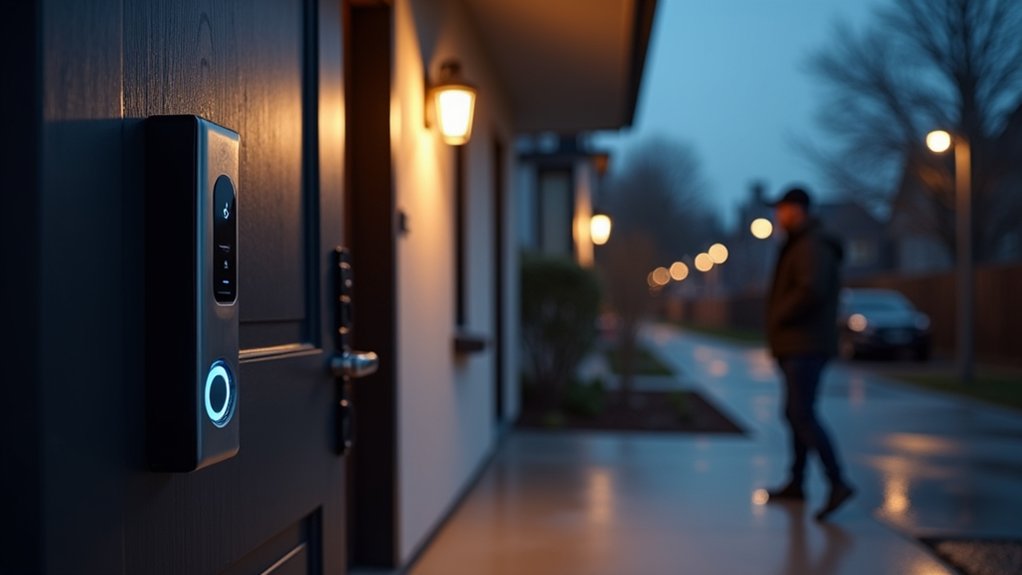

You’ve probably heard the theory that a smart doorbell is all you need to secure your front door, but that claim doesn’t always hold up. You get crisp face-level footage, instant visitor context, and package alerts in one tidy spot. Yet you can’t ignore what happens beyond that frame—driveway approaches, side paths, blind corners. If you want protection that feels complete, you’ll need to decide where “enough” actually starts.
Doorbell vs. Security Camera: Quick Pick
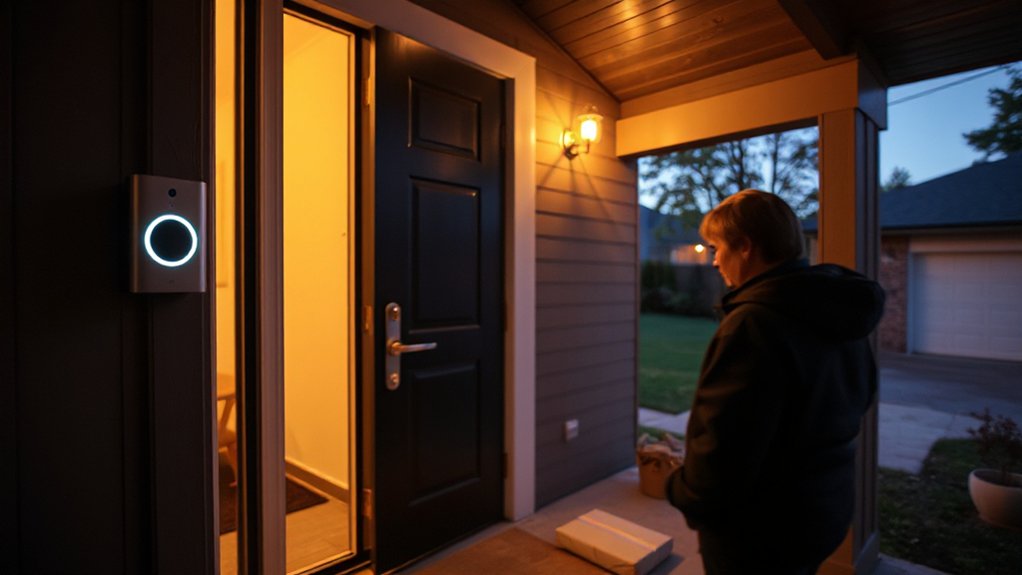
If you want fast clarity, start with what you need to cover: a smart doorbell excels at front-door visibility, two-way talk, and package alerts.
While a smart security camera wins for wider angles, flexible placement, and fuller property coverage.
If your entryway is tight and you want gear that disappears into the trim, pick the doorbell for a clean, single-point upgrade.
If you’re curating sightlines across a porch, driveway, or side path, choose a camera and aim it like lighting—intentional, unobtrusive, exact.
Compare video quality by checking resolution, HDR, night vision, and motion zones, not marketing labels.
Weigh installation ease: doorbells may need wiring; cameras often mount anywhere, but require power and Wi‑Fi strength.
Best Use Cases for a Smart Doorbell
When your front door is the choke point for visitors, deliveries, and late-night motion, a smart doorbell fits the job like a tailored trim piece. It replaces a bulky intercom with a slim, weather-tight plate that looks intentional, not tacked on. You get instant context without stepping into a drafty entryway, and you can answer from the sofa, driveway, or office.
Use it when you’re managing frequent drop-offs: Package detection flags arrivals fast and helps you confirm placement on a tight porch. Rely on Visitor identification to separate neighbors from unknowns, even when you’re mid-meeting.
It’s also ideal for rentals, shared homes, or side entrances where you need clean access control without adding visual clutter or extra hardware.
Best Use Cases for Smart Security Cameras
Although a smart doorbell owns the front threshold, smart security cameras shine wherever you need broader coverage and cleaner sightlines. Place one under the eaves to watch the driveway, another facing the side gate, and a discreet unit in the backyard to frame patio doors and fence lines. You’ll map motion zones around landscaping, sheds, and parked cars without cluttering your exterior.
Indoors, a compact camera fits high on a shelf to monitor entry points, stairwells, or a nursery, while staying visually quiet. If you rent or hate drilling, Wireless connectivity lets you position cameras where outlets and studs don’t.
Still, plan for Privacy concerns: aim away from neighbors, keep sightlines tight, and treat every lens like a design choice.
Features Compared: Alerts, Video, Storage, Power
Because the best placement won’t matter without the right performance, compare smart doorbells and smart cameras by how they handle four essentials: alerts, video, storage, and power.
Doorbells excel at front-door events: quick press-to-phone pings, package zones, and tidy, face-level framing.
Cameras push further with wider motion rules, sirens, and multi-angle coverage, but you’ll tune sensitivity to avoid noisy notifications.
Video favors cameras for sharper sensors, zoom, and night range; doorbells prioritize portrait views and visitor context.
Storage splits between cloud convenience and local cards; weigh Privacy concerns, retention controls, and encryption.
Power shapes your look: wired doorbells stay sleek and continuous; battery units hide cables but need recharging.
Installation complexity rises with hardwiring, mounts, and network reach.
Choose One or Both: Setups for Common Homes
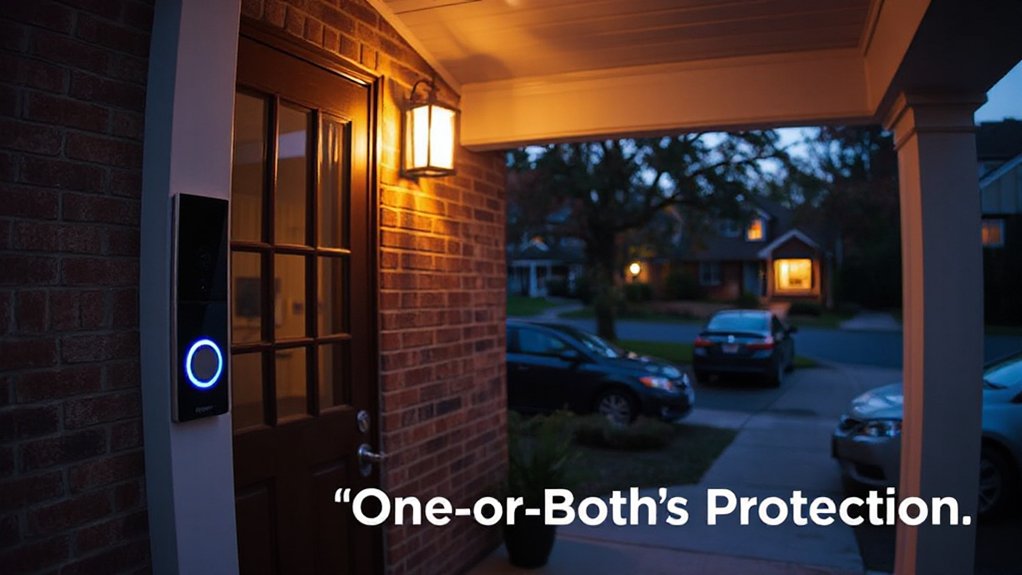
Most homes benefit from a deliberate mix: a smart doorbell to own the entry moment and one or two smart cameras to cover the approaches your porch can’t see.
In a small apartment, choose a doorbell cam (or a peephole model) and keep angles tight to avoid neighbors’ doors—privacy considerations matter in shared hallways.
In a townhouse, pair the doorbell with a slim outdoor cam aimed down the side passage; tuck wiring along trim for a clean line.
In a single-family home, add one cam over the driveway and one facing the backyard gate, spaced for overlapping sightlines without cluttering eaves.
Plan for installation challenges: masonry, limited power, and weak Wi‑Fi at exterior corners. Use solar or wired where possible, and set motion zones to your property edge.
Conclusion
Your front door’s a keyhole; a smart doorbell lets you see who’s there, catch deliveries, and answer with calm control. Your yard’s a horizon; smart cameras watch the edges, trace motion zones, and hold wider angles. Choose the keyhole if entry is your weak point. Choose the horizon if blind spots worry you. Or pair them—lock and lantern—so your home isn’t just watched, it’s understood, day and night.