
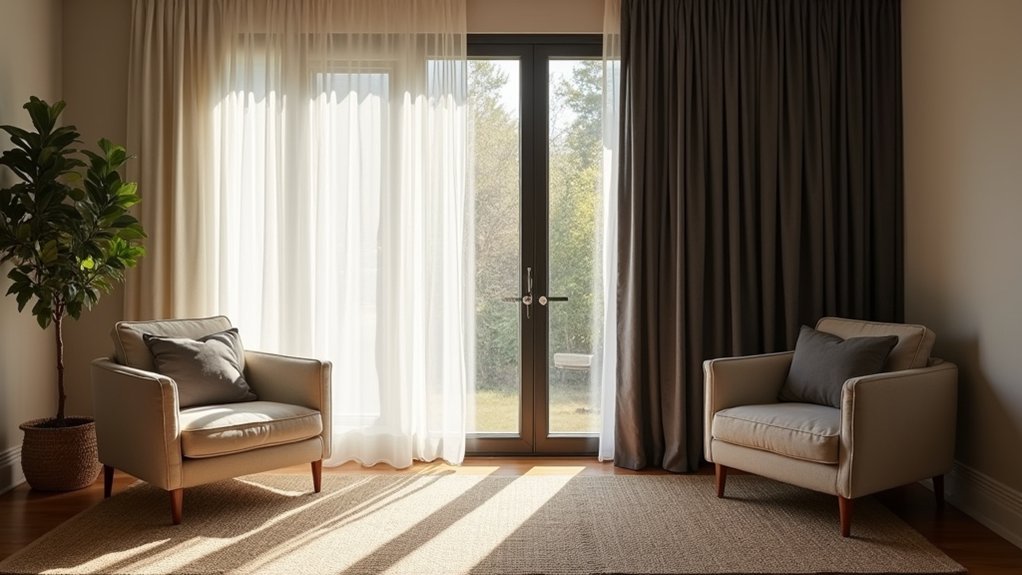

You can change a room’s mood fast with the right curtains, but you’ve got to decide what they’re fixing first—glare, privacy, awkward proportions, or a space that feels flat. Sheers soften daylight and open things up, while lined linen or velvet adds weight and warmth. Color and pattern steer the vibe, and smart placement can make ceilings feel higher and walls wider. The key moves aren’t obvious at first…
Decide What You Want Curtains to Fix

Before you shop for fabric or hardware, decide what you need your curtains to *fix* in the room—because the right choice depends on the problem you’re solving.
If ceilings feel low, you’ll prioritize height: plan to mount higher and extend beyond the frame to visually lift and widen the wall.
If the room feels cold or echoey, you’ll target softness and acoustic absorption by choosing fuller panels and generous returns.
If the space looks cluttered, you’ll choose a streamlined window treatment with simple headings and consistent hardware finishes to calm the sightlines.
If you need a more polished look fast, focus on crisp hems, proper puddle-or-float decisions, and rings that glide smoothly.
Build in curtain maintenance: washable linings, dust-friendly weaves, and access for vacuuming.
Control Light and Privacy With Curtain Types
When you match curtain type to how you actually use the room, you can fine-tune daylight, glare, and sightlines without sacrificing style. Start with sheers when you want soft brightness and daytime privacy enhancement; layer them under a second treatment so you can shift from open to protected fast.
Choose blackout panels for bedrooms, media rooms, or street-facing windows where you need total light control and stronger noise reduction. If you want clean, tailored lines, opt for ripple-fold drapery; it stacks tightly and looks current in modern spaces.
For compact zones, try Roman shades to manage glare without bulky side stacks. Add a double rod or ceiling track so you can combine options and adjust privacy by hour.
Pick Curtain Fabric to Set the Mood
You set the mood the moment you choose fabric—sheers and linens softly filter daylight, while heavier cottons and velvets mute glare and add a more cocooned feel.
Texture matters: slubby weaves read relaxed and airy, whereas plush or tightly woven fabrics bring warmth and a polished, tailored finish.
Then lock in the vibe with color and pattern—warm solids calm a room, high-contrast geometrics energize it, and tonal botanicals hit that current, nature-forward trend without overwhelming the space.
Light-Filtering Fabric Choices
Although wall color and furniture set the baseline, curtain fabric controls how light actually behaves in a room—softening glare, shifting color temperature, and setting the overall mood from airy to dramatic. Choose sheers to keep daylight bright but diffused; they’re ideal for south-facing rooms where you want privacy without dimming.
Pick semi-sheer linen blends for a modern, “quiet luxury” look that gently warms light, while tight-weave cotton voile stays crisp and cooler. For media rooms or bedrooms, use light-filtering dimouts to reduce hotspots without the cave-like effect of full blackout.
Layering matters: pair a sheer inner panel with a dimout outer for flexible control. Finish with Decorative curtain accessories like minimal rings or ripplefold tracks.
Follow Maintenance and cleaning tips: vacuum regularly and spot-clean to prevent yellowing.
Texture And Warmth Effects
Because texture changes how your room “reads” at a glance, curtain fabric becomes a fast, high-impact way to dial warmth up or down without repainting. Choose nubby linen, bouclé, or brushed cotton when you want a cozy, lived-in feel; their tactile surfaces soften hard edges and reduce that “echoey” visual chill.
For a sleeker, cooler mood, go with crisp cotton sateen or smooth, tightly woven sheers layered under structured panels, keeping surfaces clean and architectural.
Prioritize Material durability: high-rub weaves, lined wool blends, and polyester-linen mixes hold shape, resist snags, and drape consistently.
Follow maintenance tips: vacuum with a brush attachment monthly, spot-clean immediately, and steam instead of ironing to preserve pile and texture. Rotate panels seasonally to prevent uneven wear.
Color And Pattern Mood
Texture sets the tactile temperature, but color and pattern set the room’s emotional temperature at first glance. Use Color psychology to steer perception: cool whites and soft blues sharpen calm and daylight, while terracotta, saffron, and blush add sociable warmth. Deep charcoals and inky navies read tailored and modern, especially in matte weaves. Match undertones to your flooring and walls so the light doesn’t turn fabric muddy.
Then dial in Pattern symbolism. Vertical stripes lift ceilings; wide horizontals widen narrow rooms. Botanicals signal ease and biophilic comfort; geometrics feel structured and contemporary. Keep scale proportional: large prints suit big windows, micro-patterns refine small spaces. If you’ve got bold art, choose solids; if furnishings are plain, pattern becomes your focal point.
Choose Curtain Colors for Cozy or Airy Vibes
When you choose curtain colors with intention, you can instantly steer a room toward cozy warmth or breezy openness. For cozy vibes, lean into saturated tones—camel, forest green, ink navy, or terracotta—especially in velvet or brushed linen; they visually compress space and soften glare.
For airy vibes, use crisp whites, warm ivories, pale greiges, or misty blues in sheer linen blends to diffuse light and keep edges quiet. Match undertones to your wall paint: warm-on-warm reads inviting, cool-on-cool feels fresh, and mixed undertones can look muddy.
Finish the look with drapery hardware in matte black or aged brass, and keep curtain accessories minimal—sleek rings or tonal tiebacks—so color stays the main signal.
Hang Curtains Higher to Make Rooms Look Bigger
Color sets the mood, but curtain height changes your room’s perceived architecture. Mount your rod 4–8 inches above the window trim, or go halfway to the ceiling for a modern, elongated look. Then extend the rod 6–12 inches past each side so glass reads wider and you’ll expose more daylight when panels are open.
Choose wall mounted solutions that hit framing studs or use rated anchors; a higher span carries more leverage.
Match curtain rod styles to your ceiling line: slim matte-black rods feel contemporary, warm brass reads upscale, and clean white disappears for an airy effect.
Keep the hem just kissing the floor to emphasize vertical lines and make ceilings look taller without looking fussy.
Add Fullness, Pleats, and Layers for a Finished Look
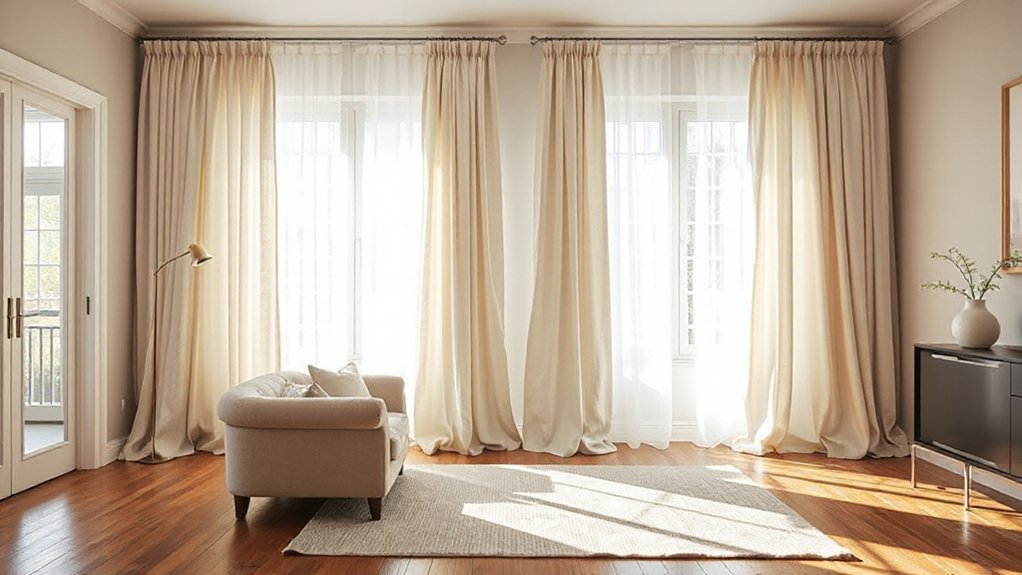
Even if you nail the height and width, curtains won’t look custom unless they’ve enough fabric and structure to hold their shape. Aim for 2x to 2.5x fullness for most drapery; go 3x for sheers if you want that designer ripple.
Choose pinch pleats or tailored French pleats for a polished, trend-forward line, and use weighted hems so panels fall cleanly.
Layer your Window treatment options: pair linen drapes with a solar shade, or add a sheer behind blackout panels to control glare without losing softness.
Keep hardware consistent—rings, hooks, and a proper traverse rod improve stack-back and symmetry.
For Curtain maintenance tips, vacuum with a brush attachment monthly, steam wrinkles, and spot-clean hems before they gray.
Conclusion
When you treat curtains like a room’s “volume knob,” you control everything—light, privacy, and perceived scale. I once swapped bare blinds for ceiling-mounted linen panels in a cramped rental; the space felt wider overnight. In fact, designers often hang rods 6–12 inches above the frame to visually lift the ceiling. Choose sheers for airy glow, velvets for cocooning warmth, and layered pleats for that tailored, trend-right finish you can’t fake.