
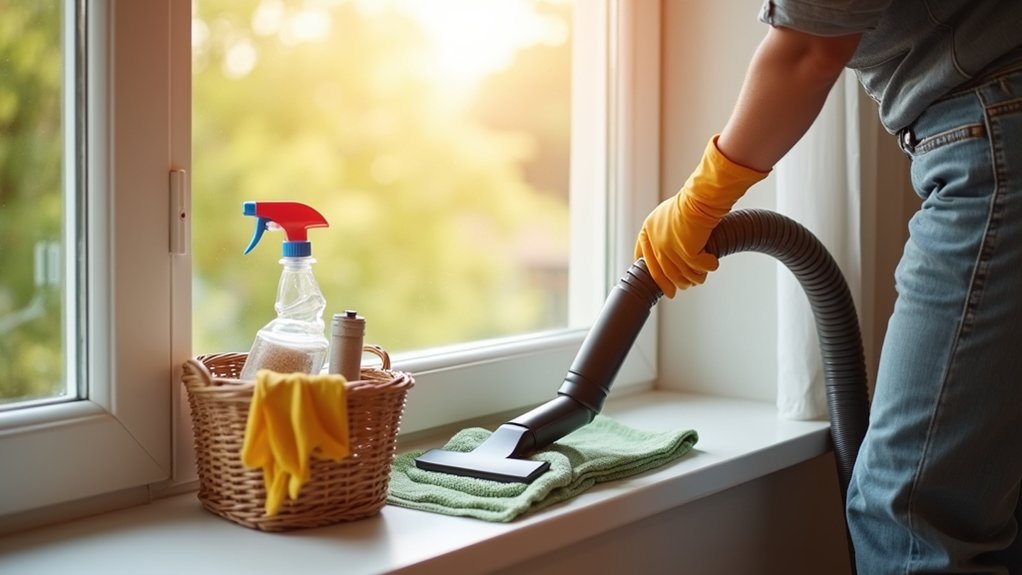

You don’t need a full-house overhaul to feel a real difference—seasonal cleaning works because you target what each month quietly builds up. In spring, you knock down dust and allergens in vents and corners; in summer, you reset patios, grills, and pest-prone spots; fall is for gutters and entryway grit; winter calls for deep-cleaning floors and fabrics. The biggest wins, though, come from the tasks you keep missing…
Spring Seasonal Cleaning Tasks: Dust, Vents, and Allergens
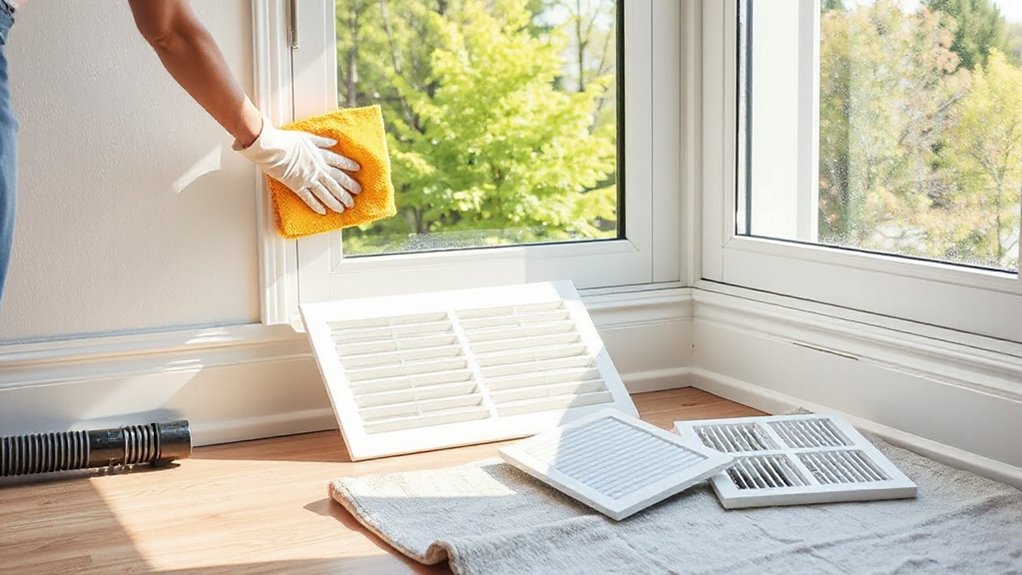
As the weather warms and you crack the windows, spring air also stirs up the dust, dander, and pollen that settled all winter. Start high: vacuum ceiling corners, wipe fan blades, and swap microfiber cloths often so you don’t smear allergens.
Pull HVAC returns and vent covers, wash them, then vacuum inside ducts you can reach; replace filters with a MERV rating that fits your system.
Damp-mop hard floors and wash throw blankets, curtains, and pet beds on hot.
Do seasonal decluttering next—clear entry drop zones and under-bed bins so dust can’t hide.
Finally, refresh Indoor plants: rinse leaves, top-dress soil, and add a tray of pebbles to reduce moldy splash and keep air feeling cleaner.
Summer Seasonal Cleaning Tasks: Patios, Grills, and Pests
With spring dust and allergens handled, shift your focus outdoors where summer heat bakes on grime and invites pests. Power-wash patios early in the day, then spot-treat stains with oxygen bleach so you don’t etch concrete.
Wipe outdoor furniture with a mild detergent, rinse, and let it dry fully to prevent mildew; add UV-protectant spray for plastics and teak oil for wood.
Degrease grill grates after a short preheat, then check burners for clogs and replace drip trays to cut flare-ups.
For pests, empty standing water, seal gaps around doors, and sweep crumbs from outdoor eating areas; use citronella-free fans to disrupt mosquitoes.
Keep pool maintenance tight: skim daily, brush weekly, and balance chlorine and pH so algae can’t take hold.
Fall Seasonal Cleaning Tasks: Gutters, Entryways, Winter Prep
As temperatures drop, you’ll keep water where it belongs by following a quick gutter-cleaning checklist: clear leaves, flush downspouts, and check hangers for sagging.
You’ll also winterize your entryway by swapping in a heavy-duty doormat, sealing drafts around the door, and setting up a drip tray for wet boots.
Knock out these tasks now, and you’ll prevent ice issues, reduce mess, and make winter maintenance a lot easier.
Gutter Cleaning Checklist
Before the leaves finish dropping, clear and check your gutters so rain and early snowmelt can drain fast instead of backing up under shingles or pooling at your foundation. Start with safe ladder setup and gloves, then do thorough debris removal: scoop leaves, pull out twigs, and bag it so nothing washes back in.
Flush each run with a hose to confirm steady flow, and watch for slow spots that signal clogs. Check downspouts for blockages and confirm they discharge away from the house. Tighten loose hangers, reseat sagging sections, and look for separated seams or pinhole leaks.
For smarter gutter maintenance, consider adding mesh guards if you’ve got heavy tree cover, but still inspect after storms. Finish by cleaning up grit from shingles.
Entryway Winterization Tips
Even if you’ve already handled the gutters, your entryway still needs a fall tune-up so winter slush doesn’t get tracked in or turn into a slip hazard. Start with a deep sweep, then vacuum corners and wipe baseboards where grit builds up. Add a heavy-duty, low-profile scraper mat outside and an absorbent runner inside; choose washable styles that are trending in performance textiles.
Upgrade Entryway organization with wall hooks for coats, a tray for keys, and a lidded bin for hats and gloves. Tighten footwear management: set a boot tray with raised edges, keep a microfiber towel for drips, and stash odor absorbers. Seal drafts with a door sweep and replace worn weatherstripping.
Finally, place ice melt and a small brush by the door so you’re ready immediately.
Winter Seasonal Cleaning Tasks: Deep-Clean Floors and Fabrics
When winter traps you indoors and moisture, salt, and soot ride in on boots and coats, your floors and fabrics take the hit first. Start with a dry pass: vacuum edges, under rugs, and along baseboards to lift gritty salt before it scratches.
Follow with eco-friendly cleaning—warm water, a plant-based floor concentrate, and a microfiber mop you can rinse often.
For carpets and upholstery, pre-treat spots fast. Use targeted stain removal techniques: blot, don’t rub; apply an enzyme spray for protein stains, a little dish soap for oily marks, or diluted vinegar for salt rings.
Steam-clean high-traffic lanes, then set fans to speed drying and prevent musty odors.
Finish by washing throws, rotating cushions, and brushing pet hair off fabric with a rubber squeegee.
Easy-to-Miss Seasonal Cleaning Tasks (Filters, Drains, Fridge Coils)
Although they don’t look dirty, filters, drains, and fridge coils quietly drive your home’s air quality, odors, and energy use, so put them on your seasonal reset list.
Start with Air filter maintenance: check sizes, replace or wash on schedule, and vacuum return vents so airflow stays steady during peak heating/cooling months.
Next, clear slow drains by removing hair and biofilm, then flush with hot water; skip harsh chemicals that can damage pipes and septic systems.
For dishwasher upkeep, pull the filter, rinse debris, and wipe the door gasket so funk doesn’t recirculate onto “clean” dishes.
Finally, unplug the fridge, brush and vacuum condenser coils, and clean the drip pan if accessible—modern energy bills make this small step worth it, season after season.
1-Hour Seasonal Cleaning Tasks for Quick Wins
When you’ve only got an hour, focus on high-traffic zones first—wipe door handles and light switches, spot-clean entryway floors, and reset the kitchen and bathroom counters.
Then refresh the air and fabrics fast: swap in a clean HVAC filter if needed, run a quick vacuum over rugs and upholstery, and mist curtains or couches with a fabric refresher.
You’ll get a noticeable, guest-ready upgrade without touching every room.
Tackle High-Traffic Zones
Because grime builds up fastest where you and your family move the most, you’ll get the biggest one-hour payoff by tackling high-traffic zones first—entryways, hallways, kitchens, and the living room. Treat these as targeted cleaning zones: set a 15-minute timer per area and work top-down.
In the entryway, shake out the mat, wipe the door handle, and spot-clean scuffs on baseboards.
In hallways, quick-vacuum edges and run a microfiber mop where footprints show.
In the kitchen, clear counters, wipe spills, and sanitize cabinet pulls and appliance buttons.
In the living room, corral clutter into a basket, wipe remotes and light switches, and vacuum under the coffee table.
Finish by emptying small trash bins and resetting shoes, hooks, and baskets.
Refresh Air And Fabrics
Once you’ve knocked out the grime in your busiest spots, shift your hour to what you can’t always see: stale air and fabric buildup. Start by cracking windows for 10 minutes, then swap HVAC and Air purifiers filters if they’re due. Vacuum sofa arms, cushions, and mattress seams with a brush attachment; that’s where dust and odor cling.
Next, treat textiles fast: toss washable throws, slipcovers, and entry rugs in a quick cycle, and steam curtains if you can’t launder them. Mist fabric refreshers lightly on upholstery, pet beds, and gym bags—don’t soak, and spot-test first. Finish by wiping vent covers and running your purifier on high for 30 minutes. You’ll notice cleaner air and softer-smelling rooms immediately.
Conclusion
Seasonal cleaning isn’t just busywork—you’re protecting your air, your home, and your time. When you dust vents in spring, tackle patio grime in summer, clear gutters in fall, and deep-clean floors and fabrics in winter, you cut down on allergens, pests, and wear. Don’t skip the “hidden” jobs either—filters, drains, and fridge coils. Here’s the kicker: indoor air can be 2–5× more polluted than outdoor air, so these small resets matter.