
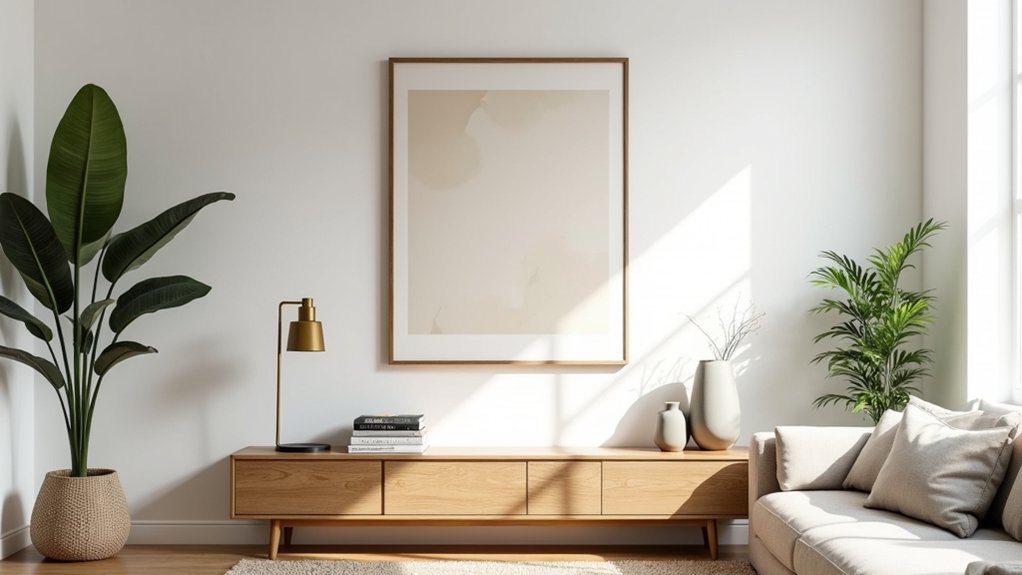

A blank wall is a clean canvas that can either sharpen your space or make it feel unfinished. You’ll start by measuring and mapping the wall so the scale feels intentional, not random. Then you’ll decide its job—anchor a sofa, brighten a hallway, or add depth behind a bed—and pick a layout that fits: gallery grid, oversized statement, a balanced pair, or a shelf-led mix. The real confidence comes when you set height, spacing, and texture so it all lands just right…
Measure Your Blank Wall for Proper Scale
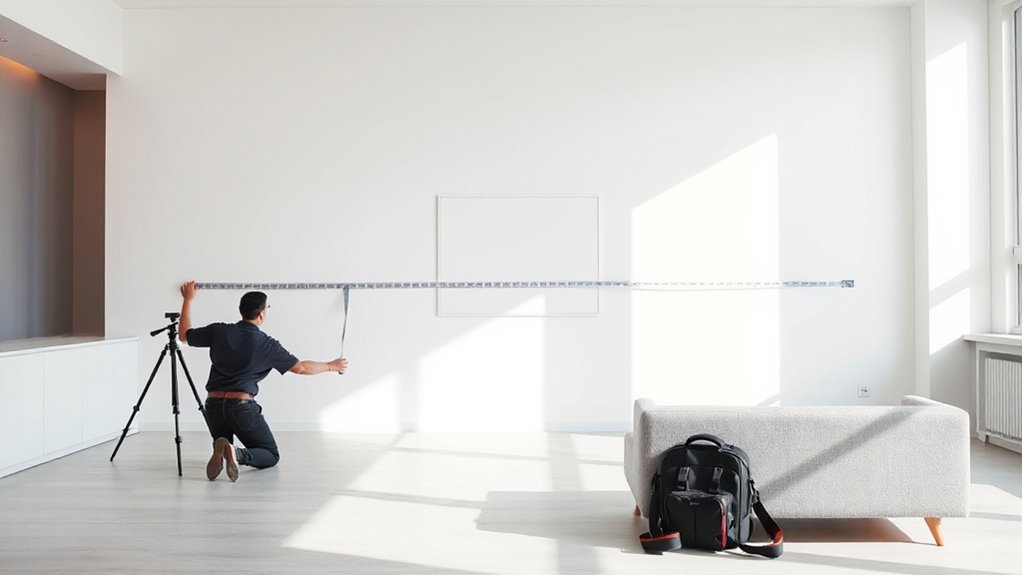
Before you buy art, a mirror, or shelves, take five minutes to measure your blank wall so everything lands at the right scale. Grab measurement tools: a tape measure, painter’s tape, a level, and your phone’s notes app.
Record Wall dimensions—width, height, and the distance to trim, switches, vents, and nearby furniture edges. Mark the wall’s centerline lightly with painter’s tape, then map “safe zones” where hardware won’t hit studs awkwardly or collide with outlets.
For trend-right proportions, sketch a quick rectangle for your planned piece and aim for it to fill about two-thirds to three-quarters of the available width above a sofa or console. Tape that outline on the wall and step back 6–8 feet to confirm scale.
Decide What Your Empty Wall Needs to Do
Once you know your wall’s scale, decide what job you want it to do—anchor the room with a focal point, add storage, improve lighting, or simply inject color and personality.
If the room feels floaty, choose one statement element that visually “lands” the seating or bed. If you’re short on function, add closed cabinets, hooks, or a slim ledge that keeps clutter off surfaces.
For dim corners, plan for hardwired sconces or plug-in picture lights, and hide cords with paintable raceways. Want warmth? Layer wall texture with limewash, slatted wood, or tonal plaster effects that look current but timeless.
Match the solution to traffic flow, door swings, and daily habits, so it works, not just looks good.
Choose a Layout: Gallery, Oversized, Pair, or Shelf
Even if you’ve found the perfect art, the layout decides whether it reads polished or scattered, so pick a structure that matches your wall’s scale and the room’s energy. Start by measuring the usable width and choosing one anchor line (centered on a sofa, aligned with a doorway, or centered on the wall).
Go gallery-style when you need flexibility: keep 2–3 inches between frames, repeat finishes, and map it on paper first for clean art placement.
Choose one oversized piece when you want modern impact; hang its center around 57–60 inches from the floor.
Use a pair for calm symmetry—match heights, vary widths slightly, and keep the gap tight.
Add a picture shelf for renters: stack by height for visual balance.
Combine Art, Mirrors, and Wall Decor Without Clutter
Although mixing art, mirrors, and wall objects can look layered and intentional, it turns messy fast if you don’t give each piece a job. Choose one hero element first—either a statement artwork or a mirror—and treat everything else as support.
Keep your focal points limited to one per wall section, then use smaller pieces to echo its shape or theme, not compete with it.
Balance mixed media by repeating one material twice (wood, brass, black metal) so the mix feels curated. Leave breathing room: aim for even spacing and stop adding once the negative space starts disappearing.
If you’re styling a shelf ledge, overlap frames slightly, then anchor with one sculptural object and keep the rest flat. Step back, edit, repeat.
Pick Color, Texture, and Hanging Height That Feel Right
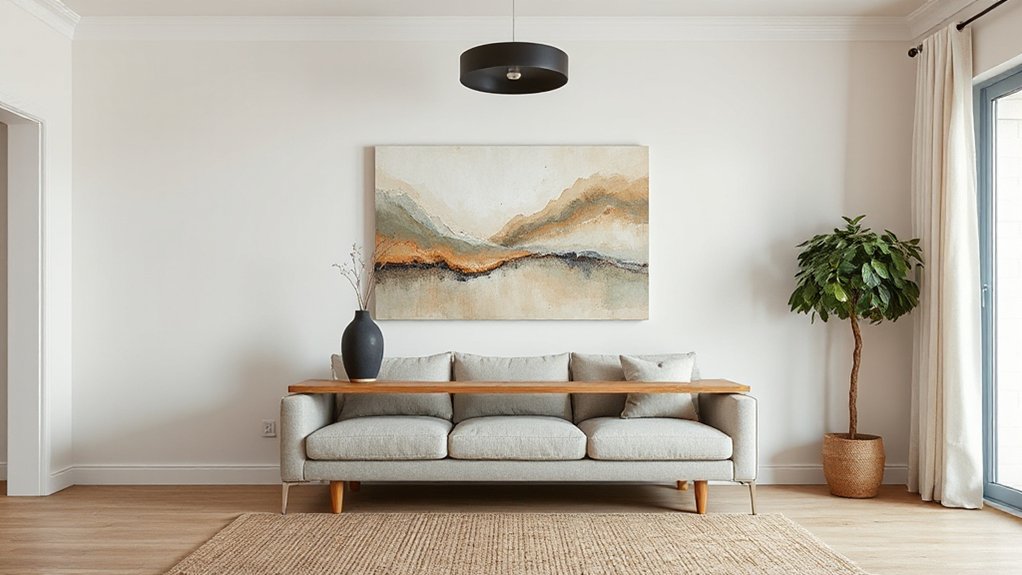
Before you start hammering nails, lock in a simple palette, add one strong texture, and choose a hanging height that suits how you actually use the room.
For Color coordination, pull two to three hues from what’s already there—rug, sofa, or bedding—and repeat them in frames, mats, and one accent piece. Keep metals consistent, or mix them intentionally: warm brass with oak, black with walnut.
Then focus on Texture layering so the wall doesn’t read flat. Pair smooth glass or glossy frames with something tactile like linen mats, a woven wall hanging, or a ribbed sconce.
Hang art at eye level (center around 57–60 inches), but adjust: go lower over sofas, higher in hallways, and leave 6–8 inches above furniture.
Conclusion
You’ve measured the wall, mapped the scale, and picked a layout that fits your life. Now style with intention: anchor a focal piece, echo it with art or a mirror, and layer decor without crowding. Keep your palette tight, mix textures for depth, and hang everything at eye level (about 57–60 inches) with breathing room above furniture. You’re not filling space—you’re shaping mood, showing taste, and making the room feel finished.