
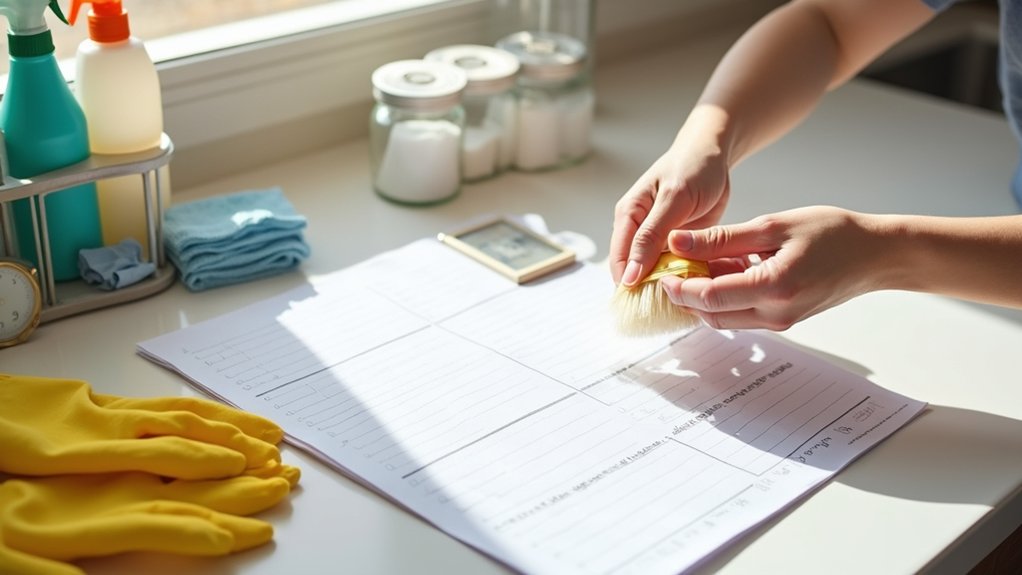

You don’t need a perfect schedule; you need a routine that matches your week and your space. Start by mapping your busiest days, then assign small daily resets and one weekly catch-up. Keep supplies minimal in a portable caddy, and set zones so you’re not bouncing room to room. Focus on high-traffic spots and hygiene first. Once you see what actually slips, you’ll know exactly what to adjust next…
Choose a Cleaning Routine That Fits Your Week
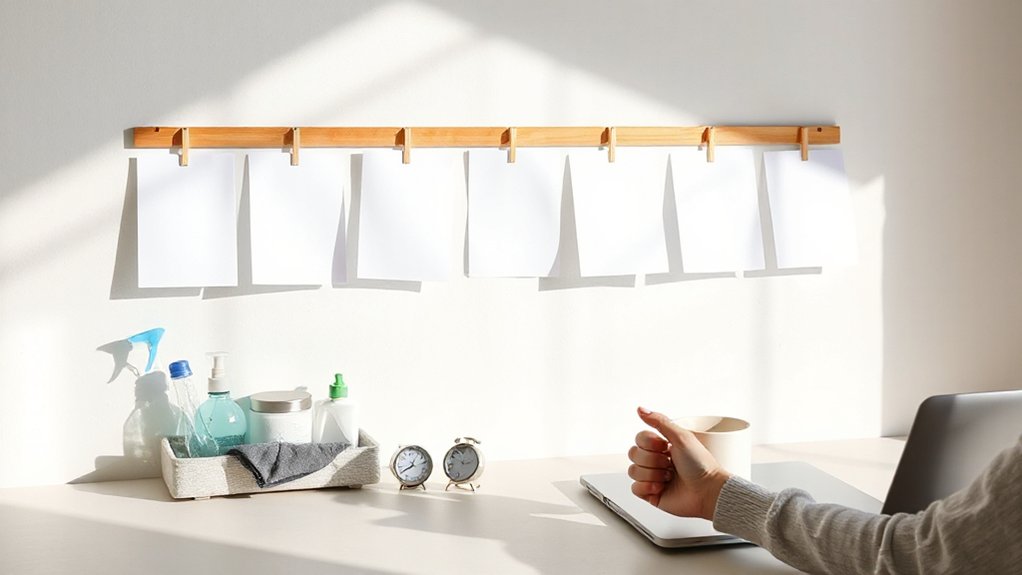
How do you pick a cleaning routine that actually sticks? Start by mapping your real week, not your ideal one. List your longest workdays, commute time, and any standing commitments, then choose a cadence: daily micro-tasks plus one longer reset, or two medium sessions.
Keep it space-conscious by limiting cleaning supplies to a small caddy that fits under the sink, stocked with a multi-surface spray, microfiber cloths, and a compact brush.
Use organizational tools like a magnetic fridge checklist or a phone reminder with repeating tasks.
Set a realistic “minimum” version for busy weeks and an “upgrade” version for lighter weeks.
Review after two weeks and adjust the frequency, not the goal.
Set Up Zones (and What Tasks Go in Each)
Where does mess actually pile up in your home—at the sink, the entryway, or the bathroom counter? Set up zones based on those hotspots so you don’t waste time zigzagging.
Give each zone a small kit: kitchen gets a spray, sponge, and trash bags; entry gets hooks, a shoe tray, and a catchall bowl; bathroom gets wipes, toilet brush, and a microfiber cloth.
Use Organizational systems that fit your space: stackable bins under sinks, vertical caddies, and labeled drawers.
Decide what “done” means per zone: clear surfaces, contained clutter, and empty trash.
Then use Task prioritization: safety and hygiene first, then visible surfaces, then deep details.
Keep supplies in-zone to prevent drift and delays.
15-Minute Daily Cleaning Routine (The Essentials)
Even if your schedule’s packed, you can keep your home consistently tidy with a 15-minute daily reset that targets the highest-impact tasks. Set a timer and start in your main zone: grab a small bin and do a fast pickup—trash, dishes, stray items—then put everything back where it belongs.
Next, wipe the kitchen counter and sink using eco friendly products; keep a spray and cloth stored under the sink to save steps.
Do a quick bathroom swipe: mirror, faucet, and a 30-second toilet rim wipe.
Finish with Dusting techniques that work in tight spaces: use a microfiber cloth, top-to-bottom, and fold it to expose clean sides.
End by straightening cushions and clearing entry clutter.
Weekly Cleaning Checklist to Stay Caught Up
When should you tackle the bigger jobs that your 15-minute reset can’t cover? Pick one weekly block (30–60 minutes) and follow a tight checklist so your home never falls behind.
Start with floors: vacuum high-traffic areas, then spot-mop kitchen and bath. Wipe bathroom surfaces, swap towels, and scrub the toilet.
In the kitchen, clear counters, clean the sink, and sanitize handles and switches.
Change sheets, empty all trash, and break down cardboard for recycling.
Do a quick Deep cleaning add-on: dust vents or baseboards in one room only.
Finish with Organizing tips: reset one “landing zone,” file loose papers, and corral chargers into a small bin.
Keep supplies in a caddy to save space.
How to Reset Your Cleaning Routine After a Busy Week
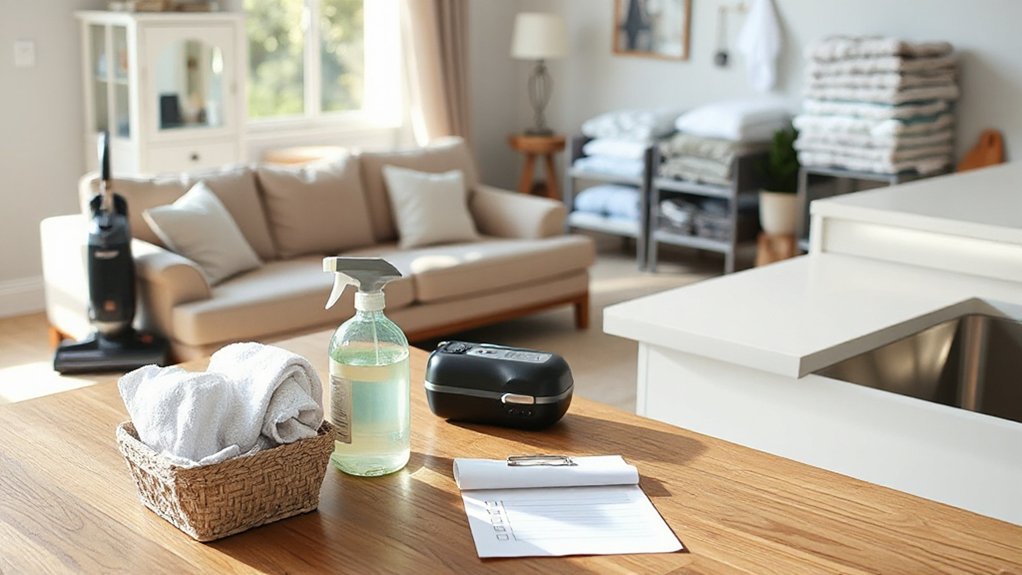
A weekly checklist keeps you caught up most weeks, but a packed schedule can still knock your routine off track. Reset fast by doing a 20-minute “minimum viable clean”: clear counters, load dishwasher, wipe sink, quick trash sweep, and run a vacuum pass in high-traffic zones.
Next, use Time management: set a timer for two 15-minute blocks and pick one room per block. Start with visual wins (entry, kitchen), then tackle laundry: one load washed and dried, one basket folded. Keep supplies in a small caddy so you don’t zigzag rooms.
For motivational strategies, write three micro-tasks on a sticky note, cross them off, then stop. You’ll restart momentum without losing your weekend.
Conclusion
When you build a cleaning routine that fits your week, you’re not chasing perfection—you’re running a tighter ship. Like Odysseus, you’ll stay on course by using simple tools: a small caddy, clear zones, and checklists that don’t sprawl. Hit the essentials in 15 minutes daily, then tackle one weekly deep-clean pass to keep grime from regrouping. If life derails you, reset fast: clear counters, run laundry, sweep high-traffic paths.