
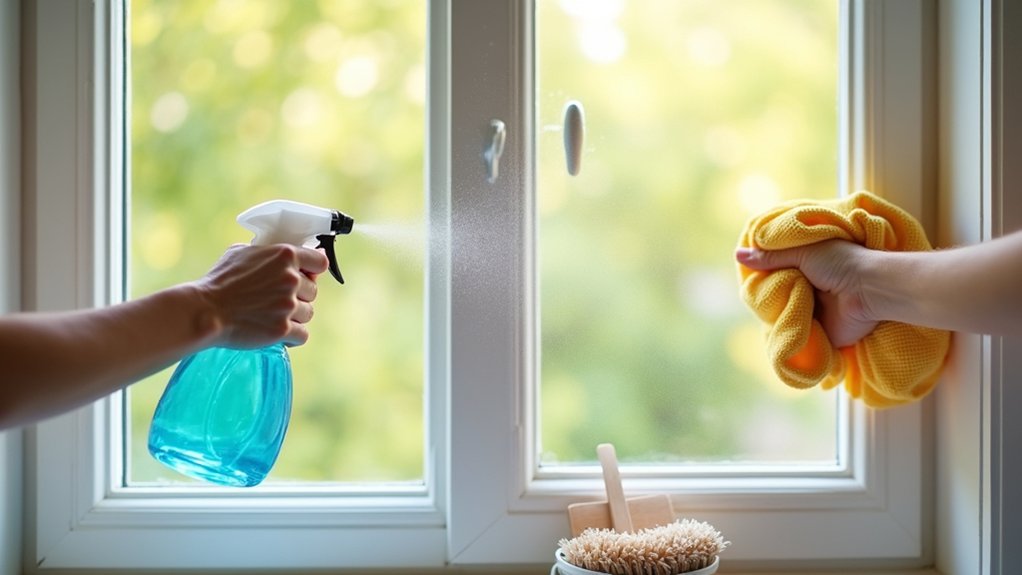

Your vinyl windows can look like they’ve survived a dust storm, a rain flood, and a grease spill all at once. You’ll get better results when you use vinyl-safe basics—warm water, a pH-neutral soap, microfiber cloths, and soft nylon brushes—and skip harsh abrasives that scratch frames and haze glass. Start by loosening debris, then work methodically from frames to tracks so you don’t re-soil clean areas, but one overlooked spot can undo everything…
Vinyl Window Cleaning Supplies (and What to Avoid)
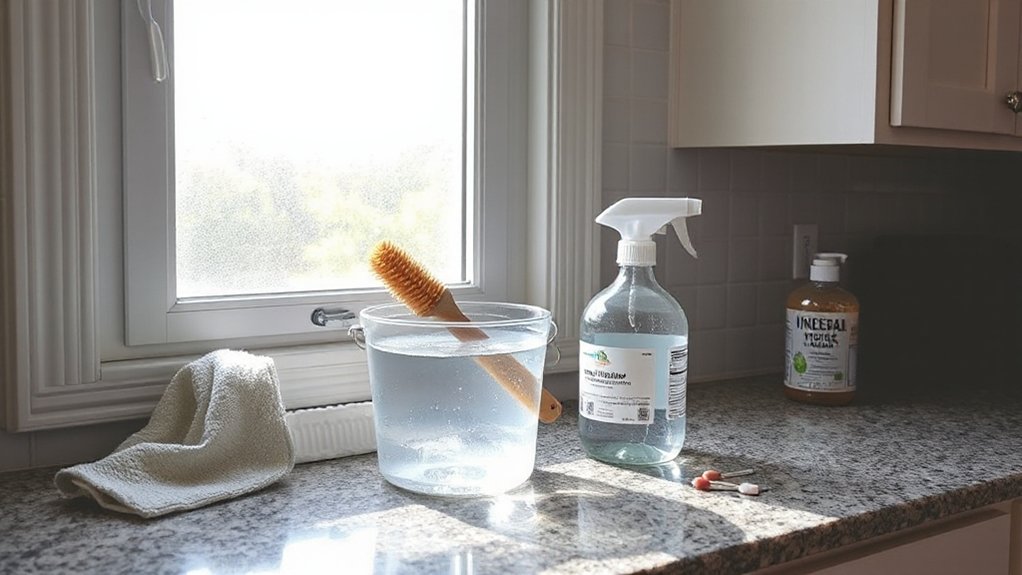
Before you start scrubbing, gather a few vinyl-safe basics: a bucket of warm water, a pH-neutral dish soap, microfiber cloths, a soft sponge, and a soft-bristle brush for corners and tracks. Add a spray bottle for mixing soap solution, cotton swabs for tight seams, and a handheld vacuum to remove grit before wiping.
For glass, keep a separate lint-free towel or squeegee so you don’t redeposit debris onto the vinyl. These Vinyl window cleaning supplies support efficient, controlled cleaning of vinyl frames.
Avoid ammonia, bleach, and high-alkaline degreasers, which can dull vinyl and weaken seals. Skip abrasives like scouring pads, powdered cleansers, and melamine “erasers.” Don’t use petroleum solvents, paint thinner, or harsh citrus removers near caulk.
Clean Vinyl Window Frames Without Scratches
To clean vinyl window frames without scratches, you’ll want to use nonabrasive tools like a soft microfiber cloth or a nylon brush and skip anything gritty or scouring.
Mix a gentle solution—warm water with a few drops of mild dish soap—and wipe with light pressure, rinsing and drying as you go.
If spots persist, reapply the same mild cleaner and let it sit briefly rather than scrubbing harder.
Choose Nonabrasive Tools
Although vinyl is tough, it can scratch or haze if you grab the wrong gear, so choose nonabrasive tools from the start.
Use soft cloths (microfiber works best) for wiping frames and sills, and keep a second cloth dry for buffing.
For gentle scrubbing on stubborn spots, reach for a soft nylon brush or an old toothbrush; work with light pressure and short strokes.
Avoid green scouring pads, steel wool, razor blades, and stiff-bristle brushes that can leave permanent marks.
Pick a plastic putty knife if you need to lift debris, and keep its edge smooth.
Always rinse your tools first so trapped grit doesn’t act like sandpaper on the vinyl surface.
Use Gentle Cleaning Solutions
A mild, pH-neutral cleaner does the best job on vinyl frames because it lifts grime without softening the finish or leaving scratches behind. You’ll get the safest results by diluting it in warm water and applying it with a damp cloth, not a soaked one, so moisture won’t seep into seams.
Skip ammonia, bleach, and harsh degreasers; they can haze vinyl or weaken seals over time. For eco-friendly products, choose plant-based, fragrance-free formulas and rinse with clean water to prevent residue lines.
If you prefer DIY cleaning solutions, mix a few drops of gentle dish soap in a quart of water, or use a 1:10 vinegar-and-water blend for light mineral film. Always spot-test first and dry the frame immediately with a microfiber towel.
Get Streak-Free Vinyl Window Glass
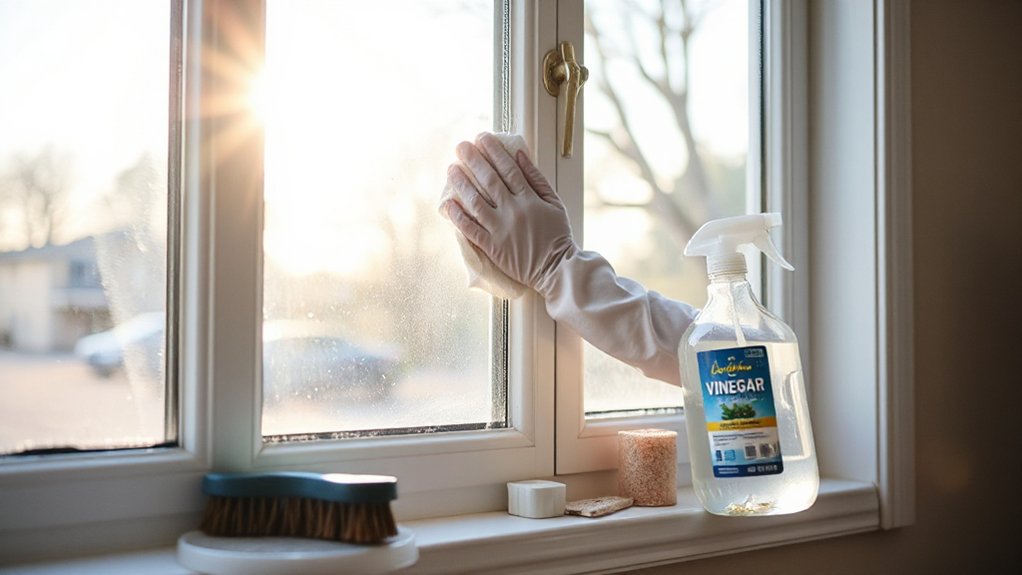
Ever wonder why freshly cleaned vinyl window glass still shows streaks in certain light? It’s usually leftover cleaner, hard-water minerals, or lint that dries unevenly. Start by dusting the glass and sash so you don’t grind grit across the pane.
Spray a light mist of cleaner—don’t soak—and wipe with a clean, low-lint microfiber. Use a top-to-bottom “S” pattern, then flip to a dry microfiber for a final buff.
For mineral haze, wipe once with a 1:1 white vinegar and distilled water mix, then immediately dry. Work in shade and replace towels as soon as they feel damp.
Your Vinyl window design and its historical popularity don’t prevent streaks; your technique does. Inspect from multiple angles before you stop.
Clear Vinyl Window Tracks and Weep Holes
Where does all that gritty sludge in your window tracks come from—and why does it matter? It’s a mix of dust, pollen, dead insects, and worn weatherstripping that traps water and prevents smooth operation. Left alone, it can overflow onto sills and stress the sash.
Start cleaning vinyl window tracks by vacuuming loose debris with a crevice tool. Then spray warm water with a drop of dish soap, agitate with a nylon brush or old toothbrush, and wipe with a microfiber cloth. Use cotton swabs for corners. Keep water minimal so you don’t flood the frame.
Finish by clearing weep holes: find the small drain slots at the bottom, poke them gently with a zip tie, then flush lightly with clean water to confirm drainage. Dry thoroughly.
Remove Hard Water, Mold, and Sticky Grime (Vinyl-Safe)
Now you’ll tackle the tougher buildup on vinyl: hard water spots, mold or mildew, and sticky grime. Use vinyl-safe cleaners and targeted tools—like a vinegar-water mix for mineral deposits, a mild mildew treatment for dark specks, and a gentle degreaser for tacky residue—so you don’t haze or scratch the surface.
Work in small sections, let products sit only as directed, and rinse and dry thoroughly to prevent new staining.
Hard Water Spot Removal
Hard water spots, mold, and sticky grime can make vinyl windows look permanently dirty, but you can lift them safely with the right cleaner and a gentle touch.
Start by dry-brushing loose grit, then spray a 1:1 mix of white vinegar and warm water onto the glass and vinyl frames. Let it dwell 3–5 minutes to dissolve mineral deposits, then wipe with a non-abrasive microfiber cloth.
For stubborn rings, apply vinegar with a soft sponge, working in small circles, and rinse immediately.
Don’t use steel wool or powdered abrasives; they can haze vinyl and scratch glass.
Finish with a clean-water rinse and dry thoroughly to prevent new spotting.
If spots return quickly, consider Water softening to reduce buildup over time.
Mold And Mildew Treatment
Although mold and mildew can look like permanent stains on vinyl windows, you can remove them safely with a mild, vinyl-friendly cleaner and controlled scrubbing.
Mix warm water with a few drops of dish soap, or use a diluted 3% hydrogen peroxide spray. Apply to the affected vinyl frame and corners, let it dwell 5–10 minutes, then scrub gently with a soft nylon brush or microfiber pad. Rinse with clean water and wipe dry to stop regrowth.
If staining persists, spot-treat with a 1:10 bleach-to-water solution, keep it off nearby fabrics, and rinse thoroughly.
Improve mold prevention by drying tracks after cleaning and keeping weep holes clear. Consider mildew resistant treatments approved for vinyl to reduce recurrence indoors.
Sticky Grime Cleanup
When mineral deposits, lingering mold residue, and oily buildup combine, they leave vinyl windows feeling tacky and looking dull, especially in corners and along tracks. Start by vacuuming loose grit, then wipe with warm water and a few drops of dish soap using a microfiber cloth.
For hard water, spray a 1:1 white vinegar-water mix, let it dwell 3 minutes, and scrub lightly with a soft nylon brush; rinse promptly.
For remaining sticky grime, apply isopropyl alcohol to a cloth (not directly on seals) and rub until the surface squeaks clean.
If you’re dealing with adhesive residue, soften it with alcohol, then lift it with a plastic scraper at a low angle.
Finish with a clean-water wipe, dry, and lubricate tracks with silicone spray lightly.
Keep Vinyl Windows Clean Longer (Quick Maintenance)
To keep your vinyl windows cleaner between deep washes, build a simple routine around quick wipe-downs and smart prevention. Once a week, dust frames, sills, and tracks with a dry microfiber cloth, then follow with a damp cloth and a drop of mild dish soap. Dry immediately to prevent streaks and mineral spotting.
For Vinyl window durability, keep chemicals gentle and avoid abrasive pads that can haze the surface.
Add seasonal maintenance tips: in spring, rinse pollen and wash screens; in summer, check weep holes for clogs; in fall, clear leaves from tracks; in winter, wipe condensation and keep weatherstripping clean.
Finally, place mats inside and trim shrubs outside to reduce splatter and grit near windows.
Conclusion
With the right vinyl-safe supplies, you can keep your windows looking new without scratching frames or leaving haze on the glass. Stick to mild soap, soft brushes, and microfiber, then rinse and dry well so residue doesn’t attract more dirt. Don’t skip tracks and weep holes—clear them so water drains properly and seals stay healthy. Tackle hard water and mold promptly with safe methods. Stay on top of it, and you’ll be ahead of the curve.