
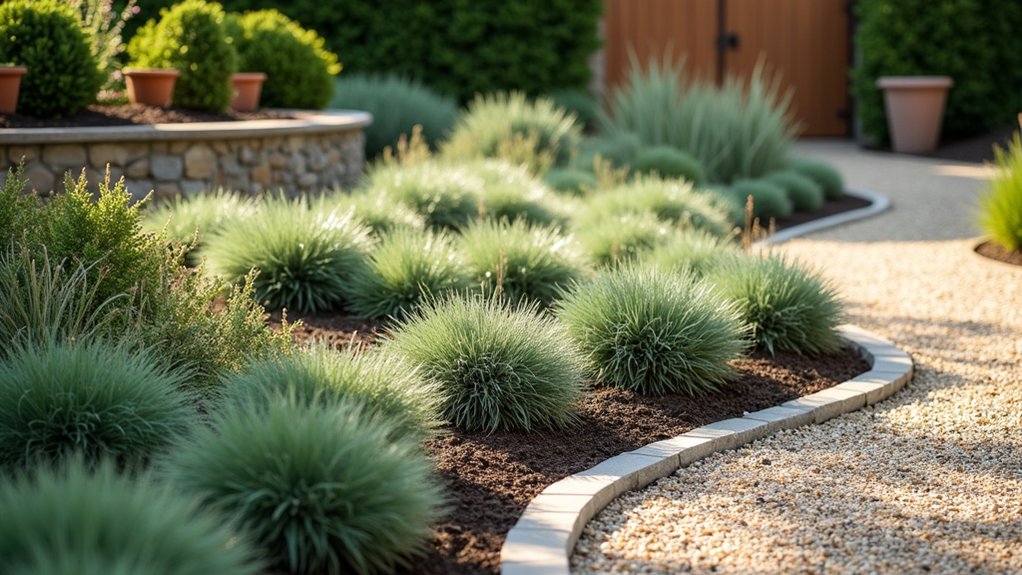

Nearly 30% of household water use goes to the landscape, and a fussy yard can double that. You can cut weekly work by shaping beds with clean, easy-to-edge curves, shrinking turf, and planting bold drifts of natives and drought-tolerant staples. Add a thick mulch layer, set drip lines on a timer, and use gravel paths for crisp structure. The best part is how a few layout choices change everything—starting with where you draw the first line.
Plan Your Low-Maintenance Garden Layout First
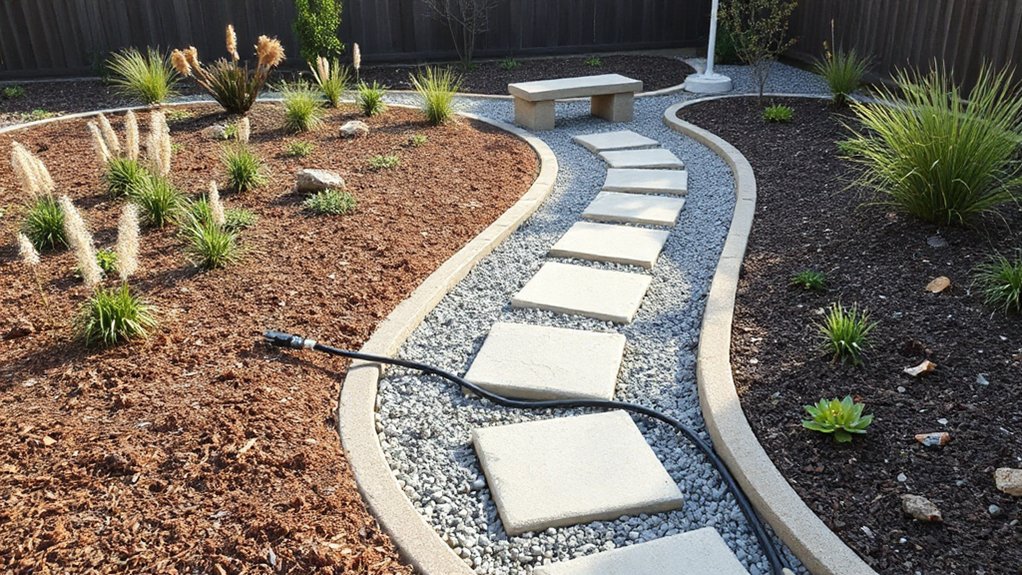
Before you buy plants or haul in mulch, map out your garden’s layout so it stays attractive without constant upkeep. Start with sunlight mapping: track morning and afternoon sun, shade from buildings, and reflected heat near walls.
Sketch beds, paths, and focal points, then use garden zoning to group tasks and looks—an entry zone for tidy structure, a mid-yard zone for seasonal color, and a back zone for looser textures.
Keep curves simple and edges crisp so trimming stays quick. Place water access and tools where you’ll actually use them, and plan wide, stable paths for easy movement.
Reserve space for growth, and repeat a few materials to unify the view year-round.
Shrink or Replace Lawn to Cut Weekly Work
Cut your weekly workload fast by shrinking your lawn footprint into clean, easy-to-edge shapes and expanding beds where plants can do the visual heavy lifting. Replace high-mow turf with no-mow groundcovers that knit into a tidy carpet, and use crisp borders so it looks intentional, not patchy.
Finish the swap with hardscape and mulch—gravel paths, pavers, and a 2–3 inch mulch layer—to lock in a polished look while suppressing weeds and reducing watering.
Reduce Lawn Footprint
Why spend every weekend pushing a mower across a carpet of grass that barely gets used? Sketch how you actually live outdoors, then trim turf to match: a tidy oval for play, a narrow green ribbon to frame beds, or a clean-edged patch near the patio.
Define the new border with steel edging or brick so lines stay crisp and trimming takes minutes. Convert leftover areas into Lawn alternatives like gravel courts, mulch paths, permeable pavers, or a compact sitting nook with a bench and bistro table.
Add drip lines under plantings and a simple timer for garden automation, so watering runs quietly while you relax. Less lawn means fewer weeds, less fertilizer, and a calmer, designed look year-round too.
Install No-Mow Groundcovers
Once you’ve trimmed your turf down to the areas you’ll actually use, replace the leftover grass with no-mow groundcovers that stay neat without weekly mowing. Choose plants that form tight mats, tolerate foot traffic where needed, and look intentional year-round—think sedges for a grassy look, creeping thyme for sun and scent, or ajuga for glossy color in part shade.
Aim for groundcover diversity so one pest, drought spell, or soggy week doesn’t wreck the whole patch. Group each type in broad drifts for a designed, calm finish, and edge them cleanly so they don’t wander into beds.
For groundcover maintenance, water until established, then shear once a season to refresh growth, remove blown-in weeds early, and thin overly vigorous runners before they crowd neighbors.
Add Hardscape And Mulch
If your lawn still feels like a weekly chore, trade the least-used corners for hardscape and mulch that look finished and stay tidy. Replace skinny grass strips with pavers, gravel paths, or a small patio where you actually walk or sit.
Choose materials that match your home—warm stone, charcoal pavers, or decomposed granite—and edge them cleanly so they don’t creep into beds. For hardscape durability, set a compacted base and use proper edging or mortar to prevent shifting.
Then top nearby planting areas with 2–3 inches of mulch for weed suppression and moisture retention. Pick shredded bark for a refined look or dark composted mulch for strong mulch aesthetics. Keep mulch off stems and refresh yearly.
Choose Low-Maintenance Plants for Your Climate
Choose plants that match your hardiness zone and sun exposure so they settle in fast and keep a clean, tailored look with minimal fuss.
Lean on native perennials for reliable color and structure because they’re already tuned to your local soils and seasons.
Finish with drought-tolerant varieties to hold their shape through heat waves while cutting irrigation and weekly upkeep.
Match Plants To Hardiness
Although the prettiest plant on the bench can be tempting, your lowest-maintenance garden starts when you match every pick to your local hardiness zone and seasonal extremes. Check the tag for Plant hardiness, then confirm it against your map of climate zones and your yard’s microclimates. Note winter lows, summer highs, wind exposure, and reflected heat from walls or paving.
Choose varieties rated for your coldest nights so you’re not wrapping shrubs or replanting after a freeze. In hot regions, favor heat-tolerant foliage that won’t scorch and flowers that don’t collapse by noon. Place marginal plants only where you can control conditions—morning sun, afternoon shade, or sheltered corners.
When everything suits your site, growth looks intentional, color stays crisp, and upkeep drops fast.
Pick Native Perennials
Because native perennials evolved with your area’s rainfall patterns, soils, and temperature swings, they settle in faster and keep their shape and color with far less intervention. Start by observing what thrives in nearby parks or older yards, then mirror those textures and bloom times in your beds.
Choose native plants with sturdy stems and clean foliage so borders look crisp even between tidy-ups. Plant in repeating drifts to create calm, designed rhythm, and edge paths with naturally mounding varieties for a polished line.
You’ll also support local ecosystems by offering familiar nectar, seed, and cover, which balances pests and reduces surprise dieback. Check mature size, sun tolerance, and soil preference before you buy, so each clump can fill in without constant dividing.
Favor Drought-Tolerant Varieties
When your summers run hot or watering feels like a chore, drought-tolerant plants keep beds looking intentional with fewer interventions. Start by matching plants to your sun and soil: gravelly, sandy, or well-drained beds suit sages, lavender, yarrow, and ornamental grasses.
In heavier soil, choose tough performers like coneflower, sedum, and Russian sage, and mound beds to shed water fast.
Group drought-resistant plants by similar needs so you can soak deeply, then skip frequent sprinkling.
For a polished look, repeat two or three shapes—spiky, mounding, and airy—and weave in silver foliage for a cool, cohesive palette.
Finish with 2–3 inches of gravel or shredded bark and think Xeriscape gardening: efficient drip lines, wide paths, and minimal edging.
Fix Your Soil so You Water Less
To cut your watering routine down to the bare minimum, start by fixing the soil so it holds moisture without turning soggy. Work 2–3 inches of compost into the top 6–8 inches to boost structure and create that dark, crumbly look that makes beds feel intentional.
In sandy spots, add aged leaf mold for sponge-like retention. In clay, mix in compost plus fine pine bark to open pores and prevent puddling.
Use Soil amendments strategically: a thin mulch of compost each season keeps surfaces neat and slows evaporation.
Test before you tinker: simple kits guide pH adjustment, so nutrients stay available and roots grow deeper.
Aim for steady, even moisture in the root zone, not a crusty top.
Set Up Simple, Low-Maintenance Watering
Even with improved soil, you’ll save the most time by setting up a watering system that delivers slow, targeted moisture right where roots actually live. Choose drip irrigation with pressure-compensating emitters so every plant gets an even sip, whether it’s near the spigot or at the far end of the line.
Hide tubing under plant canopies and run it in clean curves that follow bed edges for a tidy, intentional look. Add a battery timer and set early-morning cycles to reduce evaporation and keep foliage dry.
For Rainwater harvesting, connect a covered barrel to a downspout and feed it through a simple filter into your drip line or a watering can. Install quick-connect fittings so seasonal changes take minutes, not hours.
Mulch Beds to Block Weeds and Hold Moisture
A smart watering setup works best if the soil stays shaded and protected, so lock in that moisture with a clean, consistent layer of mulch. Spread 2–3 inches over mulch beds, keeping it a finger-width away from stems and crowns to prevent rot. Choose shredded bark or leaf mold for a refined, even finish that stays put in wind and rain.
For weed suppression, start by pulling existing weeds, then dampen the soil before you mulch so it seals in coolness. Overlap coverage so you can’t see bare soil; thin spots invite germination. Top up once or twice a year as it breaks down, and rake it smooth for a tidy, intentional look.
You’ll water less, plants stay steadier, and beds read cleaner from a distance.
Add Paths, Edging, and Gravel for Less Upkeep
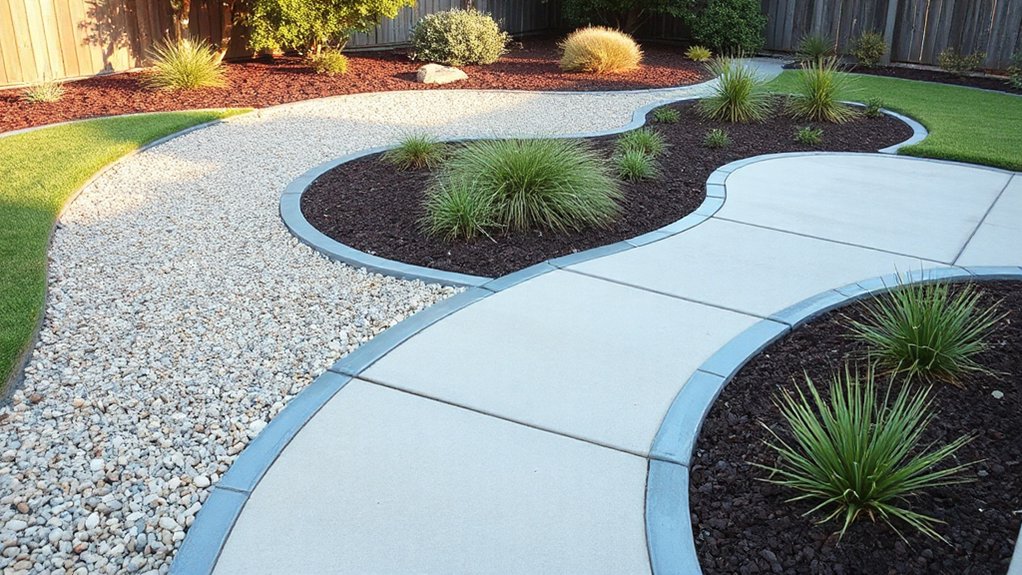
Once you define where people actually walk, the rest of the bed stays cleaner and needs less fussing. Lay firm walking pathways with decomposed granite, pea gravel, or pavers so feet don’t compact soil or snap stems. Keep paths 30–36 inches wide for easy passing, and crown gravel slightly for drainage.
Add edging to stop grass creep and mulch spillover, and you’ll trim less. Steel, aluminum, or stone gives crisp lines that sharpen Garden aesthetics; set it flush or slightly proud to catch gravel.
Use landscape fabric under gravel only where you’re not planting, then top with 2–3 inches of stone and a few larger “anchor” rocks at curves. You’ll sweep, not weed, and everything reads intentional.
Put Seasonal Chores on Autopilot With Routines
When you treat the calendar like a simple checklist, seasonal garden chores stop piling up and start happening on cue. Set repeating reminders for monthly walk-throughs: scan beds, tug small weeds, top up mulch, and rinse hardscape so everything stays crisp. Tie tasks to visual triggers—first buds mean feed, first heat wave means deep soak, first leaf drop means tidy edges.
Batch work into two 20-minute sessions each week and you’ll avoid marathon cleanups. Keep a notes card for seasonal planting windows, so you plug new color in right on time. Build pruning schedules around bloom cycles: clip spring bloomers after flowers fade, shape summer shrubs in late winter.
Store tools by the door, sharpen quarterly, and you’ll actually use them.
Conclusion
When you plan first, shrink the lawn, and pick climate-tough plants, your garden starts caring for itself. Build soil, run drip on a timer, and blanket beds with mulch so weeds don’t get a foothold and moisture stays put. Define edges, add gravel or clean paths, and you’ll trim, not wrestle. Keep a simple seasonal routine, and everything stays polished—like a well-tailored jacket—without constant fuss.