
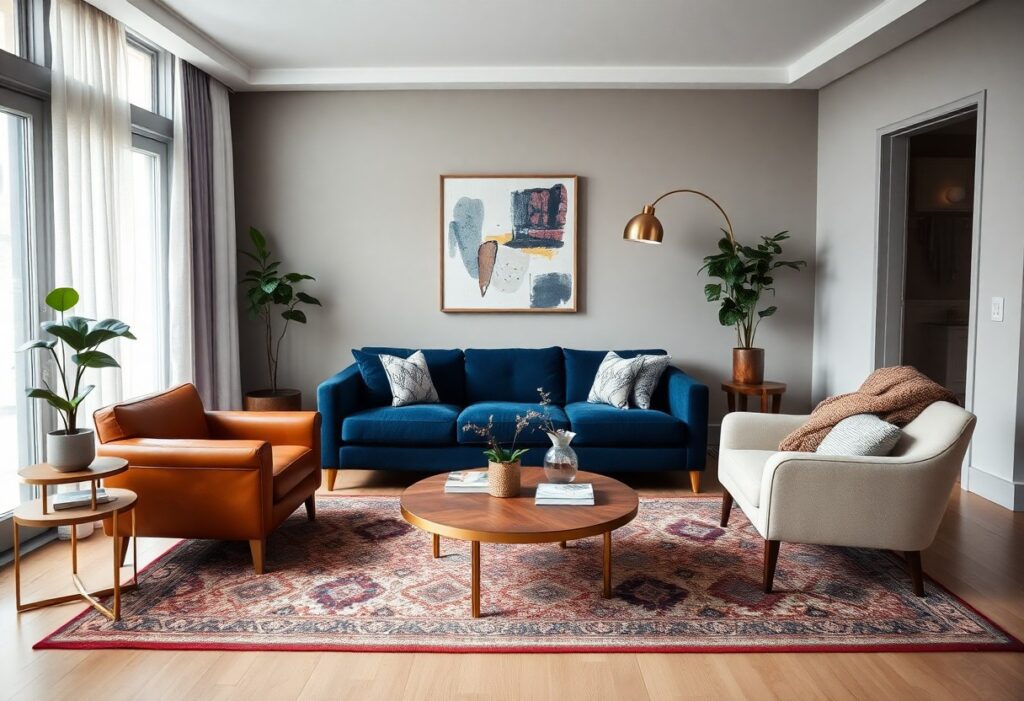

Matching your living room furniture doesn’t mean everything must match. You can combine styles, textures, and eras to create a dynamic space. The risk? A cluttered, chaotic look. But when done right, the result is a personalized, inviting room that reflects your taste and lives beautifully.
Key Takeaways:
- Choose a cohesive color palette to unify different furniture pieces, using one or two dominant colors with complementary accents to create visual harmony.
- Mix furniture styles intentionally by balancing proportions and textures-pair a modern sofa with a vintage coffee table to add character without clutter.
- Anchor the space with a focal point, like a rug or fireplace, then arrange furniture to support flow and conversation, ensuring each piece feels connected and purposeful.
Identifying Key Furniture Types and Design Styles
- Seating includes sofas, armchairs, and sectionals
- Storage pieces consist of cabinets, shelves, and media consoles
- Tables cover coffee, side, and nesting varieties
- Lighting ranges from floor lamps to statement pendants
- Textiles involve rugs, cushions, and drapes for softness
Recognizing
| Seating | Sofas and chairs define comfort and layout |
| Storage | Cabinets and shelves offer function and display |
| Tables | Coffee tables anchor seating arrangements |
| Lighting | Floor lamps add height and ambient glow |
| Textiles | Rugs tie color and zones together |
Distinguishing Between Anchor Pieces and Accent Elements
Your sofa or sectional acts as the room’s foundation, setting scale and tone. Accent elements like side chairs or decorative tables add personality without dominating. These smaller pieces allow flexibility and seasonal updates. Balance comes from pairing strong anchors with lighter accents. Recognizing
Categorizing Styles from Mid-Century Modern to Industrial
Mid-century modern favors clean lines and organic shapes with teak and walnut finishes. Scandinavian design emphasizes minimalism and light tones for warmth. Bohemian mixes patterns, textures, and global influences freely. Coastal style uses soft blues, whites, and natural fibers. Industrial leans into metal, exposed wood, and utilitarian forms. Recognizing
Each design style carries distinct materials, colors, and silhouettes that shape your room’s mood. Mid-century modern highlights tapered legs and geometric forms, often in rich wood tones. Scandinavian spaces feel airy with functional furniture and neutral palettes. Bohemian thrives on layered textiles and eclectic finds. Industrial spaces embrace raw finishes like steel beams and reclaimed wood, often with open shelving and minimal ornamentation. Recognizing these traits helps you blend pieces without clashing aesthetics.
Essential Factors for Curating a Cohesive Space
- Balance scale and proportion to avoid overcrowding or sparse layouts
- Ensure spatial flow allows easy movement and natural sightlines
- Align color palettes and material finishes across key pieces
- Reflect your personal style without sacrificing functionality
Design harmony stems from thoughtful coordination. Assume that
Analyzing Scale, Proportion, and Spatial Flow
Size matters when placing furniture. Oversized sofas can dominate small rooms, while tiny chairs disappear in large areas. Maintain balanced proportions between pieces and leave enough clearance for movement. Assume that
Utilizing Color Theory and Material Consistency
Color sets the mood and ties elements together. Pair complementary hues or stick to a single tonal family for calm cohesion. Mix materials like wood, metal, and fabric, but repeat at least one finish across multiple pieces. Assume that
Consistency in color and texture creates visual comfort. When you repeat a brass leg detail on a coffee table and lamp or echo a navy accent in both throw pillows and artwork, the room feels intentional. Clashing finishes or random colors disrupt the eye, while thoughtful repetition guides it smoothly from one element to the next.
Professional Tips for Balancing Contrasting Aesthetics
Design cohesion thrives when opposites attract with intention. Use color, texture, and scale to unify mismatched pieces. Anchor bold contrasts with neutral bases. Repeat materials across different styles for continuity. Thou can turn visual chaos into curated charm with thoughtful restraint.
- Color ties together disparate furniture styles
- Texture adds depth without clashing
- Scale ensures no single piece overwhelms
- Neutral bases ground high-contrast combinations
- Material repetition builds subtle harmony
The Rule of Three: Creating Visual Harmony
Grouping elements in threes brings natural balance to your layout. Choose one dominant piece and pair it with two supporting items of varying size or style. This rhythm prevents monotony while maintaining order. Thou can shape a dynamic yet cohesive arrangement effortlessly.
Bridging Disparate Eras with Unified Hardware and Finishes
Hardware acts as a silent connector between old and new. Matching knobs, pulls, or metal finishes across vintage and modern pieces creates subtle unity. Even mismatched furniture feels intentional when details align. Thou can erase jarring contrasts with one consistent touch.
When blending furniture from different decades, focus on the small touches that speak volumes. Replacing drawer pulls on a mid-century dresser to match those on a contemporary sideboard instantly links the two. Polished brass or matte black finishes, repeated across cabinets, tables, or shelves, serve as a visual thread. This method lets contrasting silhouettes coexist without conflict, proving that consistency in detail overpowers disparity in form. Thou can master era-blending by designing with hardware as a unifying force.
Step-by-Step Process for Mixing Furniture
Follow this structured approach to blend pieces confidently and create a cohesive yet dynamic living room.
| Assess Your Space | Measure dimensions and note architectural features like windows or fireplaces. |
| Choose a Focal Point | Select one dominant element-like a sofa or entertainment unit-to anchor the layout. |
| Mix Styles Thoughtfully | Combine no more than two primary design styles to avoid visual clutter. |
| Balance Proportions | Pair large furniture with smaller accent pieces to maintain visual harmony. |
| Unify with Color or Material | Use a consistent finish, hue, or fabric to tie diverse items together. |
Selecting a Dominant Focal Point to Anchor the Room
Your eye needs a place to land first. Choose one strong piece-like a bold sectional or a fireplace-to serve as the room’s anchor. This decision shapes furniture placement and ensures all other elements support, not compete with, the center of attention. Without this anchor, the space risks feeling scattered and unfocused.
Layering Complementary Textures and Secondary Seating
Introduce variety by adding chairs, ottomans, or benches in differing materials. A velvet accent chair beside a leather loveseat adds depth without clashing. Textures soften transitions between styles and invite touch, making the room feel lived-in and welcoming. Keep scale in mind to maintain balance.
Layering isn’t just about looks-it’s about function and feel. Mix a woven rattan side chair with a plush fabric chaise to create contrast that excites the senses. Incorporate secondary seating where conversation flows naturally, like near the coffee table or beside a reading nook. Well-placed pieces expand usability without overcrowding, giving guests options while reinforcing the room’s personality.
Analyzing the Pros and Cons of an Eclectic Approach
Blending styles can transform your living room into a dynamic, expressive space. Yet, it demands thoughtful execution to avoid chaos. The eclectic approach rewards creativity but requires discipline to maintain harmony across diverse pieces.
| Pros | Cons |
|---|---|
| Encourages unique personal expression | Risk of visual clutter |
| Creates timeless, evolving designs | Hard to maintain cohesive narrative |
| Allows use of inherited or vintage pieces | Can appear disjointed without planning |
| Offers flexibility in sourcing furniture | May confuse design intent |
| Reduces reliance on trends | Challenging to balance scale and proportion |
| Supports sustainable decorating choices | Higher time investment in curation |
| Invites creative risk-taking | Potential for clashing colors or textures |
| Reflects layered, lived-in comfort | Difficult to replicate consistently |
| Enhances storytelling through decor | May overwhelm guests or residents |
| Adaptable to changing tastes | Requires strong editing skills |
Advantages of Personalized Expression and Timeless Design
You gain the freedom to showcase who you are through furniture that tells a story. Eclectic spaces resist fleeting trends, evolving naturally over time. This authenticity creates warmth and depth few curated rooms achieve.
Challenges of Avoiding Visual Clutter and Narrative Disjointment
You must balance variety with restraint. Without a unifying thread-like color, material, or era-your room can feel random. Too many competing elements break the visual flow, making the space uncomfortable to inhabit.
Clutter often sneaks in when every piece demands attention. To prevent this, assign focal points and let secondary items support them. Use consistent finishes or repeating shapes to link disparate furniture. Without intentional editing, even beautiful pieces can work against each other, turning character into confusion. Your goal isn’t uniformity-it’s harmony through thoughtful contrast.
Conclusion
So you’ve learned how to balance style, scale, and function when combining living room furniture. You now know how color, texture, and layout shape a cohesive space. With these principles, you can confidently create a living room that reflects your taste while remaining comfortable and inviting.
FAQ
Q: How do I choose a cohesive color palette when mixing living room furniture?
A: Start by selecting a base color from a large element like your sofa or rug. Build around it using complementary or contrasting shades from the same color family. For example, if your sofa is a deep navy, add accent chairs in soft gray or warm beige. Use throw pillows, artwork, or a coffee table book stack to introduce a third color that ties everything together. Test fabric swatches and paint samples in your space at different times of day to see how natural and artificial light affect the tones. A balanced palette feels intentional without looking too matchy-matchy.
Q: Can I mix different furniture styles in the same living room?
A: Yes, mixing styles like mid-century modern, farmhouse, and industrial can create a dynamic and personal space. The key is to find a unifying element-this could be a shared material, such as walnut wood, or a consistent finish like matte black metal. Keep proportions in mind so one piece doesn’t overpower the room. A Scandinavian sofa might pair well with a rustic oak coffee table if both have clean lines and minimal ornamentation. Anchor the look with a common thread, like a neutral area rug or a repeated shape in the decor.
Q: What should I consider when combining different furniture sizes and shapes?
A: Scale and arrangement matter more than matching every piece. A large sectional can work with a delicate glass-top side table if there’s visual balance-perhaps the table has a bold base or sits beside a large floor lamp that gives it weight. Avoid clustering too many small items together, which can look cluttered, or placing oversized furniture in a tight space, which can feel cramped. Arrange seating so people can talk comfortably, with coffee tables within arm’s reach. Try sketching your layout or using painter’s tape on the floor to test furniture placement before moving anything.