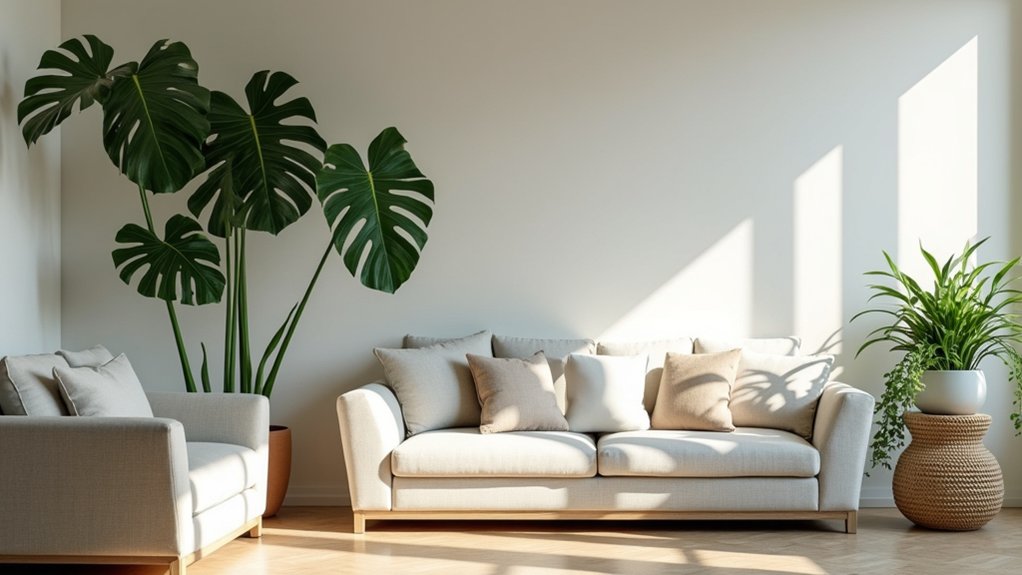

Houseplants are your home’s punctuation marks, signaling where the eye should pause. You’ll get the best look when you match foliage to your actual light, not your wishful one. In dim rooms, snake plants, pothos, and ZZ plants keep lines clean without demanding sun. For blank corners, you can sharpen the layout with a Monstera or Bird of Paradise. But placement is the difference between styled and cluttered—so start here…
Match Houseplants to Light and Room
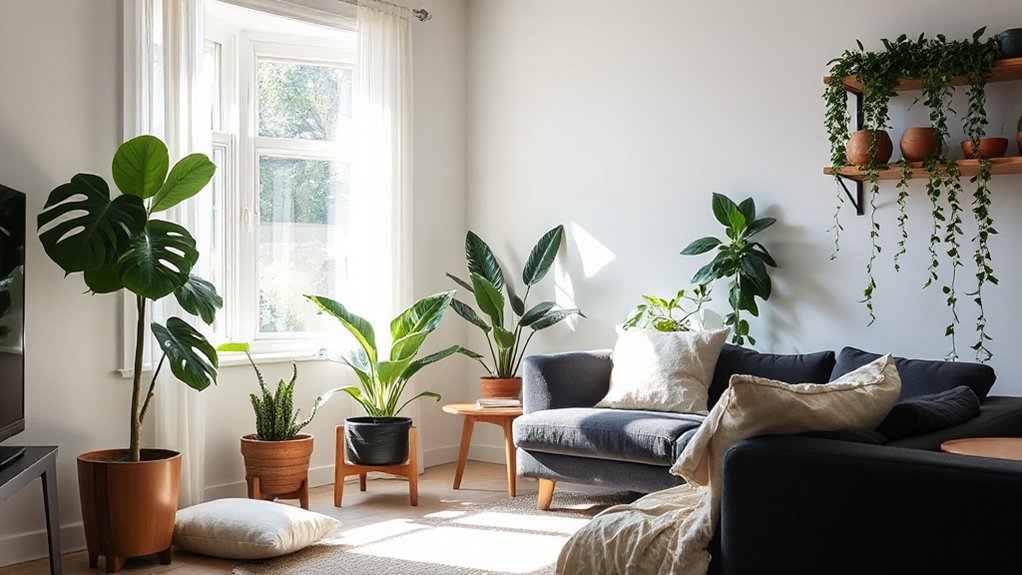
Because every room has its own light “personality,” you’ll get the most stylish (and low-maintenance) results when you match plants to what the space already gives you.
In a bright, south-facing living room, style a fiddle-leaf fig or rubber tree as a sculptural corner anchor; keep it off the walkway so leaves don’t snag.
For east windows, place a pothos or peperomia on a floating shelf to save floor space and trail cleanly.
In kitchens with shifting light, cluster herbs near the sink so soil and watering stay effortless and drips are contained.
In humid bathrooms with a window, hang a fern high to free counter space.
Plan plant propagation by placing cuttings near the same window so they root reliably.
Stylish Low-Light Houseplants (No Sun Needed)
Even if your apartment barely gets direct sun, you can still style greenery that looks intentional and stays easy-care. Reach for ZZ plants, snake plants, pothos, and cast-iron plants; they read modern, tolerate shade, and won’t sulk in a hallway or north window.
Keep silhouettes clean by using matte pots and slim saucers that fit on shelves, nightstands, and kitchen ledges.
Control soil moisture with a simple rule: water only when the top couple inches feel dry, then drain fully to avoid soggy roots.
Rotate plants monthly so growth stays even under lamps.
For plant propagation, snip pothos or philodendron nodes, root them in water, then pot up for a coordinated, low-light vignette.
Add a small grow bulb if winter dims fast.
Statement Houseplants for Empty Corners
If you’ve got an empty corner that reads “afterthought,” anchor it with a tall floor plant that adds height without eating up square footage.
You can sharpen the look with sculptural leaf statements—think bold silhouettes that act like living decor against a blank wall.
If that corner stays dim, you’ll still have low-light picks that bring presence without demanding a sunny window.
Tall Floor Plants
When a room feels finished but one corner still looks empty, a tall floor plant steps in as instant architecture—adding height, texture, and a lived-in vibe without stealing square footage.
Choose an Indoor tree with a narrow footprint, then let it pull the eye up so ceilings feel higher and the layout feels intentional.
Place it in a slim pot with a raised stand to keep visual weight light, and tuck it where traffic won’t brush the stems.
You’ll get vertical greenery that softens hard lines next to bookcases, media consoles, or a reading chair.
Match the planter to your hardware—matte black, warm brass, or stone—to keep the look cohesive.
Rotate monthly for even growth, and group a small uplight behind it for night-time drama.
Sculptural Leaf Statements
A tall floor plant gives you height, but a sculptural leaf plant gives that empty corner personality—like living decor that reads as art. Go for bold silhouettes: Monstera, Alocasia, Bird of Paradise, or a split-leaf philodendron. Their graphic leaves fill visual space without crowding your footprint, especially in a slim pot and elevated on a low stand.
Style it like furniture: angle leaves toward the room, keep 6–12 inches off the wall for airflow, and add a pebble tray to protect floors.
For Plant pet safety, place toxic varieties out of reach or choose pet-friendlier options before you buy. Nail seasonal plant care: brighter months mean more water and feeding; winter calls for less, plus dusting leaves for sheen.
Low-Light Corner Picks
Even in a dim corner, you can still land a statement look by choosing plants that read bold without demanding sun. Start with a tall ZZ plant or cast-iron plant to anchor the space; their upright lines look intentional beside a sofa or console.
For a softer silhouette, try a parlor palm, or tuck a snake plant into a slim cylinder planter to save floor area.
Keep styling crisp: use one oversized pot, not many small ones, and add a warm uplight for gallery vibes.
Watering matters in low light—check Soil moisture before you pour, since growth slows.
For Plant propagation, take pothos cuttings and trail them from a corner shelf to visually stretch the height. Rotate monthly for even form.
Trailing Houseplants for Shelves and Hangers
If your shelves feel a bit flat, you can add instant movement with trailing houseplants that spill over edges and soften hard lines.
You’ll get the best results by choosing compact favorites like pothos, heartleaf philodendron, string of pearls, or a lipstick plant, then placing them where light hits evenly and the vines can hang free.
Keep care low-fuss with well-draining soil, a pot with drainage, and a simple routine: water when the top inch dries, rotate for balanced growth, and trim to keep the look clean and space-smart.
Best Trailing Plant Picks
When you want big visual impact without giving up floor space, trailing houseplants deliver instant “styled” energy from a shelf edge, curtain rod, or hanging planter. Go for satin pothos for silvery, high-contrast drape, or heartleaf philodendron for glossy vines that read modern and minimal.
If you love a sculptural look, string of pearls turns negative space into a design feature, while lipstick plant adds bold, swipe-of-color blooms.
For Pet safe plants, choose spider plant or a trailing peperomia; both look polished and stay approachable in small apartments.
You can also lean into Plant propagation: snip node cuttings, root them in water, and replant to thicken your cascade and keep the silhouette intentional.
Placement And Care Tips
A few smart placement tweaks make trailing houseplants look designer and grow better. Set them where vines can cascade without snagging: the outer edge of a shelf, or a ceiling hook centered over open floor space. Keep them 12–24 inches from bright windows for soft light, and rotate the pot weekly so growth stays even.
Choose a planter with a saucer that fits tight ledges, or use a cachepot to hide plastic nursery pots for a cleaner look. Prioritize soil drainage: pick a chunky mix and never let roots sit in runoff.
For plant watering, check the top inch; water thoroughly, then empty the saucer. In hangers, use a drip tray insert or a watering bulb to prevent spills and stains.
Tabletop Houseplants for Desks and Side Tables
Although your desk or side table may only offer a few square inches of real estate, the right tabletop houseplant can still deliver a big style payoff without crowding your workflow. Choose compact, graphic silhouettes like a mini snake plant, peperomia, or a small pothos cutting in a slim cylinder vase for a modern, editorial look.
Keep scale tight: a 3–4 inch pot, matte ceramic, and a saucer that won’t ring wood. Prioritize Plant pet safety by skipping toxic picks if cats or dogs hop up; opt for peperomia or a small parlor palm instead.
For seasonal plant care, tweak water and light—less in winter, more in bright summer—so leaves stay crisp, not stretched. Add a discreet self-watering insert to prevent desk-side spills.
Place Houseplants: Height, Groups, and Balance
Even if your room’s footprint feels tight, you can make houseplants look intentional by designing with height, grouping, and visual balance.
Start with plant height: anchor a corner with a tall fiddle-leaf fig or palm, then step down to mid-height options on a stool, and finish with a low tray of succulents. This tiered “plant ladder” feels modern and saves floor space.
Use grouping techniques to avoid a scattered look. Cluster three to five plants with similar light needs, vary leaf shapes, and repeat one pot color for cohesion. Keep odd numbers, and leave negative space so the vignette can breathe.
Balance the room by mirroring visual weight—pair a tall plant with a wider, bushier plant across the axis, not identical twins.
Conclusion
You don’t need a bigger home to make it feel styled—you need the right plants in the right light. Start with low-light staples like snake plant or ZZ, then add one bold corner piece and a trailing vine to soften shelves. Keep tabletops tight with mini options so your space stays breathable. Here’s the kicker: studies show indoor plants can reduce stress by up to 37%, turning your rooms into calmer, cooler everyday retreats.