
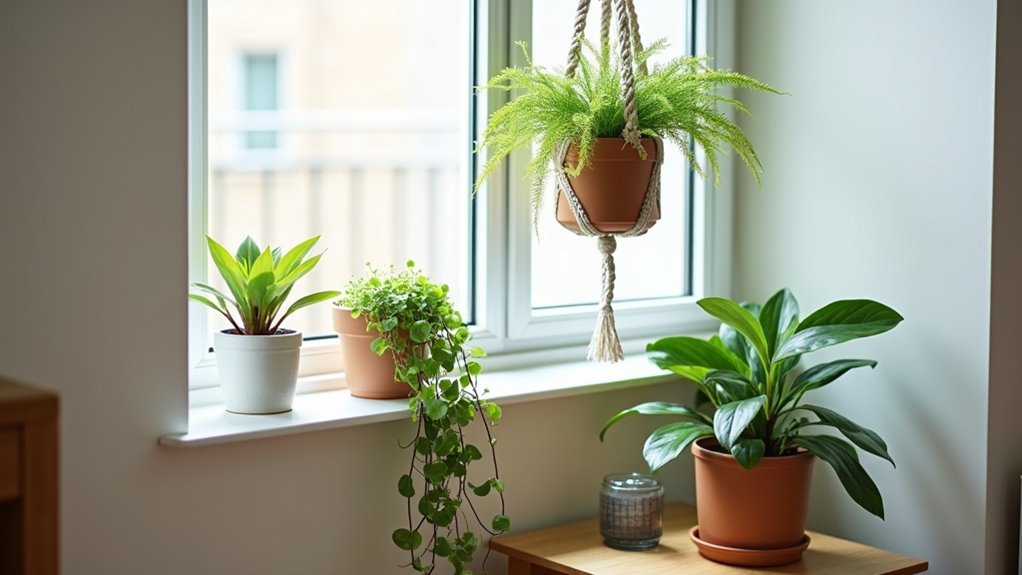

In a small room, every inch has to earn its keep. You can still add greenery without crowding your shelves if you choose compact, low-light plants like snake plant, pothos, or ZZ and pair them with slim pots or wall-mounted planters. Place a trailing plant high, group three small plants for a clean look, and rotate one seasonal accent to keep it fresh. Next, you’ll want to match plants to your light and pets…
How to Pick Indoor Plants for Small Spaces
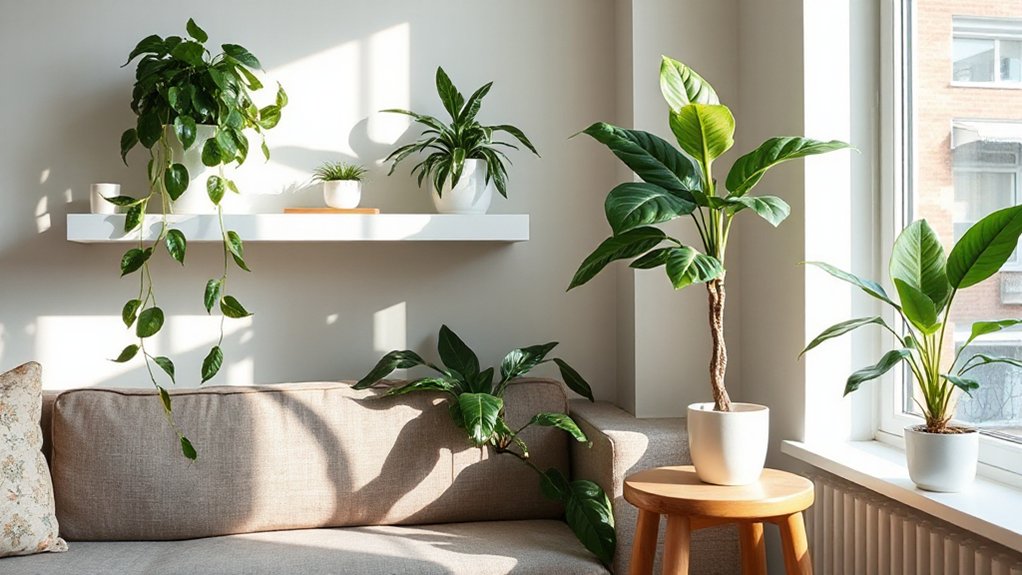
Although you might love the look of a jungle corner, the best small-space plants match your light, your habits, and your available surfaces. Start by measuring window direction, then pick plants that stay compact or trail so you can use shelves, rails, and hanging hooks instead of floor space.
Choose one “statement” pot, then repeat one or two smaller planter styles to keep your indoor garden looking intentional, not cluttered.
Match care to routine: if you travel, pick drought-tolerant options; if you’re home daily, choose thirstier plants. Check mature size and root vigor, and favor slow growers you won’t repot often.
Build in backups with plant propagation—snip cuttings, root them in water, and swap in fresh starts when a plant outgrows its spot.
Best Low-Light Small-Space Houseplants
Low light doesn’t have to limit your plant list—it just changes what you choose and where you place it. Start with snake plant or ZZ plant for sleek vertical lines and near-forgetful care; both handle dim corners and support Air purification in tight rooms.
Add pothos on a high shelf so vines trail instead of spreading across surfaces, or tuck a cast-iron plant behind a chair where it won’t snag foot traffic.
Keep containers narrow: tall cylinders, wall pockets, or a slim windowsill trough. Water less than you think—let soil dry, then soak and drain.
For Seasonal varieties, rotate a small peace lily or heartleaf philodendron between rooms to refresh the look without buying more pots. Dust leaves monthly so they photosynthesize efficiently.
Best Bright-Light Small-Space Houseplants
If you’ve got a bright window, you can keep your plant choices small, sculptural, and easy-care. Start with sun-loving succulents that thrive in tight pots and look sharp on shelves or sills.
Then add compact foliage favorites that stay tidy while giving you bold texture and color in minimal space.
Sun-Loving Succulents
Three things make sun-loving succulents perfect for small spaces: they stay compact, look sculptural, and thrive on bright windowsill light. You’ll get maximum style from minimal footprint, especially when you group a few rosettes or spiky forms on a narrow tray or shelf.
Choose Sun loving succulents like echeveria, haworthia, aloe, or small cacti for crisp lines and modern texture. Use shallow pots with drainage and gritty mix, then water only when soil dries completely.
Rotate weekly so growth stays even, and keep leaves dust-free for better light capture. To save space, try a wall-mounted planter or a tiered stand, and stick to one color palette of pots so the display looks intentional.
They’ll read like vibrant desert plants indoors.
Compact Foliage Favorites
Where do you get lush, leafy impact without sacrificing precious square footage? Choose compact foliage plants that thrive in bright light and keep their shape. Try a Bird’s Nest Fern for glossy, upright fronds, or a Peperomia obtusifolia for thick leaves that stay tidy on a windowsill.
Fit a dwarf rubber plant (Ficus elastica ‘Tineke’) in a slim pot and let its variegation do the decorating.
To maximize style, go vertical: mount small pothos or heartleaf philodendron in wall planters for Vertical gardens, and train vines along a window frame.
Use narrow stands, hanging baskets, and self-watering pots to reduce clutter and missed waterings. You’ll get Urban jungles vibes without crowding your walkways.
Best Compact Indoor Plants for Desks
If your desk gets weak light, you can still style it with compact plants that stay neat and upright.
You’ll also want minimal-water picks that handle missed watering without looking tired.
And if pets roam your workspace, you can choose pet-safe greens that keep your setup polished and worry-free.
Low-Light Desk Plants
Even when your desk sits far from a window, you can still style it with compact plants that handle low light and stay tidy. Choose a ZZ plant, pothos cutting, or small snake plant; they keep crisp silhouettes without crowding your keyboard.
For a polished look, use plant container choices that fit tight corners: slim ceramic cylinders, low bowls for trailing stems, or self-standing cachepots that hide nursery pots. Match finishes to your setup—matte white, concrete, or black metal reads clean and modern.
Place plants where they won’t brush your monitor, and rotate them weekly so growth stays even. For Indoor plant care, wipe leaves to boost light capture and keep dust off your workspace. Add a pebble tray for a neat, finished base.
Minimal-Water Desk Options
Low light isn’t the only desk challenge—watering schedules can get messy fast in a small workspace. Choose compact, minimal-water plants that stay tidy and still boost your aesthetic appeal.
Try a small ZZ plant in a matte cylinder pot; it tolerates missed waterings and keeps a glossy structure without spreading.
A haworthia or compact jade fits in a 3–4 inch pot, stores water in its leaves, and looks sharp beside monitors.
If you want trailing lines without drips, go for a small pothos cutting in a self-watering mini planter, and top off monthly.
Use a narrow saucer, gritty soil, and bottom-water to avoid splashes.
Your desk stays clean, and your indoor air feels fresher, too.
Pet-Safe Desk Greens
Because curious paws and noses treat your desk like a buffet, choose compact greens that look polished and stay non-toxic. Try a petite spider plant in a slim cylinder pot, a prayer plant that stays low and graphic, or a small peperomia with thick, tidy leaves.
Keep them in weighted planters so a tail swipe won’t tip them, and use a self-watering insert to avoid soggy trays. Place plants toward the back corner and route cords with clips to reduce chew targets.
Skip Toxic plant varieties like pothos, philodendron, and peace lily if your pet samples foliage.
If you need more style without risk, add Non plant decorative accessories: a stone coaster, mini tray, or sculptural pen cup.
Best Indoor Hanging Plants for Small Spaces
When floor space is tight, hanging plants let you add lush greenery without sacrificing a single inch of your shelves or walkways. Try pothos, heartleaf philodendron, or string of pearls for instant drape and high style.
Mount ceiling hooks into studs, or use tension rods in windows for renters. Choose lightweight coco liners or self-watering hanging pots so you won’t drip on furniture; smart container selection techniques keep soil stable and watering simple.
Place hangers near bright, indirect light, and rotate weekly for even growth.
For indoor plant propagation, snip vine cuttings, root them in water, then tuck them back into the basket to thicken the cascade. Keep trails trimmed to avoid clutter and tangles.
Best Pet-Safe Indoor Plants for Small Spaces
Hanging baskets may save floor space, but if you share your home with curious cats or dogs, you’ll want greenery that won’t turn a nibble into a vet visit. Start by checking labels and researching Toxicity concerns before you buy, especially with lookalike plants.
For pet friendly varieties that suit tight quarters, try a compact spider plant on a shelf, a Boston fern in a corner stand, or a small parlor palm beside your sofa.
Prefer a clean, modern vibe? Add a peperomia on a windowsill or a prayer plant on a narrow console; both bring bold pattern without spreading out.
Keep planters in wall-mounted brackets or slim cachepots, and rotate pots so leaves face the light and stay evenly shaped.
Low-Maintenance Indoor Plants for Small Spaces
Even if your square footage is tight, you can still add greenery that looks polished without demanding constant care. Choose hardy plants like snake plant, ZZ plant, pothos, or cast-iron plant; they tolerate low light and missed waterings, so you won’t babysit them. Let the soil dry between drinks, and you’ll avoid gnats and root rot.
For extra value, pick varieties known for air purifying benefits, especially snake plant and pothos, to help your room feel fresher.
Keep upkeep simple: wipe leaves monthly, rotate pots occasionally, and use a slow-release fertilizer a few times a year.
Finish with decorative container choices that fit your decor and won’t waste space—slim cylinders, small self-watering planters, or lightweight ceramic-look pots.
Small-Space Plant Styling Tips (No Clutter)
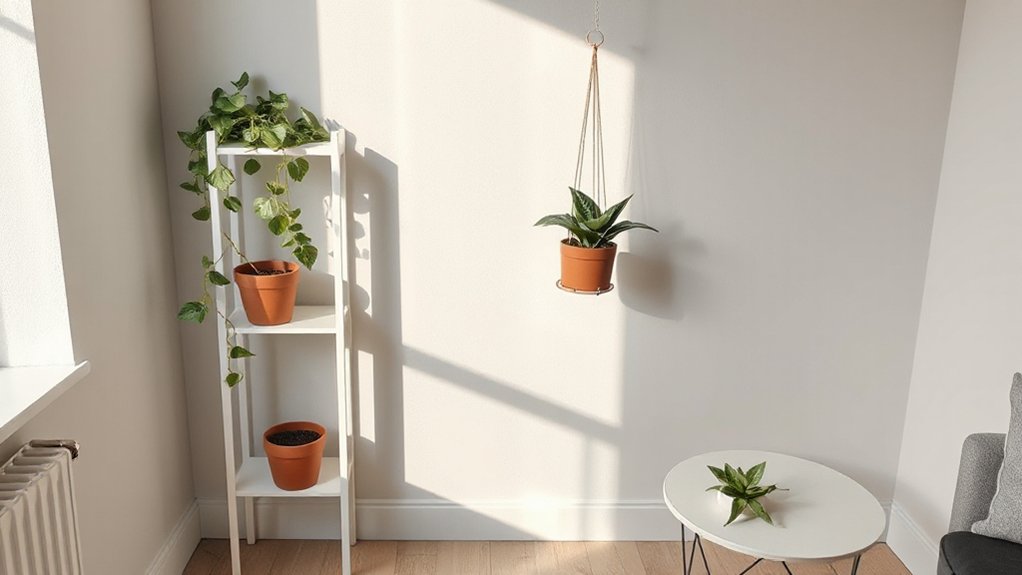
Although your room may not have spare surfaces to burn, you can still style plants so they read as intentional decor—not visual clutter—by limiting yourself to a tight palette of planters, repeating one or two plant shapes, and placing greenery in “dead zones” like corners, window ledges, and the space above cabinets instead of scattering pots across every flat spot.
For Indoor plant decor, think in vertical layers: hang a trailing pothos, mount a slim wall shelf for a single statement plant, or use a tall stand to lift foliage off the floor.
Group plants in threes with one height “hero,” one medium, one low, then leave breathing room. Match pot finishes to your hardware for cohesion. Rotate plants seasonally instead of adding more. These plant arrangement tips keep everything tidy and styled.
Conclusion
You don’t need a big home to get big plant impact. If you think plants will just clutter your space, you can keep it clean by going vertical—hang pothos, mount planters, or use slim pots on ledges. Pick tough, compact favorites like snake plants, ZZ plants, or pet-safe options where needed, and stick to a simple trio for a styled look. Rotate one “seasonal” plant, and you’ll stay fresh without fuss.