
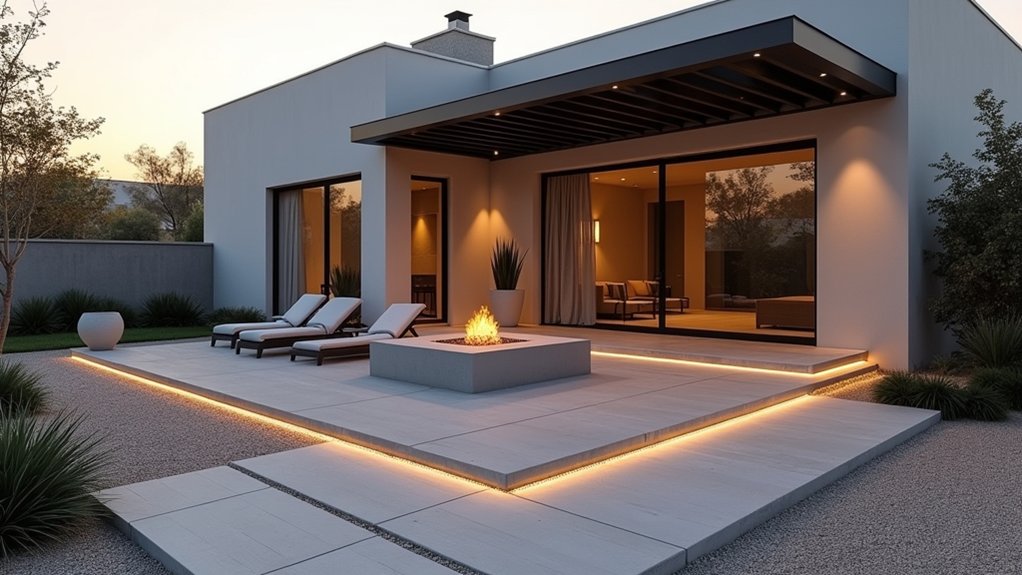

The fastest way to make an outdoor space look modern isn’t buying new furniture—it’s zoning it like a well-designed room. You’ll map clear areas for dining, lounging, and cooking, then use planters, low walls, and greenery to guide flow and add privacy without clutter. Stick to weather-proof materials and clean-lined pieces in calm neutrals, then control the mood with layered lighting. Next, you’ll choose the one element that makes it feel designed, not decorated…
Map Zones, Flow, and Privacy Outdoors
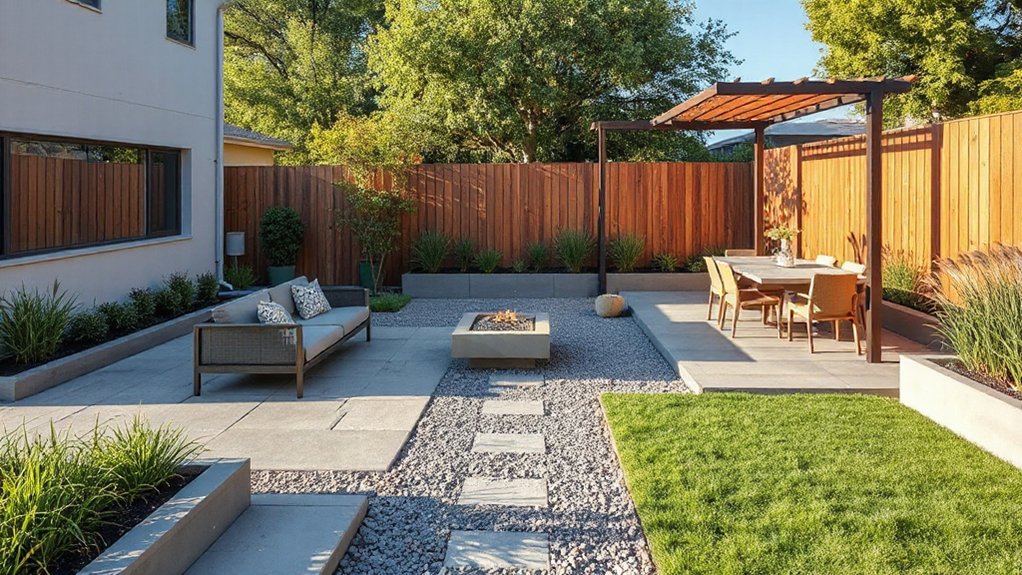
Before you buy furniture or plant a single shrub, map your outdoor space into clear zones—dining, lounging, cooking, and circulation—so everything feels intentional and easy to use. Use Zoning strategies that mirror how you actually live: keep cooking close to the house, push lounging toward the best view, and reserve a direct path from doors to gates.
Sketch traffic lines first, then size each zone so chairs pull out without blocking movement. Create thresholds with planters, low walls, or a change in level to signal purpose without clutter.
For Privacy solutions, angle seating away from neighbors, screen sightlines at eye level, and layer greenery to soften edges while maintaining airflow. You’ll get a modern layout that feels calm, efficient, and social.
Choose Modern Outdoor Materials First
Start by choosing durable, weather-ready materials that won’t warp, fade, or crack under real outdoor use.
You’ll get a cleaner modern look when you mix warm natural textures like wood or stone with industrial finishes like concrete, steel, or composite decking.
Keep the palette tight and the surfaces tough, and your whole layout will feel intentional and current.
Prioritize Durable Materials
Two choices determine whether your modern outdoor space stays sleek for years or looks tired after one season: material quality and weather resistance. Start with performance-grade seating and tables that won’t warp, fade, or crack under UV and temperature swings.
Specify weather resistant fabrics for cushions and umbrellas, and confirm they’re solution-dyed, quick-dry, and mildew-inhibiting. Choose powder-coated aluminum or high-density resin for frames, and insist on rust-proof hardware at every connection point to prevent stains and wobble.
Check welds, weight ratings, and warranty terms—premium brands back finishes for at least three to five years. Finally, pick decking or pavers with slip resistance and low porosity so they shed rain and stay clean with a quick rinse.
Mix Natural And Industrial Materials
Although clean lines define modern design, your outdoor space feels richer when you balance warm natural textures with crisp industrial finishes. Start with a modern base: powder-coated aluminum, steel edging, or concrete pavers for structure and longevity.
Then layer in teak, cedar, ipe, or stone to soften the look and keep it grounded. Pair a concrete dining table with woven chairs, or set a slatted wood bench against a black metal privacy screen.
Keep your palette restrained—charcoal, sand, and muted greens—so materials do the talking. Repeat each finish at least twice for cohesion, and vary scale: chunky stone with thin steel, smooth concrete with tactile wood grain.
Seal porous surfaces to prevent stains and fading outdoors.
Build a Modern Outdoor Color Palette
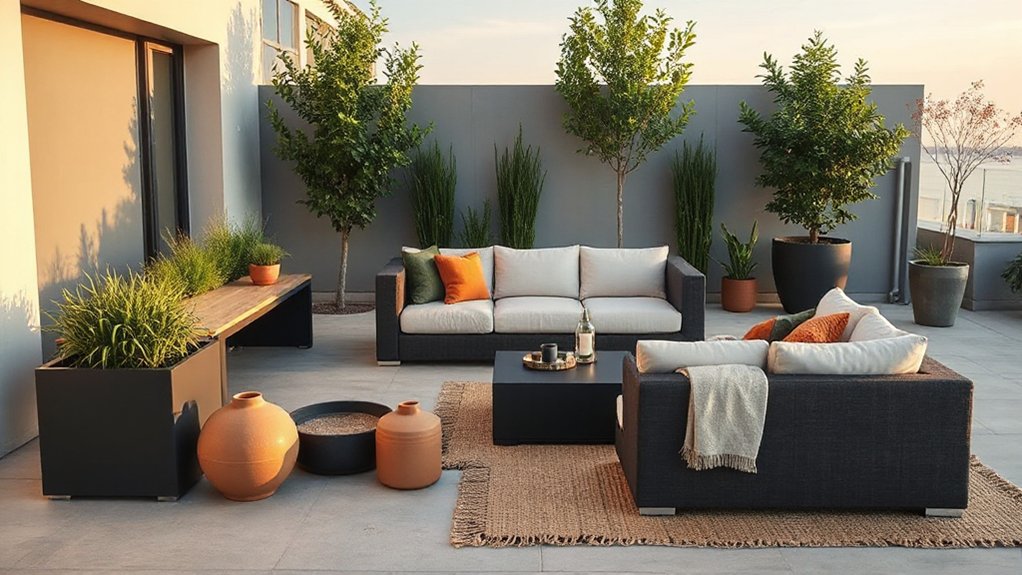
Start with a clean base neutral—think warm white, charcoal, or greige—to keep your outdoor space looking modern and cohesive.
Then layer in bold accent tones through cushions, planters, and rugs so you get impact without visual clutter.
Balance warm and cool hues to control the mood, keeping the palette crisp rather than chaotic.
Choose A Base Neutral
Before you layer in bold accents or statement pieces, lock in a base neutral that sets the mood for the entire outdoor space. Start by reading your surroundings: bright sun, deep shade, or lots of greenery will shift how neutrals look.
For a modern feel, build a neutral palette around warm greige, cool concrete gray, crisp off-white, or soft taupe. Choose base colors that repeat across large surfaces—pavers, decking, exterior paint, and key upholstery—so the space feels intentional, not busy.
Keep undertones consistent: pair warm neutrals with natural wood and brass, cool neutrals with black metal and slate. Test swatches outdoors at morning and dusk, and confirm they hide dirt and weathering well.
Your neutral should look sharp year-round.
Add Bold Accent Tones
Once your base neutral feels locked in, bold accent tones give your modern outdoor space its edge and help define zones without adding clutter. Pick one or two high-impact hues and repeat them with intent: a powder-coated chair frame, a single outdoor rug stripe, or a set of cushions.
Use color contrast to guide the eye and sharpen silhouettes against stone, concrete, or composite decking. Aim for clean, saturated options like matte black, cobalt, terracotta, or acid green, then keep the finish consistent for a curated look.
Limit accents to 10–20% of what you see from your main viewing angle, and cluster them in “moments” rather than scattering. If it reads busy, remove one item, not your statement color.
Balance Warm And Cool
Where does a modern outdoor palette go wrong fastest? When you lean all warm or all cool, the space feels either flat or harsh.
Fix it with balancing color: choose one temperature as your base, then layer the opposite in controlled doses. Start with cool anchors—charcoal pavers, black steel, slate planters—then add warm notes through teak, terracotta, or brass lighting.
Or reverse it: warm decking and sandstone, cooled down by crisp white cushions, gray concrete, and deep green foliage.
Aim for temperature contrast, not a tug-of-war: keep warm accents at 20–30% of the scheme, repeat them twice, and match undertones (yellow-warm with olive, blue-cool with pine).
Your modern look stays clean, alive, and intentional.
Select Modern Outdoor Furniture With Clean Lines
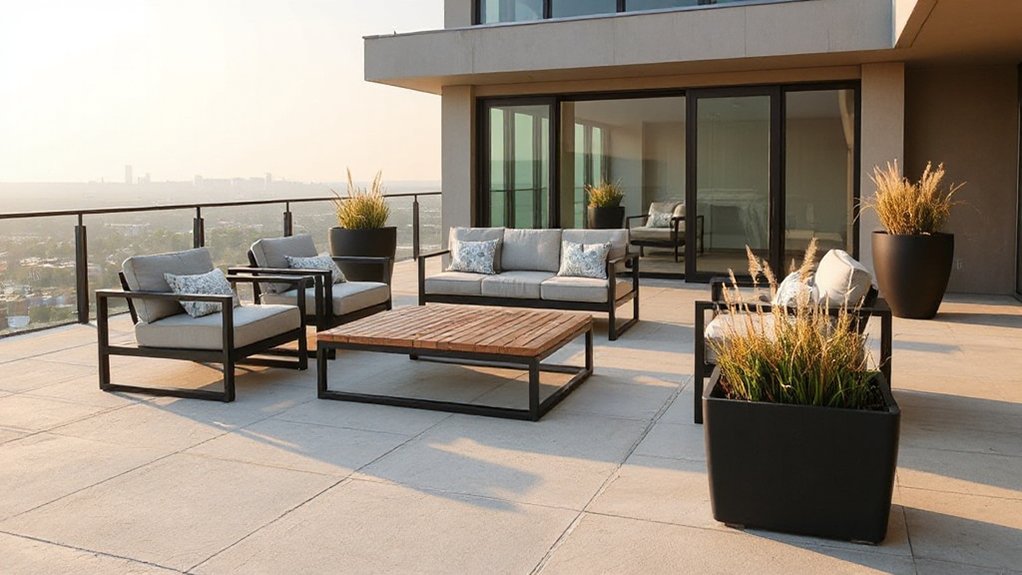
Although your patio layout sets the stage, modern outdoor furniture with clean lines delivers the sharp, current look that makes the space feel intentional. Choose low-profile seating with a sleek silhouette—think straight arms, slim legs, and tight cushions that won’t slump.
Prioritize minimalist aesthetics by limiting pieces to what you’ll actually use: a compact sectional, two lounge chairs, and a simple dining set. Stick to matte powder-coated aluminum, teak with squared edges, or all-weather wicker in crisp, geometric weaves.
Keep upholstery tailored in solid neutrals, then add contrast through one bold, structured accent chair. Measure circulation paths so furniture floats with purpose, not clutter.
Finish with nesting tables or a linear bench to maintain flexibility.
Layer Modern Outdoor Lighting for Nights
Clean-lined furniture looks its best after dark when you light it with the same restraint and intention.
Start with ambient illumination: run warm-white string lights in straight, architectural lines along a pergola beam or fence top to define the space without visual clutter.
Add task lighting where you’ll move and work—low-glare step lights on paths and a focused wall sconce near the grill or prep counter.
Then layer accent light to create depth: place solar lanterns in pairs beside seating or at corners to “bookend” zones and soften hard edges.
Keep color temperature consistent (2700K–3000K) and dim wherever possible.
Hide fixtures, not light, and aim beams downward to reduce glare and keep the mood modern.
Use Greenery in a Modern, Minimal Way
To keep a modern patio feeling calm and intentional, treat greenery like structure, not decoration. Choose a tight plant palette—one to three species—and repeat it to create rhythm. Go for architectural shapes: agave, boxwood, olive, or grasses with clean lines.
Use minimalist plant pots in matte black, warm concrete, or powder-coated steel, and keep sizes consistent so the composition reads cohesive. Place pots in deliberate clusters of odd numbers, aligned to edges or sightlines rather than scattered.
For low-maintenance impact, build succulent arrangements with varied heights but a restrained color range. Keep pruning sharp, remove spent leaves, and hide irrigation so the look stays crisp.
If you need privacy, use tall planters with slim evergreen screens, not leafy chaos.
Add Modern Outdoor Accents That Feel Intentional
Once your greenery reads as structure, the accents should follow the same disciplined logic. Choose one or two statement pieces, not a scatter of décor.
Anchor sightlines with sophisticated sculptures in matte stone, powder-coated metal, or cast concrete, and place them where they’ll catch light or frame a view. Repeat finishes to build cohesion: black, warm white, brushed steel, or natural oak.
Use sleek planters in consistent shapes and scaled heights to echo your architecture; cluster in odd numbers for balance without clutter. Upgrade function with minimalist lanterns, low-profile seating, and a single outdoor rug with a tight weave.
Keep accessories modular, weatherproof, and easy to edit seasonally so the space stays crisp and current.
Conclusion
Now you’ve got the blueprint: zone your dining, lounging, and cooking areas, then tie everything together with durable materials, a tight palette, clean-lined furniture, layered lighting, and structured greenery. Here’s the payoff: the National Association of Realtors reports that outdoor kitchen upgrades can recoup about 100% of their cost at resale. Keep accents intentional, not cluttered, and you’ll get a modern space that looks current, works hard, and stays inviting in every season.