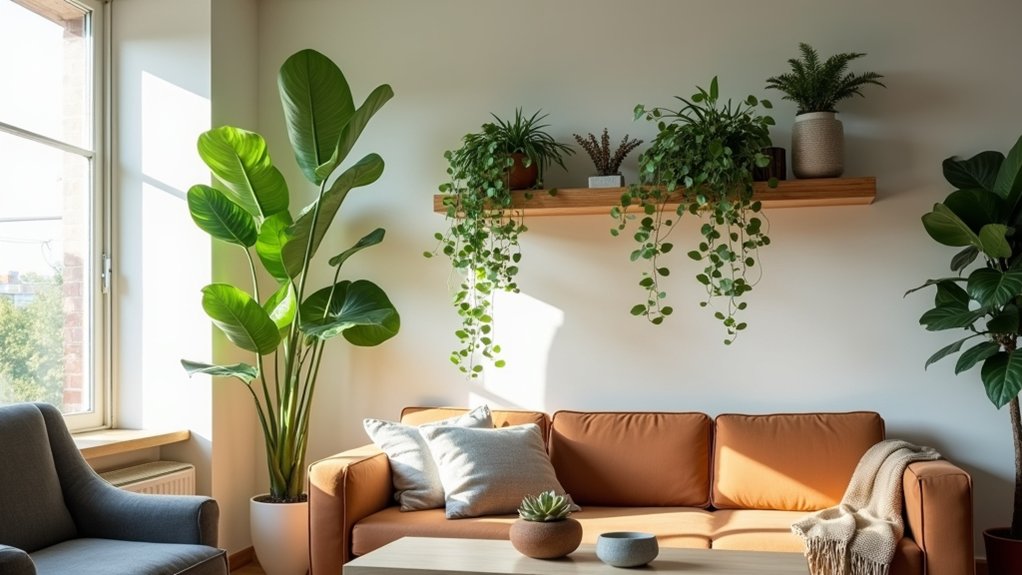

Like a museum curator deciding where each piece earns its spotlight, you’ll get the best effect when you place houseplants with purpose. Start with light: set sun-lovers by south or west windows and rotate them weekly. Use bold-leaf plants to anchor a focal point you can see from across the room. Balance tall plants near bookcases or windows, then layer smaller ones at varied heights on shelves and tables. Next, you’ll choose the exact zones that make it all click…
Start With Light for Houseplants
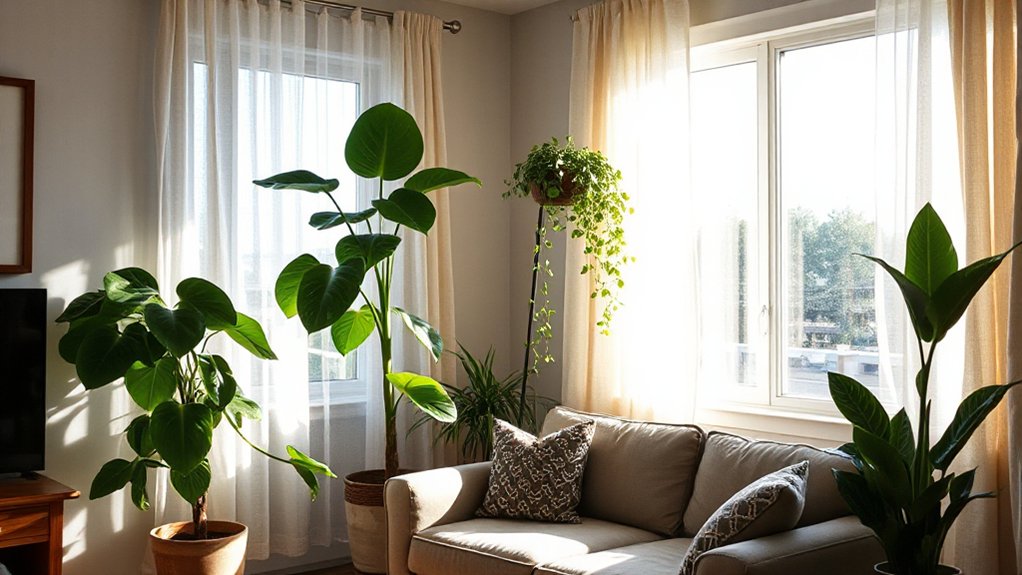
Before you move a single pot, map the light in your space, because it’s the one factor you can’t “fix” later with better soil or more water. Watch your rooms for a full day and note where sunbeams land, how long they linger, and which corners stay flat and dim. Track morning vs afternoon exposure; they behave differently and affect growth direction.
Use that map to place plants like you’d place art: highlight focal points without baking leaves on glass. Pull pots back from hot windows to soften glare, and rotate weekly so shapes stay symmetrical. Your plant care gets easier when light is steady, and your watering techniques get more precise because drying rates stop surprising you.
Match Houseplants to Bright, Medium, Low Light
Once you’ve mapped your natural light, match each plant to a clear category—bright, medium, or low—so it grows well without constant “rescue” care.
Put sun lovers like succulents, crotons, and citrus within a few feet of south or west windows; rotate weekly for even form.
Choose medium-light staples—pothos, philodendron, spider plants—for east windows or filtered light behind sheers, where foliage stays lush.
Use true low-light picks—ZZ, snake plant, cast iron plant—in interior corners, but keep expectations realistic: slower growth, less color.
Align plant care with light: brighter spots mean faster drying, so adjust watering techniques by checking soil depth, not the calendar.
In dimmer zones, water less, and prioritize drainage to prevent root rot.
Place Houseplants to Anchor a Focal Point
Although light and watering keep plants alive, placement makes them look intentional—so use houseplants to anchor a focal point in each room. Pick the feature you want noticed first: a fireplace, sofa, sideboard, or statement art. Then place one strong plant nearby to “underline” it, keeping the pot finish aligned with your metals or wood tones for cohesion.
Aim for Foliage focal points by choosing bold leaf shapes that read from across the room. Use Plant grouping when the focal point feels wide: cluster two or three plants with complementary textures and coordinated containers, leaving breathing room so each silhouette stays distinct. Keep sightlines clear and avoid scattering small pots; repetition looks deliberate, not accidental. This creates calm, styled focus fast.
Use Houseplants for Height and Visual Balance
Anchoring a focal point sets the “what,” and now you can use houseplants to fix the “how it feels” by adjusting height and balance across the room.
Start by mapping your sightlines: if your furniture sits low, add a taller plant to lift the eye; if ceilings feel lofty, cluster medium plants to prevent a hollow look. Vary plant height in stepped increments—short, medium, tall—so the room reads intentional, not chaotic.
Place taller plants near large, vertical elements like windows, curtains, or bookcases to reinforce proportion. Use pairs to calm busy corners, or offset one tall plant with two smaller ones to maintain visual harmony.
Keep spacing consistent so the composition looks edited, not scattered.
Style Shelves, Sills, and Tables With Houseplants
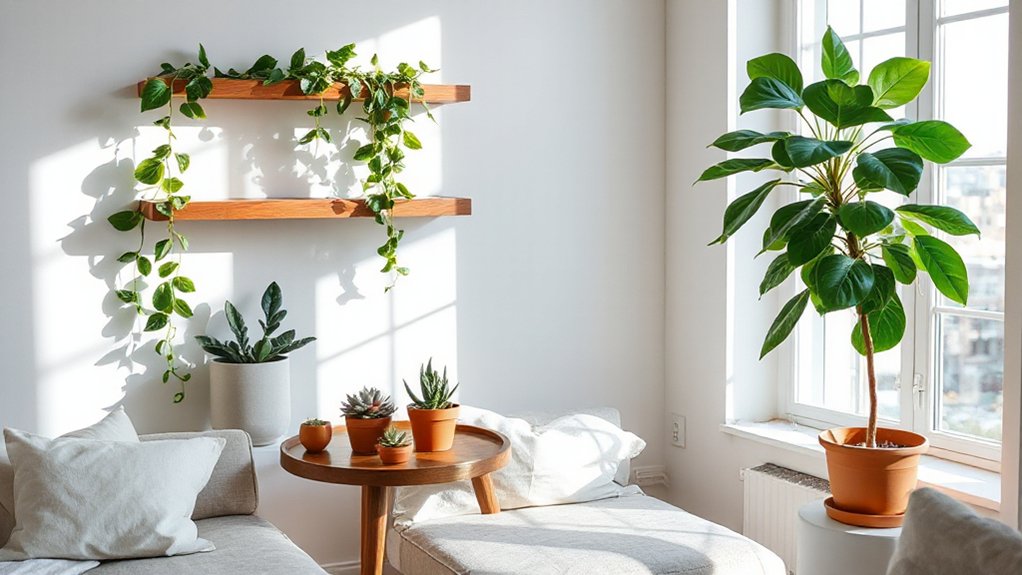
When you treat shelves, sills, and tables like curated display zones—not spare storage—houseplants instantly look intentional.
Start with a clear anchor: one larger plant in a substantial pot, then layer two to three smaller plants at staggered heights. Keep spacing tight enough to read as a vignette, but leave air around leaves so it doesn’t feel cluttered.
On windowsills, match plants to light and rotate weekly for even growth; good plant care is part of good styling.
On tables, use trays to corral pots and tools, and mix materials—ceramic, terracotta, glass—for contrast.
Add one non-plant accent (book, candle, or stone) to sharpen decorative arrangements.
Edit often, and swap pieces seasonally.
Conclusion
When you place houseplants with intention, you don’t just decorate—you shape the room’s balance. Start by matching each plant to its light, then build a focal point with bold leaves where your eye naturally lands. Add height near windows or bookcases, and layer smaller pots on shelves and tables for depth. One vivid stat: indoor plants can reduce airborne dust by up to 20%, so your greenery can look styled and feel cleaner.