


Most furniture-buying regrets start long before you swipe your card. You’ll want to measure your room and key walls, then check doorways, stairs, and traffic paths so nothing gets stuck or blocks flow. Set a budget with a buffer for delivery, assembly, and taxes, and choose a size that fits your space and daily routines. Then you can judge quality, maintenance, and comfort—but one quick check often changes everything…
Measure Your Room and Key Walls
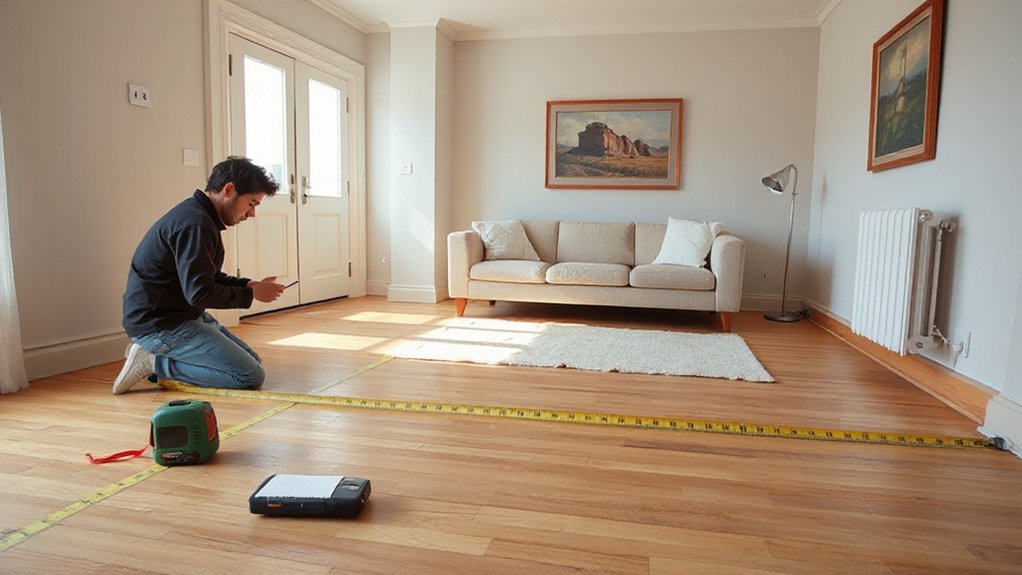
Before you buy anything, measure your room—and not just the overall length and width. Record ceiling height, window and radiator spans, and the clear wall sections where furniture can actually sit. Measure each key wall separately, noting trim, outlets, and vents so you don’t block access or force awkward cords.
Mark the location and size of artwork, mirrors, or TVs to plan decor placement and avoid crowded sightlines. Then map your intended layout at scale on graph paper or with painter’s tape on the floor.
Confirm the new piece’s footprint, plus clearance for drawers and recliners while stationary. Finally, check wall coordination: align heights of headboards, shelves, and media consoles with existing moldings and window lines.
Check Doorways, Stairs, and Traffic Paths
Even if a sofa fits your floor plan, it still has to make the trip from the curb to its final spot. Measure Doorway clearance at every entry point, including interior doors, elevator doors, and tight hallway turns. Don’t forget hinges, trim, and handrails; they steal inches. Compare those measurements to the item’s widest dimension, and ask whether legs, arms, or cushions detach to reduce bulk.
Next, map the route up stairs: check tread width, ceiling height at landings, and the angle of any switchback.
In the room, protect Traffic flow by leaving comfortable walking lanes around seating and between key zones like the door, coffee table, and media console. If the path feels pinched now, it’ll feel worse once you add furniture.
Set Your Furniture Budget (With a Buffer)
Once you know a piece can physically make it into your home and fit the traffic paths you’ve planned, set a spending cap that matches how long you expect it to last and how hard you’ll use it.
Start with budget planning: rank categories (sofa, bed, dining) by daily use and allocate more to the items you can’t easily replace. Define clear spending limits per item, then research typical price ranges so you don’t anchor on promotional “sale” tags.
Add a 10–20% buffer for delivery fees, assembly, fabric protection, taxes, and returns.
Decide upfront what you’ll compromise on—finish, brand, or extras—so you don’t downgrade core construction.
If financing, calculate total cost, not monthly payments, and keep the buffer intact.
Choose Furniture Size and Scale for the Room
Before you buy, you’ll want to measure your room’s length, width, ceiling height, and key obstacles like doors, windows, and vents.
Then choose pieces that match the room’s scale, so a large sofa doesn’t overpower the space and small tables don’t get lost.
Leave practical clearance for walkways and function—typically 30–36 inches for main paths and enough space to open doors, drawers, and cabinets fully.
Measure Room Dimensions First
To avoid ending up with furniture that overwhelms your space or looks oddly undersized, measure your room dimensions first. Record wall-to-wall lengths, ceiling height, and key architectural features like windows, radiators, built-ins, and outlets.
Note door swings and hallway widths so you can confirm delivery access and verify pieces can enter without damage.
Map your furniture placement by marking where you want major items, then measure the available footprint at each spot. Include the height and width of window trim and sill lines to prevent blocking views or vents.
Consider room lighting by measuring distances to lamps, switches, and natural-light sources, so bulky pieces don’t cast unwanted shadows or cover fixtures.
Keep measurements in a notes app for quick in-store checks.
Balance Proportions And Clearance
Although a sofa might fit the wall on paper, it can still dominate the room if you don’t balance proportions and clearance. Aim for Proportion harmony by matching furniture scale to the room’s volume and existing visual weight, not just its footprint. Pair bulky pieces with lighter profiles, and keep seat heights consistent across a grouping so the layout feels intentional.
Use rugs and coffee tables sized to the seating zone to prevent a “floating” look.
Protect Space clearance by planning walkways first: keep primary paths open, allow doors and drawers to swing freely, and leave enough room to sit and stand comfortably. Check arm depth, recline range, and table overhangs, then mock the layout with tape or boxes before you buy.
Pick Furniture That Fits Your Daily Life
Since you’ll use your furniture every day, choose pieces that match how you actually live—not how a showroom looks. Map your routines: where you drop keys, how you lounge, and whether you eat, work, or game at the same surface.
If you host often, prioritize flexible seating and tables that expand or nest. If you’ve got kids or pets, pick easy-clean shapes and consider rounded edges in high-traffic zones.
Use Functional storage to reduce clutter: closed cabinets for toys, drawers for chargers, and entry benches with bins.
Keep Decorative accessories intentional—choose a few durable accents that won’t become obstacles.
Finally, test comfort and reach: can you open drawers, recline, and move freely without rearranging?
Inspect Frames, Joints, Fabrics, and Finishes
Before you fall for a silhouette or color, inspect how the piece is built, because the frame, joinery, upholstery, and finish determine how it’ll hold up under daily use. Lift one end slightly; excessive flex or creaks can signal weak frame integrity.
Look underneath: hardwood, thick plywood, or metal rails usually outperform particleboard. Check joints at corners—dowels, mortise-and-tenon, or corner blocks beat staples alone.
For upholstery, unzip cushions and examine seams, welting, and stitching density. Ask for rub counts or performance ratings to gauge fabric durability, and run your hand over the weave for snags or looseness.
Finally, inspect finishes in bright light: uneven sheen, rough spots, or pooled stain can indicate rushed prep and future wear.
Decide on Low- vs High-Maintenance Furniture
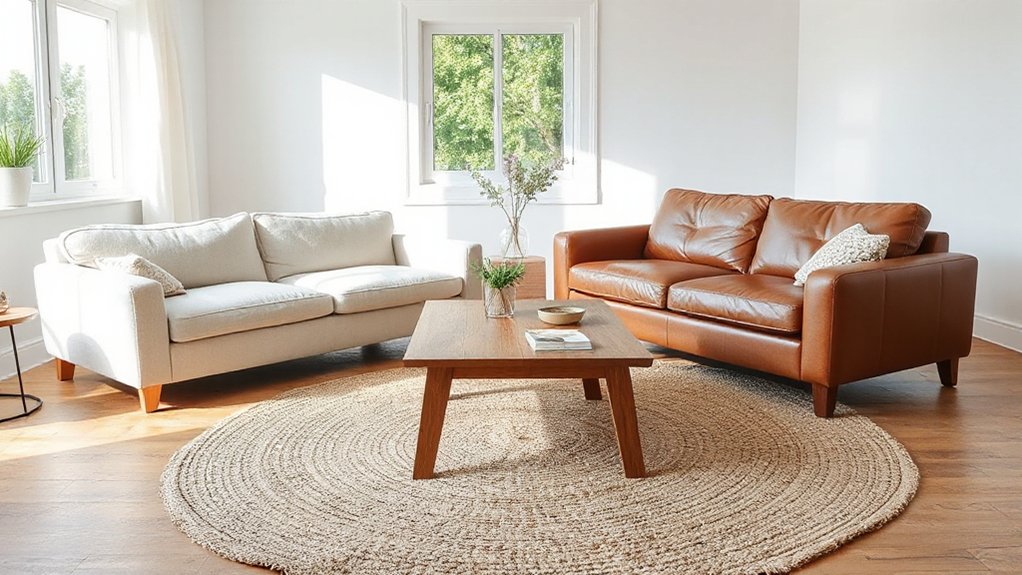
Solid construction sets the baseline for longevity, but your day-to-day upkeep habits will determine how good that piece looks over time. Start by matching Maintenance requirements to your lifestyle: if you’ve got kids, pets, or frequent guests, choose wipeable finishes, tight weaves, and stain-resistant performance fabrics.
For low-maintenance woods, favor sealed oak or laminate over raw, open-grain surfaces that show water rings and scratches. If you’re willing to do regular care, leather, velvet, and natural stone can look elevated, but they’ll demand conditioning, brushing, or sealing on schedule.
Compare Durability options realistically—ask about abrasion ratings, finish type, and cleaning codes. Then budget for protectants, covers, and professional cleaning so upkeep doesn’t become a surprise cost later.
Test Comfort: Support, Depth, and Firmness
Before you buy, sit and check that the lumbar area supports your lower back and the seat keeps your hips level without pressure points.
Assess seat depth by making sure you can rest your back against the cushion while leaving a small gap behind your knees.
Test firmness by sitting for a few minutes and noting whether the cushions hold their shape and provide steady support instead of sinking.
Check Lumbar And Seat Support
How do you know a chair or sofa will still feel good after an hour, not just a quick sit? Check lumbar and seat support with a deliberate test.
Sit back fully and notice whether the backrest fills the curve of your lower spine without forcing you forward. Good ergonomic design helps you maintain neutral spinal alignment, so your shoulders can relax and your pelvis stays level.
Slide your hand behind your lower back; you should feel gentle, even contact, not a hollow gap or a hard ridge.
Next, assess seat support by placing your feet flat and sensing pressure distribution. You shouldn’t feel sharp points under your sit bones or sinking that tilts your hips.
Stand up; discomfort shouldn’t linger.
Assess Depth And Firmness
Once the lumbar and seat support feel right, check whether the piece fits your body size and comfort preferences by testing depth and firmness.
Sit back with your hips against the backrest and see where your knees land. Ideal Seat depth lets you keep 2–4 inches between the seat edge and the back of your knees, so circulation isn’t restricted. If the seat’s too deep, you’ll slouch; too shallow, and your thighs won’t feel supported.
Next, evaluate Cushion firmness by sitting for at least two minutes. You should sink slightly without bottoming out, and the cushion should rebound when you stand. If it feels hard, pressure points build; if it’s soft, alignment and durability suffer over time.
Match Furniture Style, Color, and Texture
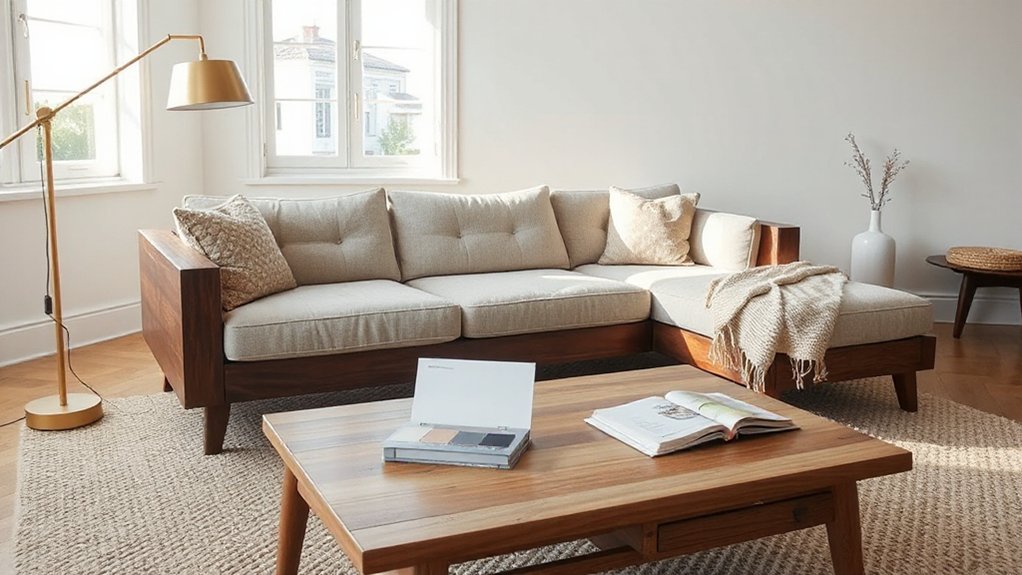
While it’s tempting to buy pieces you love one by one, your room will feel more cohesive if you match furniture style, color, and texture with a clear plan. Start by choosing a dominant style—modern, traditional, or transition—then keep major silhouettes consistent.
Pick a tight color palette: one neutral base, one secondary tone, and one accent, and repeat them across upholstery, wood finishes, and decor.
When mixing, use Matching materials to bridge looks, such as black metal hardware tying together oak and walnut.
Add depth by Coordinating textures—pair smooth leather with nubby linen, or matte wood with glossy ceramic—so the space feels layered, not busy.
Finally, test samples in your lighting to avoid surprises.
Conclusion
When you buy new furniture, you’re balancing inches and impact. You measure walls, then the sofa; you check doorways, then traffic flow—so what fits on paper fits in real life. You set a budget, then add a buffer—so surprise fees don’t surprise you. You choose scale, then daily-use needs—so it looks right and lives right. You inspect build, test comfort, and match style—so it lasts and belongs.