
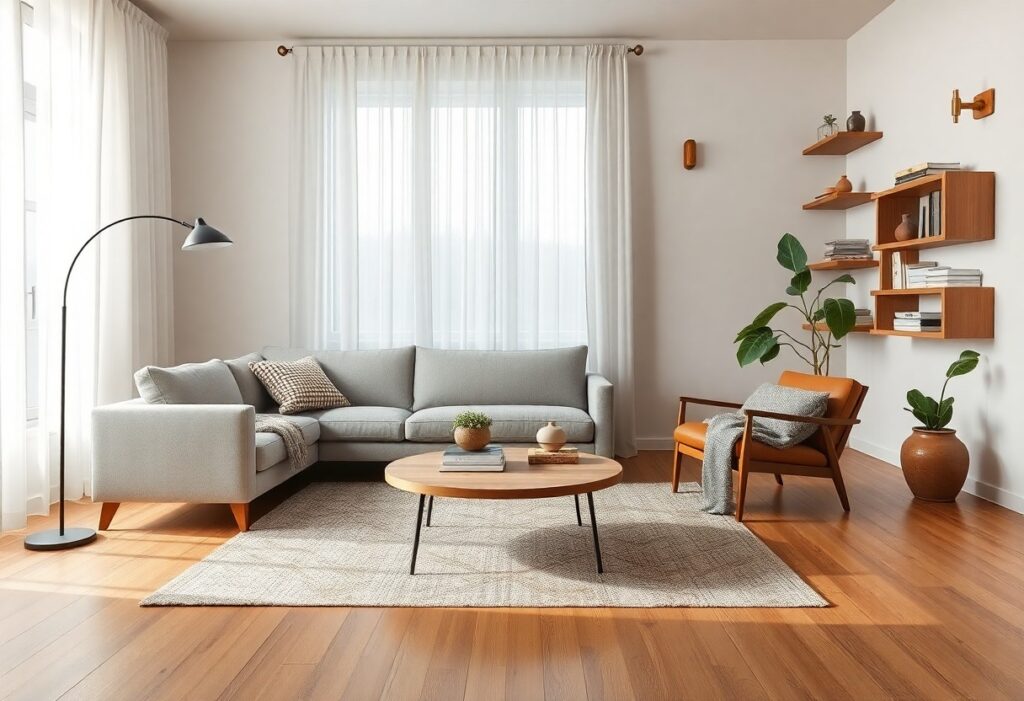

Most people overfill their living rooms, but minimal furniture can create a more inviting and spacious feel. You don’t need clutter to achieve warmth-choose one statement piece and build around it with soft textures and warm lighting. Avoid overcrowding; instead, focus on quality, proportion, and intentional placement for a balanced, stylish space.
Key Takeaways:
- A well-placed rug and a single statement sofa can define the space and create warmth without overcrowding the room.
- Use layered lighting-like a floor lamp in one corner and a small table lamp near a chair-to build a welcoming atmosphere with minimal pieces.
- Choose multifunctional furniture, such as an ottoman with storage or a coffee table that doubles as a workspace, to keep the room tidy and stylish.
The Empty Floor
Embracing the empty floor transforms your living room into a breathing, intentional space. You don’t need to fill every corner to feel warmth-strategic emptiness enhances comfort and style. Let open areas define the rhythm of the room, drawing attention to key pieces while giving your mind room to rest.
Space for the soul
Leaving open floor space isn’t just aesthetic-it’s emotional. You create a quiet invitation to pause, reflect, and simply be. This openness supports mental clarity, making your room not just stylish, but deeply personal and calming.
Movement without clutter
Clear pathways allow you to move freely, reinforcing a sense of ease. Unobstructed flow between furniture prevents visual noise and makes even small rooms feel larger and more inviting.
When you prioritize movement without clutter, you’re not just designing for looks-you’re designing for life. Every step you take through the room should feel natural, unhindered by excess. This means choosing only the furniture that truly serves you and arranging it to support real living. Minimalism here isn’t cold-it’s liberating, offering room for play, conversation, and quiet moments alike.

The Honest Chair
You don’t need five seating options to make your living room feel complete. One well-chosen chair can define the space, offering both comfort and character without clutter. Choose a design that reflects your taste-its presence should feel intentional, not just functional.
Quality in the wood
Wood grain tells a story of time and care. Furniture made from solid hardwoods like oak or walnut ages beautifully, resisting dents and wear far better than engineered alternatives. When you run your hand over the armrest, it should feel substantial, not hollow or thin.
Utility of the frame
Frame construction determines how long your chair will last. Look for kiln-dried hardwood frames with reinforced joints-they resist warping and support weight evenly. A strong frame means you won’t need to replace it in a few years.
What makes the frame truly valuable is how it supports daily use without showing strain. Chairs with corner-blocked or double-doweled joints handle movement and weight without loosening over time. This kind of craftsmanship means fewer repairs and deeper comfort, letting you relax without worrying about wear. A solid frame turns a simple seat into a long-term companion.
The Warm Wool
You’ll find that natural fibers like wool add subtle richness without clutter. Their soft texture invites touch, making even a minimalist room feel lived-in and welcoming. Wool’s natural insulating properties keep spaces feeling warm, even when furniture is kept to a minimum.
Rugs for the feet
A well-placed rug defines your seating area while grounding the space visually. Choose wool or wool-blend weaves for warmth underfoot and sound absorption. Keep size proportional-leave at least six inches of floor visible around the edges to maintain openness.
Throws for the cold
A draped throw instantly signals comfort. Keep one folded over the arm of your sofa for easy access when temperatures drop. Neutral tones preserve serenity, while a textured weave adds depth without visual noise.
Having a throw within reach changes how you experience your living room. It’s not just about warmth-it’s about creating moments of pause. A chunky wool throw in a soft hue enhances tactile appeal and encourages relaxation. One well-chosen piece can transform a sleek, sparse setup into a nurturing retreat, proving minimalism doesn’t mean sacrificing comfort.
The True Light
Light shapes how you experience your living room, influencing both mood and perception of space. Choosing the right balance of natural and artificial light transforms minimal furniture into a warm, inviting setting without clutter.
Sun through the glass
Position your seating to face windows where daylight floods in. Morning sun brightens neutral tones and enhances texture, making sparse furnishings feel rich and layered throughout the day.
Lamps for the dark
When daylight fades, well-placed lamps sustain warmth. A single floor lamp in the corner or a small table light beside your chair creates intimate pools of light that define zones without visual noise.
Focus on lampshades in soft, diffusing materials like linen or paper to soften the glow. Choose bulbs with a warm color temperature-around 2700K-to mimic candlelight. This subtle illumination makes minimalism feel welcoming, not cold, and supports relaxation after sunset.
The Quiet Wall
You don’t need wall-to-wall art to make a statement. A single, well-placed piece on an empty wall draws the eye and creates focus without clutter. Let negative space breathe-this restraint amplifies the impact of what remains.
Colors that stay still
Neutral tones like warm beige, soft gray, or greige anchor the room with calm. These hues don’t compete for attention, allowing texture and form to shine. You’ll find they make small spaces feel larger and more intentional.
Accents that speak
One ceramic vase, a handwoven throw, or a single candle in a textured holder can say everything. These pieces carry emotion without volume, adding depth through subtle detail rather than quantity.
Each accent you choose should reflect something true about how you live. A linen pillow with visible stitching, a wooden bowl with natural grain-these aren’t just objects. They’re quiet invitations to touch, to pause, to feel grounded. Minimalism isn’t cold when it’s human. Let your few chosen items carry meaning, not just style.
Final Words
On the whole, you create a cozy, stylish living room with minimal furniture by prioritizing comfort, choosing pieces with clean lines and warm textures, and letting negative space enhance the sense of calm. You maintain visual harmony through a consistent color palette and strategic lighting. Your restraint becomes the foundation of lasting style.
FAQ
Q: How can I make a living room feel cozy with just a few pieces of furniture?
A: Start by choosing one or two comfortable, well-proportioned pieces like a soft sofa or an armchair with plush cushions. Position them to face each other to create an inviting conversation area. Use soft lighting-like floor lamps or table lamps with warm bulbs-to add warmth without clutter. Layer in texture with a wool throw, a woven rug, or linen curtains. These elements add comfort and depth, making the space feel lived-in and welcoming even with minimal furniture.
Q: What color palette works best for a stylish yet simple living room?
A: Neutral tones like warm beige, soft gray, or creamy white create a calm, open backdrop that makes small spaces feel larger and more relaxed. Add subtle contrast with earthy accents-think terracotta, olive green, or deep navy in a single accent chair or a set of cushions. Monochrome schemes with varying textures in the same color family can also add sophistication without visual noise. The key is consistency-limiting the palette helps unify the space and keeps it feeling intentional and serene.
Q: How do I avoid a sparse or empty look when using minimal furniture?
A: Focus on scale and placement. Choose one statement piece-like a low-slung sofa or a sculptural coffee table-and let it anchor the room. Fill empty wall space thoughtfully with a single large artwork or a small gallery of three framed pieces at eye level. Use plants in simple pots to bring life and softness into corners. A well-placed rug that extends beyond the front legs of the sofa ties the area together and defines the seating zone. Thoughtful details, not quantity, create a full, balanced look.