

You probably don’t know that most garden “problems” start as tiny, fixable issues you can spot in under five minutes. Set a weekly 15‑minute loop: scan beds, pull any new weeds, check soil moisture, and snip spent blooms before plants waste energy. Water early and deeply, then lock it in with mulch. Keep tools in one grab-and-go spot so you don’t skip jobs. Next, you’ll want a simple seasonal checklist that prevents the big setbacks…
Build a Weekly Garden Routine in 15 Minutes
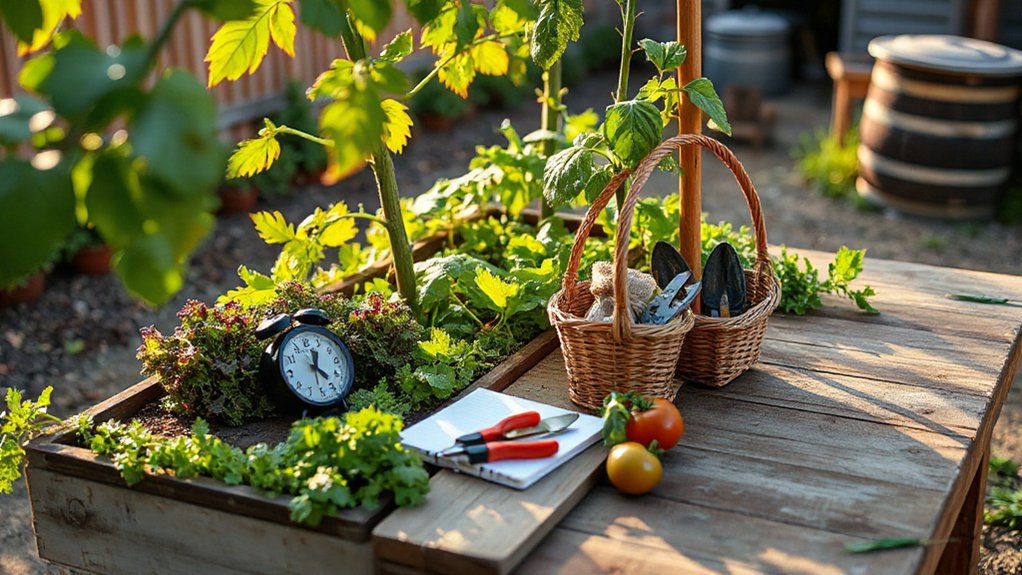
Even if your schedule’s packed, you can stay ahead of weeds, pests, and wilting with a simple 15-minute weekly garden routine.
Start with a 3-minute scan: check soil moisture, leaf color, and pest hotspots under leaves.
Spend 4 minutes pulling small weeds before they seed, then edge paths to sharpen your garden design lines.
Use 3 minutes to deadhead and pinch back fast growers so beds keep their shape.
Take 3 minutes for compost management: aerate the bin, add a thin “green” layer, and top with browns to prevent odors; then sprinkle finished compost around heavy feeders.
Finish with a 2-minute note in your phone: what you watered, what you saw, and what to buy.
Seasonal Garden Checklist: Spring to Winter Tasks
To stay ahead of the seasons, you’ll prep beds in spring with a quick soil refresh, a compost top-dress, and timely planting matched to your last-frost date.
In summer, you’ll keep growth steady by watering deeply on a schedule, mulching to cut evaporation, and knocking back weeds before they seed.
When fall hits, you’ll clean up spent plants, protect perennials with mulch or frost cloth, and set your garden up for an easier winter.
Spring Planting And Prep
As soon as the soil thaws and daylight stretches, spring is your window to reset the garden and get ahead of weeds and pests. Start with Soil testing so you’re not guessing; amend with compost, lime, or sulfur based on results, then top-dress beds and refresh mulch paths.
Clean, sharpen, and disinfect pruners, stakes, and pots to limit disease carryover. Prune dead wood, cut back perennials, and divide crowded clumps before new growth surges.
Map out Companion planting to boost pollination and natural pest resistance: pair basil with tomatoes, onions with carrots, and marigolds along borders.
Direct-sow cool-season crops, harden off seedlings, and label rows. Install supports early and cover tender starts with row fabric for late frosts.
Summer Watering And Weeding
When summer heat locks in and rain turns sporadic, you’ll stay ahead by watering deeply and weeding proactively instead of chasing problems later. Water at dawn, soak soil 6–8 inches, and switch to drip lines or soaker hoses to cut evaporation. Mulch 2–3 inches to cool roots and slow weeds, but keep it off stems.
Weed weekly after watering, pulling before seeds set; a stirrup hoe makes fast work on dry mornings. Don’t ignore garden pests hiding in weedy edges—scout undersides of leaves, hand-pick, and rinse with a hard spray before you reach for harsher options. Use composting techniques by hot-composting seed-free weeds and spent plants, or solarize bags if pests or disease are present.
Fall Cleanup And Protection
Cooler nights and shorter days signal a shift from daily watering and weed patrols to fall cleanup and protection that sets you up for an easier spring.
Start by pulling spent annuals, cutting back diseased foliage, and leaving healthy seedheads for birds. Rake leaves off lawns, but keep some in beds as mulch; shred them first so they don’t mat.
Follow composting tips: layer “browns” (dry leaves) with “greens” (fresh trimmings), skip weeds with seed, and avoid any diseased material.
Top-dress beds with finished compost, then add 2–3 inches of mulch to buffer freeze-thaw cycles.
Protect tender perennials with collars or burlap, drain hoses, and clean tools.
Create small brush piles or log edges to shelter garden wildlife over winter.
Stop Weeds Early (Before They Seed)
Why wait until weeds take over? Get ahead of them with quick weekly passes while sprouts are small and roots are shallow. Pull after a light rain, or use a sharp hoe to slice seedlings at soil level; don’t just “top” them. Bag flowering weeds immediately so you don’t spread seed, and clean your tools before moving beds.
For weed prevention, block light with 2–3 inches of mulch, or try today’s favorite: cardboard-under-mulch sheet mulching around shrubs and paths.
Focus on seed management by deadheading opportunistic growers, mowing edges before they bloom, and topping up mulch where soil shows. Keep a “weed bucket” by the door so you act fast.
Your beds stay tidy and productive.
Water Deeply: When and How Often
Water early in the morning so the soil absorbs moisture before heat and wind ramp up, and your leaves dry quickly to reduce disease.
Aim for deep, infrequent soakings that wet the root zone rather than daily sprinkles—think 1–2 solid waterings per week, adjusted for heat, soil type, and rainfall.
Use a rain gauge or smart irrigation timer to fine-tune timing and keep your plants steady through dry spells.
Best Time To Water
Although your plants can survive the occasional missed soaking, you’ll get stronger roots and fewer disease issues when you time irrigation and go deep instead of frequent sprinkles. Water at dawn, when air is cool and wind is low, so moisture reaches roots instead of evaporating. Morning watering also lets foliage dry fast, cutting mildew risk.
If you can’t do dawn, water in late afternoon, aiming at the soil line and avoiding wet leaves overnight. Skip midday watering unless you’re preventing wilt in containers. Use a rain gauge or smart controller data to adjust after storms; trendy weather-based timers help, but verify with a finger test.
Good soil preparation improves infiltration and discourages garden pests that thrive in soggy, splashy beds.
Deep Watering Frequency
Because shallow, frequent sprinkling keeps roots near the surface, you’ll get better growth by soaking less often but much deeper. Aim to wet the root zone 6–8 inches for beds and 12 inches for shrubs, then wait until the top 1–2 inches dry. Check soil moisture with a finger test or a cheap probe; don’t water by the calendar.
In hot spells, most gardens need deep watering 1–2 times weekly; in mild weather, every 7–10 days often works. Adjust for soil: sand drains fast, so water a bit more often; clay holds longer, so extend the interval.
Use slow watering techniques—soaker hoses, drip lines, or a bubbler—to prevent runoff and save water.
Mulch and Feed to Cut Maintenance Time
If you want a garden that looks tended without constant fussing, mulch and a smart feeding routine will do most of the heavy lifting. Spread 2–3 inches of compost, shredded bark, or leaf mold, keeping it a couple inches off stems.
One of the best mulch benefits is moisture stability, so you’ll weed less and water less. Top up after heavy rain or as it breaks down.
Pair that with a simple feeding schedule: slow-release organic granules in spring for beds, then a light midseason boost for heavy feeders like tomatoes and containers.
Use liquid seaweed or fish emulsion every 2–4 weeks during active growth, but skip feeding during heat waves.
Test soil every few years so you’re not guessing.
Prune and Deadhead to Keep Plants Blooming
Mulch and a steady feeding routine set the baseline for low-effort success, but pruning and deadheading are what keep your garden looking sharp week after week. Use clean, sharp snips and make cuts just above a leaf node or outward-facing bud to guide new growth.
For shrubs, follow modern pruning techniques: thin crowded stems at the base, then lightly shape—don’t shear everything into balls unless that’s the look you want.
Deadhead spent blooms on annuals and repeat-blooming perennials to push energy into new flowers, not seed. That’s the real Deadheading benefits: longer bloom time, tidier beds, and fewer flop-prone stems.
Pinch soft tips early for bushier plants, and do bigger cuts right after flowering for spring bloomers. Work weekly, five minutes per bed.
Catch Pests and Disease Early (Quick Signs)
Even with solid watering and pruning habits, pests and diseases can move fast, so you’ll want a quick weekly scan that catches problems before they spread. Start at the newest growth and flip leaves to check for sticky residue, stippling, webbing, or clusters of tiny eggs.
Look for chewed edges, curled tips, and sudden yellowing that doesn’t match your watering schedule. For Pest identification, snap a close-up photo and compare it to a reliable extension site or app before you treat.
For Disease prevention, watch for powdery coatings, black spots, mushy stems, or concentric leaf rings. Then remove affected leaves promptly and improve airflow.
Water at the soil line, not over foliage. Quarantine new plants for a week too.
Store Tools So Garden Jobs Take Less Time
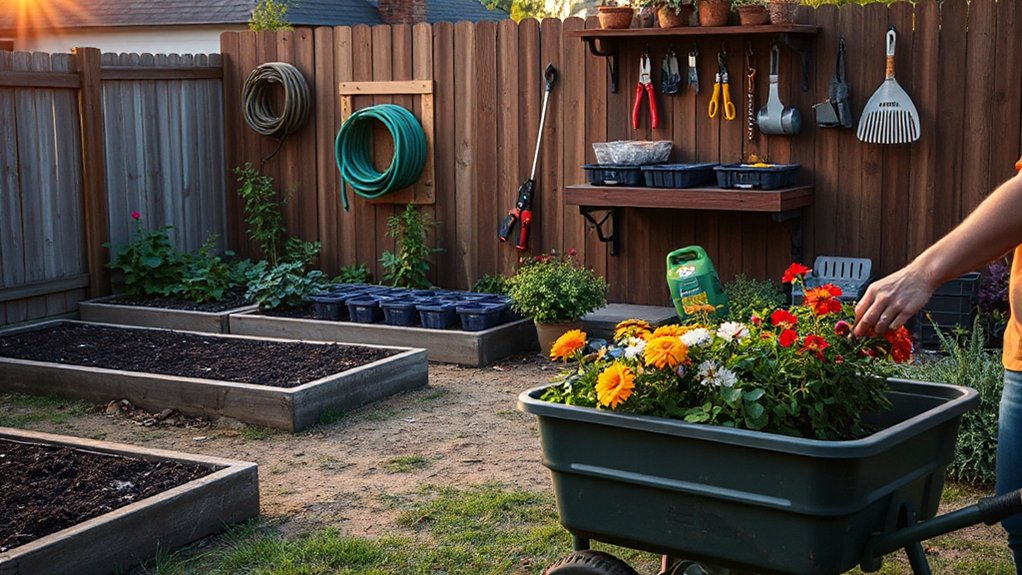
Two smart storage zones—one by the door and one in the garden—can cut setup time to near zero. Put a narrow wall rack or pegboard in your mudroom for pruners, gloves, twine, and a small caddy of ties; you’ll grab everything in one motion.
Outside, add a weatherproof deck box or mini shed near your beds for hand tools, hose fittings, and fertilizer scoops.
For Garden tool organization, hang long tools vertically with labeled hooks, blades down, handles up. Store sharp tools in sheaths, and keep a spray bottle of rubbing alcohol nearby so you can wipe and stash fast.
Trend-forward storage solutions like modular rails and magnetic strips keep tools visible, prevent duplicates, and make five-minute jobs actually take five minutes.
Conclusion
Stay on top of your garden, and it won’t turn into a “Secret Garden” you’re afraid to enter. Stick to your 15-minute weekly walk-through, pull weeds before they seed, and water deeply at dawn. Refresh mulch, feed lightly, and prune or deadhead to keep blooms coming. Scan leaves for spots, holes, and sticky residue so pests don’t get a foothold. Keep tools stored and ready, and you’ll finish faster—and enjoy more.