
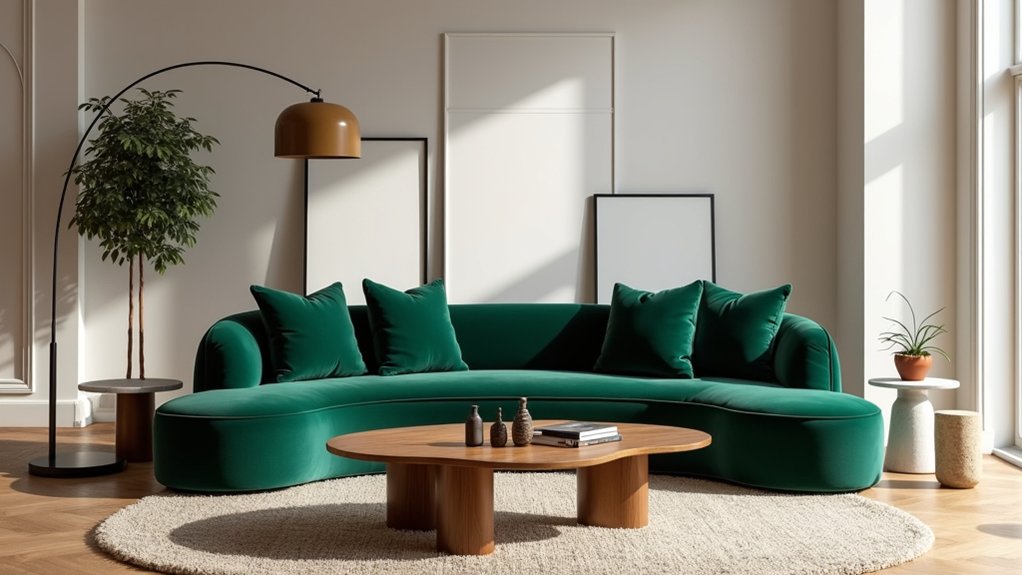

You don’t need more stuff—you need one piece that sets the agenda. Choose statement furniture with clear geometry, confident color, and workmanship you can see up close, then give it negative space so it actually registers. Scale matters: an oversized sofa or monolithic coffee table should anchor, not crowd. Pair contrasting textures and tight finishes for cohesion. Next, you’ll see which rooms reward risk—and which pieces pay off fastest.
Statement Furniture: What It Is and Isn’t
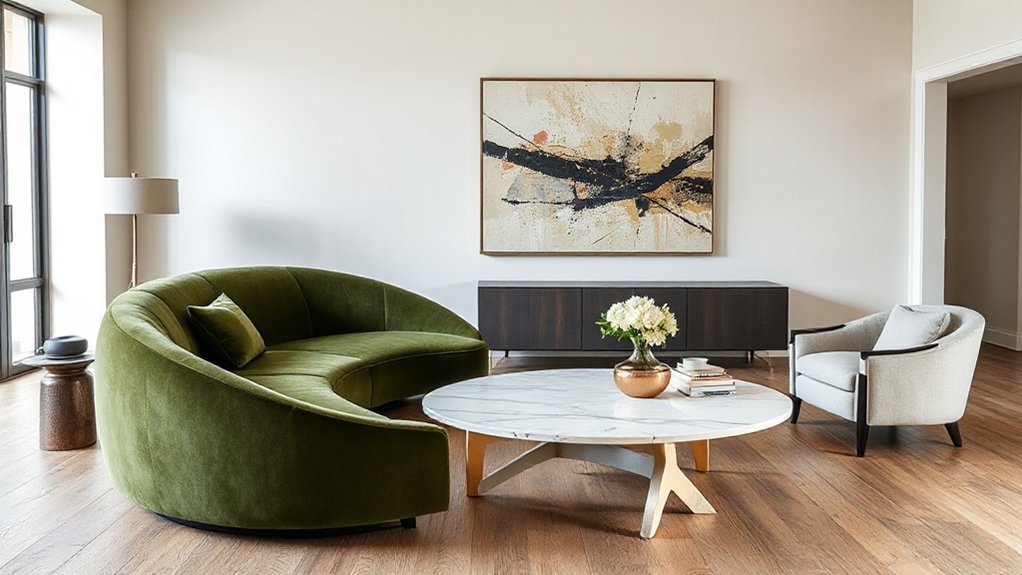
While “statement furniture” gets tossed around as a catch-all trend term, it has a specific meaning: it’s a deliberately standout piece—through scale, silhouette, color, material, or craftsmanship—that anchors the room and sets the design direction.
You’re not just adding something “bold”; you’re declaring a focal point that controls the room’s visual hierarchy and makes everything else feel intentional.
It isn’t clutter, matching sets, or a pile of trendy accents competing for attention. It also isn’t purely decorative: the best pieces earn their spotlight with construction and presence.
You’ll see it in a sculptural chair, a monolithic credenza, or a carved antique with Vintage charm.
Material diversity matters—lacquer against linen, travertine near walnut—so the statement reads curated, not loud.
How to Choose Statement Furniture (Size, Color, Comfort)
You’ll choose statement furniture like a stylist: start by balancing scale and proportion so the piece commands attention without overwhelming the room. Check sightlines, clearance, and height relationships to keep the layout sharp and intentional.
Then pick a bold color you’ll actually live with, and don’t compromise on comfort—because the best statement is one you’ll use every day.
Balance Scale And Proportion
How do you make a statement piece look intentional instead of oversized or lost in the room? Start by scaling it to your room’s architecture: match the furniture’s height to window lines, headboards, and sightlines, and keep at least 30–36 inches for walkways.
Anchor large pieces with a rug that extends beyond the front legs, so the footprint reads deliberate. Balance visual weight—bulky shapes need breathing space, while slender silhouettes can cluster with a side table or floor lamp for presence.
Repeat one proportion elsewhere: echo a curved sofa with an arched mirror, or counter a low profile with tall shelving. You’re aiming for artistic expression backed by functional design, not random drama. Measure first, then edit surrounding pieces.
Pick Bold Color Comfortably
Once the scale feels right, color becomes the fastest way to make a statement piece read confident rather than chaotic. Start with your room’s fixed tones—floors, large rugs, and drapery—then choose one bold hue to dominate and one accent to echo elsewhere for tight Color coordination. If you’re going saturated, keep surrounding finishes quieter: warm whites, pale oak, or matte black.
Next, stress-test comfort and longevity through Material selection. Velvet signals luxe but shows pressure marks; performance bouclé hides wear; top-grain leather patinas and wipes clean. Check undertones under daytime and evening light, then confirm with a large swatch against your wall color.
Finally, balance intensity with texture: pair glossy lacquer with nubby upholstery, or vivid boucle with slim metal legs.
Statement Furniture Ideas for the Living Room
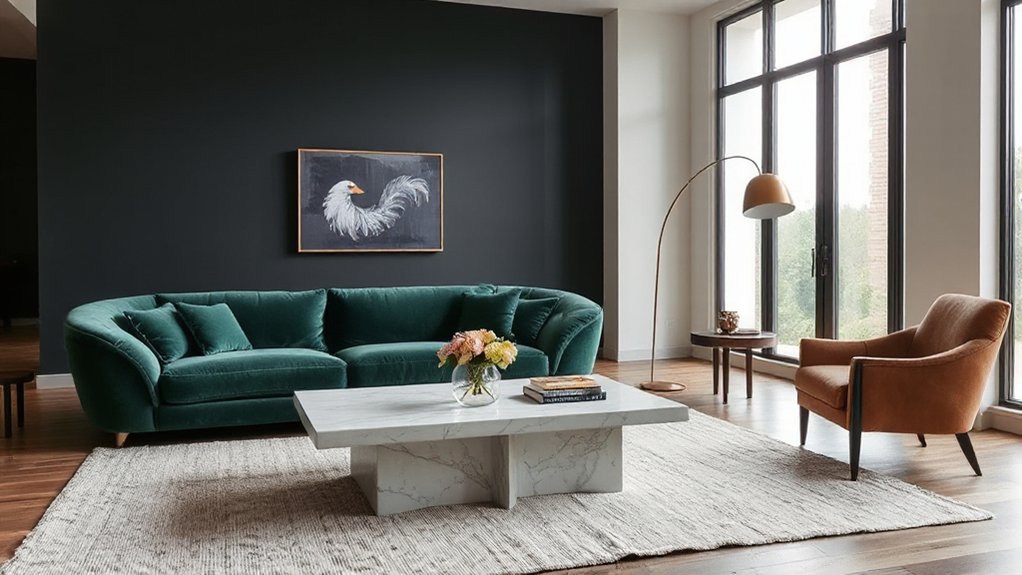
Whether you’re working with a compact lounge or an open-plan great room, the right statement piece can anchor the entire living space and set the design direction. Start with a sculptural sofa in a saturated hue or a low-slung modular profile; it instantly defines circulation and sightlines.
Pair it with a bold, oversized coffee table—stone, burl, or lacquer—for a runway-ready focal point. If you prefer Minimalist decor, choose one hero item and keep surrounding pieces streamlined, tone-on-tone, and leggy.
Add controlled contrast through Antique accents like a carved side table, a gilt mirror, or a patinated trunk used as storage.
Finish with an architectural floor lamp and a single large-format artwork to lock in scale.
Statement Furniture Ideas for the Bedroom
After you’ve set the tone in the living room, the bedroom calls for a statement piece that feels intentional but still restful. Anchor the space with an oversized upholstered headboard in bouclé, velvet, or saddle leather; it delivers hotel polish while softening acoustics.
If you prefer cleaner lines, choose a low-profile platform bed and let minimalist contrasts do the work—warm oak against matte-black steel, crisp white bedding against inky walls.
Add Vintage accents through a reupholstered bench at the foot of the bed or a sculptural 1970s lounge chair in a corner, not cluttered surfaces.
Keep scale decisive: one hero piece, then streamlined nightstands and hidden storage.
Finish with a bold pendant or swing-arm sconces to frame the bed.
Statement Furniture Ideas for the Dining Room
In the dining room, you set the tone with a sculptural dining table that anchors the space like functional art.
You’ll sharpen the look with bold statement chairs—think contrasting upholstery, oversized silhouettes, or mixed finishes that read intentional, not chaotic.
Then you seal the moment with a striking lighting centerpiece, scaled to the table and hung low enough to command attention without blocking sightlines.
Sculptural Dining Tables
How do you make a dining room feel instantly designed? You anchor it with a sculptural dining table that reads like art from every angle. Choose a pedestal base with bold geometry, a faceted trestle, or a monolithic plinth to create visual weight without clutter.
Track design evolution by mixing classic proportions with contemporary engineering: thinner tops, stronger joinery, and seamless edges. Prioritize material textures—veined stone, wire-brushed oak, matte concrete, or lacquered burl—so light skims, shadows deepen, and the surface looks intentional up close.
Keep the silhouette clean, then amplify impact with an oversized top or an unexpected profile, like an oval with sharp chamfers. Your table becomes the room’s focal point, day and night.
Bold Statement Chairs
A sculptural table sets the stage, but bold statement chairs bring the personality. You can shift the whole dining room mood by choosing silhouettes with intention: barrel backs for softness, cantilever frames for edge, or wishbone profiles for crafted appeal.
Prioritize comfort, then amplify style with texture—bouclé, saddle leather, velvet, or woven cord.
Use Minimalist contrasts to keep the look controlled: pair one dramatic chair design with a restrained table base, neutral walls, and streamlined tableware. Or mix a modern set with two end chairs featuring Vintage accents like cane panels, brass caps, or turned legs.
Keep finishes coherent—repeat one metal tone or wood stain—so the mix reads curated, not chaotic. Scale matters: match seat height, arm clearance, and visual weight.
Striking Lighting Centerpieces
When you treat lighting as furniture, the dining room instantly feels intentional and high-design. Choose a sculptural chandelier or linear pendant sized to your table: aim for about half to two-thirds the table’s width, and hang it 30–34 inches above the surface.
If you love Minimalist decor, pick matte black, brushed nickel, or milk-glass forms with clean geometry and dimmable LEDs for precise mood control.
Want Vintage accents? Go for aged brass, fluted glass, or an artful lantern silhouette, then balance it with streamlined chairs and simple linens.
Layer in discreet wall sconces or a picture light on a buffet so the centerpiece never has to do all the work alone.
Statement Pieces: Mirrors and Lighting That Pop
While a standout sofa anchors the room, mirrors and lighting create the instant “wow” by amplifying scale, bouncing light, and setting the mood. Go oversized with an arched, thin-frame mirror to push height and visually widen tight layouts, or choose a sculptural, irregular silhouette for gallery-level impact.
To keep it current, lean into Minimalist aesthetics: clean lines, slim profiles, and intentional negative space.
For lighting, pick one bold form with precision—an opal-globe cluster, a linear LED bar, or a pleated pendant—then tune the finish for Material contrasts. Pair brushed brass with smoked glass, matte black with alabaster, or chrome with linen to sharpen depth.
Install dimmers and warm LEDs (2700–3000K) so your statement reads luxe, not harsh.
How to Style Statement Furniture Without Clutter
Even if you love bold design, you’ll keep a statement piece looking intentional by giving it breathing room and editing everything around it. Start with a clear focal point: one sculptural sofa, a chunky credenza, or an oversized lounge chair.
Pull surrounding pieces back 6–12 inches to create negative space, then limit nearby décor to one tight vignette.
Control Minimalist clutter by repeating only two supporting finishes—like matte black and warm oak—across the room, and avoid mixed metals within the same sightline.
Keep patterns to one hero print and one quiet texture.
Choose Functional aesthetics: add a tray to corral remotes, swap stacks of books for one large art book, and hide cables with slim raceways.
Light it with one directional sconce or spot.
Conclusion
You don’t need a full makeover to get a magazine-worthy room—you need one confident piece and disciplined styling. Pick a sculptural sofa, oversized coffee table, or architectural pendant, then protect negative space so it reads intentional, not busy. In a recent city-apartment refresh, you swap a basic sectional for a curved velvet sofa in moss green, keep walls neutral, add one textured rug, and the whole living room instantly feels elevated, current, and cohesive.