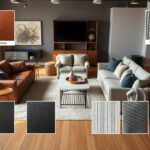
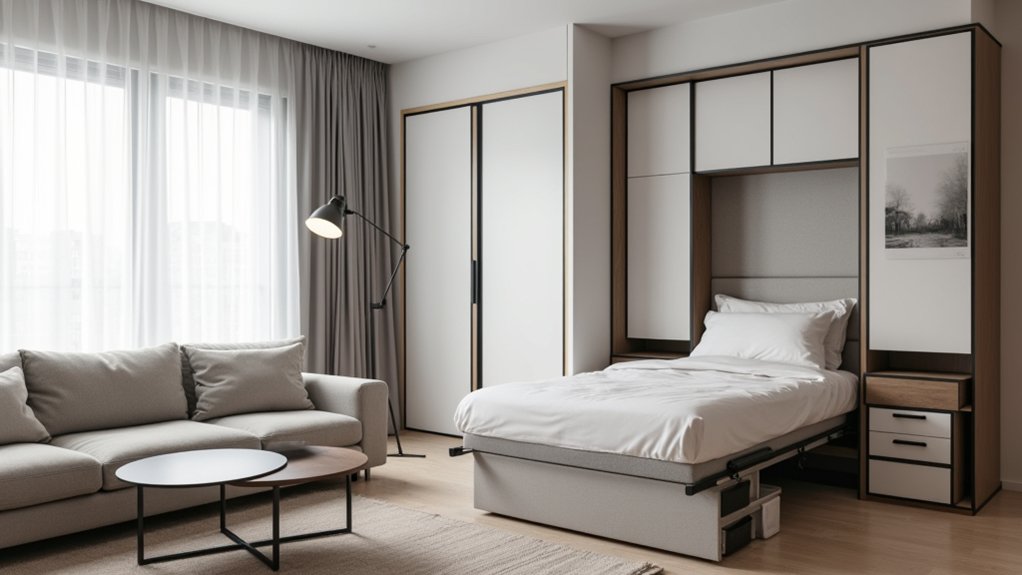

You want a calm, open home, but you also need it to work harder every day. When you measure clearances, zone the room, and choose multi-tasking pieces—storage sofas, lift-up beds, wall desks, and nesting tables—you gain function without visual clutter. Slim shelving and hidden drawers keep the look clean, and durable finishes like sintered stone stay low-maintenance. The next step is choosing which upgrades fit your layout first…
Measure, Clearances, and Zone Your Room
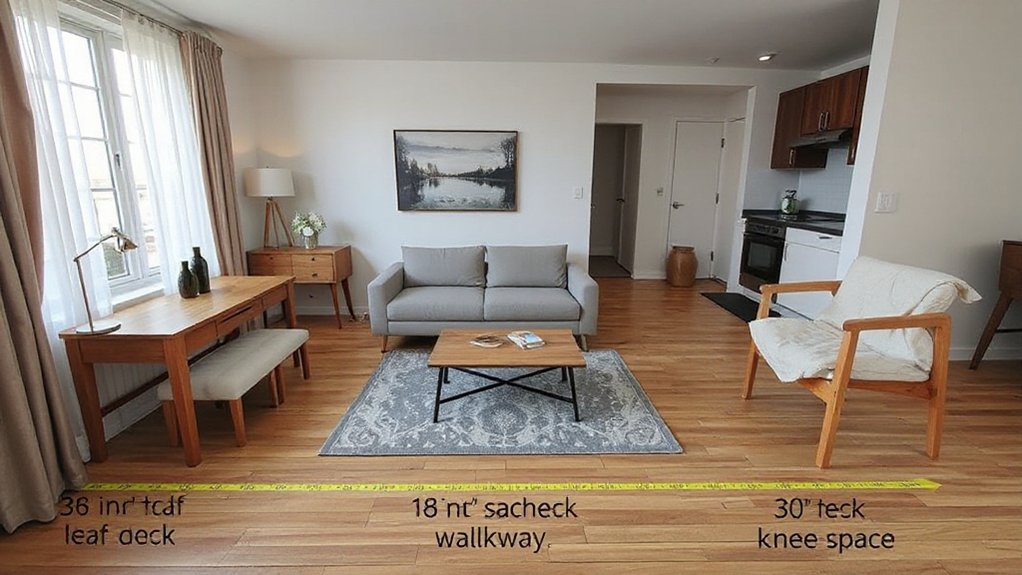
Before you buy anything, measure your room like you’re planning a layout, not just shopping: note wall-to-wall dimensions, ceiling height, window and door swings, and outlet/radiator locations. Treat this room measurement as your nonnegotiable baseline for every furniture footprint and pathway.
Next, map circulation: keep 30–36 inches for main walkways, 18 inches around side tables, and enough swing space for drawers and cabinet doors. That’s clearance planning, and it it prevents “fits-on-paper” pieces from blocking daily routines.
Then zone the room by use: lounging, work, dining, or sleep. Anchor each zone with one primary piece, and keep secondary items visually light—raised legs, slim arms, and low backs read modern and open.
Finally, mark zones with rugs and lighting, not extra furniture.
Space-Saving Storage Furniture for Any Room
Once you’ve measured clearances and mapped your zones, you can choose storage pieces that pull double duty without crowding the floor plan. Start with vertical: slim bookcases, ladder shelving, and wall-mounted cabinets keep circulation clear while increasing capacity.
In the entry, add a storage bench with lift-top bins for shoes and bags. In the bedroom, pick a platform frame with drawers or rolling under-bed boxes sized to your clearance marks.
In the kitchen, use a narrow pantry tower or a mobile cart that tucks under a counter overhang. For the bath, install a mirrored medicine cabinet and a recessed shelf between studs.
Favor multifunctional furniture with closed fronts to support aesthetic minimalism and hide visual noise. Match finishes to existing hardware for cohesion.
Space-Saving Sofas: Sleepers, Modular, Storage
When you need your living room to flex, a space-saving sofa does double duty without looking bulky. You’ll want sleeper-sofa essentials like a smooth pull-out mechanism, a supportive mattress, and performance fabric that stands up to daily use.
To fine-tune the footprint, you can choose modular sections that reconfigure for guests and storage bases that hide bedding, throws, and chargers.
Sleeper Sofa Essentials
If your living room has to double as a guest space, a well-chosen sleeper sofa gives you a full bed without sacrificing daytime style. Treat it like one of today’s smartest Convertible beds and true Multi purpose furniture: comfort matters as much as footprint.
Choose a mechanism you can open one-handed, and test it in-store for pinch points and smooth glide. Prioritize a 5–8 inch mattress; memory foam feels luxe, while innerspring sleeps cooler for frequent guests.
Measure clearance for the pullout length and your walkway, not just the sofa width. Look for supportive seat cushions that won’t bottom out after the mattress folds in.
Performance fabric, tight tailoring, and slim arms keep it modern and easier to clean. Add a washable cover and a low-profile topper nearby.
Modular And Storage Options
Because layouts shift and square footage stays tight, modular and storage sofas let you reconfigure seating and stash clutter without adding extra pieces. Start with sectional units you can split into a loveseat and chair, or snap into an L for movie night. Choose armless modules to keep sightlines open, and add a chaise that doubles as a daybed for guests.
For tight studios, look for Convertible beds built into modular frames, so you don’t sacrifice daily comfort. Prioritize lift-up seats or drawer bases sized for throws, board games, and tech cords; soft-close hardware prevents slams.
Measure doorways and module widths before delivery, and pick performance fabric in neutral tones for longevity. You’ll get Multi purpose furniture that adapts quickly.
Space-Saving Beds With Drawers and Lift-Up Frames
You can reclaim serious square footage with drawer-storage bed designs that stash linens, off-season clothes, and shoes right under the mattress, especially when you choose full-extension runners and divided compartments.
If you need even more capacity, you’ll want a lift-up frame mechanism that hinges smoothly and stays open with gas struts so you can access deep storage without wrestling the mattress.
Pick the option that fits your layout—side drawers for tight headboards, lift-up frames for narrow walkways—and you’ll keep your bedroom clean, modern, and functional.
Drawer Storage Bed Designs
Where do you stash extra linens, off-season clothes, or spare pillows when closet space runs tight? Drawer storage beds let you reclaim dead space under the mattress without adding bulky dressers. Choose full-extension drawers on smooth, quiet glides so you can access items from the side even in tight rooms.
If your layout blocks one side, pick a design with drawers on the footboard or a mix of shallow and deep drawers for socks, sweaters, and blankets. Look for Hidden compartments built into the headboard or rail for valuables and chargers.
Ergonomic designs matter: recessed pulls prevent shin bumps, and raised drawer bases reduce drag on rugs. Match finishes to your nightstands for a seamless, modern look.
Lift-Up Frame Mechanisms
If closet space and under-bed drawers still can’t keep up, a lift-up frame adds a second, hidden storage zone in the same footprint. You raise the mattress platform on gas struts or a hinged mechanism, exposing a full-bed cavity that stays dust-free and visually clean—very in line with minimalist, modern interiors.
Choose a Lift up frame with safety locks and a smooth, one-hand lift so you won’t wrestle the weight daily. Look for a slatted base that keeps airflow moving, especially if you’ll store linens.
Use the hidden compartments for off-season clothes, spare pillows, luggage, or bulky throws. Measure clearance for nightstands and headboards so the platform can open fully.
If you’ve got pets, prioritize soft-close hardware and sealed edges.
Wall Desks and Fold-Down Work Setups
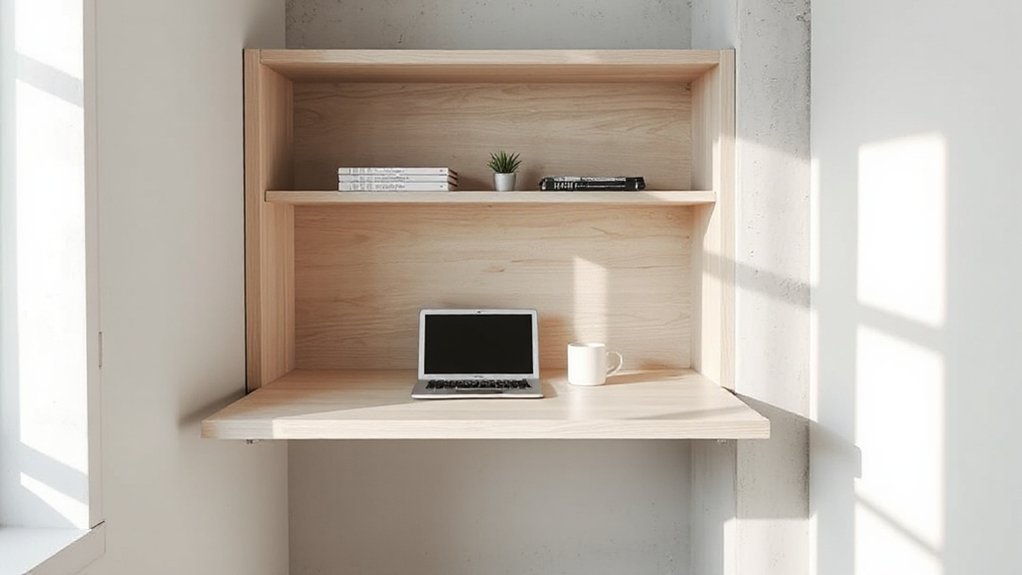
Although square footage feels tighter than ever, wall desks and fold-down work setups let you claim a dedicated workspace without sacrificing your living area. A Wall mounted unit keeps your floor clear and your sightlines open, matching the airy, minimal look popular in modern apartments.
Choose a fold down desktop with soft-close hinges so it won’t slam, and confirm the weight rating supports your laptop, monitor, and elbows. Mount it into studs or use a rated rail system, then add a cable grommet to prevent cord clutter.
Look for shallow shelves above for chargers and notebooks, plus a magnetic strip for tools. When you’re done, close it up and reset the room in seconds. Consider task lighting too.
Space-Saving Dining Sets for Tight Layouts
How do you fit a real dining spot into a narrow kitchen or open-plan living room without turning the walkway into an obstacle course? Start with compact dining sets designed for slim footprints: a small round pedestal base or a narrow bench-and-chair combo that tucks fully under the top.
Choose armless, low-back chairs so you can slide them in tight to the wall, then pull them out only when you eat.
Look for multi-purpose tables paired with seating that works double duty—storage benches for linens, stackable stools for guests, or a banquette along one wall to keep traffic clear.
Keep 30–36 inches of passage behind seats, and use a rug to zone the area without adding bulk.
Opt for easy-clean finishes.
Space-Saving Tables: Nesting, Lift-Top, Extendable
Working with limited square footage, you can get more surface area on demand by choosing tables that transform—nesting sets that slide together when you’re done, lift-top coffee tables that rise to laptop or meal height while hiding storage underneath, and extendable designs that expand for guests then collapse back to a slim profile.
Prioritize Multifunctional designs with smooth, one-hand mechanisms, locking hinges, and levelers for uneven floors. For nesting tables, mix heights and shapes so they tuck tight beside a sofa yet pull apart for drinks.
With lift-tops, check the clearance to your seating and look for soft-close hardware to prevent pinched fingers. Extendable tables work best with butterfly leaves or self-storing panels.
Material innovations like sintered stone, nano-laminates, and powder-coated steel keep surfaces thin, durable, and easy to wipe clean.
Space-Saving Entryway Pieces to Stop Clutter
Once you’ve made your tables pull double duty, tackle the next space thief: the entryway drop zone where shoes, bags, and mail pile up fast.
Start with a slim bench that hides cubbies or flip-up storage, so you can sit and stash in one move. Add a wall-mounted shelf with hooks and a small tray to corral keys and incoming mail for instant entryway organization.
For shoe storage solutions, choose a tilt-out cabinet or vertical tower that keeps pairs off the floor without eating walkway space. If you rent, use an over-the-door rack or modular stackable bins you can reconfigure.
Finish with a narrow mirror cabinet for sunglasses, lint rollers, and chargers—everything you grab on the way out.
Layout Rules That Make Compact Furniture Feel Bigger
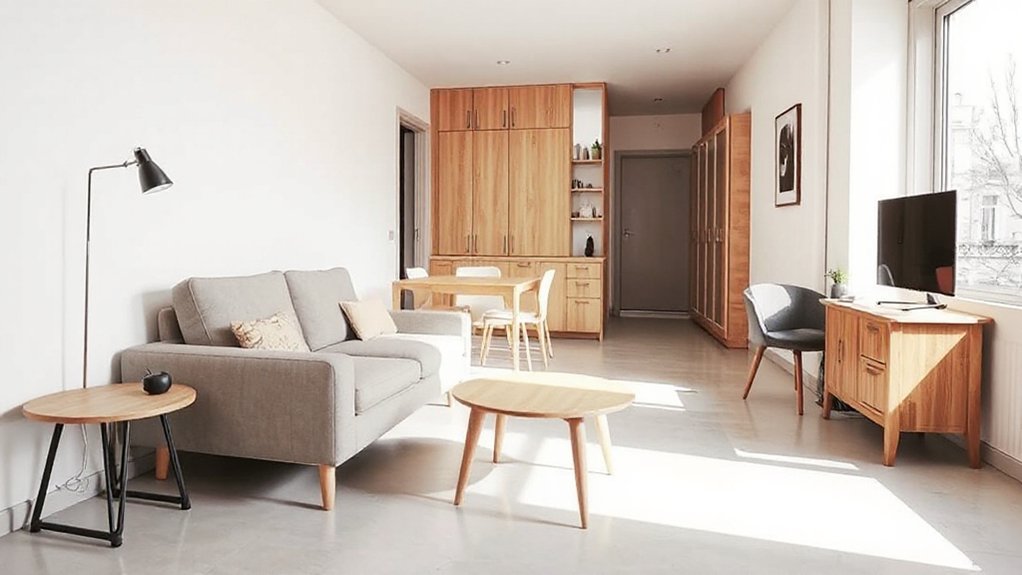
Even if you’ve bought the right small-scale pieces, a few layout rules determine whether they read airy or cramped. Float furniture slightly off walls to reveal baseboards and let light travel; it tricks the eye into seeing more floor. Keep one clear “runway” from entry to window, and align legs so sightlines don’t break.
Use ergonomic design to set walking clearances (about 30–36 inches) and pull seating close enough for easy reach, not awkward stretching. Apply Color psychology: lighter, low-contrast palettes expand perceived volume, while one darker anchor (rug or media wall) adds depth without heaviness.
Finally, go vertical—stack storage, hang sconces, and use mirrors opposite daylight to double brightness. Keep surfaces edited.
Conclusion
When you measure carefully, plan clearances, and zone each corner, small rooms start working like they’ve doubled overnight. Choose storage-forward pieces—sofa sleepers, modular sections, lift-up beds, and nesting or extendable tables—so every item earns its footprint. Add wall desks and fold-down stations to reclaim floor space, then finish with slim entryway storage to stop daily clutter at the door. Stick to durable, sleek surfaces, and you’ll keep it stylish, practical, and easy to clean.