
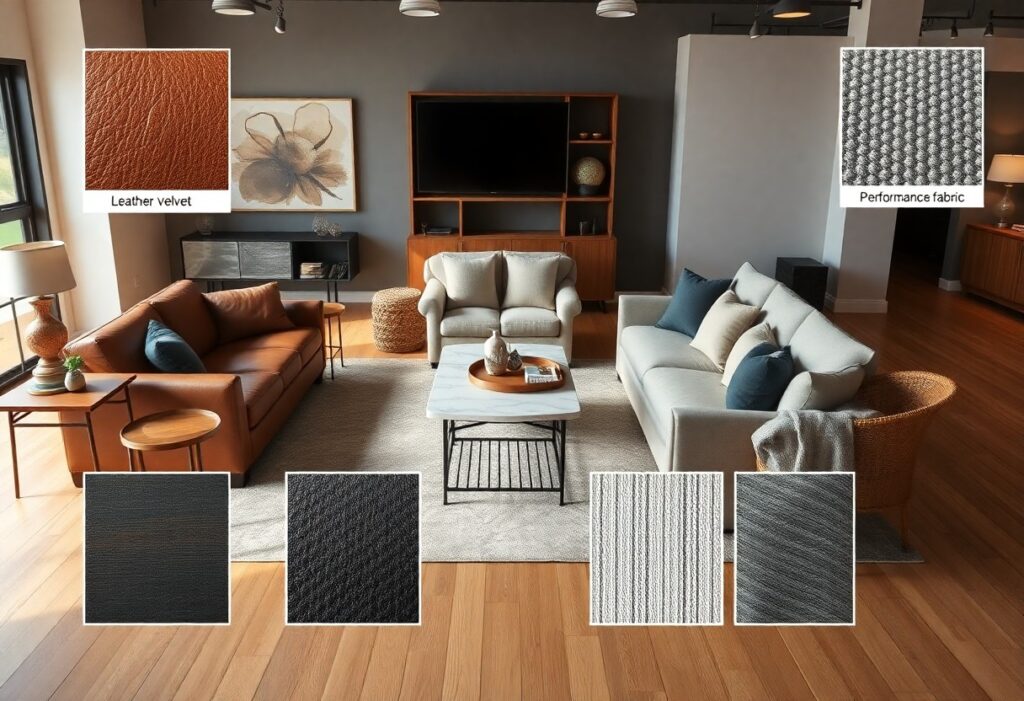

There’s a wide range of materials used in living room furniture, each with distinct durability, comfort, and maintenance needs. Your lifestyle and design preferences determine the best fit. Leather ages beautifully but requires care, while microfiber resists stains and suits families with kids or pets. Solid wood offers long-lasting strength and timeless appeal, whereas engineered wood is budget-friendly but less durable.
Key Takeaways:
- Leather furniture offers durability and a timeless look, making it ideal for households seeking long-lasting pieces with a classic aesthetic, though it requires regular maintenance to preserve its quality.
- Fabric upholstery provides a wide range of colors and textures, suiting families who prioritize comfort and style versatility, especially in homes with children or pets where softness and washable options matter.
- Wood and engineered materials balance strength and design, fitting well in spaces where natural aesthetics and sturdiness are valued, with solid wood being best for heirloom pieces and engineered wood offering affordability and stability.
The Honest Oak and Ash
Wood speaks truth through grain, and oak and ash are among the most honest choices for your living room. Their natural beauty ages gracefully, revealing character over time. You’ll find oak resists wear with impressive durability, while ash offers a lighter tone and smooth finish that adapts to modern or rustic settings.
Hardwood Endurance
Hardwoods like oak stand up to daily life with remarkable resilience. You’ll appreciate how they resist dents and scratches, especially in high-traffic areas. Their dense structure means furniture lasts decades, not years, making them a smart long-term investment for your home.
Softwood Simplicity
Softwoods such as pine offer an affordable, lightweight option with a clean, natural look. You’ll find them easier to move and refinish, though they scratch more easily. Their softer surface shows wear faster, but that can add charm if you love a lived-in aesthetic.
Choosing softwood means embracing imperfection as part of the story. You’ll notice dents and marks appear sooner, but many find this adds warmth and authenticity to a space. With proper care and occasional touch-ups, softwood furniture can remain functional and inviting for years, especially in low-stress environments like a reading nook or formal lounge.
Leather That Remembers
You’ll find full-grain leather adapts uniquely to your lifestyle, developing a personalized patina over time. This material doesn’t just age-it tells your story, with every scratch and softening marking moments lived. Its natural imperfections are not flaws but signatures of authenticity, making each piece one-of-a-kind.
Full Grain Integrity
Full grain leather uses the entire top layer of hide, preserving its natural grain and strength. It resists wear better than any other leather type, forming a tight barrier against spills and daily use. You’re choosing long-term resilience when you select this unaltered material.
The Grace of Aging
Each mark on full-grain leather adds character, not damage. Instead of fading or cracking, it deepens in color and softness, like a well-loved book or favorite jacket. You’re not maintaining perfection-you’re embracing evolution.
Over months and years, sunlight and touch work together to enrich the surface of your leather furniture. Oils from your hands, shifts in light, and daily contact gently condition the hide, creating a warm, lived-in glow. This transformation is irreversible and deeply personal-no two sofas will ever age the same way, ensuring your living room remains uniquely yours.
Fabric and the Loom
You’ll find fabric upholstery offers both comfort and character in your living room. Woven from natural or synthetic fibers, these materials adapt to your lifestyle when chosen wisely. Breathability, texture, and fade resistance vary widely, so match the weave to your home’s light and use.
Linen for the Heat
Linen keeps you cool when temperatures rise. This natural fiber pulls moisture away from the surface, helping your sofa stay dry and comfortable. Its loose weave promotes airflow, making it ideal for sunlit rooms and warm climates.
Wool for the Cold
Wool naturally insulates, trapping warmth without feeling heavy. You’ll appreciate its softness and resilience, especially in cooler regions. It resists wrinkles and recovers its shape, maintaining elegance even with daily use.
Wool’s structure includes natural crimps that create tiny air pockets, enhancing its ability to retain heat. You benefit from year-round comfort-warm in winter, yet surprisingly breathable in milder weather. Highly durable and naturally flame-resistant, wool is a long-term investment that ages gracefully with proper care.
Steel and Clear Glass
Industrial Bone Structure
You’ll notice steel frames provide unmatched structural integrity, forming the skeleton of modern industrial design. Their clean lines and minimal ornamentation resist warping and rust when properly coated, making them ideal for high-traffic living spaces where durability matters most.
Transparent Weight
Clear glass surfaces create a sense of openness, letting light flow freely across the room. Despite its delicate look, tempered glass handles daily use safely and pairs beautifully with steel for a sleek, uncluttered aesthetic.
Tempered glass used in coffee tables or shelving units undergoes intense heat treatment, making it up to five times stronger than regular glass. If broken, it shatters into small, less hazardous pieces instead of sharp shards-this safety feature is imperative if you have children or pets. Its transparency maintains visual space, preventing the room from feeling crowded.
The Weight of Stone
Stone furniture commands attention with its solid presence and natural elegance. You’ll feel its substantial mass the moment you interact with it-each piece grounded, unyielding, and built to last. Its durability is unmatched, though its weight means placement is permanent once set.
Marble Coldness
Marble feels cool under your hand, even in warm rooms. This natural chill can be refreshing in summer but less inviting during colder months. The surface may also etch or stain if not sealed properly, demanding consistent care to maintain its polished beauty.
Granite Permanence
Granite resists scratches, heat, and daily wear like few other materials. You’ll appreciate its toughness in high-traffic living areas where spills and bumps are common. Its natural patterns ensure no two pieces are alike, giving your space a unique, earthy character.
Granite’s dense composition makes it nearly impervious to damage from household use. You can set hot trays or sharp objects on it without fear of marks or burns. While it requires occasional sealing, neglect won’t ruin it quickly. Its resilience makes it ideal for homes with children or pets, where practicality meets refined style.
Finding the True Fit
Every home tells a story through its furniture choices. Your lifestyle, habits, and daily routines shape what materials will truly work. Durability, comfort, and ease of maintenance must align with how you live. Choosing wisely means balancing aesthetics with long-term function.
The Busy Household
Life moves fast when kids, pets, or constant activity fill your space. Stain-resistant fabrics like performance microfiber or leather handle spills and scuffs without fading. Opt for pieces with tight weaves and dark patterns to hide wear. Cleanability is your top priority-choose materials that survive real life.
The Solitary Space
Quiet homes allow for more delicate, expressive choices. Luxurious fabrics like velvet or light linen shine when there’s little risk of damage. You can prioritize texture and elegance over toughness. This setting rewards refined tastes with lasting beauty.
When you live alone or enjoy a calm environment, furniture becomes an extension of personal style. Without constant wear, you can embrace softer leathers, pale upholstery, and natural fibers that age gracefully. These materials develop a gentle patina over time, adding character rather than showing damage. Your space becomes a curated retreat, where comfort meets aesthetic intention.
Conclusion
Conclusively, your living room furniture material should reflect your lifestyle and preferences. Leather offers durability and ages well with use. Fabric suits families seeking comfort and variety. Wood brings timeless warmth and strength. Metal works for modern, low-maintenance spaces. Assess how you live, then choose the material that aligns with your needs and taste.