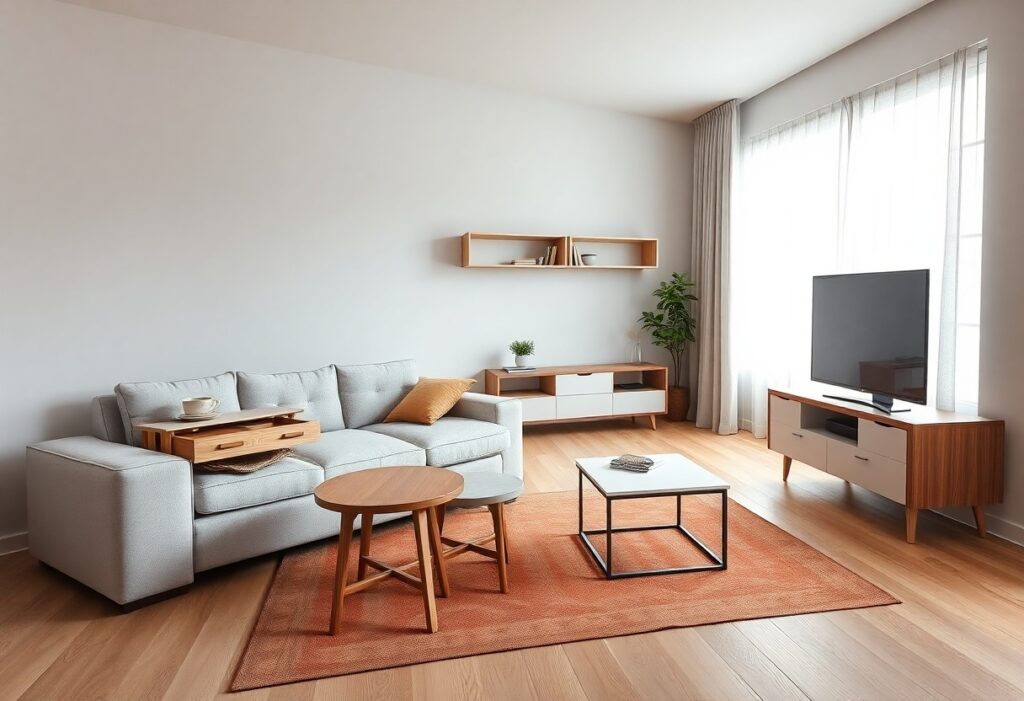

There’s a way to make your small living room feel spacious and stylish without sacrificing comfort. Choosing multi-functional furniture like storage ottomans and sofa beds can transform how you use your space. Potential design mistakes-like oversized pieces-can make a room feel cramped, but smart selections create positive, open environments that work perfectly for daily life.
Key Takeaways:
- Choose multi-functional furniture like storage ottomans or sofa beds to make the most of limited square footage without sacrificing comfort.
- Opt for scaled-down or leggy furniture designs that create visual openness and allow more floor space to remain visible.
- Use vertical space wisely with tall, narrow shelves or wall-mounted units that keep necessarys within reach while preserving floor area.
The Deceptive Charm of Storage
You might overlook a sleek ottoman, but its hidden compartment can double your living room’s storage. Designers often use furniture that disguises function as form, giving you space to stash blankets, books, or tech. A coffee table with drawers or a bench with interior volume keeps clutter out of sight. What looks decorative often becomes your most practical asset.
The Invisible Grace of Glass
You gain depth without bulk when choosing glass-topped tables or transparent chairs. This visual lightness keeps your room feeling open, even as you add functional pieces. A glass coffee table reflects light, making walls appear farther apart. Unlike solid furniture, it occupies space without dominating it. You maintain style and utility, all while preserving the airiness vital in small living rooms.
The Vertical Pursuit of Style
You gain serious storage and style by drawing the eye upward. Wall-mounted shelves keep crucials close without crowding the floor. Tall bookcases fit snugly in corners, turning dead space into display zones. Going vertical means less clutter and more room to move-transforming your walls into functional art.
The Foldable Art of Convenience
You gain instant flexibility when you choose furniture that folds away after use. A collapsible table or wall-mounted desk disappears when not needed, freeing up floor space for movement or other activities. Even fold-out chairs and nesting stools offer seating on demand without permanent footprints. These pieces prove smart design doesn’t sacrifice comfort for function.
Conclusion
To wrap up, you can transform your small living room into a functional, stylish space by choosing multi-purpose furniture, using vertical storage, and selecting pieces scaled to your room. Smart layouts and strategic design choices allow you to maximize every inch without sacrificing comfort or aesthetics.
FAQ
Q: What are the best types of furniture for a small living room to save space?
A: Sofas with hidden storage, nesting tables, and wall-mounted shelves work well in compact living rooms. A loveseat takes up less floor space than a full sofa and still offers comfortable seating. Choose pieces with exposed legs to create a sense of openness. Furniture that serves more than one purpose-like an ottoman with storage inside or a coffee table that doubles as a desk-helps reduce clutter and keeps the room functional without feeling crowded.
Q: How can I arrange furniture in a small living room to make it feel larger?
A: Place the largest piece, usually the sofa, against the longest wall to open up the center of the room. Float furniture away from walls only if the layout allows for clear walking paths. Use a rug to define the seating area without crowding it. Keep pathways at least 18-24 inches wide for easy movement. Mirrors across from windows reflect light and give the illusion of depth. Avoid blocking windows or doors with furniture to maintain a sense of flow and natural light.
Q: Are there space-saving alternatives to traditional entertainment centers?
A: Wall-mounted TV brackets eliminate the need for a bulky media console and free up floor space. A narrow console table or a low bookshelf can store media devices without dominating the room. Some models include doors or drawers to hide electronics and cords. Mounting speakers or using soundbars reduces the need for extra furniture. If space is extremely tight, consider using streaming devices so you can keep everything compact and out of sight.