
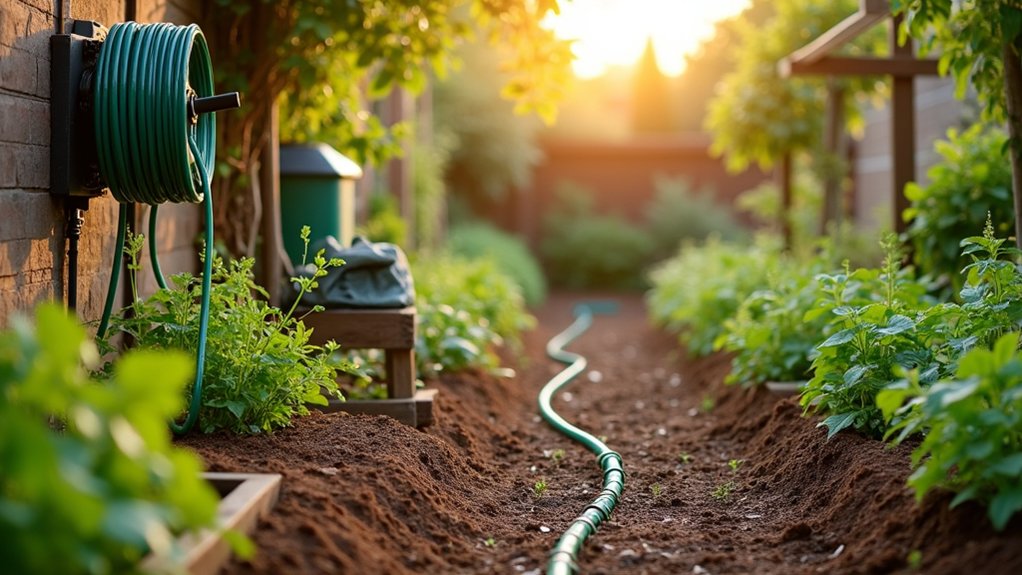

A low-stress garden should feel like a well-tailored jacket—sharp, comfortable, and effortless to wear. You get there by planning simple beds with wide paths, grouping plants that want the same light and water, and protecting soil with compost and a clean layer of mulch. Set drip lines or soaker hoses on a timer, then do a quick weekly sweep for weeds and spent blooms. The best part is how little you’ll do next…
Plan a Low-Maintenance Garden Layout First
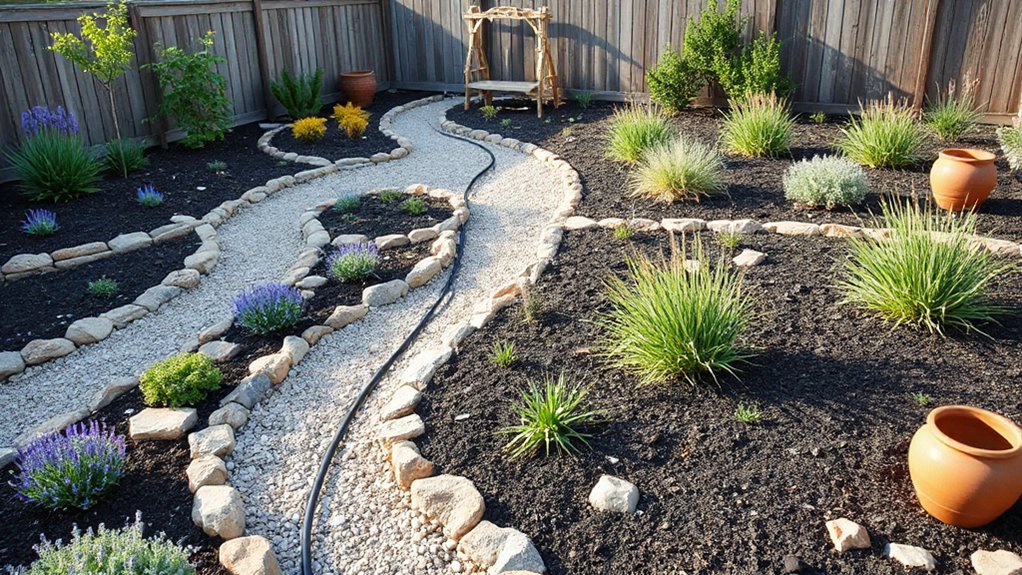
Before you buy a single plant, map out a layout that works with your life, not against it. Put the beds where you’ll actually water and harvest: close to the door, along a straight path, with a hose-friendly route. Keep edges crisp with metal or stone so weeds don’t creep and garden aesthetics stay intentional.
Group plants by sun and water needs, then repeat shapes and colors for a calm, designed look. Choose wider paths and fewer, larger beds so you can reach everything without stepping on soil. Add a simple seating spot to make quick check-ins feel inviting.
For pest control, leave airflow between plantings, avoid tight corners, and reserve a clear zone for easy scouting and cleanup.
Build Low-Maintenance Garden Soil That Feeds Plants
Even if you love a lush, layered look, low-stress gardening starts under the surface with soil that stays crumbly, moist, and nutrient-rich on its own. Aim for structure first: top-dress beds with 1–2 inches of finished compost each season, then cover it with shredded leaves or bark fines to lock in moisture and keep the surface tidy.
For smart soil enrichment, mix in worm castings around heavy feeders and add a light dusting of rock minerals if your soil’s thin or sandy. Use simple composting techniques—kitchen scraps plus dry browns, turned occasionally—to create a steady, free amendment.
Skip constant digging; instead, aerate gently with a fork and let roots, microbes, and mulch do the work. Your garden looks curated, not coddled.
Pick Low-Maintenance Plants for Your Light and Zone
Although a garden can look effortless, it only stays that way when you match plants to the light you actually have and the hardiness zone you live in. Start by mapping sun patterns: full sun, part shade, bright shade. Then choose plants labeled for your zone so they overwinter cleanly and don’t demand constant rescue.
Lean on Native plants; they’re tuned to your climate swings, soils, and local pests, so they keep their shape with less fuss. In hotter, exposed spots, favor drought tolerant species with silver leaves, deep roots, or narrow foliage for a crisp, modern look.
In shade, pick textured growers—ferns, heuchera, woodland sedges—that stay lush without coddling. Group plants with similar light needs so your beds look intentional and stay calm.
Set Up Low-Maintenance Watering (Drip, Soaker, Timers)
Set your garden up to water itself by choosing drip lines for precision or soaker hoses for an even, quiet soak under mulch. Add smart water timers so you’re not chasing schedules, and let weather-aware settings keep things efficient.
Then optimize watering zones and pressure so every bed gets the right flow—no misting, no puddles, just clean, consistent growth.
Choose Drip Or Soaker
Wondering which low-maintenance watering method will keep your garden thriving without turning your mornings into a hose-and-sprinkler routine? Start by matching the system to your layout and planting style.
Drip lines shine in curated beds and container groupings, delivering water precisely at the root zone—one of the key drip irrigation benefits for tidy, efficient garden design. Use emitters for thirsty tomatoes, micro-sprays for herbs, and keep foliage dry to reduce disease.
Choose a soaker hose when you’ve got long borders, dense groundcovers, or informal cottage plantings. The soaker hose advantages include quick setup, gentle seepage, and even moisture along winding edges.
Bury it under mulch for a clean look, less evaporation, and fewer weeds.
Add Smart Water Timers
Once you’ve picked drip lines or a soaker hose that suits your beds, add a smart water timer to keep that steady moisture going while you get your mornings back. You’ll set start times, run lengths, and days once, then let the schedule handle the routine while your borders stay evenly refreshed.
Choose Smart water timers with app control so you can pause watering from the porch when rain rolls in, or trigger a quick cycle after a windy afternoon. For a cleaner look, tuck the timer behind a planter or inside a valve box and route lines neatly along bed edges.
With garden automation, you’re not guessing—you’re maintaining consistency, reducing waste, and keeping foliage dry at the right hours. Your garden looks intentional, not overwatered.
Optimize Zones And Pressure
If your drip lines sputter at the far end or your soaker hose floods one bed while another stays dry, your zones and pressure need a quick tune-up.
Start with zone optimization: group plants by thirst and sun, then run separate lines for containers, veggie rows, and shrubs so each area gets exactly what it needs. Keep runs short, use consistent tubing sizes, and cap dead ends to prevent weak flow.
For pressure management, add a regulator at the source, install a filter, and use pressure-compensating emitters for long beds or slopes.
Test with a simple gauge, then adjust until emitters bead evenly, not spray. You’ll save water, reduce stress, and keep foliage crisp and clean.
Stop Weeds Fast With Mulch and Groundcovers
Because bare soil invites trouble, you’ll stop weeds faster by covering it with a clean layer of mulch or a living carpet of groundcovers. Start with smart Mulch strategies: lay cardboard over weeds, overlap seams, then add 2–3 inches of shredded bark or composted wood. Keep mulch a few inches off stems, and refresh thin spots before sunlight reaches soil. Choose a mulch color and texture that echoes your hardscape for a finished, intentional look.
Lean on groundcover benefits where mulch drifts or slopes: thyme, sedum, ajuga, or native strawberries knit the surface, shade germinating seeds, and soften edges. Plant densely, water in well, and let foliage interlock. You’ll spend less time pulling, and your beds will look calm, tailored, and complete year-round.
Follow a 10-Minute Weekly Garden Maintenance Routine
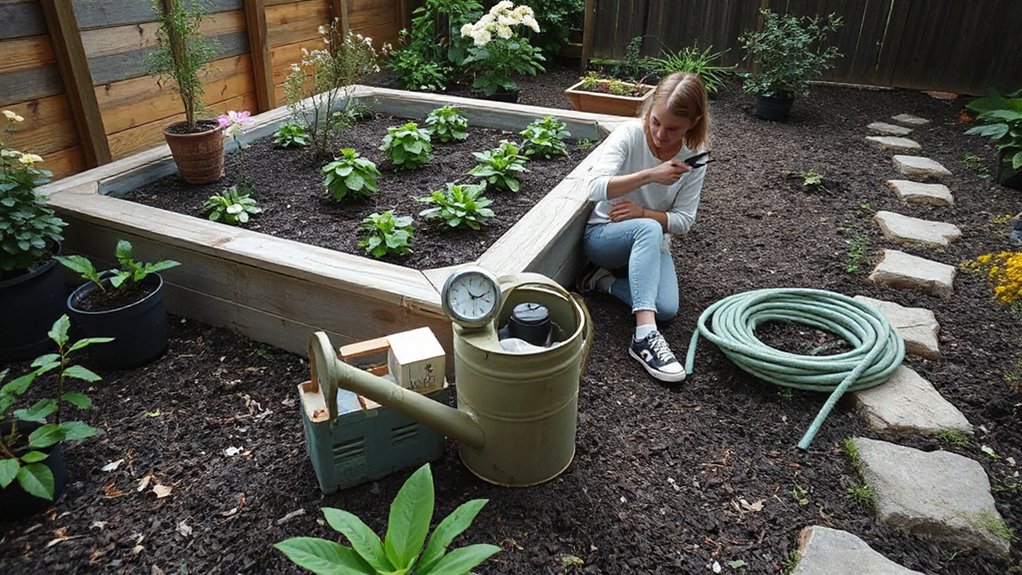
When you treat garden upkeep like a weekly reset instead of a weekend project, you’ll keep beds crisp with just 10 minutes and zero drama. Set a timer and do a tight loop: scan foliage, then soil, then edges. Pinch spent blooms, snip stray stems, and lift any yellowing leaves to keep the look clean and airy.
Next, check for garden pests under leaves and along new growth; remove offenders by hand and rinse with a firm spray if needed. Pull a few fresh weeds before they root deep, then smooth mulch lines for a tailored finish.
Finish with composting tips you’ll actually use: scrape a thin layer of screened compost around feeders, water it in, and wipe down tools. You’re done, and your garden still looks styled.
Finish Seasonal Garden Maintenance Quickly (Spring–Winter)
That 10-minute weekly reset keeps your beds looking sharp, but the real time-saver is pairing it with quick seasonal touchpoints that prevent bigger cleanups later.
In spring, top-dress with compost, edge beds, and refresh mulch to lock in a crisp outline. Add simple Garden pest control: inspect new growth, rinse aphids, and set traps before infestations spread.
In summer, deadhead, tie in strays, and water deeply at dawn; you’ll preserve structure and reduce scorch.
In fall, do seasonal pruning on spent perennials, cut back diseased stems, and rake leaves into a fast mulch layer or bag them for compost.
In winter, clear broken branches, protect crowns with straw, and clean tools.
These small, timed moves keep your garden polished, calm, and always camera-ready.
Conclusion
You don’t need to live in your garden like it’s a full-time job. Plan simple beds, build rich soil, choose tough plants, and let drip lines and timers do the heavy lifting. Smother weeds with mulch and groundcovers so thoroughly they’ll think twice about showing up. Then keep it all humming with a 10-minute weekly sweep and brisk seasonal resets. Suddenly, your “maintenance” feels like strolling through a magazine spread.