
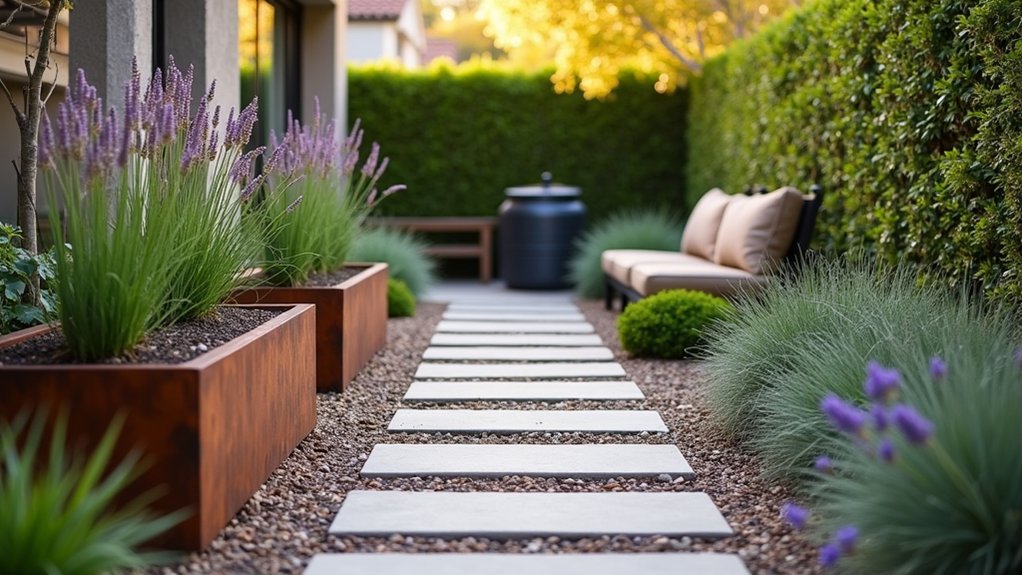

You can build a garden oasis that looks intentional without signing up for constant chores if you start with your site: track sun, drainage, and how much you want to spend. Choose climate-proof, drought-tolerant plants, then group them by water needs so you’re not overwatering half the bed. Add gravel, permeable pavers, and big stepping stones to cut weeding time. The key move most people skip comes next…
Plan Your Low‑Maintenance Garden (Sun, Soil, Budget)
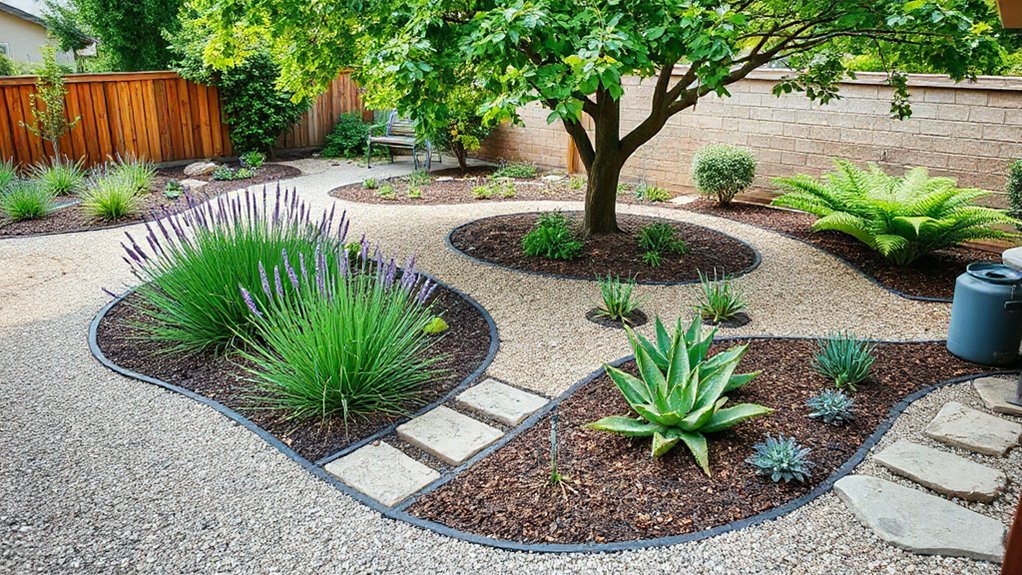
Before you buy a single plant, map out the three things that will make—or break—a low‑maintenance garden: sun, soil, and budget.
Track light for a week: note morning vs. afternoon sun, shade from fences, and hot reflected spots near walls.
Then test soil texture by squeezing a damp handful; add a lab test if you’re unsure about pH or nutrients.
Use what you learn to simplify garden design: group areas with similar light and soil, limit bed shapes, and choose a repeatable layout that’s easy to edge and mulch.
Finally, set a realistic budget for hardscaping, irrigation, compost, and seasonal refreshes.
Smart plant selection comes last, guided by your site map, not impulse buys.
Pick Drought‑Tolerant Plants for Your Climate
Start by matching every pick to your USDA hardiness zone so plants can handle your winter lows and summer heat without constant babying.
Choose native, water-wise species that thrive on local rainfall patterns and keep your garden aligned with today’s sustainable, low-input landscaping trends.
Then group plants by water needs (hydrozones) so you can irrigate efficiently and avoid overwatering your toughest performers.
Match Plants To Hardiness Zone
Wondering why some “drought‑tolerant” plants still struggle in your yard? They might be tough with water, but not with your winter lows or summer highs. Match every pick to your USDA hardiness zone and heat zone, not the tag’s hype. Check minimum temperature ratings, then confirm sun exposure and wind tolerance so foliage doesn’t scorch or split.
Buy plants labeled for your exact zone range (or colder) and avoid “zone pushing” unless you’ll provide shelter. This simple filter cuts Plant disease risk from cold damage and stress, and it improves Pest control because healthier plants attract fewer opportunistic insects.
Use a zone map app, track microclimates near walls and patios, and group plants by zone needs for easier care.
Choose Native Water-Wise Species
Even if you’ve nailed your zone, you’ll save the most water (and get the most reliable growth) when you choose natives and well-adapted regional plants that evolved with your area’s rainfall patterns, soils, and seasonal swings. Start with native plant selection lists from your local extension, native plant society, or nursery tags, then filter for “xeric,” “drought-tolerant,” and “pollinator-friendly” picks that still look lush.
Prioritize deep-rooted perennials, bunch grasses, and shrubs that handle heat without daily watering. Swap thirsty annuals for long-blooming natives, and choose cultivars only if they keep the species’ resilience.
Build water conservation techniques into plant choice: look for waxy leaves, silver foliage, and summer dormancy traits. You’ll prune less, replace fewer plants, and keep color through dry spells.
Group By Water Needs
Once you’ve shortlisted native and region‑adapted plants, make them work harder by grouping them into “hydrozones” based on how much water they actually need. Put thirstier perennials and containers near the house or hose, and park drought‑tolerant shrubs, grasses, and succulents farther out. This layout boosts Water conservation because you won’t overwater tough plants just to keep a few favorites happy.
Match each zone to a dedicated irrigation line: drip for beds, micro-sprays for groundcovers, and a separate valve for any higher‑use pocket. Adjust emitters by plant size, not by guesswork, and mulch each zone to hold moisture.
You’ll improve irrigation efficiency, reduce runoff, and keep maintenance light even through heat waves or watering restrictions.
Group Plants Into Simple Water‑Need Zones
Start by tagging your low‑water plants—think succulents, lavender, and native grasses—so you know what can thrive on minimal irrigation.
Then cluster plants with matching moisture needs in the same beds or borders, keeping thirstier varieties closer to higher‑use areas.
You’ll simplify your setup by aligning these groupings with straightforward irrigation zones, so each line or drip circuit waters only what it should.
Identify Low‑Water Plants
Because your irrigation plan should match your plant choices—not the other way around—identify low‑water plants early and group them into simple water‑need zones you can manage at a glance.
Start with proven natives and Mediterranean staples that thrive on infrequent deep watering: lavender, rosemary, sage, yarrow, salvia, agave, sedum, and ornamental grasses like blue fescue.
Use plant tags and local extension lists to confirm “low” water use, sun tolerance, and mature size.
Follow xeriscaping principles by prioritizing plants with small or silver leaves, deep roots, and heat tolerance, then limit thirsty annuals to containers you can control.
For trend-smart, drought resistant landscaping, mix textures and bloom times so your yard stays lush-looking without constant hose time.
Cluster By Similar Needs
After you’ve flagged your low‑water picks, map them into a few clear water‑need zones so you’re not overwatering half the yard to keep one plant happy. Keep drought-tough perennials and herbs together, place moderate drinkers near shade or downspouts, and reserve the thirstiest plants for containers or a small bed you can watch.
Use repeating plant “blocks” for a modern, designer look and easier care: three to five of the same plant reads tidy and cuts guesswork. Match soil prep to each zone, too—blend in finished compost where plants need steadier moisture, and keep gritty mixes for xeric areas.
Smart Composting techniques also reduce fertilizer chores. When plants share conditions, you’ll spot Garden pests faster and treat only the affected zone, not everything.
Simplify Irrigation Zones
Where does your water actually go once you turn on the hose or timer? If you can’t answer fast, your beds are probably overwatered in spots and stressed in others.
Simplify by grouping plants into just three water-need zones: low (natives, succulents), medium (shrubs, most perennials), and high (new plantings, containers, veggies).
Run each zone on its own line, then fine-tune with zone control instead of cranking the whole system longer.
A drip system makes this easy: use separate manifolds or valves, then match emitter flow rates—1/2 gph for drought-tolerant, 1 gph for mixed beds, 2 gph for thirstier pockets.
Add a moisture sensor or smart controller to cut waste.
Layer Shrubs, Perennials, and Grasses for Fullness
To make your garden feel lush instead of sparse, layer plants by height and texture: anchor beds with a few structural shrubs in the back or center, thread in mid-height perennials for color and seasonal change, then finish with airy ornamental grasses along the edges for movement and a clean, modern look.
Layer shrubs in repeating groups of 3–5 so the design reads intentional, not cluttered. Choose evergreen forms (boxwood, inkberry, dwarf conifers) for year-round structure, then build perennial borders with long-blooming, drought-tolerant workhorses like salvia, nepeta, echinacea, and sedum.
Use grasses such as feather reed or blue oat for vertical lines that stay tidy. Repeat the same palette across beds to simplify care and unify the space. Keep spacing true to mature size.
Stop Weeds With Mulch and Groundcovers
Even if you plant densely, bare soil invites weed seeds to sprout, so lock it down with a one-two combo of mulch and living groundcovers. Spread 2–3 inches of shredded bark or leaf mold, keeping it a few inches off stems to prevent rot. Top up once a year, ideally after a light weeding so you don’t bury seedheads.
This simple layer is your best low-effort weed prevention strategy and keeps moisture in during heat waves.
For groundcover selection, match plants to light and traffic: creeping thyme for sunny edges, sedum for dry beds, ajuga or sweet woodruff for shade.
Plant plugs 8–12 inches apart, water for two weeks, then let them knit into a weed-smothering mat.
Add Hardscaping to Reduce Garden Upkeep
Mulch and groundcovers handle a lot of weed pressure, but you can cut maintenance further by swapping fussy planting areas for hardscaping that doesn’t need watering, weeding, or pruning.
Replace narrow beds with gravel, decomposed granite, or permeable pavers to keep things tidy and on-trend. Edge every surface with steel or stone so materials don’t creep into planting zones, and add a weed barrier only where it won’t block drainage.
Create a small patio pad for garden furniture so you’re not constantly trimming around chair legs. Use large-format stepping stones to define paths and prevent soil compaction.
Finish with a few durable decorative ornaments—think corten spheres or stone bowls—that deliver style without chores. Keep surfaces swept, not fussed over.
Set Up Drip Irrigation and a Simple Schedule
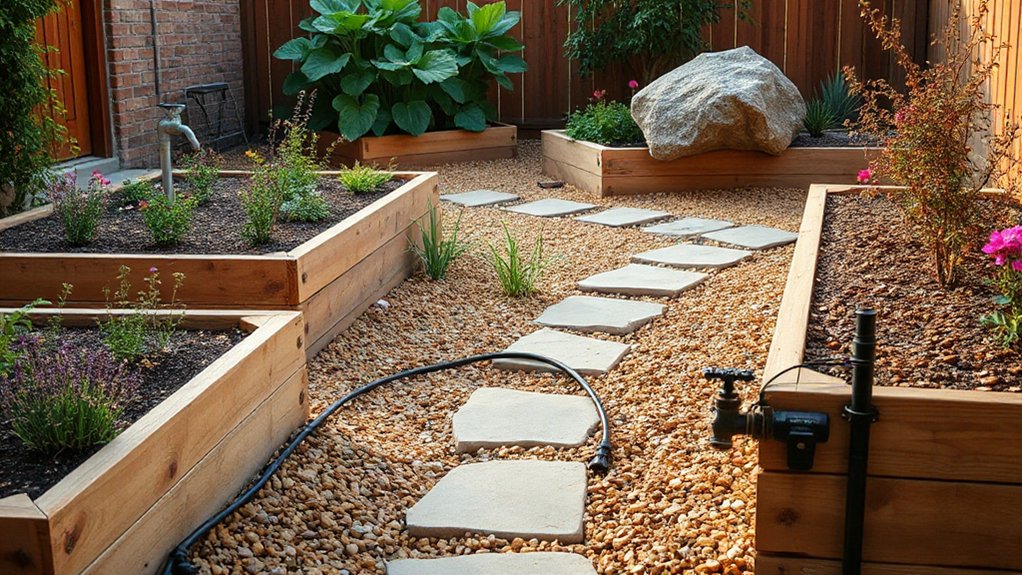
Because hand-watering wastes time and often misses root zones, you’ll get better results with a basic drip system and a no-drama schedule you can actually stick to.
Start with 1/2-inch mainline tubing along beds, then run 1/4-inch lines to each plant. Use pressure-compensating emitters (1–2 GPH) for shrubs and inline dripline for groundcovers, so every spot gets even flow.
Add a filter and 25 PSI regulator at the spigot, then cap the ends for quick flush-outs.
Put the system on a battery timer and build a simple watering schedule: deep, less frequent cycles—2–3 times weekly in heat, weekly in mild weather. Adjust by soil: sandy needs shorter runs; clay needs slower, longer runs.
Easy Weekly Routines to Keep Your Oasis Neat
Once your drip schedule runs on autopilot, you can keep the whole garden looking “resort neat” with a quick weekly reset that takes 20–30 minutes.
Start by doing a fast loop: snip spent blooms, pull tiny weeds before they root, and edge paths with a half-moon edger for clean lines. Shake out mulch where soil shows to prevent splash and fungus.
Next, scan leaves top and underside; remove damaged foliage and hose off aphids, then refresh sticky traps or neem as your light-touch pest control.
Wipe down containers, rinse birdbaths, and straighten Garden decor—lanterns, cushions, and solar stakes—so everything looks intentional.
Finally, top up a small “grab bucket” with gloves, twine, and pruners for next week.
Conclusion
You’re not chasing a perfect garden—you’re building a system that runs itself. Think of it like batching tasks on your phone: once you set zones, mulch deep, and lay gravel or permeable pavers, the “apps” stop draining your time. One weekend, I swapped sprinklers for drip and a moisture sensor; my water use dropped about 30%. Now you’ll just prune, pull a few weeds, and reset mulch—small beats, steady calm.