

We’re going to look at smart home devices that actually cut energy bills. Your biggest energy leaks often hide in plain sight—inside “set-and-forget” habits and always-on gear. You can trim bills without cluttering your space if you choose devices that work like good design: quiet, precise, and purpose-built. Think adaptive thermostats, discreet sensors, and plugs that cut standby load while staying out of view. The trick is matching each upgrade to how your rooms actually live and breathe—and that’s where it gets interesting.
How to Choose Smart Devices That Lower Energy Bills
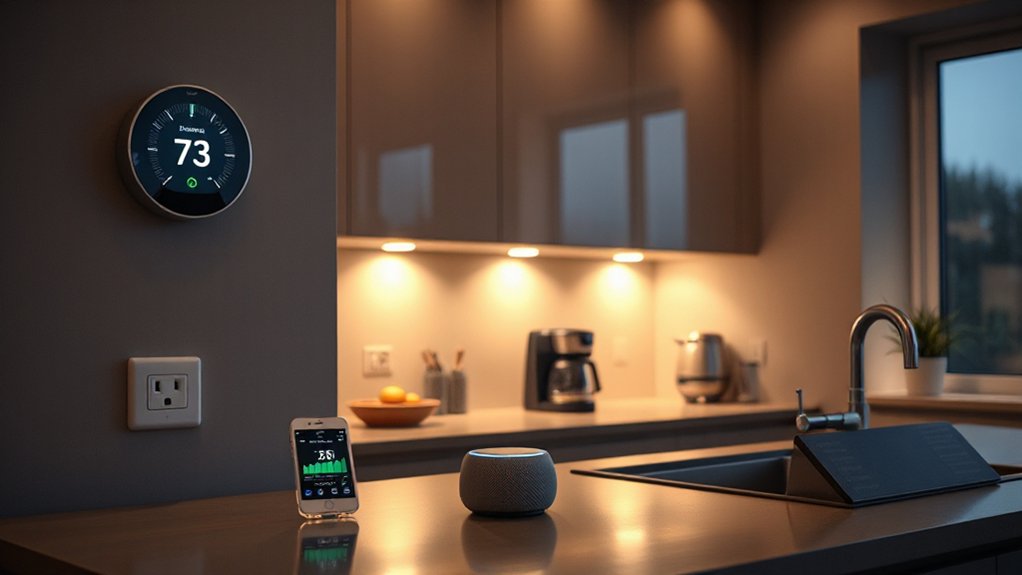
If you want smart devices that actually shrink your utility bill, start by targeting the loads you use every day—heating and cooling, hot water, lighting, and standby power. Choose gear with clear wattage data, scheduling, and occupancy sensing, so you cut waste without cluttering rooms.
Prioritize compact hubs and flush-mount switches that disappear into trim lines, not bulky add-ons.
For kitchens and laundry, upgrade to Energy efficient appliances with connected eco-modes and delay-start, letting you run cycles when rates drop.
Add smart power strips in matte, heat-resistant housings to kill vampire draw at media consoles.
For outdoor paths and sheds, pick solar powered devices with replaceable cells and sealed lenses; you’ll save wiring, preserve sightlines, and reduce maintenance.
Smart Thermostats That Lower HVAC Energy Costs
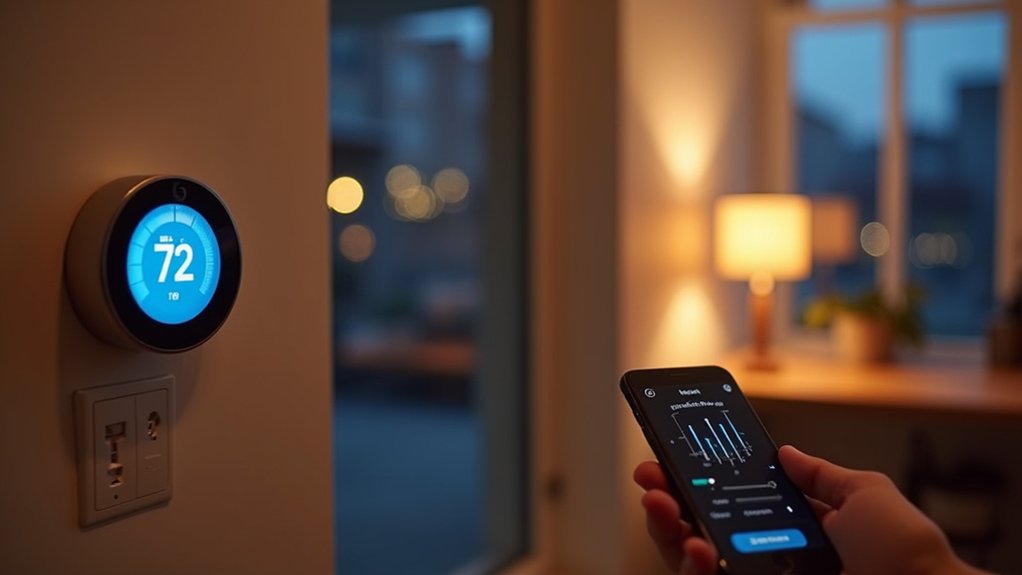
While lighting and plugs help at the margins, a smart thermostat cuts deeper by tightening control over the biggest load in most homes: HVAC. You’ll trim runtime with adaptive schedules, occupancy sensing, and geofencing that preps comfort only when you’re actually home.
Choose a unit with a slim profile, a matte glass face, and a clean bezel that sits flush on drywall; it reads like a small wall object, not a gadget. Pair it with room sensors to balance hot and cold zones, then set tight deadbands and modest setbacks to lock in Energy saving habits without constant tweaking.
With smart device integration, you can tie it to window sensors or a voice routine so it pauses conditioning when you ventilate. Review monthly reports and nudge setpoints by one degree.
Smart Water Heaters That Cut Hot-Water Energy Use
After you’ve tightened HVAC runtime with a smart thermostat, aim at the next steady energy drain: hot water. Swap in a smart heat-pump or controller-equipped tank that learns your routines and schedules heating for demand, not idle standby. You’ll boost Water heater efficiency by trimming recovery cycles, setting tighter temperature bands, and enabling vacation mode from your phone.
Design-wise, choose a tall, slim cabinet footprint or wall-hung unit to free floor area; pair it with neat, insulated PEX runs and a compact recirc valve only where needed. Look for corrosion-resistant tanks, quality foam insulation, and leak-detection shutoff to protect finishes.
With utility-rate integration, the heater shifts loads to off-peak hours—Energy saving technology that cuts cost without sacrificing comfortable showers daily.
Smart Lighting That Reduces Electricity Use
Because lighting touches every room and fixture, smart bulbs and switches deliver fast, visible savings without changing your layout. You’ll trim watts by scheduling lights to match your routines and daylight, not habits.
Use occupancy and ambient-light sensors to shut off forgotten sconces in halls, closets, and laundry nooks, keeping small spaces tidy and purposeful.
Automated dimming is the quiet workhorse: set task-level brightness for counters and desks, then let scenes fade to a softer glow after dinner.
Choose warm-dim LEDs in matte glass for vintage fixtures, or slim down can lights with retrofit smart trims that disappear into the ceiling.
Color changing bulbs let you shift tone for mood without over-lighting—cooler for focus, warmer for wind-down—while staying efficient throughout.
Smart Plugs and Strips That Stop Vampire Power
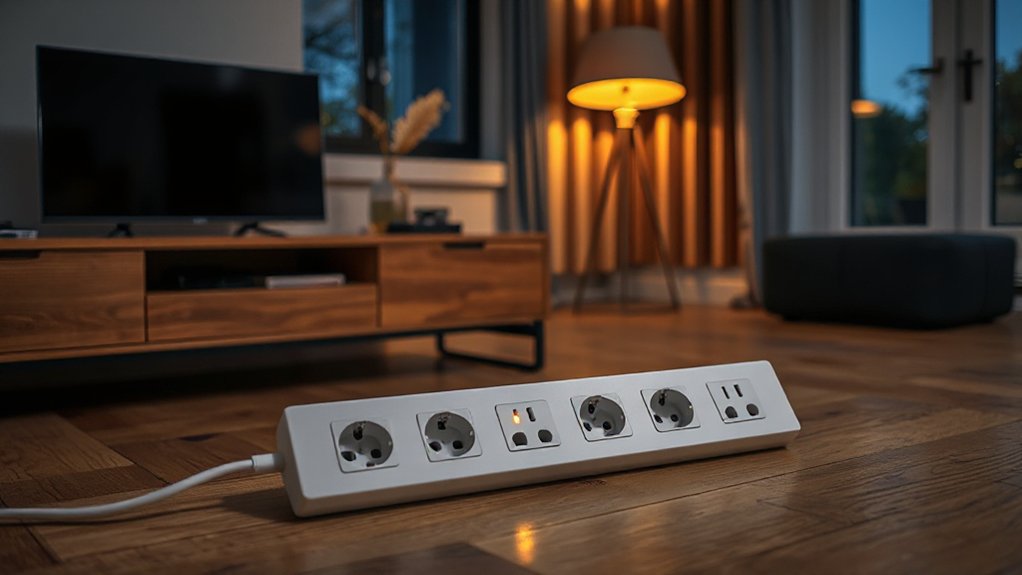
Where does your energy bill leak when everything looks “off”? It’s the quiet draw from chargers, game consoles, routers, and TVs waiting on standby. A smart plug cuts that vampire power with schedules, motion triggers, and automatic shutoff when you leave.
Choose compact, matte polycarbonate bodies or aluminum-faced models that blend into outlets instead of bulking up your wall plane.
For media centers and desks, swap your cheap strip for a smart power strip with spaced sockets and a slim braided cord that routes cleanly along baseboards. You’ll get granular power management: kill peripherals when your computer sleeps, or group devices by scene.
Pair each energy-efficient appliance with a plug that reports watts so you can spot the worst offenders fast, and fix them quickly.
Smart Blinds That Reduce Heating and Cooling Demand
Standby watts aren’t the only invisible drain—your windows can quietly push HVAC runtimes up all day. Smart blinds tackle that load with automated shading that responds to sun angle, room temp, and time of day, so you’re not overcooling a bright afternoon or overheating a winter morning.
Choose tight-weave, light-filtering fabrics to cut glare without turning rooms into caves, or reflective-backed textiles for south- and west-facing glass.
In small spaces, slim cassette headers and low-profile side channels keep the look crisp and reduce light leaks that drive heat gain. Solar powered blinds avoid messy wiring and suit rentals, while still syncing to schedules and voice control.
Set “summer close” and “winter open” routines, and you’ll feel the comfort shift fast.
Smart Energy Monitors to Find and Fix Power Hogs
Even if you’ve optimized lighting and HVAC, a few unnoticed circuits can keep your bill stubbornly high—smart energy monitors pinpoint the exact loads in real time. Installed inside your panel, they’re invisible, leaving your walls clean and your closet space untouched, with slim CT clamps and tidy cable routing that won’t fight your millwork.
You’ll get Energy consumption analytics that translate watts into daily patterns, so you can spot a fridge cycling too often, a dehumidifier stuck on high, or a “sleeping” entertainment rack that never sleeps. Set alerts for spikes, then fix with a smart plug, timer, or a better gasket.
Prioritize device compatibility before you buy, especially for solar, EV chargers, and multi-zone panels.
Conclusion
Choose smart devices that earn their shelf space by shrinking waste, not adding clutter. Start with a thermostat and water heater that learn your rhythm, then layer in lighting, plugs, and strips that cut standby draw. Add blinds that sculpt sunlight like a shade architect, easing HVAC strain. Finish with an energy monitor to spotlight power hogs. You’ll spend less without sacrificing comfort—and your home will feel cleaner, tighter, and purpose-built.