
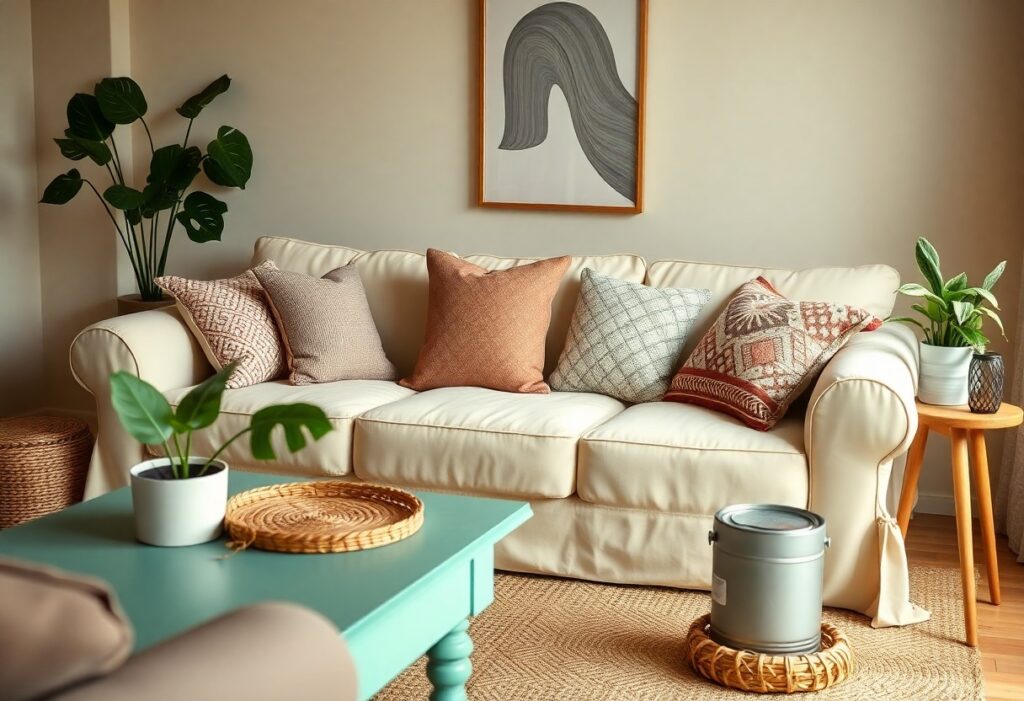

Just swap out throw pillows, repaint old frames, or add a new rug to transform your space. You don’t need to buy new furniture-small changes make the biggest impact. With smart updates, you’ll save hundreds while giving your living room a fresh, stylish look in hours.
Key Takeaways:
- Repaint or refinish existing furniture to give it a fresh look-this simple update can transform the feel of your living room at a fraction of the cost of buying new pieces.
- Swap out throw pillows, rugs, and curtains with on-trend or seasonal options to instantly change the room’s style without a major investment.
- Reconfigure the layout of your current furniture to create a new flow and perspective, making the space feel refreshed and more functional.
Essential Factors to Evaluate Before Starting
Assess your living room layout, available materials, and personal style preferences before making changes. Consider how much time and effort you can commit. Think about durability, comfort, and long-term use. Assume that
- Your space dictates furniture size and placement
- Budget limits affect material and color choices
- Lifestyle determines fabric and finish durability needs
- Lighting impacts how colors appear in the room
Analyzing your current living room layout
Study how you currently use the space. Identify traffic patterns and seating efficiency. Notice which furniture pieces feel out of place or block movement. A well-organized layout improves flow and comfort. Assume that
Setting a realistic budget for materials
Determine how much you can spend on paint, fabric, or new accessories without straining finances. Prioritize key updates that deliver the most visual impact. Assume that
Choosing affordable materials like washable paint or second-hand textiles keeps costs low while offering fresh results. Discount stores, online marketplaces, and seasonal sales provide quality options at lower prices. Track every expense to avoid overspending. Assume that smart sourcing multiplies your budget’s value.
How to Revive Upholstery Without Reupholstering
Breathe new life into tired furniture by addressing stains, odors, and fabric wear without the high cost of reupholstering. Professional-grade cleaning and slipcovers offer fast, affordable transformations that dramatically improve your living room’s look and feel.
Utilizing professional-grade cleaning methods
Clean deeply with tools like steam cleaners or rental extraction machines to lift ground-in dirt and refresh fabric. These methods remove allergens and bacteria, not just surface stains, giving your sofa a healthier, like-new appearance. Always test cleaning solutions on a hidden area first to avoid damage.
Selecting and fitting stylish slipcovers
Choose slipcovers that match your style and fit snugly over your existing pieces. Stretchable, wrinkle-resistant fabrics offer a tailored look without constant adjusting. A well-fitted cover instantly modernizes dated upholstery and protects against future spills and pet wear.
When deciding on slipcovers, measure your furniture carefully and opt for machine-washable materials for easy upkeep. Look for reversible options or those with decorative details like piping or tufting to add character. The right fit hides sagging cushions and uneven frames, creating a polished, intentional look that mimics custom upholstery at a fraction of the cost.
Practical Tips for Refinishing Wooden Furniture
- Use sanding to remove old finishes and smooth imperfections
- Choose stain or chalk paint based on your desired finish and wood type
- Always work in a well-ventilated area with proper protective gear
- Apply finishes with even strokes to avoid drips and streaks
Assume that preparation is just as important as the final coat.
Sanding techniques for a smooth surface
Start with coarse-grit sandpaper to strip away old varnish, then progress to finer grits for a silky finish. Always sand in the direction of the grain to prevent scratches. Wipe down the surface with a tack cloth between passes to remove dust. This step ensures your new finish adheres evenly and looks professional.
Applying stains or chalk paint for a new look
Stain enhances the wood’s natural grain while adding rich color, ideal for a timeless appeal. Chalk paint adheres without priming and offers a matte, vintage look with minimal prep. Both options are budget-friendly and transform tired pieces dramatically. Assume that
When applying stain, use a clean cloth or brush to work it into the wood evenly, then wipe off excess to prevent blotchiness. For chalk paint, two thin coats beat one thick layer-this reduces drying time and prevents cracking. Seal with clear wax or polyurethane to protect the finish and boost durability. These finishes let you customize color and texture while preserving the piece’s integrity.
Expert Tips for Strategic Furniture Rearrangement
Transform your living room by rethinking layout instead of replacing pieces.
- Position seating to encourage conversation
- Align furniture with architectural features like windows or fireplaces for a focal point
- Leave at least 18 inches for walkways to maintain traffic flow
Recognizing how each change affects the room’s energy helps you make smarter, cost-effective choices.
Creating new focal points without spending money
You can shift attention in your space simply by repositioning key items. Try angling your sofa toward a natural light source or highlighting artwork already on your walls. A well-placed lamp or mirror can draw the eye and redefine the room’s center. Reframing existing elements often has the same impact as buying new decor.
Improving traffic flow and spatial balance
Clear pathways make your room feel larger and more inviting. Avoid blocking doorways or creating tight squeezes between furniture. Proper spacing prevents cluttered movement and enhances comfort. Recognizing high-traffic zones helps you place pieces where they support, not hinder, daily use.
Start by mapping how you naturally move through the room-do you walk straight to the kitchen or circle around the couch? Position larger furniture against walls or use area rugs to define zones without closing off space. Keep end tables within reach but not in walkways. When seating is balanced and pathways are open, the room feels more functional and calm. Strategic placement reduces visual weight and improves how the space lives day to day.
Key Factors for Buying High-Quality Secondhand Pieces
- Assess the material quality-solid wood and metal frames last longer than particle board.
- Check for signs of wear that affect function, not just appearance.
- Verify dimensions to ensure the piece fits your space.
- Look for timeless design that complements your current decor.
Smart choices now save money and effort later. The best finds combine durability, style, and value.
Inspecting used items for structural durability
Test every joint, leg, and seam by gently wobbling the piece. Weak spots often hide under fabric or dust. Avoid items with cracks, soft wood, or loose frames. Repairs can add up fast. The sturdiest furniture feels heavy and solid, not shaky or hollow.
Navigating thrift stores and online marketplaces
Visit thrift stores midweek when new stock arrives. Online, set alerts for keywords like “solid wood sofa” or “mid-century dresser.” Sort by newest listings to beat the crowd. The quickest deals go to those who act fast and know what to look for.
Thrift shopping rewards patience and timing. Stores like Goodwill restock shelves daily, and weekend crowds miss midweek gems. On platforms like Facebook Marketplace or Craigslist, sellers often lower prices after a few days. Search consistently and respond quickly-great pieces vanish in hours. The smartest buyers combine routine checks with clear goals to score long-lasting wins.
Conclusion
So you can refresh your living room furniture without spending much by repurposing what you already own, adding new textiles, painting old pieces, or rearranging layouts. You don’t need a large budget-just creativity and a clear vision. Small changes, done well, transform your space into something inviting and renewed.