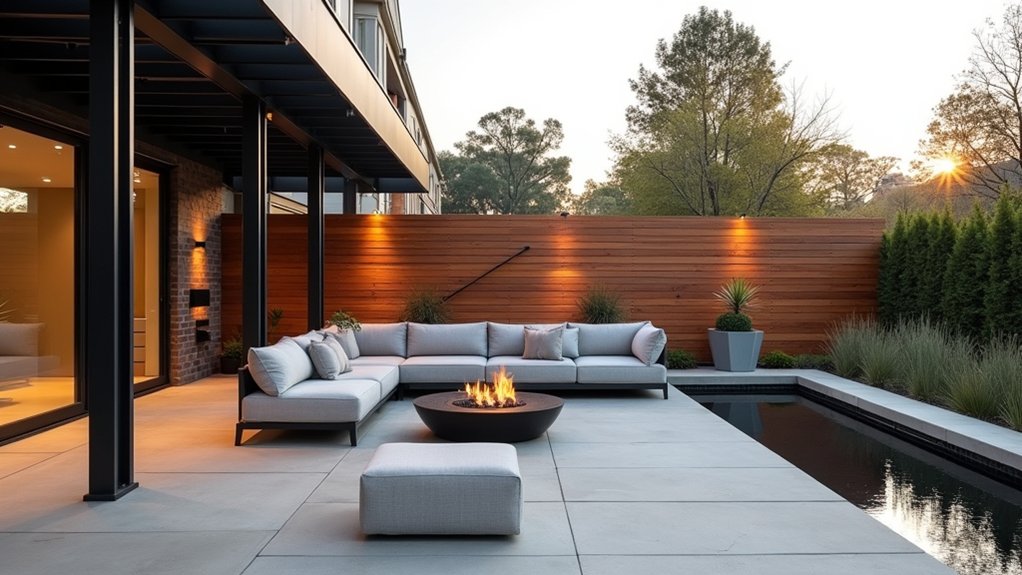

Is it really true that you can make an outdoor space feel high-end just by “going modern”? You can—if you treat the yard like an interior and build clear zones with cohesive materials, clean-line hardscaping, and restrained planting. Then you layer lighting, add smart control, and choose durable furniture that fits the scale. The difference comes down to a few upgrades that do the heavy lifting, and you’ll want to know which ones.
Start With Zones for a Modern Outdoor Space
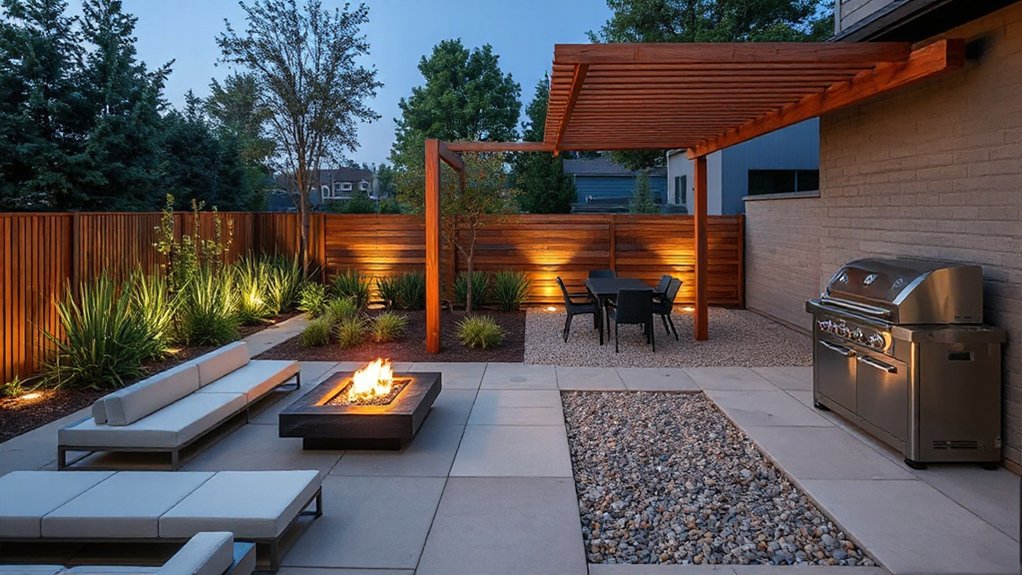
Before you pick furniture or finishes, map your outdoor space into clear zones—lounging, dining, cooking, and circulation—so every square foot works with intention.
Anchor each zone with a hard edge: a rug-like paver inset for seating, a dining pad aligned to the kitchen door, and a grilling strip kept downwind.
Keep circulation at least 36 inches wide, and use straight sightlines for a crisp, modern read.
Define boundaries with low planters, slatted screens, or grade changes instead of bulky railings.
Specify Natural materials—thermally modified wood, honed stone, matte concrete—to unify surfaces without visual noise.
Finish with Artistic installations: a sculptural fire feature or a linear light wall that punctuates zones after dark.
Prioritize the Biggest Modern Upgrades First
Once you’ve defined your outdoor zones, you’ve gotta prioritize the biggest modern upgrades that set the tone.
Start by upgrading hardscaping—clean-lined pavers, crisp edging, and seamless flow—then install modern lighting to layer path, step, and accent illumination with a refined glow.
Finish with smart outdoor features like app-controlled lighting scenes, automated irrigation, and integrated speakers that make the space feel current and effortless.
Upgrade Hardscaping First
Because hardscaping sets the lines, flow, and functionality of your yard, it’s the first modern upgrade you should tackle. Start by replacing tired concrete with large-format pavers, porcelain slabs, or smooth architectural stone for a cleaner, contemporary grid.
Widen primary pathways, square off planting beds, and add crisp steel or concrete edging so every zone reads intentional. Build a patio sized for real use, then anchor it with a pergola or low seat wall to define outdoor “rooms.”
Plan utilities now: run gas, water, and power beneath new surfaces so your outdoor kitchen drops in without messy tear-outs. Reserve conduit and mounting points for future landscape lighting, but keep the focus on structure today.
Install Modern Lighting
Clean hardscaping looks unfinished without lighting that reinforces the same modern lines after dark. Start with architectural layers: low-glare path lights to define circulation, in-grade uplights to wash stone walls, and linear LEDs under caps or stair nosings to sharpen edges. Keep color temperature consistent—2700K to 3000K reads current and flattering—then aim beams away from sightlines to avoid hotspots.
Choose matte-black or bronze housings with minimal profiles, and specify energy-efficient fixtures rated for wet locations. You’ll get longer life, lower heat, and cleaner output than old halogens.
Add smart light controls for dimming and scheduling so the scene stays tailored, not overlit. Treat lighting as a design material, not an afterthought, and your outdoor space will feel intentional.
Add Smart Outdoor Features
If you’re going to add smart tech outdoors, start with the upgrades that change how the space performs every day: app-controlled irrigation with weather-based scheduling, integrated gate/entry access with video and package alerts, and a whole-yard audio system that disappears into the landscape.
Smart irrigation cuts waste by pausing for rain, adjusting to seasonal evapotranspiration, and flagging leaks before they spike your bill.
Next, layer in automated lighting tied to astronomical timers and motion zones so pathways, steps, and entries illuminate only when needed.
Choose low-voltage fixtures with smart transformers for granular scenes and energy reporting.
Finish with Wi‑Fi mesh or hardwired Ethernet to keep devices responsive, and consolidate everything in one platform so routines feel seamless, not gimmicky.
Clean-Line Hardscaping for a Modern Patio
While lush planting can soften the edges, clean-line hardscaping sets the modern patio’s foundation with crisp geometry and intentional negative space. You’ll get a sharper, more architectural look by locking in straight runs, tight radii, and consistent joint spacing that reads as deliberate, not busy.
Choose natural materials that age well and keep their texture: honed stone, clay pavers, or brushed concrete with exposed aggregate. Lay them in geometric patterns—stack bond, oversized grid, or linear planks—to visually widen the footprint and guide circulation.
Keep progressions flush, specify slim edge restraints, and align seams with doors, steps, and sightlines for a tailored finish. Finally, control scale: fewer, larger units beat small repeats, and a disciplined palette makes the patio feel calm and contemporary.
Mix Stone, Wood, and Metal: Without Clutter
To mix stone, wood, and metal without visual noise, you’ve got to name a dominant material and let it lead the outdoor story. Then you repeat just one or two accent finishes—like matte black steel or brushed bronze—across lighting, hardware, and furniture frames to keep the look cohesive.
Finally, you balance texture and scale by pairing large-format stone or concrete with slimmer wood slats and minimal metal lines, so every contrast reads intentional, not cluttered.
Choose A Dominant Material
One dominant material keeps your outdoor design looking modern and intentional, even when you mix stone, wood, and metal. Choose a primary surface that covers the largest visual area—decking, pavers, or cladding—then let the other materials play supporting roles. This anchors the space and protects aesthetic cohesion, so progressions feel clean instead of chaotic.
Prioritize material durability by matching the dominant choice to your climate and traffic: dense stone for freeze-thaw patios, composite or hardwood for sun-baked decks, powder-coated metal for coastal air. Keep textures in the same visual “temperature,” pairing matte wood with honed stone, or brushed metal with smooth concrete. You’ll get contrast without clutter, and the layout reads high-end.
Repeat Accent Finishes
After you’ve set a dominant material, repeat a tight set of accent finishes to make mixed stone, wood, and metal feel curated instead of busy. Pick two to three complementary accents—like matte black metal, warm oiled teak, and honed limestone—and commit to them across the space.
Use the same metal tone on lighting, railings, furniture frames, and hardware so everything reads intentional. Echo wood on a bench, pergola trim, and planters to soften hard surfaces.
Let stone appear on a low wall, stepping pads, or a fire feature, keeping the finish consistent. When you repeat textures this way, you create rhythm without adding more materials.
Limit sheen shifts, match undertones, and specify outdoor-rated coatings so your accents stay sharp season after season.
Balance Texture And Scale
Repeating a tight set of finishes creates cohesion, but texture and scale determine whether the mix feels elevated or overcrowded. Start with one dominant material, like large-format stone pavers, then layer warm wood in a single plane—decking, a bench, or slat privacy screen—to build intentional textural contrast.
Keep metal as an accent, not a third headline: thin black steel chair frames, a streamlined pergola, or minimal sconces. To maintain scale harmony, match the heft of each element to its neighbors—chunky stone pairs best with substantial timber, while delicate metal suits slimmer wood profiles.
Limit pattern changes: choose one stone joint width, one wood grain direction, and one metal finish. You’ll get a modern mix that reads curated, not cluttered.
Layer Modern Outdoor Lighting (Task, Glow, Accent)
If you want a patio or deck to feel intentional after dark, layer modern outdoor lighting in three distinct zones: task, glow, and accent.
Start with task prioritization: mount glare-free downlights over grilling stations, prep counters, and steps, aiming for even pools of light and safe footing.
Next, build glow ambiance with dimmable string lights or low-voltage bollards that wash seating areas in a warm 2700K tone without hotspots.
Finally, add accents to sculpt the space: use narrow-beam uplights on architectural columns, grazing lights along textured stone, and small spotlights to highlight planters or art.
Keep finishes cohesive—matte black, bronze, or stainless—and put everything on smart controls with scenes, timers, and motion where it matters.
Indoor-Outdoor Flow Without a Full Remodel
Lighting sets the mood at night, but true outdoor polish comes from making the patio feel like an extension of your interior—no gut renovation required. Start by repeating your interior palette outdoors: pull one wall color into planters, pillows, or tile accents, and mirror key metals in hardware and fixtures.
Extend indoor ambiance with a coordinated scent, a slim indoor-grade speaker zone, and dimmable lamps visible through glass.
Create material contrast intentionally: pair smooth concrete pavers with warm wood slats, or matte black steel with light stone. Use oversized thresholds—flush sill caps, wide runners, or a continuous deck board direction—to trick the eye into one seamless room.
Finally, unify zones with consistent trim lines and concealed cable management for a cleaner, modern edge.
Outdoor Furniture That Fits and Does More
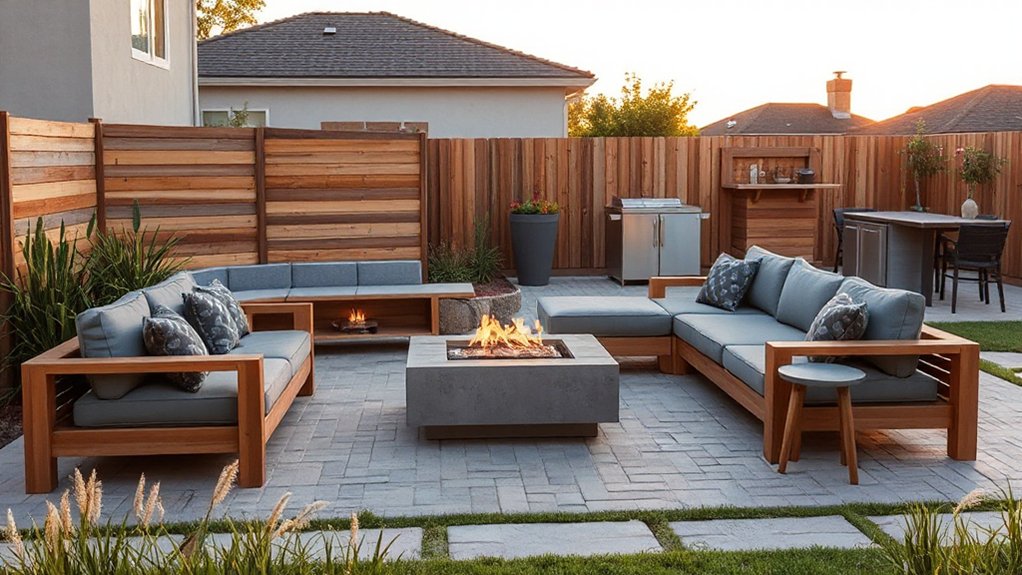
Because most patios fail on scale before style, start by sizing furniture to your actual circulation: keep a clear 36-inch walkway, anchor the layout with one correctly proportioned piece (often a modular sectional or a compact dining set), and choose low-profile frames that won’t visually crowd the space.
Then make outdoor furniture work harder. Pick benches with hidden storage for cushions, nesting tables that expand for drinks, and ottomans that double as extra seating. Prioritize durable, modern materials—powder-coated aluminum, teak, and performance fabric—so you won’t baby them season to season.
Add functional aesthetics with integrated side shelves, slim armrests, and consistent finishes that read intentional, not cluttered. Finally, lock the zone with a right-size outdoor rug and a single statement umbrella that shades without swallowing your footprint.
Minimal Modern Landscaping With Strong Shapes
While cottagey plant chaos can feel charming, minimal modern landscaping elevates an outdoor space faster by committing to bold geometry and clean negative space. Start by laying out strong rectangles and circles: a crisp patio grid, a linear path, and planting beds with hard edges.
Choose one dominant material—large-format pavers, decomposed granite, or smooth concrete—and repeat it for cohesion. Keep plant palettes tight: sculptural evergreens, upright grasses, and a single accent color in seasonal blooms.
If you love wildflower meadows, corral them into a defined block so they read intentional, not messy. Add water features with architectural profiles—blade fountains or still reflecting basins—to reinforce the lines and amplify calm.
Finish with clean steel edging and minimal, warm lighting.
Privacy, Shade, and Heat for Longer Seasons
As soon as you treat comfort as a design feature, you can stretch your outdoor season by months with a smart mix of privacy screening, shade control, and targeted heat.
Start with privacy screens in slatted cedar, powder-coated aluminum, or laser-cut steel; you’ll block sightlines while keeping airflow and a crisp modern rhythm.
Layer in shade structures like cantilever umbrellas, pergolas with adjustable louvers, or tensile sails positioned for your afternoon sun angle.
Add radiant heat where you sit, not where you don’t: ceiling-mounted infrared panels, linear gas fire tables, or low-profile electric heaters.
Specify dimmable controls and weather-rated finishes so everything performs through shoulder seasons.
Your patio stays usable, calm, and intentional longer.
Conclusion
You’ve probably heard the theory that “modern” outdoor spaces feel cold—but test it against the upgrades that actually work. When you zone first, commit to clean-line hardscaping, and mix stone, wood, and metal with restraint, the space reads tailored, not sterile. Add layered lighting (task, glow, accent), right-sized multifunctional furniture, and minimal planting with bold forms. Finish with privacy, shade, and heat, and you’ll extend the season—and the style.