
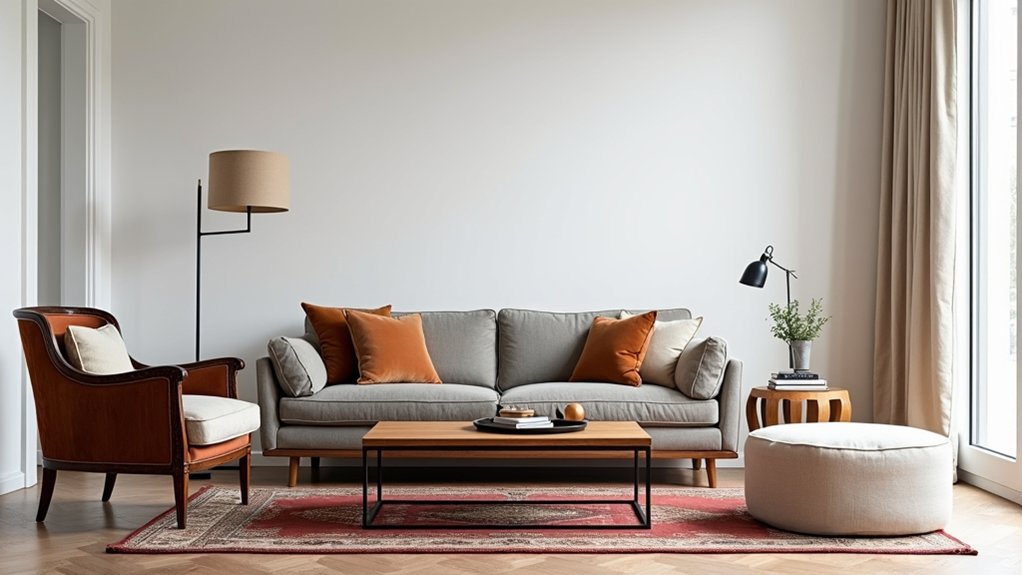

Mixing furniture styles is like conducting an orchestra—you need a clear lead and tight timing. You’ll start by choosing one anchor style and limiting yourself to two accents, then lock in a shared color palette and repeat a few finishes so nothing feels random. You’ll also watch scale and silhouettes, because mismatched proportions make a room look accidental. Get these basics right, and you’ll avoid the common mistakes that derail the whole plan…
Choose Your Anchor Style (And 2 Accents Max)
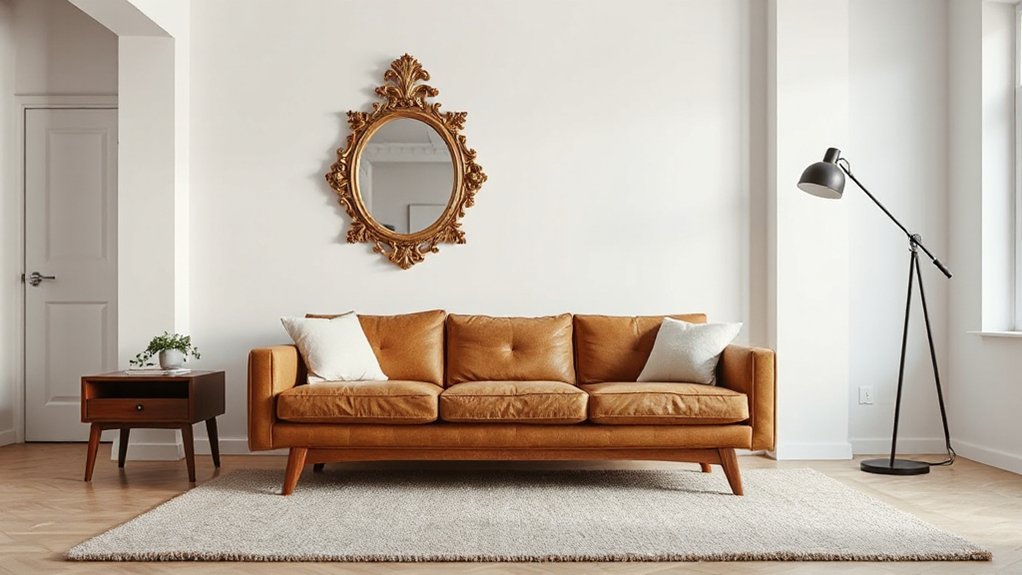
Before you start blending silhouettes and finishes, pick one “anchor” style that will lead the room—modern, traditional, farmhouse, Scandinavian, industrial, or mid-century—and let everything else support it. You’ll make faster decisions because every purchase either reinforces the anchor or it doesn’t.
Next, choose no more than two accent styles to prevent visual noise: think Vintage charm against Modern minimalism, or industrial edges with Scandinavian warmth. Keep accents to smaller, swappable pieces—chairs, side tables, lamps, art—so the room doesn’t feel like a showroom.
Repeat one or two signature forms from the anchor (tapered legs, boxy frames, turned details) across multiple items. If a piece clashes, replace it with something that shares the anchor’s proportions.
Set a Shared Color Palette to Mix Styles
Once you’ve chosen an anchor style and capped your accents, lock the room together with a shared color palette so the mix reads intentional instead of random. Pick one dominant neutral (walls, rug, or sofa), then add one mid-tone and one accent color you’ll repeat across the space.
Use Color coordination to bridge eras: echo the accent color in textiles, art, and a small decor item, not just on one statement piece. Keep saturation consistent—either muted and dusty, or crisp and high-contrast—so pieces don’t fight.
Limit patterns to two families and keep them within your palette. For style harmony, match color temperature: pair warm whites with earthy hues, cool grays with blue-green tones. If a piece feels off, edit its accessories first.
Repeat Finishes to Make Mixed Furniture Cohesive
Even if you mix eras and silhouettes, repeating a few finishes makes the room feel cohesive. Pick two to three anchor finishes—like warm oak, matte black metal, and brushed brass—and echo them across the room in at least three places each.
Match undertones: pair honey woods with warm metals, ash or walnut with cooler nickel, and keep sheen consistent so pieces don’t fight. Use hardware, lamp bases, frame edges, and table legs as easy repeat zones.
Aim for material harmony by balancing wood, metal, and upholstery in predictable ratios. Then add texture contrast deliberately: a rough linen sofa, a glossy ceramic lamp, and a smooth leather chair can coexist when their finishes repeat.
Edit extras; duplicates beat variety.
Balance Scale and Silhouettes When Mixing Furniture Styles
Although your pieces may come from different decades, they’ll only look intentional if you balance scale and silhouettes across the room. Start by anchoring the layout with one dominant volume—sofa, bed, or dining table—then choose supporting pieces that step down in height and visual weight.
Pair a low, boxy sectional with slimmer-legged chairs, or offset an ornate hutch with clean-lined seating. Track the “shoulder line”: keep chair backs, console tops, and side tables within a tight band so the room reads calm.
For scale harmony, repeat one or two similar proportions (chunky arms, tapered legs, rounded backs) in at least three spots. Use clutter reduction: edit small accent furniture so silhouettes stay readable and the mix feels deliberate.
Avoid the 5 Mistakes That Make Mixed Styles Messy
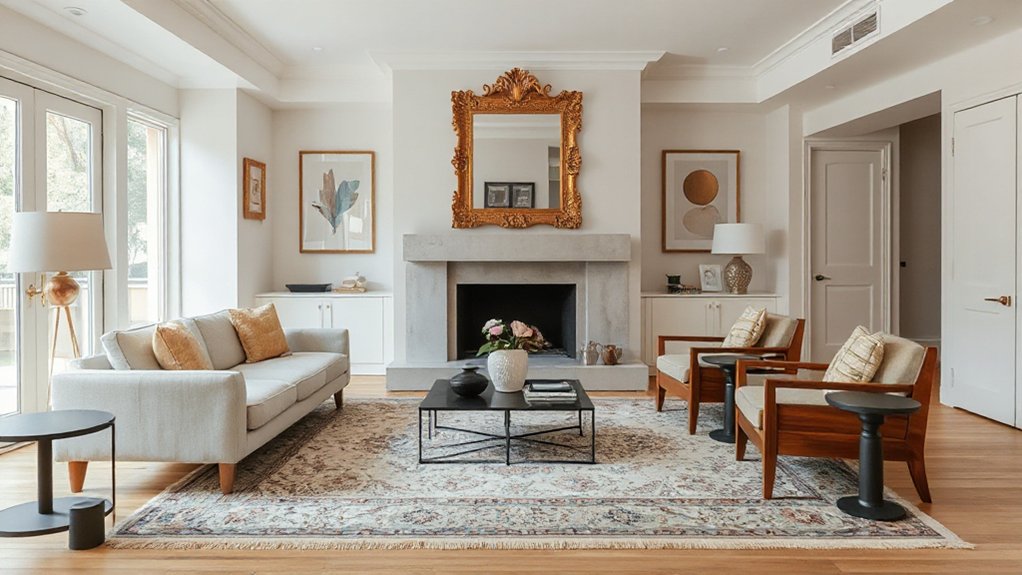
Balanced scale and aligned silhouettes set the foundation, but mixed-style rooms still fall apart when a few common missteps creep in.
First, you skip a unifying palette; pick three core hues and repeat them across wood, metal, and fabric.
Second, you mix eras without an anchor; choose one dominant style, then add two accents in smaller doses.
Third, you overdo “statement” pieces; limit hero items to one per zone and let supporting pieces stay quiet.
Fourth, you ignore Layering textures; combine matte, gloss, woven, and leather to create depth without adding clutter.
Fifth, you botch Incorporating patterns; vary scale (large, medium, small) and keep patterns to two families.
Edit relentlessly, and negative space will make the mix read intentional.
Conclusion
Mixing furniture styles is like captaining a small fleet: you pick one flagship style, then allow only two support ships to join. You chart a shared color map, so every piece sails under the same sky. You repeat finishes like consistent rigging, and you balance scale so nothing tips the deck. Avoid the common storms—too many styles, clashing tones, mismatched proportions—and your room arrives curated, calm, and intentional.