
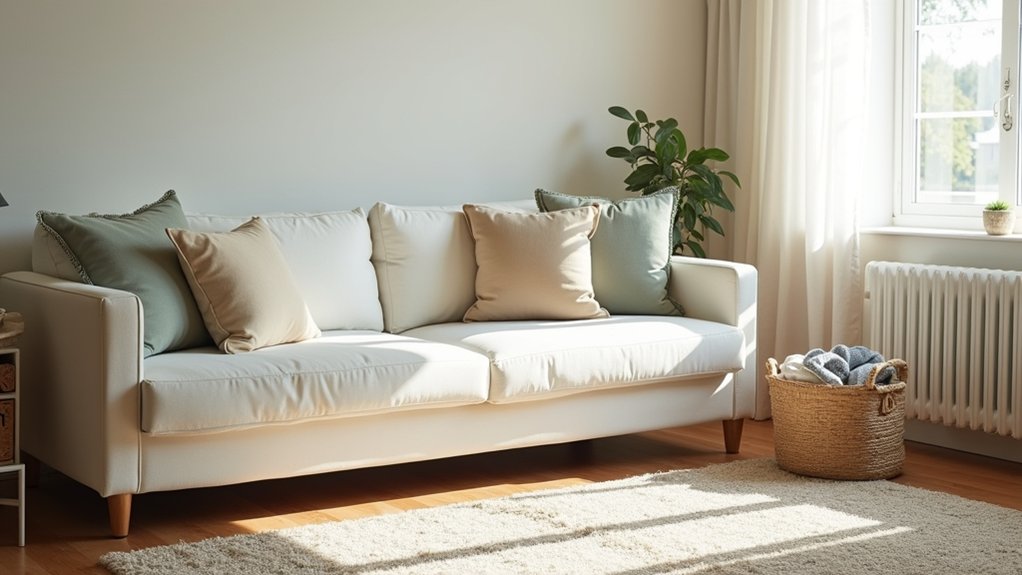

Indoor air can hold up to five times more pollutants than outdoor air, and a lot of that ends up trapped in your sofa and cushions. You keep soft furnishings looking fresh by vacuuming seams and under cushions, rotating and fluffing inserts, and blocking UV before it fades fibres. You also spot-treat spills fast and deodorise properly instead of masking odours. The key is knowing what to do by fabric type—because one wrong method can set damage in place.
Quick Refresh: 10-Minute Soft Furnishing Reset
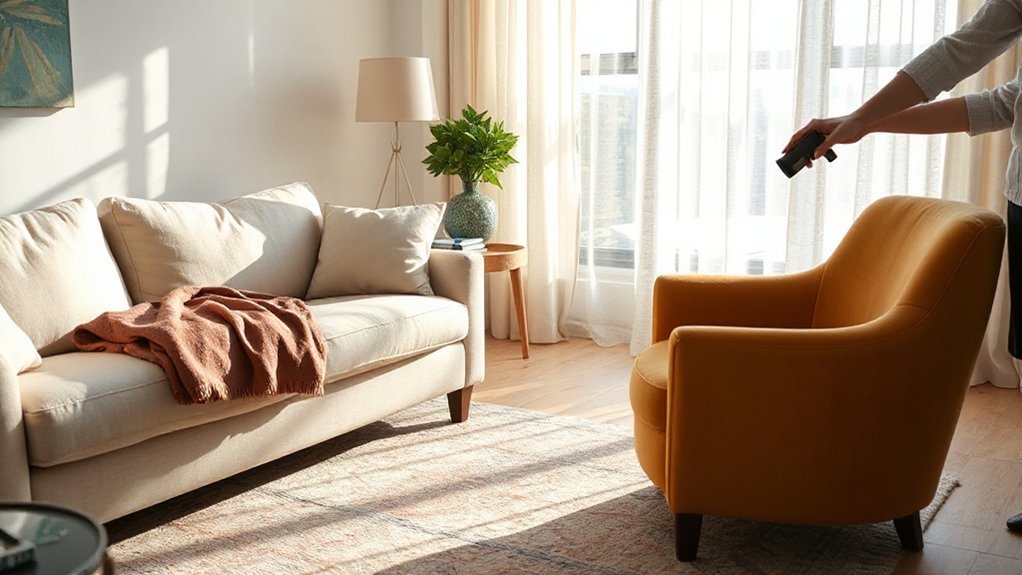
If you’ve only got 10 minutes, you can still make your soft furnishings look cleaner and feel fresher with a fast, systematic reset. Start by shaking and snapping cushions and throws to lift dust and restore loft.
Next, run a lint roller over pillows, arms, and seat fronts, then use your vacuum’s upholstery tool on seams, welts, and under cushions.
Spot-check for smudges: dab with a barely damp microfiber cloth, then blot dry—don’t rub.
Finish Fabric maintenance by brushing velvets or chenilles with a soft clothes brush in one direction.
For Soft furnishing styling, reinsert cushion inners squarely, rotate cushions for even wear, and do a quick “pinch and plump” at corners.
Fold throws with crisp edges and place them consistently for a tidy look.
Place Soft Furnishings to Prevent Sun Fade
To prevent sun fade, you should place soft furnishings in shaded spots and keep high-exposure pieces away from direct window light.
Rotate cushions regularly so the same panels don’t take the full hit day after day.
Install UV-blocking window treatments to cut damaging rays while still letting you use the room comfortably.
Choose Shaded Locations
Where you place your soft furnishings matters more than you might think, because direct sunlight steadily breaks down dyes and fibers and leaves fabrics looking washed out.
For reliable shade protection, position sofas, chairs, and ottomans away from south- and west-facing windows where exposure is strongest. If you can’t move large pieces, shift smaller items like throws and accent pillows to interior seating zones or under covered areas.
Prioritize sunlight prevention by controlling light at the source: install UV-filtering window film, line drapes with blackout or thermal liners, and keep blinds angled up during peak hours to bounce rays toward the ceiling.
On patios, use umbrellas, awnings, or pergolas, and keep cushions under cover when they’re not in use. These steps slow fading and extend fabric life.
Rotate Cushions Regularly
Sun protection works best when you pair smart placement with consistent cushion rotation. Turn seat and back cushions weekly so the same panels don’t face the brightest side of the room. Swap left and right positions, then flip cushions top-to-bottom to spread exposure across seams, piping, and high points.
If your cushions are reversible, rotate the covers as well, not just the inserts.
Build fabric rotation into your cushion maintenance routine: mark discreet tags inside covers, or track rotations in your calendar. When you vacuum, check for early color shift along edges and the “sun side” of each cushion.
Adjust placement immediately if one side starts lightening. Consistency keeps wear even and colors stable longer.
Use UV-Blocking Window Treatments
Even if you keep furniture out of direct rays, UV still passes through standard glass and slowly bleaches fabrics. Add UV-blocking window treatments to cut fading on curtains, upholstery, and rugs. Choose lined drapes, solar shades, or UV-filtering roller blinds rated for high UV protection; check product specs for UV rejection percentages, not vague claims.
Place treatments on the sunniest exposures first—south and west windows—and keep them closed during peak hours. For a cleaner look, pair sheer panels with a hidden blackout liner so you can balance light and protection.
If you rent or can’t swap coverings, apply UV-filtering window film and still use shades for glare control. Recheck color consistency seasonally and adjust coverage as sunlight shifts.
Rotate and Fluff Cushions to Stop Sagging
Rotate your seat and back cushions regularly—swap sides and flip them if they’re reversible—so wear stays even and sagging doesn’t set in.
Each day, fluff and reshape them by pushing filling back into the corners and smoothing the surface to restore support.
Stick to a simple schedule you’ll follow, and you’ll keep cushions firm and comfortable longer.
Rotate Cushions Regularly
Because daily sitting compresses foam and shifts filling, you’ll get a longer-lasting, more even seat if you rotate and fluff your cushions on a set schedule.
Swap left to right and flip top to bottom weekly on heavily used sofas; do it biweekly for occasional chairs. If your cushions are reversible, rotate both the insert and the cover so wear patterns don’t set into one face.
Keep a simple reminder on your phone and rotate after vacuuming so you don’t forget. This small habit improves fabric durability by spreading abrasion, friction, and sunlight exposure across more surface area.
It also supports consistent cushion maintenance by reducing edge collapse and preventing permanent “seat maps.” Check seams and zippers while you rotate so minor issues don’t grow.
Fluff And Reshape Daily
After you get up, take 30 seconds to fluff and reshape each cushion so the filling doesn’t settle into a permanent dip. Lift the cushion, smack both sides, then press the top into a gentle dome.
For boxed cushions, pull the corners outward to square the edges and keep seams aligned.
Do this after heavy use, too: rotate the cushion 180 degrees, then flip it if it’s double-sided. This spreads compression across the core and reduces early sagging.
Pay attention to fabric fragility—avoid sharp tugs, and don’t twist zippers or piping. If the insert shifts, unzip and redistribute filling by hand so it’s even to the corners.
Daily shaping is fast, but it’s the backbone of consistent upholstery upkeep.
Clean by Material: Cotton, Wool, Velvet, Leather
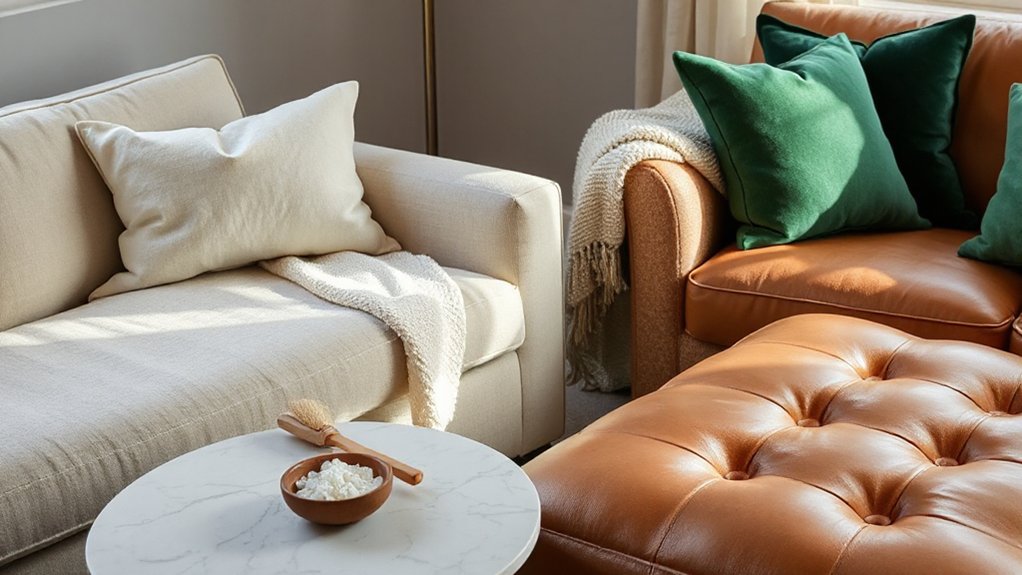
When you match your cleaning method to the fabric, you’ll lift soil without flattening pile, shrinking fibers, or stripping finishes. Follow Material specific cleaning and Fabric durability tips for every piece.
For cotton covers, vacuum with an upholstery brush, then wipe with a barely damp microfiber cloth and mild soap; rinse with a clean, damp cloth and air-dry.
For wool, vacuum gently, use cool water only, and blot with wool-safe detergent; avoid agitation and heat.
For velvet, vacuum in the nap direction, then steam lightly from a distance and brush to reset pile; never saturate.
For leather, dust weekly, wipe with pH-balanced leather cleaner, dry immediately, and condition sparingly; keep it away from radiators and direct sun.
Remove Common Stains Before They Set
Even if you plan to deep-clean later, you’ll get the best results by treating spills immediately before pigments, oils, and sugars bond to the fibers. Start stain removal by blotting, not rubbing, with a white cloth to lift liquid without spreading it. Work from the edge toward the center.
For coffee or wine, dab cool water, then a drop of mild dish soap; blot and rinse with clean water.
For grease, lift solids with a spoon, then apply baking soda or cornstarch for 10 minutes and vacuum; follow with a tiny amount of soap solution.
For ink, press with isopropyl alcohol on a cotton pad, changing pads often.
Always test spot treatment on a hidden seam, and don’t overwet the padding.
Deodorise Fabrics Between Washes (Without Masking Smells)
Because odours cling to the oils and residues trapped in fibres—not the fabric itself—you’ll get better results by removing the source rather than covering it with fragrance.
Start with airflow: open windows, run a fan, and let cushions stand on edge so trapped moisture dissipates.
For Fabric freshening, lightly mist a 1:1 mix of distilled water and vodka, or water with a small splash of white vinegar; test an inconspicuous spot first and don’t soak seams.
Sprinkle bicarbonate of soda, work it gently into the nap with a soft brush, leave for 30–60 minutes, then vacuum slowly with the upholstery tool.
For Odor neutralization, treat the cause: blot spills, wipe pet oils with a damp microfiber, and dry thoroughly.
Repeat weekly as needed.
Prevent Wear: Covers, Rules, and No-Shoes Habits
Although daily use is inevitable, you can dramatically slow wear on soft furnishings by combining fitted covers, clear house rules, and a consistent no-shoes habit.
Choose washable, snug covers for sofas and armchairs, and rotate or flip cushions weekly to spread pressure points. Add throws on high-contact zones like armrests and seat edges, then launder them often.
Set simple rules: no eating on upholstered seating, no jumping on cushions, and keep pets’ claws trimmed or use pet blankets.
Place a shoe rack and a bench at the entry, plus a durable doormat outside and inside to trap grit that acts like sandpaper.
This Furnishing maintenance routine strengthens Wear prevention and preserves texture and colour longer.
Conclusion
Funny how your sofa starts looking better the same week you begin that 10‑minute reset: vacuum seams, lift cushions, and spot-clean fast. Keep it out of direct sun, or you’ll watch colour fade while you’re not watching. Rotate and fluff daily to stop sagging, and match cleaning to the fabric—cotton, wool, velvet, leather. Catch stains early, deodorise to remove odours (not hide them), and set simple rules: covers, no shoes, no snacks.