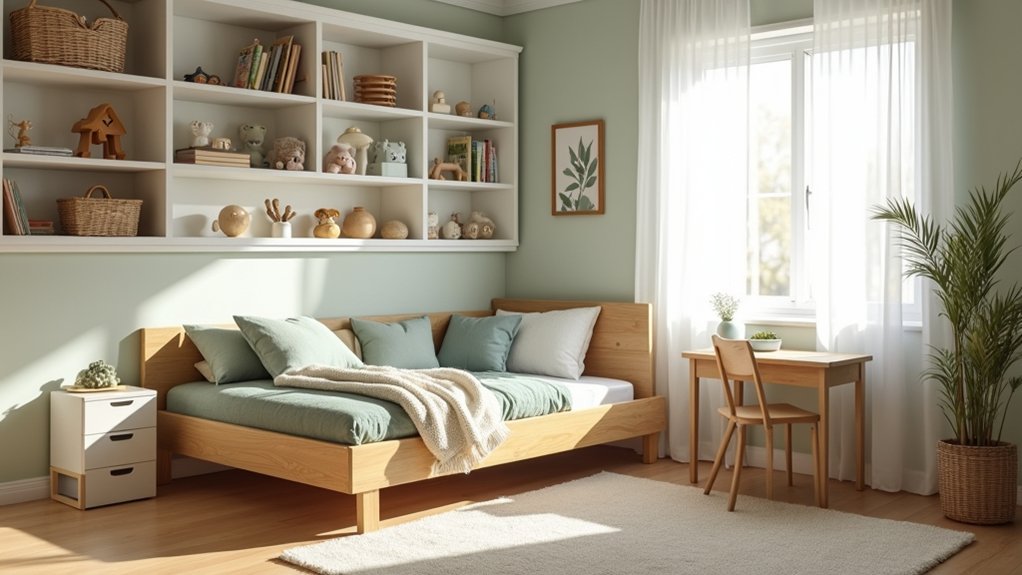

You can create a kids’ bedroom that looks pulled-together and still works hard if you plan it like a small studio. Start with measurements, then map clear zones for sleep, study, and play so every piece earns its footprint. Build in open storage that’s easy to use, anchor anything tall, and tame cords early. Keep the palette neutral, then rotate accents with textiles and art as tastes shift—next comes the part most rooms get wrong.
Start With Measurements and a Zone-Based Layout
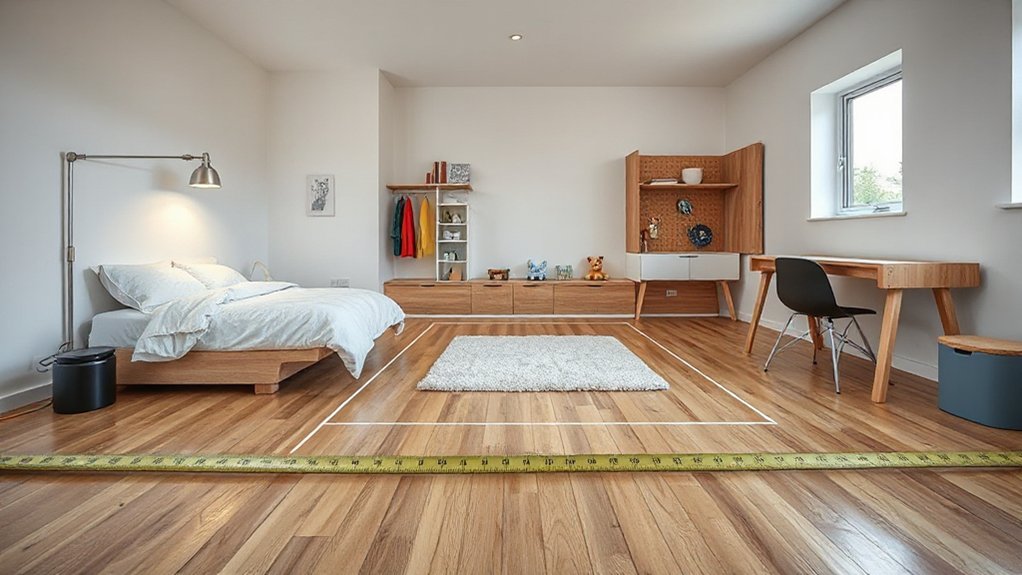
Before you buy a single piece of furniture, measure the room and map out clear zones for sleep, play, study, and storage. Sketch the floor plan, note windows, doors, and outlets, then test furniture footprints with painter’s tape so pathways stay open and the room feels bigger.
Place the bed where it won’t block light, then tuck a slim desk near daylight for homework. Define a play zone with a low-profile rug and bins that slide under shelving.
Use creative storage like drawer beds, wall ledges, and labeled cubes to keep toys off the floor. Tighten the look with color coordination: repeat two to three hues across bedding, baskets, and art for a trend-clean, cohesive finish.
Put Safety Essentials in the Plan (Anchors, Cords, Rugs)
Bake safety into the design by anchoring dressers, bookcases, and wardrobes so the room stays sleek and tip-proof. Keep cords and outlets tight and tidy with low-profile covers and hidden routing that won’t clutter your layout.
Finish with rug pads and grippers so rugs and play mats stay flat, stable, and styled.
Anchor Heavy Furniture
Even if you’ve styled the room with sleek dressers and floating-look bookcases, you’ve still got to design safety in. Start by anchoring every tall or top-heavy piece—dresser, wardrobe, changing table, even that slim toy cabinet—so curious climbers can’t pull it forward. Use anti tip straps that match your wall type, then hide the hardware behind furniture for a clean, editorial look.
If you’re tight on floor space, trade bulky units for wall mounted shelving and a low, wide dresser that doubles as a display ledge. Keep frequently used items in lower drawers to reduce tugging up high.
Finish by choosing a bed frame with a stable footprint and avoiding stacked pieces that look airy but shift easily. Safety can stay invisible and chic.
Manage Cords And Outlets
Where do all the cords go when you’re aiming for a clean, kid-proof look? You’ll get the sleekest result when you plan cord management as part of the layout, not an afterthought. Route lamp and charger lines behind dressers, along baseboards, or inside paintable raceways so walls stay crisp and minimal.
Choose nightstands with rear cutouts and beds with built-in charging to keep surfaces calm and clutter-free. Mount power strips high, out of reach, and label them so you can unplug fast during cleanup.
For outlet safety, use tamper-resistant receptacles or tight-fitting covers, and avoid daisy-chaining adapters. Keep cords short with clips or Velcro ties, and stash extra length in a cable box for calm, modern lines.
Secure Rugs And Mats
If you’re layering rugs for warmth and style, lock them down as part of the safety plan, not a finishing touch. Choose low-pile, washable safety rugs that sit flat under doors and drawers, so your layout stays sleek and space-smart. Add a grippy rug pad or double-sided tape at every edge; curling corners ruin the look and trip little feet.
Define the play area with one generously sized rug instead of scattered mats, and you’ll visually calm the room while reducing seams. In high-traffic routes—bed to door, dresser to hamper—use runner-style mats with non-slip backing. Skip fringe and thick shag; they catch toys and vacuum heads.
For trend-forward texture, try woven cotton, indoor-outdoor flatweave, or subtle geometrics in muted tones.
Choose a Flexible Color Palette That Can Age Up
As your child’s tastes shift fast, a flexible color palette keeps the room looking intentional without constant repaints. Start with calm, modern neutrals on big surfaces—warm white, greige, soft sand—so the space feels larger and brighter.
Then build color coordination with two accents you can swap: a muted sage with terracotta, or navy with butter yellow.
Use paint palettes that include a midtone and a deep shade to create contrast on one wall, a built-in nook, or shelving, which adds depth without eating floor space.
Keep patterns small-scale and geometric so they read current, not childish.
Let personality land in art, bedding, and storage bins, so the room matures with minimal effort.
Pick Durable, Cleanable Finishes and Fabrics
Choose finishes that look polished but can take daily wear, starting with stain-resistant, scrubbable paint on high-touch walls and trim.
Then specify washable, tough textiles—performance rugs, machine-washable bedding, and wipe-clean upholstery—so messes don’t stall your style.
You’ll keep the room crisp, current, and low-maintenance without sacrificing comfort.
Stain-Resistant Paint Choices
Ever wonder why some kids’ rooms still look polished after marker mishaps and sticky fingerprints? You’re usually seeing the right Stain resistant paint paired with a smarter sheen. Choose scrubbable matte or modern eggshell for low-glare, on-trend walls that still wipe clean; reserve satin for high-touch zones like around switches, desks, and bunk ladders.
Look for labels like “washable,” “scuff-resistant,” and “stain-blocking primer built in” to keep coverage even and touch-ups invisible.
For small rooms, use one deeper accent wall to add style without shrinking the space, and keep the other walls light to bounce daylight.
Finish with kid friendly finishes on trim—durable semi-gloss makes corners and baseboards easy.
Washable, Tough Textiles
Two swaps—performance fabrics and wipe-clean finishes—can make a kids’ bedroom look pulled together even through snack spills, paint-water splashes, and daily climbing.
Choose durable fabrics for curtains, headboards, and reading nooks: tightly woven cotton blends, solution-dyed acrylics, or indoor/outdoor bouclé that still feels soft. Layer in stain resistant textiles for bedding and rugs, then keep patterns small-scale so mess blends in without looking busy.
For space efficiency, use a washable slipcover on a compact chair, and pick a low-pile rug you can shake out and spot-clean fast. Add a wipeable vinyl or faux-leather desk mat and a coated canvas hamper to corral laundry.
Stick to one accent color so everything coordinates, even after frequent washes.
Choose Grow-with-Them Furniture (Bed, Desk, Seating)
Because kids grow fast and their needs change even faster, invest in furniture that flexes with them—an adjustable bed frame, a desk that raises with grade level, and seating that supports real posture.
Pick a bed that converts from toddler to twin, with a slim headboard that won’t crowd the wall and leaves room for future art. Keep the look cohesive by choosing warm wood or matte white that plays nicely with evolving nursery themes.
Style it with streamlined sleep accessories—layered pillows, a washable duvet, and a low-profile reading sconce—so the bed feels intentional, not temporary.
Choose a compact, height-adjustable desk with cable cutouts and a chair with a footrest, so homework stays comfortable and aligned.
Add a small lounge pouf for hangouts.
Add Easy Storage Systems Kids Can Actually Use
Keep cleanup simple with low, open storage bins your kid can grab without help, and you’ll cut visual clutter fast.
Add picture labels so sorting stays quick and intuitive, even for pre-readers.
In the closet, create clear zones with hooks at kid height for backpacks, hoodies, and dress-up gear so mornings run smoother.
Low, Open Storage Bins
If you want a kids’ room that stays calm without constant cleanup battles, swap tall, lidded containers for low, open storage bins. You’ll make tidying intuitive because everything’s visible and within reach, even for smaller kids.
Tuck bins under a window bench, inside a low bookcase, or along a closet floor to use dead space without adding visual bulk.
Keep the look polished with smart Color coordination: choose two to three bin colors that echo bedding or wall art, then repeat them across zones for a cohesive rhythm.
Nail Material selection for durability and style—woven water hyacinth warms up modern rooms, matte plastic feels sleek and wipeable, and canvas cubes soften corners.
Add grippy handles so bins slide out fast.
Picture Labels For Sorting
While your bins make clutter easy to corral, picture labels make the system stick: add simple icon-and-word tags (LEGO, art, dress-up, books) so kids can sort at a glance, even before they can read. Print matching icons, slide them into clear label pockets, and keep the palette tight so the room still feels styled, not classroom.
Treat labels like micro-graphics: repeat colors from your rug, bedding, or Creative wall art to create a cohesive, gallery-like look. For small rooms, stick labels on bin fronts, not lids, so everything stays visible when stacked or tucked under a bed.
Want a trend-forward finish? Echo label shapes in your themed ceiling designs for subtle, coordinated storytelling kids’ll notice.
Closet Zones With Hooks
Because a closet only works when kids can reach it, carve it into simple zones and let hooks do the heavy lifting. Hang a low rail for daily outfits, then add a hook strip beside it for tomorrow’s look, backpacks, and jackets. Use color-coded hooks to match your picture labels, so clothing organization stays intuitive and fast.
Mount a second row higher for seasonal pieces you’ll rotate down. On the door, install slim, matte-black hooks for hats, belts, and swim bags—instant accessory storage without adding bulk. Add one small tray shelf under the hooks for sunglasses, hair ties, and spare change.
Keep hangers uniform for a clean, boutique feel, and leave one “landing hook” empty to prevent pile-ups.
Set Up a Homework + Reading Spot With Good Ergonomics
Even in a compact kids’ room, you can carve out a homework + reading spot that looks intentional and feels comfortable by treating ergonomics as part of the design. Start with a slim desk or wall-mounted surface at elbow height, then pair it with an ergonomic chair that adjusts and tucks in neatly.
Keep feet grounded with a small footrest or a low drawer unit if the chair sits high. Layer task lighting: a plug-in sconce frees desktop space and looks custom. Add a pinboard rail to keep papers vertical, not sprawled.
For a cozy reading nook, anchor one corner with a supportive floor cushion, a narrow book ledge, and a washable throw in a modern print. Choose calm, matte finishes to reduce glare and boost focus.
Plan a Play Zone That’s Easy to Reset
Once the desk area stays streamlined, give play its own defined footprint so toys don’t migrate across the room. Anchor the play area with a low, washable rug or foam tiles that visually “frame” mess and protect floors.
Use a simple furniture arrangement: tuck a cube shelf against one wall, float a small table nearby, and keep a clear path to the bed and door.
Choose lidded bins in one palette for a calm, trend-forward look, and label them with icons for fast sorting. Limit open storage to a few favorite sets and rotate the rest in a closet.
Add a rolling caddy for art supplies so you can park it back under the table after playtime.
Keep a donation bag handy.
Layer Lighting: Overhead, Task, and Night Lights
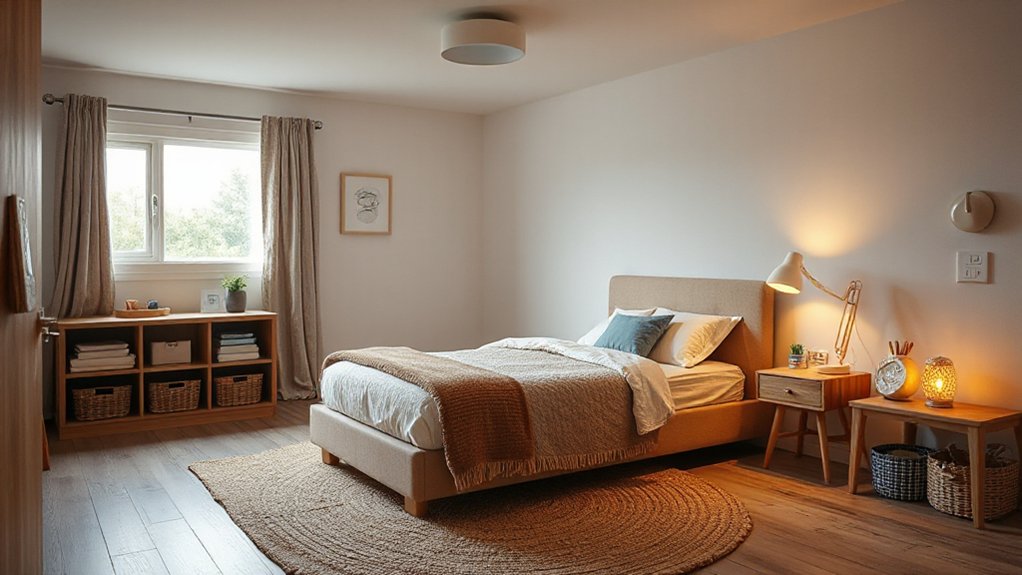
While a single ceiling fixture might cover the basics, layered lighting makes a kids’ bedroom feel polished and work harder in less space. Start with a dimmable overhead light to set an even ambient glow for play and cleanup.
Add task lighting where you need precision: a slim LED desk lamp for homework, a clip-on reading light for bedtime books, or under-shelf strips to brighten a compact study nook without eating surface area.
Then include a night light that’s low, warm, and glare-free, so midnight trips stay calm and safe. Choose warm temperatures (2700–3000K) and diffused shades for visual comfort, and put everything on simple controls—wall dimmers, smart bulbs, or a bedside switch—so your child can manage light independently.
Add Personality With Swappable Decor (Bedding, Art, Decals)
With lighting handled, you can let the room’s personality show through decor you can swap in minutes. Start with bedding: choose a neutral duvet, then rotate bold sheets and pillow shams to match changing interests. Keep one lidded bin under the bed for backups, so you don’t waste closet space.
For walls, skip permanent paint statements and lean on framed prints, clip rails, or magnetic poster hangers that update fast. Use decals on closet doors or above the headboard for big impact with zero commitment—today’s dinos, next month’s galaxies.
Build a small set of repeatable decor themes (color + motif) so swaps still look intentional. Finish with seasonal updates: a new throw, a themed rug topper, or a fresh pinboard display that feels current without a full redo.
Conclusion
Measure first, then build zones that work like a well-edited capsule wardrobe—everything earns its place. You’ll keep the room safe with anchored furniture, tidy cords, and rugs that stay put. Stick to a neutral base, then swap accents as tastes change. Choose durable, washable materials and grow-with-them furniture for longevity. Add an ergonomic homework nook, a play area that resets fast, and layered lighting to make every corner feel calm, current, and ready for tomorrow.