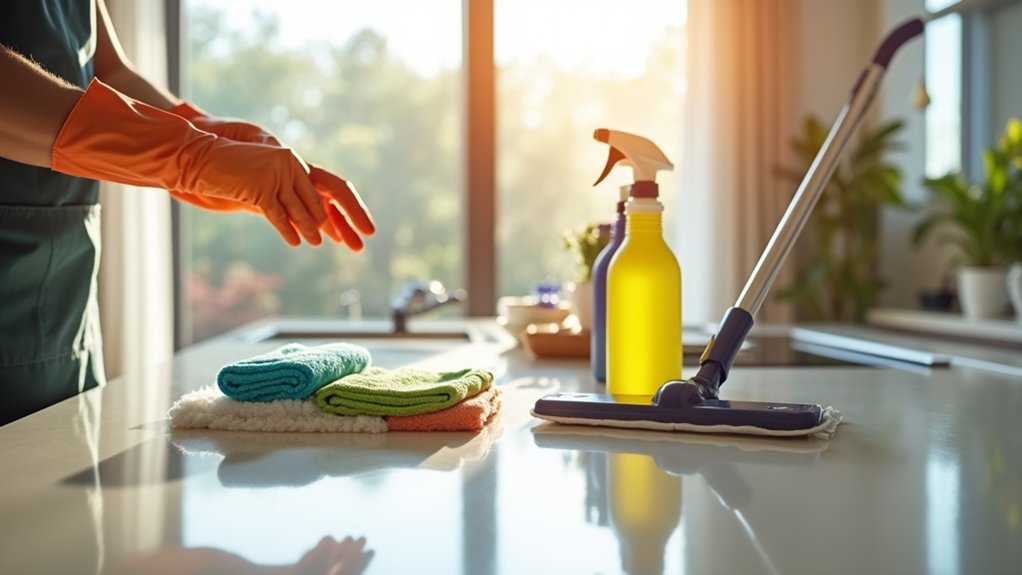

You don’t need more time to clean—you need a tighter plan. Start with a 30-minute sprint and a small kit you can carry, so you’re not walking back and forth for supplies. Move top to bottom in one room at a time, and hit the spots that make the house look clean fast: entry clutter, counters, sinks, and high-touch surfaces. Then you’ll see what to skip, what to soak, and what’s been slowing you down…
Follow a 30-Minute Clean-Faster Sprint Plan
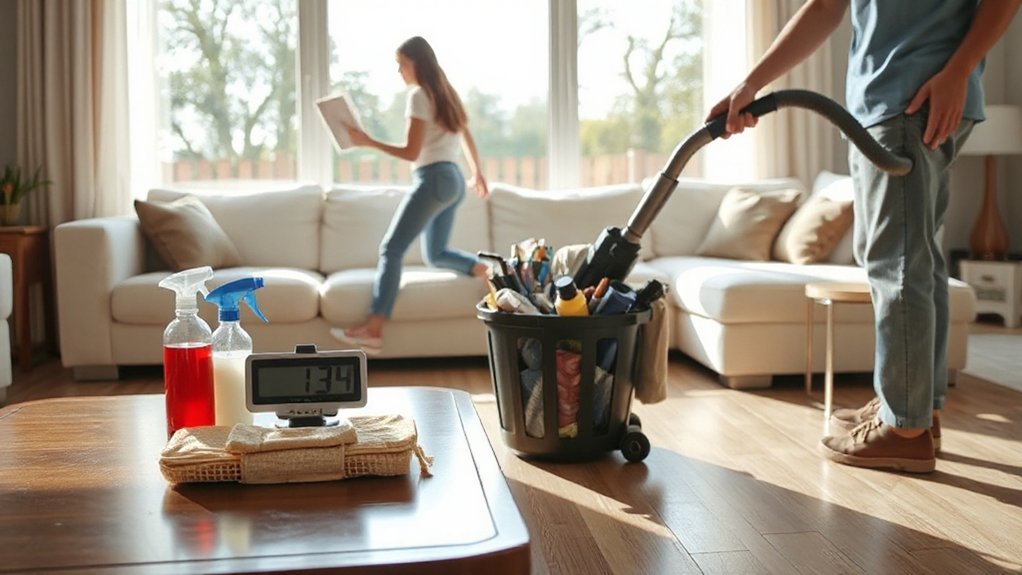
If you only have 30 minutes, a clean-faster sprint plan keeps you focused and stops you from drifting into low-priority tasks. Set a timer and commit to one pass per zone: entry, kitchen, bath, living, sleep.
Use Organizational strategies: start at the doorway, move clockwise, and keep items moving to their “home” or a single sorting spot.
Limit decisions: trash first, then dishes, then laundry, then surfaces.
Apply Motivational techniques: race the timer, play one upbeat track, and set a simple target (clear counters, empty sink, reset floor).
Work in 5-minute bursts with 30-second shifts.
Finish with a 2-minute scan to return strays and stage tomorrow’s priorities.
Grab Your Efficient Cleaning Kit First
Before you start, grab a compact cleaning kit so you’re not wasting minutes hunting supplies mid-sprint.
Assemble core tools (microfiber cloths, scrub brush, mop/vac, gloves), stock essential solutions (all-purpose, glass, disinfectant), and keep them in one portable caddy.
Add time-saving accessories—trash bags, a small squeegee, grout brush, and a timer—so you can move room to room without stopping.
Assemble Core Cleaning Tools
Why waste minutes hunting for supplies mid-task when a tight cleaning kit keeps you moving? Build a small, repeatable set of core tools you can carry room to room.
Start with microfiber cloths, a scrub sponge, a grout brush, and a handheld duster for fast touch-ups. Add a squeegee for glass and shower walls, plus a lint roller for lampshades and upholstery.
Keep a compact vacuum attachment set and a crevice tool to hit edges without switching machines. Choose durable Cleaning gadgets that nest or fold to save space.
Use smart Storage solutions: a handled caddy or slim tote with labeled pockets, plus a hook for gloves. Restock tools here after every session. Keep duplicates minimal.
Stock Essential Cleaning Solutions
Since the right solutions do most of the work, stock a small lineup that covers every surface without cluttering your cabinets.
Start with an all-purpose cleaner for counters, sealed wood, and painted walls; choose concentrated refills to save space.
Add a glass cleaner for mirrors and windows, plus a disinfecting option for high-touch areas like handles and switches.
Keep a dedicated bathroom cleaner that cuts soap scum and hard-water spots, and a degreaser for stovetops and range hoods.
For floors, match the formula to the finish: pH-neutral for tile and sealed hardwood.
Favor Eco friendly alternatives when you can, and keep natural cleaning products like diluted vinegar or baking soda for deodorizing and light abrasion.
Label bottles clearly.
Prepare Time-Saving Accessories
When you keep your go-to accessories in one portable kit, you cut wasted trips and finish each room in fewer passes. Use a slim caddy that fits under sinks or in a closet corner, and restock it after each session.
Pack microfiber cloths, a scrub brush, a crevice tool, and a squeegee; add a small grout brush for tight lines. Choose ergonomic designs—angled handles, lightweight poles, and trigger grips—to reduce fatigue and keep your pace steady.
Include Eco friendly solutions: reusable pads, washable dusters, and refillable spray bottles. Clip a checklist to the handle so you don’t forget glass wipes, gloves, or spare trash liners. Label compartments to grab tools fast.
Clean Faster With Top-to-Bottom, Room-by-Room Order
To clean faster, follow a top-to-bottom, room-by-room order so you don’t redo work. Start with ceilings, vents, light fixtures, and upper shelves, then move to counters, furniture, and finally floors. Gravity’s on your side: dust and debris fall, and you’ll capture it once at the end.
Work one room fully before moving on. Keep your tools in a small caddy so you’re not backtracking through hallways or opening extra cabinets. Use a simple cleaning schedule that lists rooms in the order you’ll tackle them, and stick to the same route each time.
These organizational strategies reduce decision fatigue, prevent missed surfaces, and keep clutter contained to the space you’re cleaning, not the whole house.
Hit the High-Impact Spots First (and What to Skip)
Even if you don’t have time for a full-house reset, you can make the place feel clean fast by targeting the high-impact spots people see and touch most. Start at the entry: shoes, mail, and bags into one bin for quick clutter prioritization.
Then do spot cleaning on fingerprints and smudges: door handles, light switches, fridge pull, and faucet. Clear and wipe the kitchen counter, sink rim, and stove front; they telegraph “clean” instantly.
In the bathroom, hit the mirror, tap, and toilet exterior, plus a quick wipe of the vanity edge. Fluff couch pillows, fold throw blankets, and empty visible trash.
Skip deep organizing, baseboards, inside cabinets, and full-floor scrubbing unless there’s obvious grit. Save those for longer sessions later.
Use Fast Tools and “Soak First” Shortcuts
Upgrade to faster tools—microfiber cloths, a squeegee, and a cordless vac—so you cover more area with fewer passes.
Spray showers, sinks, and stove grime first, let it soak while you tackle another task, then wipe with minimal scrubbing.
Batch clean by zone (bath, kitchen, floors) so you don’t waste time switching products, tools, and focus.
Upgrade To Faster Tools
When you swap slow, manual scrubbing for purpose-built tools—and let grime loosen first—you’ll cut your cleaning time fast. Choose a lightweight cordless vacuum for daily passes, a microfiber flat mop with a rinse bucket, and a squeegee for glass and shower walls. Keep a narrow crevice tool and a small detailing brush for baseboards, vents, and grout lines.
Set up Smart storage so tools live where you use them: a caddy under each sink, wall hooks in the laundry area, and a labeled bin for refills. Stock eco friendly products in concentrated form to reduce clutter and trips to restock.
Use a timer and a checklist, and you’ll finish rooms in one focused loop without backtracking.
Soak First, Scrub Less
Fast tools speed up the work, but you’ll move even quicker if you let chemistry and time do the hard part first. Spray shower walls, sinks, and faucets with a daily cleaner, then wait 5–10 minutes.
Apply an enzyme or oxygen cleaner to organic spots for stain removal, and a degreaser to stovetops or backsplashes for grease elimination.
While it dwells, prep your next step: fill a bucket with warm water, set out microfiber cloths, and ready a scrub brush or drill brush. Return and wipe top to bottom; most grime lifts with one pass.
For pans, trays, and filters, add hot water plus detergent, then soak 15 minutes before a quick scrub. Finish by rinsing and drying to prevent new buildup.
Batch Clean By Zone
After you’ve got cleaners dwelling, switch to batch cleaning by zone so you’re not bouncing between rooms and redoing steps. Pick one zone (kitchen, bath, entry) and run the same sequence: clear surfaces, wipe high-to-low, then finish floors.
Keep a small caddy with only fast tools: microfiber cloths, a scrub brush, squeegee, and a handheld vacuum. Use “soak first” shortcuts again: spray sink, shower, or stovetop, then dust or empty trash while it works.
Set a 10–15 minute timer per zone to keep pace and protect your motivated mindset. Seeing each zone hit “done” fuels cleaning motivation and stops half-finished detours.
Reset tools before moving on.
Stop These Habits That Slow Cleaning Down
Even if you’ve got a solid routine, a few common habits can quietly add minutes to every cleaning session and make the work feel harder than it needs to be. Build habit awareness: notice when you start “pre-cleaning” by shuffling piles, sorting mail, or hunting for supplies mid-task.
Do clutter reduction first by removing obvious trash and returning stray items to one temporary bin, not multiple rooms.
Stop switching tools every two minutes; stage what you need on a caddy and finish one surface before changing products.
Don’t start with the floor if counters are still messy—you’ll redo work.
Avoid over-spraying; it forces extra wiping and leaves residue.
Finally, don’t perfection-clean low-impact spots; prioritize high-touch, high-visibility areas to keep momentum.
Keep It Clean With a Simple Daily/Weekly Routine
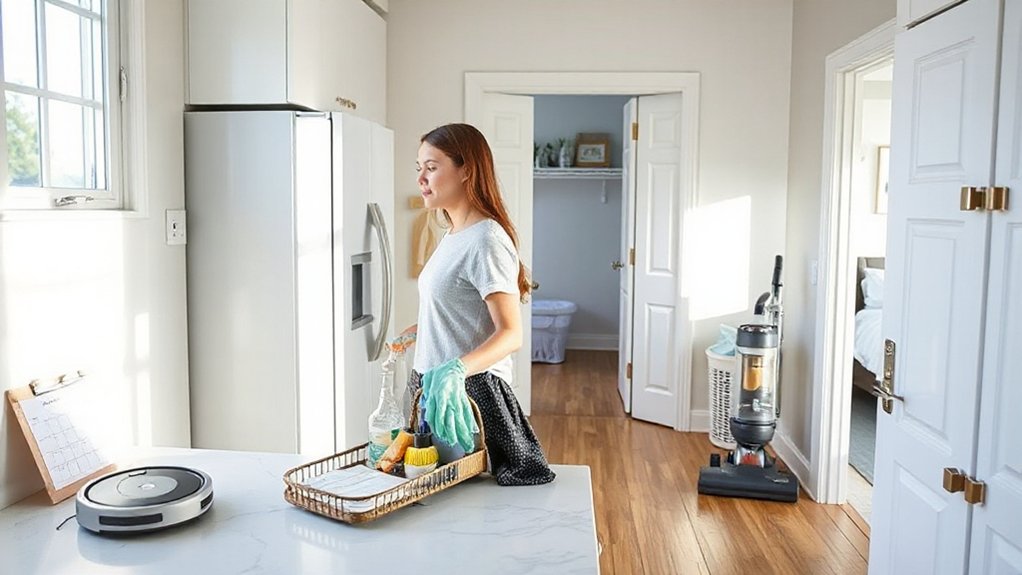
When you anchor your cleaning to a simple daily/weekly routine, you stop relying on motivation and keep mess from building into time-consuming projects. Do a 10-minute daily reset: clear counters, run a quick vacuum pass, wipe the sink, and put items back in labeled bins. Keep a small caddy under each bathroom sink so you don’t waste steps.
For pet friendly cleaning, swipe fur with a rubber broom, then mop with an enzyme-safe solution and wash bowls and mats nightly.
Once a week, rotate zones: Monday floors, Tuesday bathroom, Wednesday dust, Thursday kitchen, Friday laundry, Saturday sheets, Sunday prep.
Use decorating tips that reduce clutter: closed storage, trays for essentials, and hooks by the door. Keep supplies minimal, refillable, and stored where you use them.
Conclusion
When you clean with a 30-minute sprint, a stocked caddy, and a top-to-bottom, room-by-room order, you’ll cut rework and see results faster. Start with entryways, counters, and high-touch points, then let showers and sinks “soak” while you wipe and vacuum. Skip low-visibility perfection. One useful stat: the average home holds roughly 300,000 items, so quick decluttering pays off. Stick to a simple daily reset and weekly schedule.