
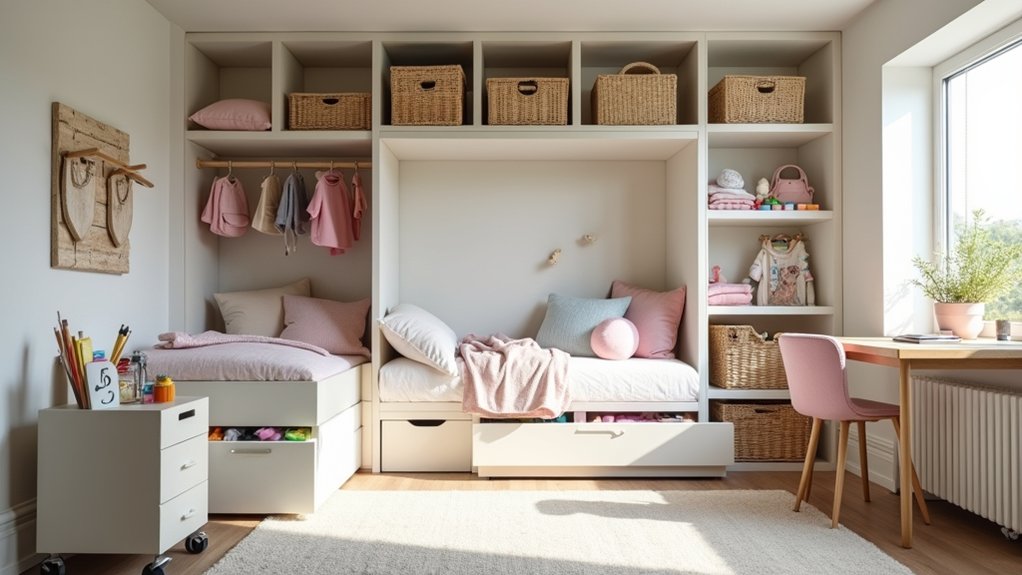

In a small shared bedroom, you set a low slide-in shelf by the door, add two labeled bins for daily toys, and mount a front-facing book ledge at kid height. You keep zones clear: toys here, books there, clothes in the closet. You choose matching baskets so the room looks calm, not cluttered. Cleanup stays quick because everything’s easy to spot and reach—but the real difference comes from one habit you haven’t tried yet…
Set Up Kids’ Room Storage Zones (Toys, Books, Clothes)
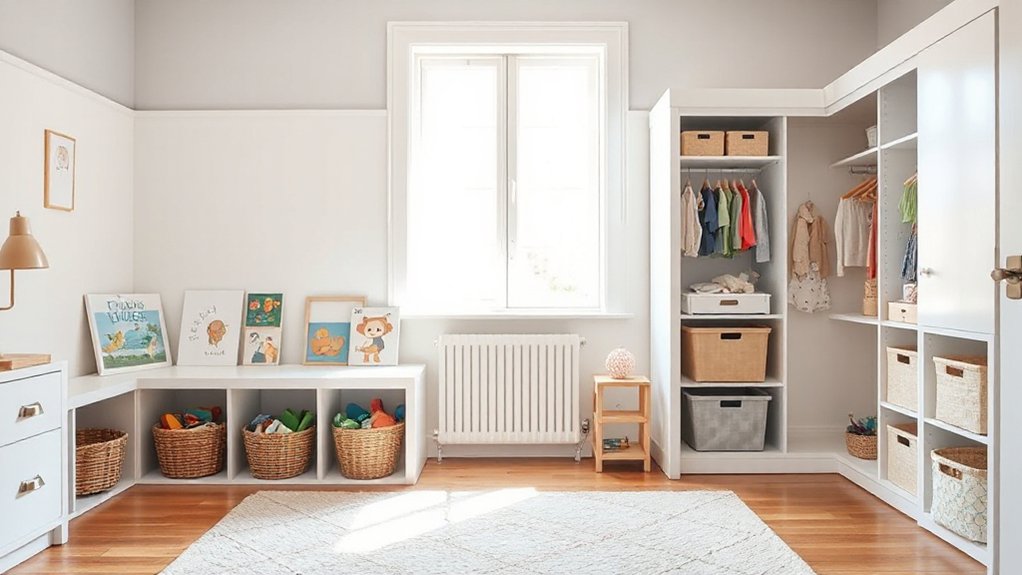
If you divide the room into clear storage zones, you’ll cut clutter fast and make cleanup feel automatic.
Put toys near the play area with low, slide-in shelves, so kids can grab and return items without crossing the room.
Create a book zone by the bed or reading nook, using front-facing ledges to show covers and save floor space.
Set a clothes zone by the closet with a slim dresser, double-hang rods, and a hamper tucked under a bench for quick outfit swaps.
Keep each zone visually calm: match containers, limit colors, and leave breathing room on surfaces.
Finish the layout with Creative wall art above each zone and personalized decor that signals what belongs where.
Make Kids’ Room Storage Easy With Bins + Labels
Once you’ve set storage zones, keep them effortless with kid-friendly bins that fit the shelf and look clean. Pick lightweight, easy-grab options with smooth edges.
Then, use a label system that won’t peel or smudge. When bins and labels stay put, you won’t be resetting the room every week.
Choose Kid-Friendly Bins
How do you make toy cleanups faster and your shelves look calmer? You choose kid-friendly bins that fit the way your child plays. Go for low, wide bins on open shelves so little hands can toss toys in without tipping stacks.
Use a Creative container mix: square fabric cubes for blocks, shallow trays for cars, and lidded boxes for tiny sets.
Stick to a tight color palette—two neutrals plus one accent—so the room looks styled even when it’s lived in.
Prioritize material safety: BPA-free plastics, smooth edges, non-splintering wood, and washable fabrics with low-odor finishes. Add handles for easy carry, and pick sizes that slide neatly under beds or inside closets. Keep extras nested when empty.
Label Systems That Stick
Because bins only work when everything returns to the right spot, a label system that sticks turns cleanup into a quick, no-drama habit and keeps open shelves looking intentional. Start with big categories kids understand: Blocks, Art, Dress-Up, Books. Place labels at eye level on every bin front, not lids, so you don’t stack confusion.
For metal shelves or rolling carts, use magnetic labels so you can reassign bins as interests change without peeling tape. On woven baskets, tie on chalkboard tags for a tidy, uniform look that still flexes with new toys. Keep fonts bold, icons simple, and colors limited to your room palette. Add a picture label for pre-readers, and you’ll cut dumping, searching, and shelf clutter fast.
Fast Toy Storage Ideas: Cubbies, Baskets, Rotation
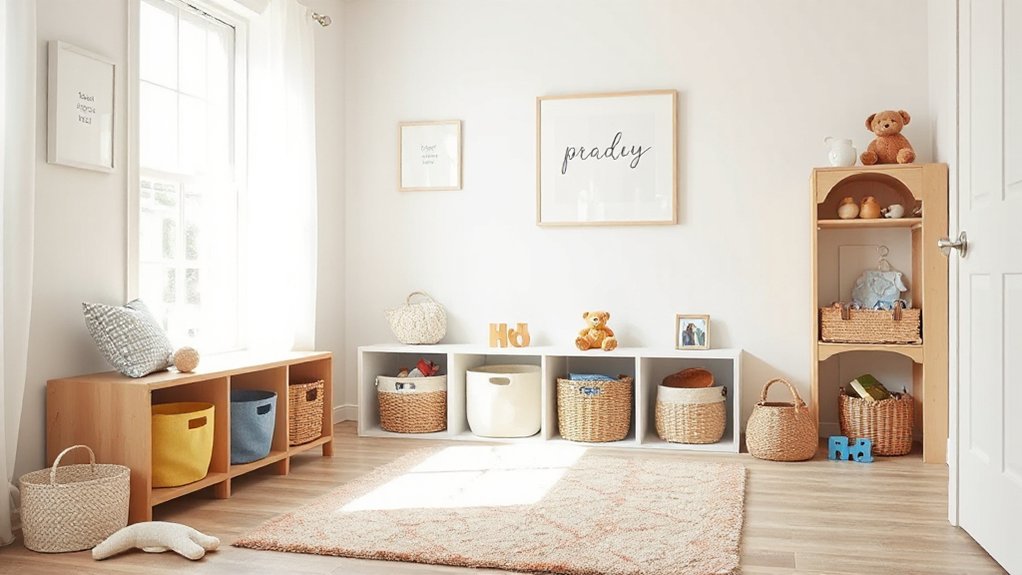
When toys seem to multiply overnight, you can bring instant order with a few streamlined storage moves: open cubbies, lidded baskets, and a simple rotation system.
Start with storage cubbies at kid height so cleanup becomes a quick drop-and-go routine. Assign one category per cube, then slide in matching baskets to hide visual clutter while keeping everything portable. Choose neutral woven or fabric bins to soften the look and coordinate with the room.
Next, use Toy rotation to cut the volume in play. Keep only a small, curated set out and stash the rest on a top shelf or in a closet tote. Swap weekly, and you’ll reset interest without buying more.
Finish with an empty “return” basket for strays, so surfaces stay clear.
Book Storage Ideas for Children’s Rooms (Front-Facing, Slings)
Although books stack neatly on adult shelves, kids reach for covers, not spines—so front-facing ledges and fabric sling racks work better in a children’s room. Mount two or three slim picture ledges at kid height, then display front-facing books like art while keeping titles visible. Keep the palette cohesive with matching ledges or painted trim so the wall looks intentional, not busy.
For tight corners, add sling storage: a narrow, wall-hung fabric rack that holds several books without stealing floor space. You’ll make cleanup faster by limiting each row to a category (bedtime, favorites, library). Rotate covers weekly to refresh interest and prevent piles.
Finish with a small bin below for overflow reads, not toys, so the setup stays calm.
Make the Closet Work for Kids’ Clothes Storage
Even if your kid’s closet is small, you can make it work harder by setting it up at their scale. Drop the hanging rod or add a second, lower rod so they can reach outfits without help. Use slim, matching hangers to keep lines clean and save inches.
Add labeled bins on the top shelf for off-season items and accessories, and keep daily essentials at eye level for fast mornings.
For better closet organization, swap bulky dressers for vertical solutions: stackable shelf dividers, a narrow cubby tower, and door-mounted hooks for backpacks.
If the closet has no rod, install wall-to-wall clothing racks or a tension rack to create instant hang space.
Finish with a light, neutral liner and one woven basket to soften the look.
Under-Bed Storage Ideas for Small Kids’ Rooms
If floor space disappears the minute toys hit the ground, treat the area under the bed as your hidden storage zone. Slide in low-profile bins on casters so you can pull everything out with one hand and keep cleanup fast. Choose clear fronts or labeled handles to make Under bed organization foolproof for kids.
Use divided drawers for LEGO, dolls, and art supplies, and stash off-season clothes in vacuum bags for compact storage. Match containers to the room’s palette—woven baskets for warmth, matte boxes for a modern look—so the view stays calm.
Add a simple bed skirt or a streamlined frame to hide visual clutter without blocking access. Keep one bin “today’s toys” and rotate the rest weekly to cut mess.
Wall Shelves and Hooks to Save Floor Space
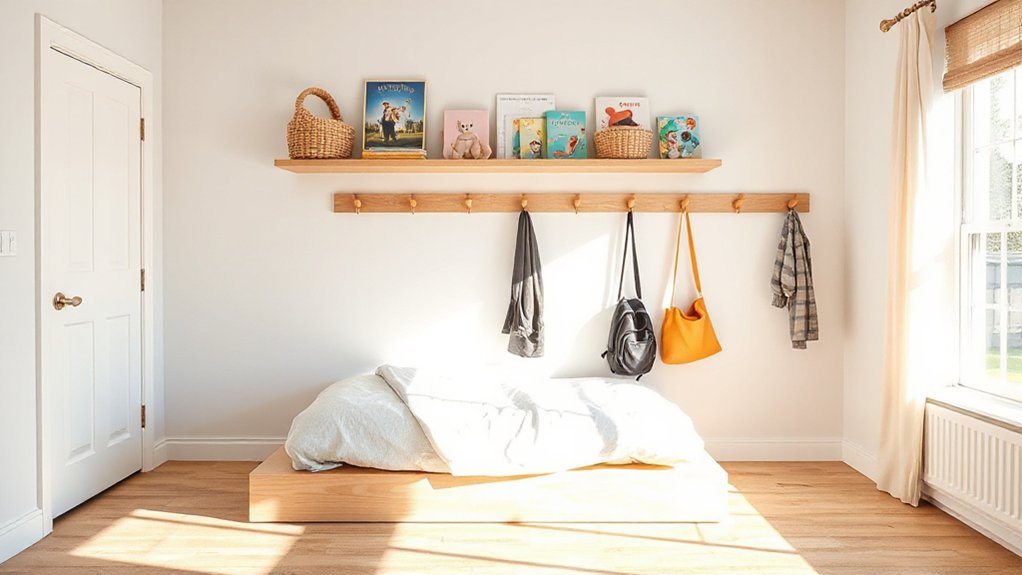
Once you’ve maxed out under-bed bins, look up—the wall can hold what the floor can’t. Install floating shelves above the desk or dresser to park books, puzzles, and display-worthy toys without crowding walkways. Keep the lowest shelf within reach so your child can reset their own space.
Add wall hooks near the door for backpacks, hoodies, and sports gear, and use double hooks to separate “today” from “laundry.” Choose rounded, sturdy hooks and mount them into studs or anchors for safety.
Create a tidy zone by pairing a narrow shelf with hooks beneath it: label baskets for small items, hang caps and tote bags below. Match shelf finishes to trim or furniture, and you’ll get storage that looks built-in, not bolted-on.
Conclusion
When you set clear zones, add labeled bins, and use vertical and under-bed space, your kid’s room stays calm and quick to reset. Think you don’t have enough room for “real” storage? You do—swap bulky furniture for slim cubbies, front-facing book ledges, and a lower closet rod, and you’ll gain floor space instantly. With everything at kid height, cleanup becomes automatic, and the room looks tidy, bright, and intentional.