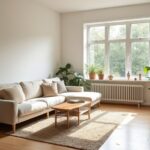
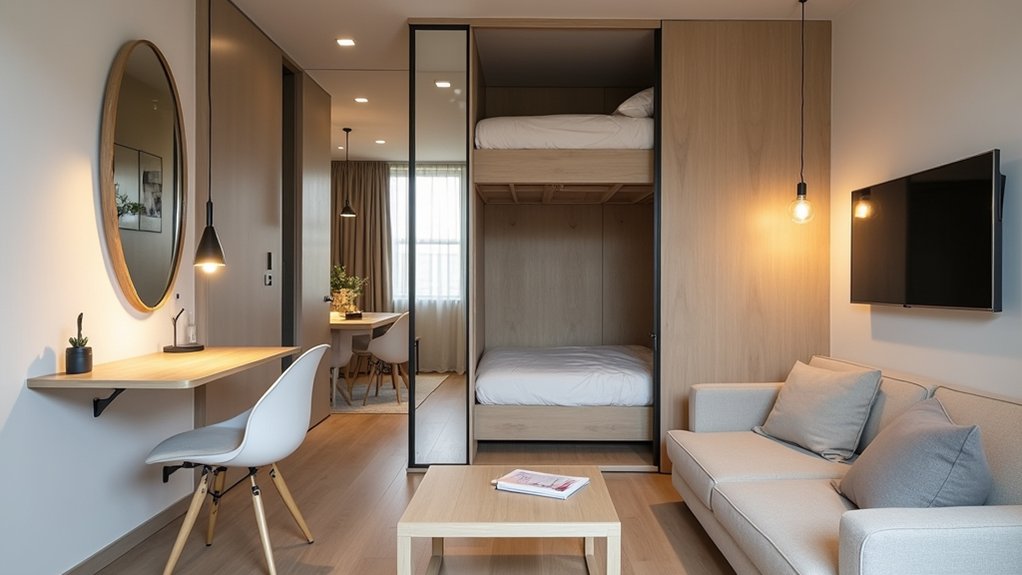

If your apartment is a bit “cozy,” you can still make it feel intentional and spacious. You start by measuring every wall and mapping zones for sleep, work, and storage, then you swap in multi-use pieces like a sofa bed or wall-mounted desk. You push storage upward with floating shelves and tall bookcases, layer lighting to widen the room, and use mirrors or glass to bounce light. But the real difference comes from what you hide next…
Plan Your Small Apartment Layout (Measure + Zones)
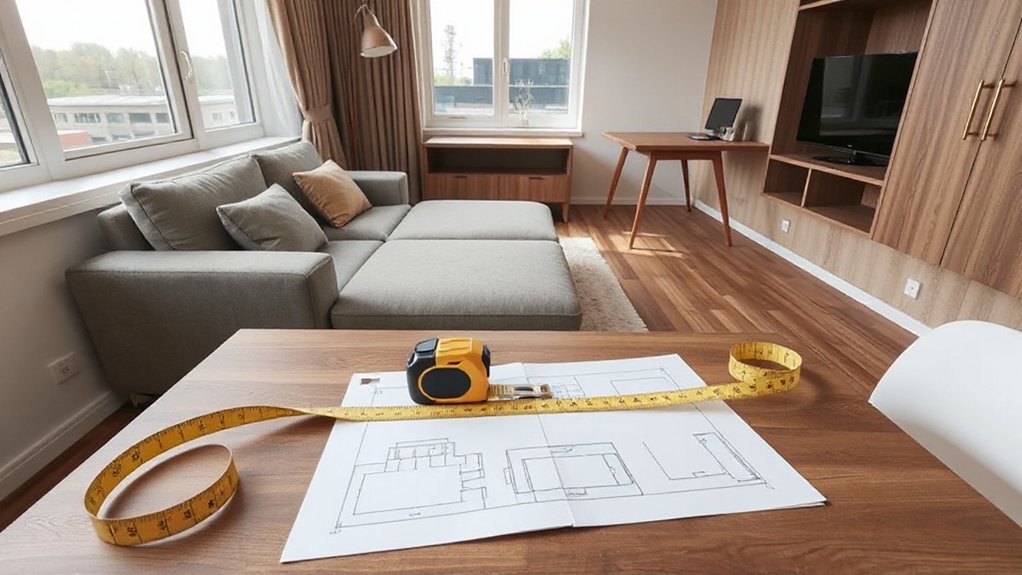
Before you buy another “space-saving” piece, map what you’re working with: measure every wall, window, doorway, and outlet, then sketch a quick floor plan (paper, tape on the floor, or an app). Do quick space measurement twice and note swing paths for doors, drawers, and the fridge. Mark HVAC vents and radiators so you don’t block airflow.
Next, use apartment zoning to make your studio feel intentional. Define an entry “drop zone” (keys, shoes), a work zone near daylight, and a lounge zone positioned for the best sightline to the room. Keep 30–36 inches for main walkways, and test zones with painter’s tape outlines.
Finally, plan lighting by zone: task, ambient, and accent, so each area reads purposeful.
Choose Multi-Use Furniture for Small Apartments
Once you’ve mapped your zones, make every piece earn its footprint by choosing multi-use furniture. Pick space-saving convertibles—like a sofa bed, drop-leaf table, or wall-mounted desk—that shift modes fast without blocking walkways.
Then add hidden-storage heroes such as an ottoman with a lift-top, a platform bed with drawers, or a storage bench to keep clutter out of sight and your place looking clean and current.
Space-Saving Convertible Pieces
Two smart upgrades can make a small apartment feel instantly bigger: convertible, multi-use pieces that earn their footprint.
Start with foldable beds that lift or tuck away, so your bedroom becomes a lounge or workout zone by day. Choose models with smooth pistons and a firm lock; you’ll actually use them.
Next, add collapsible desks that flip down for WFH, then disappear when you’re done. Look for cable pass-throughs, a shallow depth, and a weight rating that supports monitors.
In seating, pick a sofa bed with a tight-back design and thin arms to keep the profile sleek.
Finish with nesting tables or a drop-leaf dining top, so you can host without crowding your daily flow.
Hidden Storage Furniture
One of the cleanest ways to win back floor space is to choose furniture that hides storage in plain sight. Start with an ottoman that lifts for blankets, chargers, and mail, then pair it with a slim coffee table that includes drawers. Swap your bed frame for one with deep pull-out bins, and you’ll eliminate bulky dressers fast.
In the entry, use a storage bench with shoe cubbies so clutter doesn’t spread.
Look for trend-forward furniture integration: a headboard with shelves, a side table with a concealed compartment, or a mirror cabinet that reads like décor. Keep finishes consistent—light oak, matte black, or bouclé—so your hidden storage blends, not shouts.
Measure lift clearance and drawer swing before you buy.
Add Vertical Storage Without Crowding the Room
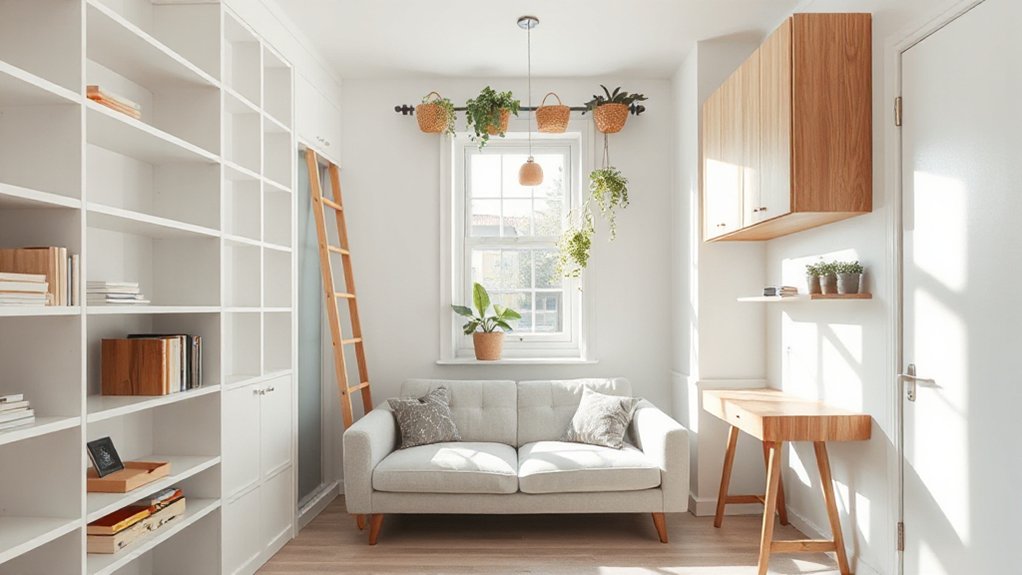
Because floor space disappears fast in a small apartment, you’ll get more function by building upward: mount floating shelves above doors and windows, install a slim wall-rail system in the entry or kitchen, and use tall bookcases anchored to the wall to keep the footprint tight.
Add wall mounted shelves with a 6–8 inch depth for mugs, spices, and books so they don’t jut into walkways. Use Vertical racks inside cabinet doors for lids, cutting boards, and wraps, and hang them with removable hooks if you rent.
Keep sightlines clean by matching shelf color to the wall and grouping items in bins. Leave 12–15 inches between shelf tiers, and reserve the topmost level for seasonal gear.
Layer Lighting to Make a Small Apartment Feel Bigger
Even if your square footage stays the same, layered lighting can make the room feel wider, taller, and more flexible by controlling shadows and where your eye lands.
Start with a warm, dimmable ceiling fixture or semi-flush mount for even ambient light.
Then add task lighting where you work: an articulating wall sconce by the bed, an under-cabinet LED strip in the kitchen, a desk lamp with a focused beam.
Finish with accent light to lift corners and soften ambient shadows—try a plug-in uplight behind a plant or a slim floor lamp aimed at the wall.
Keep bulbs consistent (2700–3000K) for a cohesive glow, and use smart dimmers to tune layered illumination by time of day.
Add Mirrors and Glass to Open Up a Small Apartment
You can make your apartment feel instantly larger by placing mirrors where they’ll bounce daylight—across from windows, behind lamps, or at the end of a narrow hall.
Swap bulky pieces for glass furniture like a coffee table or dining top so sightlines stay clean and the room reads lighter.
Finish with reflective decor accents—metallic trays, glossy frames, or mirrored tiles—to add depth without adding clutter.
Strategic Mirror Placement
Where can a mirror do the most work in a small apartment? Put it opposite your biggest light source—typically a window—to bounce daylight deeper into the room and visually double the view.
Use mirror placement techniques like hanging a full-length mirror near the entry to widen tight circulation, or leaning one behind a plant to add depth without clutter.
In a narrow hallway, center a long horizontal mirror at eye level to stretch the sightline.
Choose decorative frame options that match your vibe: slim black metal for modern, warm wood for Japandi, or rounded brass for a soft, on-trend curve.
Keep reflections intentional—aim at art, greenery, or light, not laundry. Use secure anchors always.
Glass Furniture Selections
One well-chosen glass piece can make a small apartment feel instantly lighter because it keeps sightlines open instead of chopping the room into visual blocks. Start with a glass coffee table or nesting side tables; they deliver surface area without visual bulk, supporting a transparent aesthetic.
Choose tempered glass with rounded corners for safety, and pair it with a slim metal or light wood frame for sleek design. In the dining zone, try a glass-top bistro table that tucks close to the wall, or a console with a glass shelf for entry storage.
Keep shapes simple, avoid etched or heavily tinted finishes that add visual weight, and size pieces to your walkway clearances so circulation stays effortless. Opt for durable, scratch-resistant coatings when possible.
Reflective Decor Accents
Although square footage stays the same, reflective decor accents can make a small apartment read brighter and wider by bouncing light and extending sightlines. Hang a large mirror opposite your main window to double daylight, or angle it toward a lamp to boost evening glow. Choose slim, black or brass frames for a modern look without visual bulk.
Use wall-mounted accents like mirrored sconces, glass shelves, and glossy tiles behind a kitchenette to add depth while staying functional. Swap heavy gallery walls for reflective art pieces—metallic prints, mirrored panels, or acrylic-framed photography—to keep things airy.
Keep reflections intentional: avoid facing clutter, and group small mirrors in a tight grid to look curated. Finish with high-shine hardware to echo light across the room.
Hide Clutter With Renter-Friendly Hidden Storage Ideas
Ever wonder why a small apartment can look messy even when it’s “clean”? You’re seeing visual clutter: cords, mail, shoes, and daily grab-and-go items with no assigned home. The fix isn’t more bins—it’s storage that disappears.
Start with hidden compartments: add a lift-top coffee table for remotes and chargers, slip a slim tray under your sofa for paperwork, and use an ottoman with a removable lid for blankets.
Go vertical with over-door racks and adhesive hooks inside cabinet doors for hair tools and cleaning sprays. Try underfloor storage vibes without renovations by sliding flat, lidded boxes under your bed, dresser, or radiator cover. Keep labels facing out, and limit each stash to one category.
Conclusion
Your small apartment isn’t a box—it’s a pocketknife: compact, sharp, and ready for anything. You measure, zone, and let each area earn its keep. You pick sofa beds, wall desks, and storage that disappears under beds and behind doors. You build up with floating shelves and tall bookcases, not out. You layer warm task light and soft ambient glow. Then you hang mirrors and add glass to bounce light, making every inch feel lighter.