

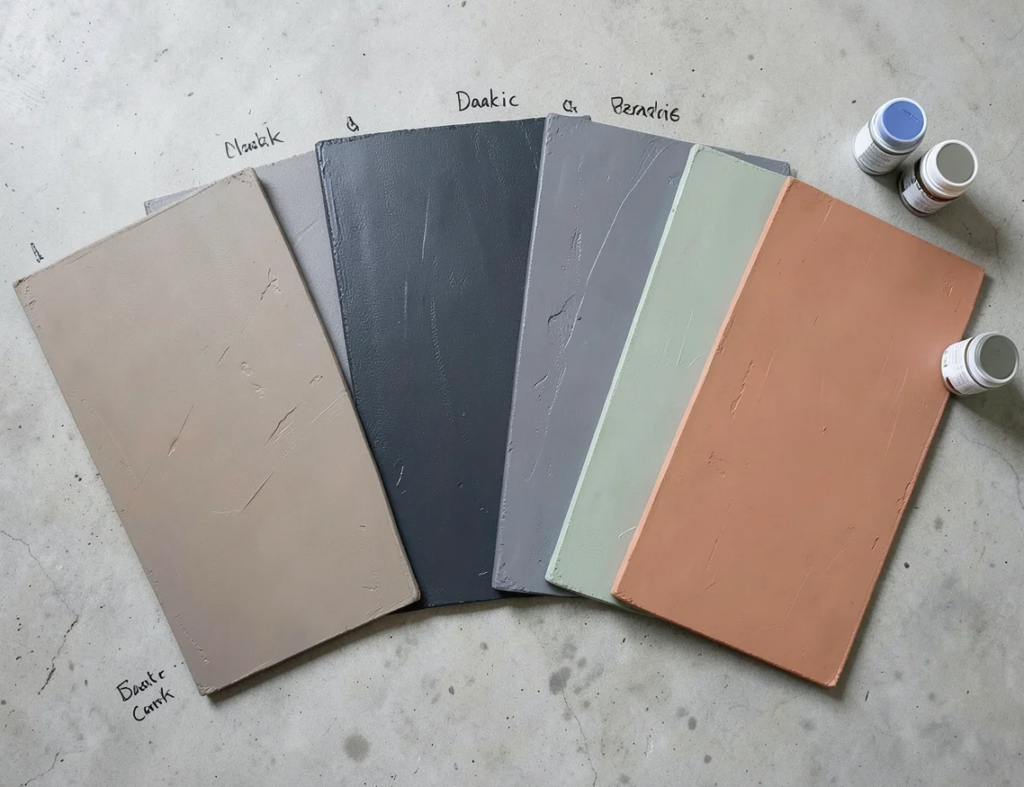
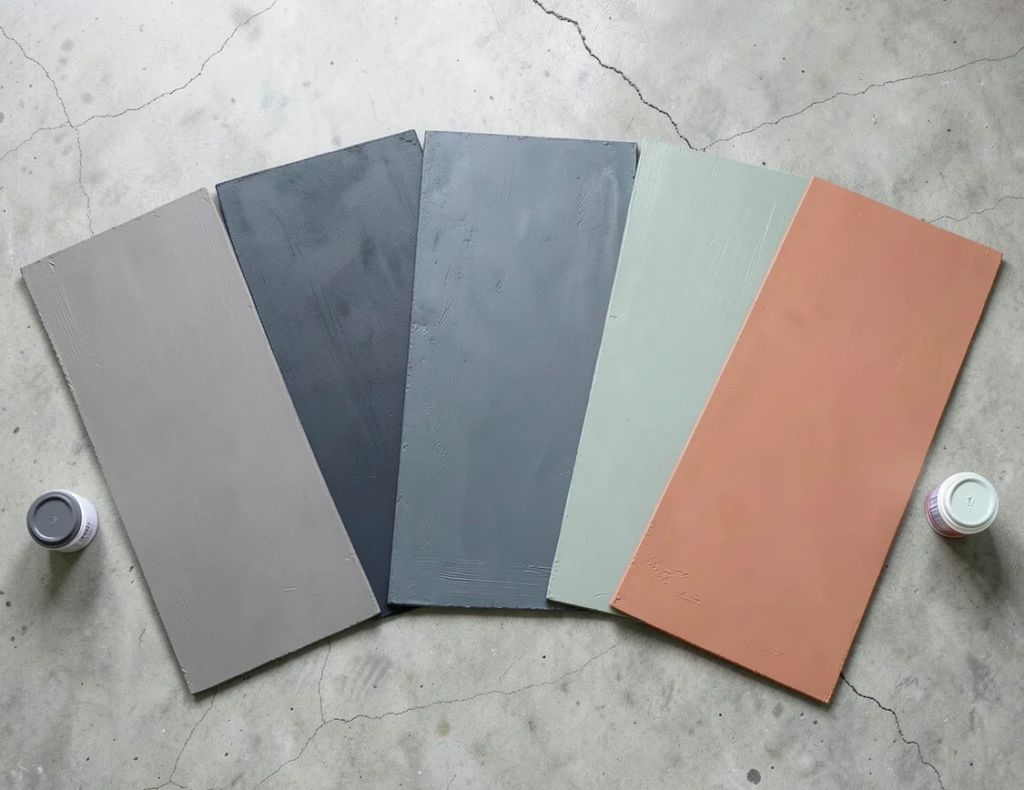
Walk into any decent decorators’ merchant or builders’ supply and the range of concrete floor paint has changed almost beyond recognition in the last few years. What was once a choice between grey, darker grey, and that particular shade of battleship that somehow ended up in every UK garage has expanded into a genuinely considered palette — warm neutrals, earthy greens, terracotta tones, deep blues, and the full spectrum of both practical and decorative options. The colors for concrete floor paint available in 2026 reflect the broader shift in interior design away from cool industrial grey and toward something warmer, more grounded, and more considered.
This guide covers the color options across the full range of concrete floor paint types — from functional garage coatings to decorative interior finishes — including what’s popular now, how color choice interacts with the type of paint used, and how to match floor color to the room and its purpose.
Paint Type Shapes Your Color Options
Before exploring specific colors for concrete floor paint, it’s worth understanding how the type of paint affects what colors are available and how they look in practice. Different chemistries offer different palette widths, different surface appearances, and different limitations.
Acrylic and Water-Based Floor Paints
The most accessible category — water-based, quick-drying, easy to apply, and available in the widest range of colors. Most major UK paint brands (Ronseal, Rust-Oleum, Dulux Trade, Johnstone’s) offer acrylic floor paint in ranges spanning from ten to thirty or more colors, covering neutrals, standard greys, greens, blues, terracottas, and sometimes bolder options.
Acrylic floor paint produces a satin or semi-gloss finish in most formulations. Color accuracy is good — what you see on the tin lid is broadly what you get on the floor, more predictable than acid staining or epoxy which can shift in different curing conditions.
The limitation is durability in heavy use applications — acrylic floor paint performs well in light-traffic domestic settings (basements, utility rooms, patios) but isn’t the choice for garages with regular vehicle use or any setting with significant chemical exposure.
Epoxy-Modified Single-Pack Floor Paints
Many products sold as “epoxy floor paint” in UK retail are not true two-part epoxy systems — they’re acrylic paints with epoxy resins added to improve hardness and adhesion. The confusion created by the word “epoxy” in the product name leads to a significant number of disappointed buyers who expected performance comparable to a real two-part system. These products are a genuine step up from plain acrylic but not the same as a professionally applied two-part system.
Color range for epoxy-modified single-pack products is broadly similar to acrylic — a managed palette of greys, greens, and occasional earth tones, generally ten to twenty options depending on the brand.
True Two-Part Epoxy Systems
Two-part epoxy (resin plus hardener mixed immediately before application) is what’s used in commercial and professional applications — car dealerships, warehouses, food preparation areas. It produces an extremely hard, chemical-resistant, glossy surface that bonds chemically to the concrete rather than sitting as a film on top of it.
The color range for two-part epoxy is more limited than decorative paints. Most systems focus on practical mid-greys, light greys, charcoal, mid-stone, and occasionally red or green for specific industrial applications. Some manufacturers offer custom tinting, and a handful of specialist UK companies offer wider decorative palettes for residential applications. This is the paint type that suits a garage or workshop where chemical and abrasion resistance matter more than color range.
Polyurethane Floor Paints
Single-pack polyurethane floor paints offer a good balance of durability and ease of application — harder and more chemical-resistant than acrylic, with a wider color range than most epoxy products. Dulux Trade Concrete and Masonry Floor Paint, Johnstone’s Floor Paint, and similar products in this category offer the sort of color range that includes proper heritage tones, greens, terracottas, and mid-neutrals alongside standard greys.
Polyurethane is the category that most overlaps with decorative interior floor painting — the right choice for someone who wants proper durability (four to five years between repaints in normal domestic use) with a wider color selection than pure epoxy provides.
The Colors: What’s Available and What Works
The Grey Family: Still the Most-Used, But Evolving
Grey has been the default concrete floor paint color for so long that it barely registers as a choice — it’s what concrete looks like, approximately, so painting it grey feels neutral. The range within grey is wider than most people realise, and the difference between a warm mid-grey, a cool blue-grey, a light silver, and a deep charcoal in the same room is significant.
Light grey and silver tones: The classic garage and workshop color. Bright, clean, slightly industrial. Makes a small or dark space feel larger. Popular with a gloss or satin finish where light reflection is useful. Most concrete floor paint ranges include a “light grey” or “silver” as a standard option.
Mid-grey and stone: The interior designer’s concrete grey — slightly warmer than a pure cool grey, comfortable in living spaces, utility rooms, and kitchens. Rust-Oleum’s “Rock Solid” mid-grey, Ronseal’s “Slate Grey”, and Johnstone’s “Concrete” are all in this territory. Works well with white walls, exposed brick, and natural timber.
Warm grey and greige: The trend direction for 2026 is away from pure cool greys and towards warmer tones. Oatmeal, putty, clay-based neutrals, and grey-beige hybrids (greige) are gaining popularity as floor colors because they feel less cold underfoot and read more naturally in domestic spaces. Dulux Trade’s “Natural Calico” and similar putty-warm tones are being used as floor colors where a few years ago only grey would have been considered.
Charcoal and dark grey: Creates a dramatic, moody effect in contemporary interiors — a dark floor against white or pale walls reads well in a high-specification extension or a converted industrial space. Charcoal floor paint in a satin finish with a good wax topcoat achieves a look close to polished concrete at a fraction of the cost. Requires adequate lighting — dark floors in low-ceiling basements without good lighting can make the space feel oppressive.
Greens: The Strongest Color Trend of the Moment
Green floor paint has emerged from relative obscurity to become one of the most requested decorative concrete floor colors, driven by the broader green paint trend that has dominated UK interior design for the last three or four years.
Sage green: The gentle, dusty sage that has been the dominant interior design green across UK homes suits concrete floors in utility rooms, boot rooms, garden rooms, and orangeries with a naturalness that few other colors achieve. Farrow & Ball’s “Mizzle”, Little Greene’s “Sage”, and Dulux’s “Sage Green” are the reference points; several concrete floor paint manufacturers now produce a near-equivalent in their ranges, or can tint to these specifications.
Moss and olive green: Deeper, earthier, and more complex than sage. Works in basement spaces, workshops, or utility areas where a darker floor is practical. The 2026 interior color direction toward olive and moss tones from the wall has translated naturally to floors. Johnstone’s Trade offers a “Moss Green” floor paint; Rust-Oleum’s “Sage” sits at the lighter end of this family.
Heritage green: The deep, slightly blue-toned green of Victorian and Edwardian paintwork — think the green of old post boxes, cast-iron railings, and heritage signage. On a floor, it’s unconventional but genuinely effective in period properties, especially in hallways and utility rooms. Provides a strong, characterful base under black or white tile-effect rugs and brass or bronze hardware.
Earth Tones: Terracotta, Rust, and Warm Browns
The significant shift in UK interior color preference for 2026 is toward warmth — Mediterranean-influenced terracotta, warm clay, and red-earth tones are appearing everywhere from kitchen walls to exterior facades, and floor paint is following.
Terracotta: Warm, slightly burnt orange-red that suits Mediterranean-influenced spaces, farmhouse kitchens, and sun-facing rooms where the warmth feels earned rather than artificial. Dulux’s “Sunbaked Terracotta” and Farrow & Ball’s “Dead Salmon” (which despite its name reads as a warm, dusky terracotta-pink) are the wall color references; concrete floor paint in a similar terra cotta tone is available from specialist decorative concrete suppliers and through tinted floor paint systems.
Warm brown and tan: Particularly effective in entrance halls and boot rooms — a warm brown floor doesn’t show dirt in the way that light grey does, takes the visual weight of a dark hallway and grounds it, and ages gracefully as foot traffic creates a natural patina. Rust-Oleum produces “Tawny” and similar warm earth tones in their floor paint range.
Red oxide: Traditional floor paint in the deep red-brown of old factory floors and Victorian workshops. Has a period authenticity that no other color achieves in the right setting — flagstone basements, converted farm outbuildings, period boot rooms. Dulux Trade “Red Oxide” and the equivalent from Johnstone’s have been in production for decades for good reason.
Blues and Navy: The Bold Choice
Blue concrete floor paint is less commonly seen than grey or green, but makes a genuinely striking statement in the right context.
Mid and slate blue: Works in workshops and utility rooms where the slightly cool, functional quality of blue reads as intentional rather than cheerless. Popular in craft rooms, garden workshops, and hobby spaces.
Navy: A deep navy floor in a cellar bar, a reading room, or a home office creates an enveloping quality that few other floor colors achieve. Requires careful lighting design — a navy floor in a poorly lit space turns the room into a cave. In a well-lit space with warm-toned furniture and good artificial lighting, it’s one of the most dramatic and satisfying floor choices available.
Teal: The 2026 interior color direction includes saturated teal as a key shade — Mylands chose “Burlington Arcade”, a moody teal, as their 2026 color of the year. On a concrete floor, a teal or deep teal-green creates an extraordinary effect in the right space — particularly in basement conversions or glazed garden rooms where the floor color becomes part of a more immersive interior palette.
Whites and Near-Whites: Surprisingly Practical
White concrete floor paint is the choice that most people assume is impractical — it shows everything. And in a garage or utility room, it does. But in a more controlled domestic setting — a light-flooded kitchen extension, a white-painted hallway, a minimalist home studio — a white or very pale concrete floor reads like expensive poured stone at a fraction of the price.
The key is finish specification: a white or near-white floor in a satin or semi-gloss finish is considerably easier to clean than matte, since dirt sits on the surface rather than absorbing into a rougher finish. A sealed white floor that’s mopped regularly with a pH-neutral cleaner maintains itself surprisingly well.
Dulux Trade produces “Brilliant White” in their floor paint range. Johnstone’s “White” floor paint has similar availability. Several specialist decorative concrete paint companies offer off-whites and creamy near-whites that read more softly than pure brilliant white in domestic settings.
Color by Space: Matching Paint to Room and Purpose
Garage and Workshop
Function first in a garage — durability, chemical resistance, and the ability to show up oil spills matter more than color trend. Light grey remains the dominant practical choice for good reason: it reflects available light, shows fluid leaks clearly, looks clean, and reads as professional. Mid-grey in a two-part epoxy or polyurethane formulation is the safe, sensible default.
The growing alternative: dark charcoal. A charcoal epoxy floor in a garage or home workshop doesn’t show tyre marks, hides the inevitable oil staining better than light grey, and looks genuinely impressive in a space that’s been properly fitted out. The trade-off is that darker floors require adequate lighting to see what you’re doing.
Utility Room, Boot Room, and Hallway
The working spaces of a house where floor paint earns its keep. Warm grey, warm brown, terracotta, and sage green all work well here — these are spaces where some colour is a positive rather than a risk, where the floor handles wet boots and muddy dogs and doesn’t need to be precious about it.
Darker colours in the hallway have the practical advantage of hiding tracked-in dirt better than pale floors. A deep sage or warm charcoal in a boot room is both practical and characterful.
Basement and Cellar
The range of possibilities is widest here, because the basement floor is away from the main decorative decisions of the house and can carry a stronger statement. Deep navy, teal, and dark charcoal all work well in basement spaces that are being converted to habitable use. Warm stone and greige tones make a basement feel warmer and more domestic. For utility basements, mid-grey remains the practical default.
Check for moisture before committing to any colour — the plastic sheet test (tape a square of polythene to the floor for 48 hours; condensation underneath indicates moisture movement through the slab) is essential before applying any floor paint to a concrete basement. Moisture trapped under an impermeable coating will cause it to blister and fail regardless of colour choice.
Patio and Outdoor Concrete
Outdoor concrete requires a paint specifically formulated for external use with UV stability, frost resistance, and some degree of anti-slip texture — most interior floor paints are not appropriate for outdoor exposure. The colour range for exterior-rated concrete paint is more limited than for interior products, focusing on practical neutrals and earth tones that hold their colour under UV.
Warm stone, terracotta, and mid-grey are the dominant patio floor paint colours. These are stable under UK weather conditions and complement brick, rendered walls, timber furniture, and planting. Bold colours outdoors — bright blue, strong green — tend to look faded and tired within a season or two under direct sunlight unless the paint is specifically UV-stabilised to a high standard.
Garden Room, Orangery, and Extension
Decorative concrete floor paint in a glazed garden room or kitchen extension has the opportunity to make a stronger statement than in a purely functional space. This is where sage green, warm putty, and terracotta genuinely belong — the connection to the garden, the natural light, and the organic feel of these colour families suits the brief of an indoor-outdoor transition space.
Color and Finish Together
The finish level — matte, satin, gloss — affects how a colour reads in a space as much as the colour itself.
Matte finish: Colours look slightly darker and more muted. Surface texture is more visible, giving the floor a concrete-like quality. Hides surface imperfections and footprints better than gloss. Appropriate where the aesthetic goal is understated — warehouse style, farmhouse, industrial chic.
Satin finish: The most versatile option — colour reads true, some light reflection without obvious shine. Practical and visually pleasing in most domestic settings. The default finish for most decorative applications.
Gloss finish: Colours look slightly brighter and richer. Light reflection makes a small space feel larger. Shows footprints and dust more readily. Most appropriate for commercial or display applications where the floor is being used to make a strong visual statement.
The Preparation Step Nobody Skips (After They’ve Done It Wrong Once)
A floor paint is only as good as the primer beneath it. Many people try to save money by skipping this step, but on a floor, that is a recipe for disaster. Concrete primed before painting holds topcoat far more reliably than bare concrete — particularly for colours that need to read true, since uneven absorption in unprimed concrete produces uneven color across the floor.
The other preparation step that determines success: cleaning. Oil contamination, tyre marks, adhesive residue, and any previous coating must be removed before painting. An oil-contaminated patch won’t accept paint — the colour will be patchy, the adhesion will fail, and the repair is more work than the original preparation would have been.
For the moisture check: the plastic sheet test, left for 48 hours, tells you whether moisture is moving through the slab. High moisture and an impermeable floor paint is a reliable formula for paint failure within weeks. If the slab is damp, use a breathable acrylic or a DPM (damp-proof membrane) primer system before the topcoat.
Choose the colour last, after the paint type has been selected for the use case. A beautiful terracotta concrete floor paint in a garage that sees regular vehicle use and oil spills is a beautiful terracotta floor for about six months — then it’s a patchy, peeling problem. Colour is the final layer on top of a specification that serves the space. Get the specification right, and then enjoy the colour.


Pingback: Painted Concrete Floors Pros and Cons: An Honest Assessment