
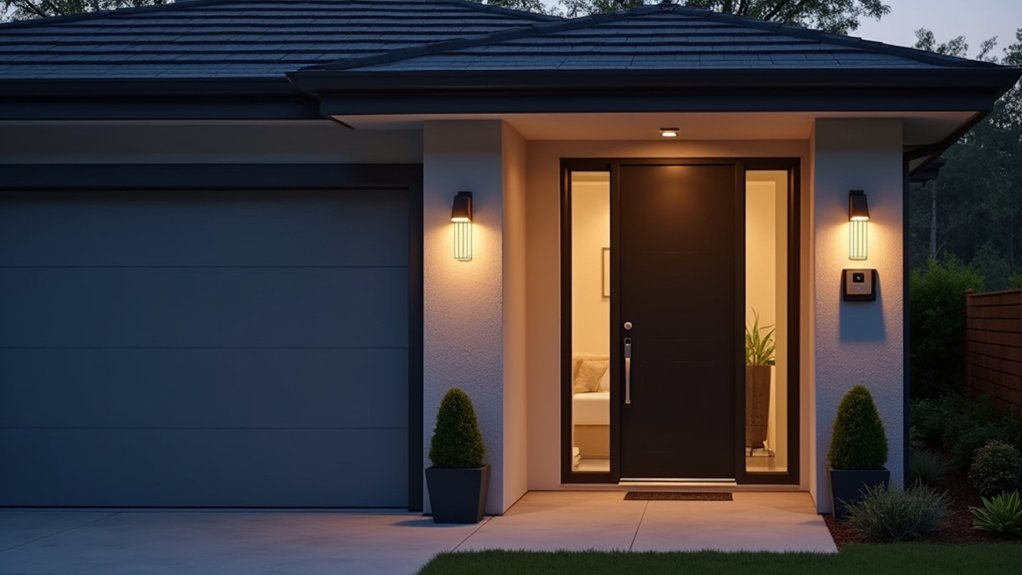

You’re choosing security gear that looks intentional, not bulky: slim video doorbells that sit flush, AI cameras that analyze on-device, and minimalist smart locks with fingerprint and app access. You’ll favor matte finishes, clean lines, and privacy controls like local storage and mic toggles. Then you’ll layer in quiet sensors—contact, motion, smoke, leak—and tie it together with a dependable hub for routines and manual overrides. The real question is what you install first…
Smart Home Security in 2026: What to Buy First
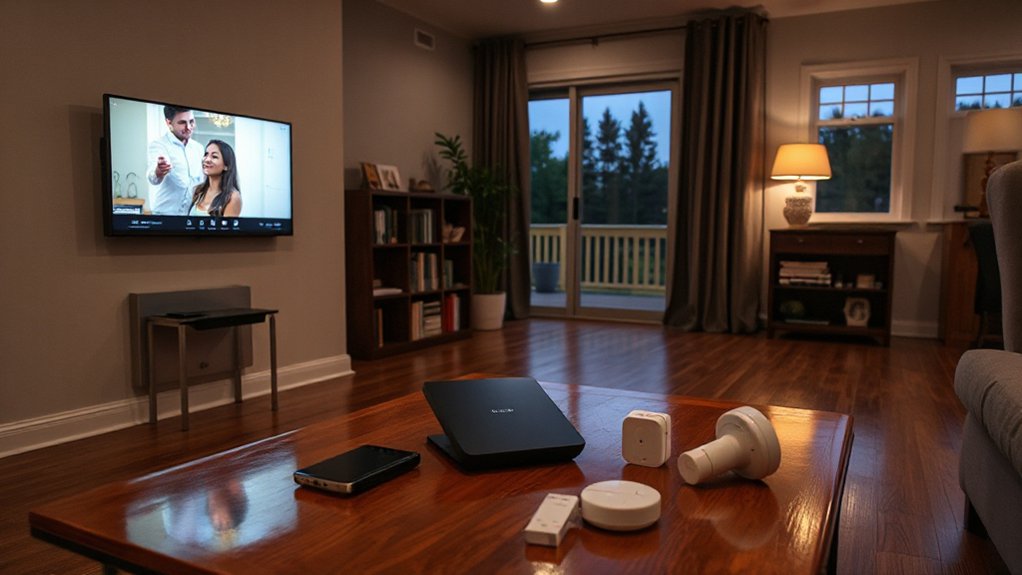
If you’re building a smart home security setup in 2026, start with the layers that do the most work with the least visual noise: a video doorbell for the threshold, a smart lock for controlled access, and a hub or router that keeps everything reliable.
Choose finishes that disappear into your palette—matte black on steel doors, satin nickel on warm woods, or color-matched trim so hardware reads intentional, not gadgety.
Keep sensors minimal: a few low-profile contact sensors on primary entries and slim motion sensors aimed down hall lines, not across living areas.
Let Home automation handle routines—auto-lock at night, disarm on arrival—while you keep manual control.
Address Privacy concerns early: local storage options, mic toggles, and tight user permissions.
Best Smart Video Doorbells in the U.S. (2026)
Because your front door sets the tone for the whole house, the best smart video doorbells in 2026 balance crisp, reliable footage with hardware that looks built-in, not bolted on. Choose a slim profile with a flush mount so it hugs brick, stucco, or fiber-cement without awkward gaps, and match finishes—matte black, brushed nickel, or warm bronze—to your handle set.
For tight entryways, prioritize wide vertical framing so you see packages without a bulky wedge.
Video doorbell installation feels cleaner with hidden wire channels, paintable trim plates, and optional battery packs that don’t swell the silhouette. Look for on-device motion filtering and AI security analytics that sort visitors, deliveries, and loitering, so your notifications stay calm and curated.
Best AI Security Cameras (2026): Features That Matter
While a basic camera can record what happened, the best AI security cameras in 2026 shape how your home feels day to day—quiet, intentional, and never cluttered with false alerts. You’ll want models with on-device AI integration that separates people, pets, and passing cars, so notifications stay minimal and meaningful.
Choose slim, matte housings in aluminum or soft-touch polymer that disappear against trim, not glossy domes that shout “gadget.” Look for HDR and low-light color that reads like natural film, plus a wide-but-uncurved field of view that keeps lines straight.
For privacy concerns, prioritize local storage, end-to-end encryption, physical shutters, and microphone kill switches. Set activity zones that respect neighbors, and keep indoor cams pointed away from living spaces.
Best Smart Locks for Keyless Entry (2026)
A smart camera tells you what’s happening; a smart lock decides who gets to come in. In 2026, you’ll want a slim profile that doesn’t crowd your trim, with finishes that match your hardware: matte black, brushed nickel, or warm brass.
Choose a deadbolt with a metal keypad that feels solid, not plasticky, and a low-glare coating that won’t show fingerprints.
For true keyless living, prioritize biometric access that reads quickly, even with dry hands, plus app codes you can time-limit for guests.
Smart lock installation gets easier when you pick models that reuse your existing bore and include a rigid mounting plate to prevent door flex.
Look for quiet motors, auto-lock timing, and battery swaps that don’t require removing the whole unit.
Must-Have Smart Security Sensors (Motion, Entry, Smoke, Leak)
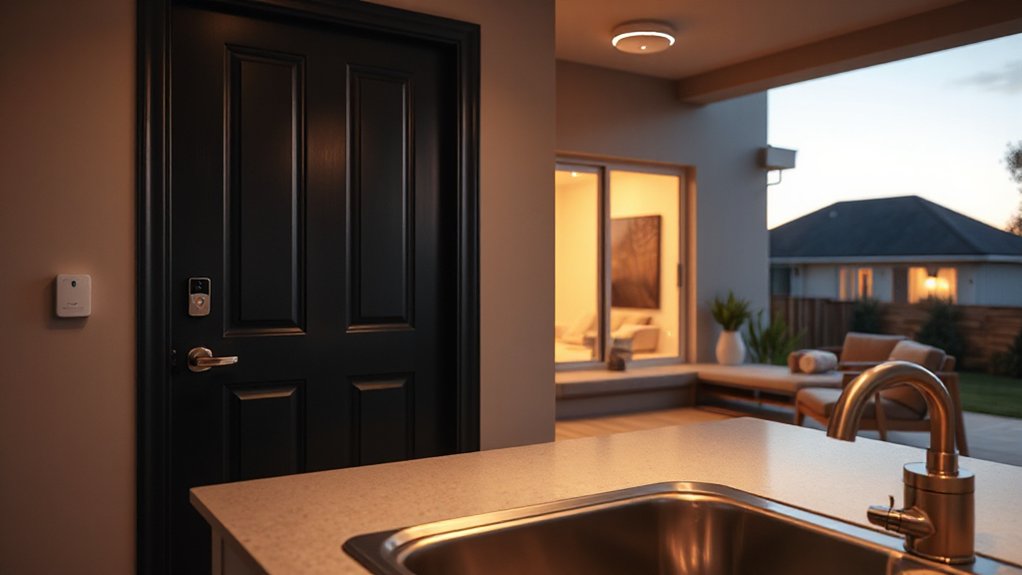
Even if your cameras and locks do the heavy lifting, smart sensors are the quiet layer that catches what they can’t—an opened window, a late-night hallway stride, a slow leak under the sink, or smoke before you smell it.
Choose low-profile contact sensors in matte white or sand to disappear on trim, and place motion sensors high in corners for clean sightlines and fewer false alarms.
Pick photoelectric smoke/CO units with sealed 10-year batteries, and tuck leak pucks beneath braided supply lines and water heaters.
With Sensor integration, you’ll trigger lights, sirens, and shutoff valves in one routine, not four apps.
To ease Privacy concerns, keep alerts local when possible, disable cloud logging, and favor platforms with granular, room-by-room permissions.
Conclusion
In 2026, you don’t buy “security”—you curate it. Choose a slim, flush video doorbell, then add AI cameras that think locally, not loudly. Pick a minimalist smart lock with biometric touch and app backup, and let a solid hub stitch it all together. Finish with quiet sensors—contact, motion, smoke, leak—small discs that speak only when it matters. Less clutter, more control: your home stays calm, and covered.