
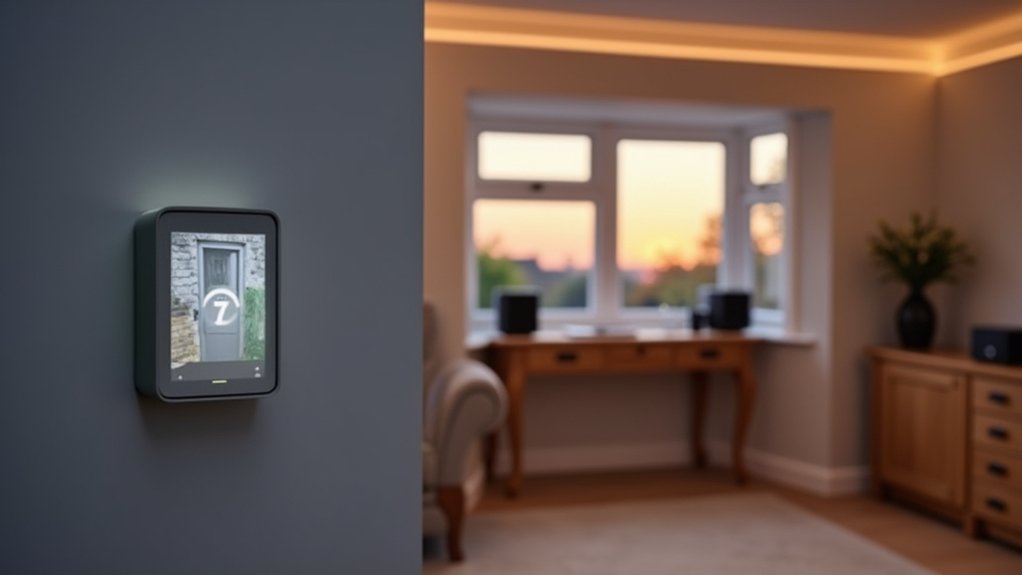

You’re adding convenience, boosting security, and cutting energy waste. In the UK in 2025, you’ll likely start with a voice speaker, then layer in a geofencing smart thermostat and room-by-room smart lighting. You’ll tighten security with a video doorbell, sensors, and a keyless smart lock, then mop up quick savings with smart plugs and better smoke alarms. The tricky part is choosing the right platform and standards so it all works together…
Best Smart Home Devices UK Homeowners Buy First
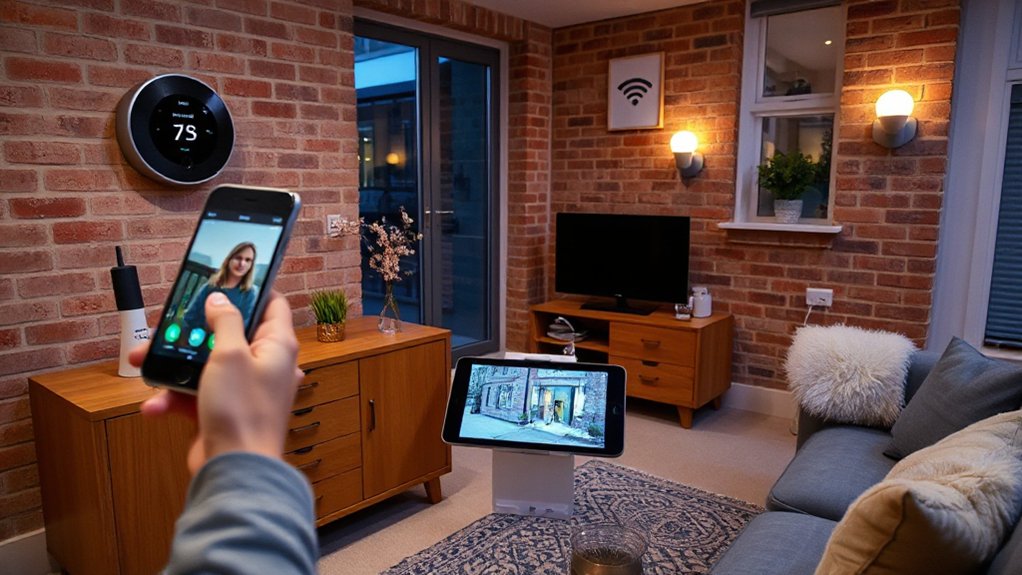
Three devices usually top the UK “first smart home buy” list: a smart speaker to act as your hub, a smart thermostat to cut heating costs, and a video doorbell for instant front-door security.
Place the speaker in the kitchen or living room for hands-free timers, lights, and routines.
Fit the thermostat with a compatible boiler controller, then set geofencing and room schedules to stop heating empty spaces.
Mount the doorbell at chest height, tune motion zones to avoid pavement alerts, and enable package detection.
Next, add a few smart plugs for lamps and dehumidifiers, plus leak sensors under sinks.
If you’ve got outdoors space, start a Smart garden with weather-based irrigation.
For busy households, pet automation feeders and camera treat-dispensers help.
Choose a Smart Home Platform in the UK (Alexa, Google, Apple)
Because your platform choice decides what plays nicely together (and what won’t), pick Alexa, Google Home, or Apple HomeKit before you buy your second or third gadget.
In the UK, Alexa still wins on sheer range and sharp routines, especially if you’re price-watching Prime Day deals.
Google Home feels fastest for natural queries and household info, but check how much data you’re comfortable sharing.
Apple HomeKit suits you if you’re already on iPhone, want tight on-device controls, and care most about Smart home privacy.
Also watch for voice assistant bias: accents, dialects, and kids’ voices can trigger different results, so test wake words and recognition in your rooms.
Decide who’ll use it daily, then standardise your automations around that choice.
Smart Home Compatibility in the UK: Matter, Zigbee, Wi‑Fi
Once you’ve picked Alexa, Google, or Apple, you’ll want to check what each device speaks: Matter, Zigbee, or plain Wi‑Fi.
Matter promises smoother cross‑brand setup, but you’ll still run into legacy Zigbee hubs and Wi‑Fi-only gadgets that don’t play as nicely.
Zigbee’s great for low-power sensors and reliable mesh coverage, while Wi‑Fi suits cameras and high-bandwidth kit—just watch your router load and 2.4GHz quirks.
Matter Vs Existing Standards
While smart home brands love to talk ecosystems, what actually matters in the UK is whether your devices can talk to each other reliably—and that’s where Matter, Zigbee, and plain Wi‑Fi diverge.
Matter’s pitch is simple: one set of smart home standards that lets you mix brands without juggling multiple apps, hubs, and cloud logins.
In practice, you’ll still face interoperability challenges: not every device category is supported yet, some features land later via firmware, and “Matter-enabled” can mean Thread, Wi‑Fi, or a bridge.
Before you buy, check that your chosen controller (Apple Home, Google Home, Alexa, SmartThings) supports the specific Matter device type, and confirm UK availability and plug formats.
If you’ve already got a Zigbee hub, look for bridge updates that expose older kit into Matter.
Zigbee And Wi‑Fi Tradeoffs
Even if Matter’s getting the headlines, most UK smart homes still run on a mix of Zigbee and Wi‑Fi—and the tradeoffs shape everything from reliability to how many hubs you’ll tolerate.
Zigbee shines for sensors, bulbs, and switches because it forms a mesh; add devices and range improves, ideal for Victorian terraces with thick walls. You’ll usually need a bridge, but good Zigbee integration (Hue, Aqara, IKEA) keeps automations fast and local.
Wi‑Fi suits cameras, speakers, and plug‑in gadgets, but you’re betting on Wi Fi reliability: router placement, 2.4GHz congestion, and ISP outages. If your network’s busy, latency spikes and devices drop.
Use a modern mesh router, isolate smart gear on a guest SSID, and mix protocols to match each device’s job.
Smart Thermostats UK Homes Use to Cut Bills
Because heating still accounts for the biggest chunk of most UK energy bills, a smart thermostat can deliver the fastest, most noticeable savings in a connected home. You’ll cut waste by scheduling around real routines, then let occupancy and geofencing trim temps when you’re out.
Look for OpenTherm modulation if you’ve got a compatible boiler; it smooths heat output instead of on/off cycling, boosting comfort and energy savings.
Multi-room sensors help you stop overheating bedrooms while keeping living spaces steady.
In 2025, you’ll also want simple tariff-aware controls, clear usage reports, and Matter support for easier app switching later.
Fit it with a good boiler service and draught proofing, and your Smart thermostat’s efficiency gains will actually show up on bills.
Smart Lighting UK Homeowners Add Room by Room
Next up in Best Smart Home Devices UK, you’ll get the biggest impact from smart lighting when you add it room by room.
In the kitchen and dining area, you can use bright task lighting for prep, then switch to warmer scenes for meals with a tap or voice command.
In bedrooms and hallways, you’ll set softer schedules, motion-triggered night lighting, and dimmed routines that make your home feel calmer and more premium.
Kitchen And Dining Upgrades
While the living room gets most of the smart-lighting hype, your kitchen and dining area benefit just as much from layered, task-focused illumination. Start with under-cabinet LED strips for prep zones, then add tunable ceiling downlights that shift from cool white for chopping to warmer tones for winding down. Use motion sensors for late-night trips and voice control when your hands are messy.
Pair lighting scenes with smart kitchen gadgets: trigger “Cook” when your hob turns on, or dim lights when the oven timer ends. In the dining space, go for a pendant on a smart dimmer plus table lamps on plugs.
With dining room automation, schedule “Dinner” at 7pm, sync music, and set a soft fade for dessert.
Bedroom And Hallway Ambience
Even if you’ve already upgraded the busy zones, bedroom and hallway lighting is where smart scenes pay off fastest for comfort and safety.
Start with tunable-white bulbs or LED strips to nail Ambient lighting: warm 2200K for wind-down, neutral 3500K for folding laundry, then dim-to-red for midnight trips.
Add a bedside motion sensor that triggers a 5% pathway glow, so you don’t shock your eyes.
In the hallway, fit smart downlights with time-based brightness caps and presence detection to prevent full-beam glare.
Pair scenes with a smart speaker for bedroom soundscapes—rain, pink noise, or guided breathing—set to fade out after 30 minutes.
Use geofencing to switch everything off when you leave, automatically.
Best Video Doorbells in the UK (2025 Picks)
Five years ago, a video doorbell felt like a nice-to-have—now it’s one of the most practical smart home upgrades you can make in the UK, especially with more parcel drop-offs, doorstep scams, and busy schedules.
In 2025, look for sharp HDR, colour night vision, fast app alerts, and local storage options to cut monthly fees.
For easy Video doorbell installation, pick battery models with angle wedges for Victorian porches and narrow terraces; go wired if you want constant recording and fewer recharges.
Top UK-friendly picks include Ring Battery Doorbell Pro (solid ecosystem), Google Nest Doorbell (great AI events), and Eufy Video Doorbell (local storage).
Prioritise smart home privacy: set activity zones, disable street-facing recording, and use end-to-end encryption where available.
Smart Home Security Systems UK Households Trust in 2025
A video doorbell covers the doorstep, but a full smart security system protects the rest of your home—front and back doors, ground-floor windows, sheds, and even your Wi‑Fi network.
In 2025, UK households trust systems that bundle door/window sensors, motion detectors, indoor sirens, and app-first monitoring with fast alerts. Choose a kit with dual-path connectivity (Wi‑Fi plus cellular backup) and battery support, so it stays online during outages.
Look for privacy controls, local recording options, and clear subscription terms. For Home automation, pick platforms that trigger lights, cameras, and alarms from one routine.
With security integration, you’ll link CCTV, smoke/CO sensors, and flood sensors into a single dashboard, reducing false alarms and tightening response times.
Smart Locks UK Homeowners Choose for Keyless Entry
While video doorbells and alarms handle what’s happening outside, smart locks give you day‑to‑day control over who can get in—without juggling keys. For Keyless entry, you’ll see UK homeowners choosing retrofits that keep existing multipoint locks, plus full smart deadbolts for flats.
Prioritise Lock security: look for UKCA/CE compliance, auto‑lock, tamper alerts, and bank‑grade encryption, then pair it with a door sensor so it won’t lock on a left‑ajar latch.
You can issue time‑limited codes for cleaners, dog walkers, and trades, and revoke them instantly if plans change. Choose models with local key backup, offline access options, and long battery life with low‑power warnings.
If you rent, pick non‑destructive installs and keep spare keys.
Smart Plugs UK Households Use for Quick Savings
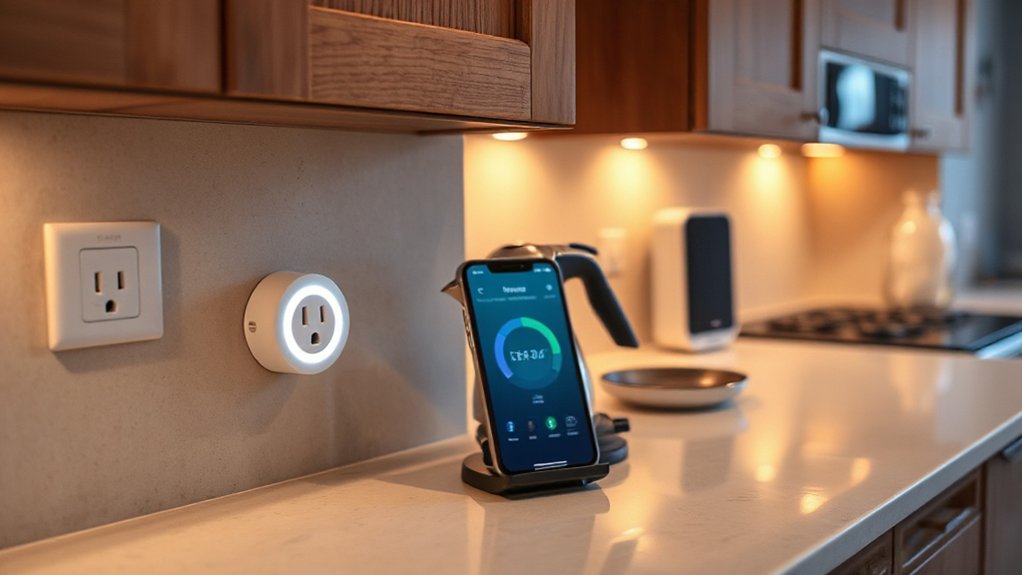
Smart plugs are one of the quickest UK smart-home upgrades you can make for real savings, because you’ll see exactly what each appliance costs with built-in energy monitoring and clear usage insights.
You can also pick voice-control options that work with Alexa, Google Assistant, or Siri so you can cut standby power with a simple command.
To stretch your tariff further, you’ll schedule high-draw devices to run off-peak and automate shut-offs when you’re out or asleep.
Energy Monitoring And Insights
Because energy bills can spike without warning, energy-monitoring smart plugs give you fast, actionable insight into what’s actually driving your usage—right down to the “always-on” offenders like TVs on standby, dehumidifiers, and old fridges. You’ll see live watts, daily kWh, and cost estimates in-app, so you can compare devices and spot waste in minutes, not months.
Use the history view to track consumption patterns across weekdays, weekends, and seasonal shifts, then set realistic targets for energy efficiency. When a plug shows a heater cycling harder than expected, you can adjust timer schedules, lower thermostat setpoints, or replace a failing appliance before it drains cash.
For UK homes on time-of-use tariffs, you can verify whether shifting laundry to cheaper hours actually delivers savings.
Voice Control Plug Options
If you want quick, low-effort savings, voice-controlled plugs let you cut wasted power the moment you notice it—no app-fiddling required. In UK homes, the best Voice control plug options now focus on reliability, energy visibility, and tight ecosystem fit.
Choose Matter-over-Wi‑Fi models if you want smoother setup across Alexa, Google Assistant, and Apple Home, or pick dedicated Echo/Google versions for the cheapest bundles.
Look for a 13A rating for kettles, heaters, and tumble-dryer standby, plus overload protection and a physical on/off button for guests.
Prioritise compact designs so you don’t block adjacent sockets on UK double outlets.
Add one to TVs, consoles, and chargers, then simply say “off” and stop phantom drain.
Off-Peak Scheduling Savings
When you shift everyday loads into off-peak windows, a decent UK smart plug can turn time-of-use tariffs into effortless savings. Set routines so your washer, tumble dryer, or immersion heater runs after 11pm, then cuts off before peak hours bite.
Pick a plug with reliable scheduling, sunrise/sunset options, and a manual override button for real-life interruptions. Use the energy-monitoring view to spot “always-on” drains like dehumidifiers and aquarium heaters, then cap runtimes with auto-off timers.
If you’re on Agile or Economy 7 energy tariffs, create multiple schedules: cheap-rate charging for e-bikes and power banks overnight, plus a midday burst when prices dip.
Keep safety tight—don’t schedule high-load heaters unattended, and stay within the plug’s rated wattage limit.
Smart Smoke Alarms UK Homes Need for Safer Alerts
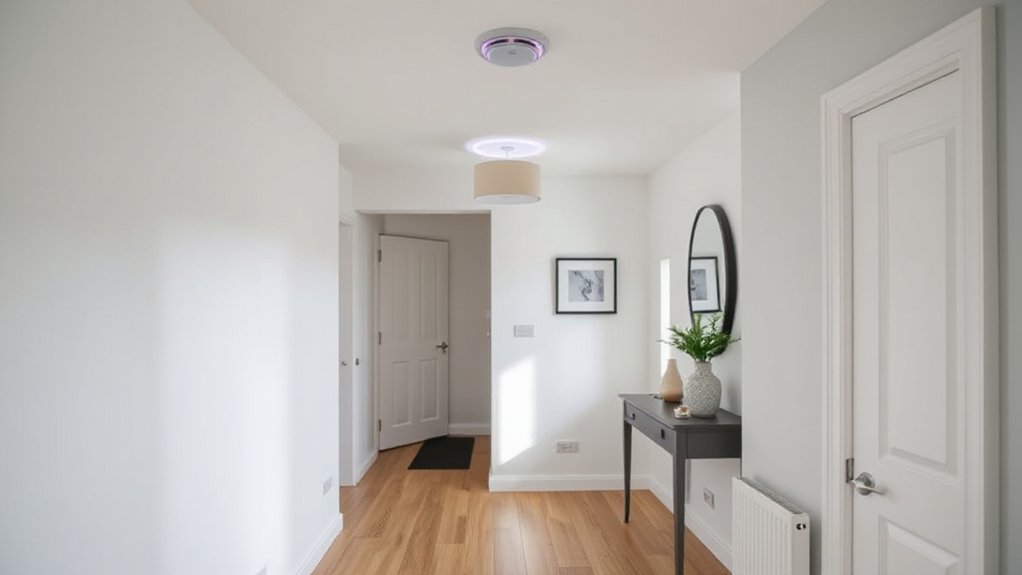
While standard smoke alarms still do the bare minimum, smart smoke alarms give you faster, clearer alerts that fit how UK homes actually work today—open-plan layouts, loft conversions, and rented flats included. You’ll get phone notifications when you’re out, plus loud voice prompts that tell you where the danger is, not just that it exists.
For Fire safety, pick interlinked models so one trigger sounds every unit, even across thick party walls. Look for sealed 10-year batteries to meet landlord expectations and cut maintenance.
If you’ve got a log burner or busy kitchen, choose combined smoke and heat sensing to reduce nuisance alarms.
Add smart home routines that flash lights and release doors for emergency alerts.
Conclusion
By now, you’ve seen how a few well-chosen upgrades can gently “tidy up” daily life—without turning your home into a sci‑fi set. Start with a platform you’ll actually use, then lean on Matter, Zigbee, or solid Wi‑Fi so everything plays nicely. Add a geofencing thermostat, layer lighting room by room, and give security a quiet boost with doorbells, sensors, and smart locks. Finish with smart plugs and smoke alarms for low‑effort peace of mind.