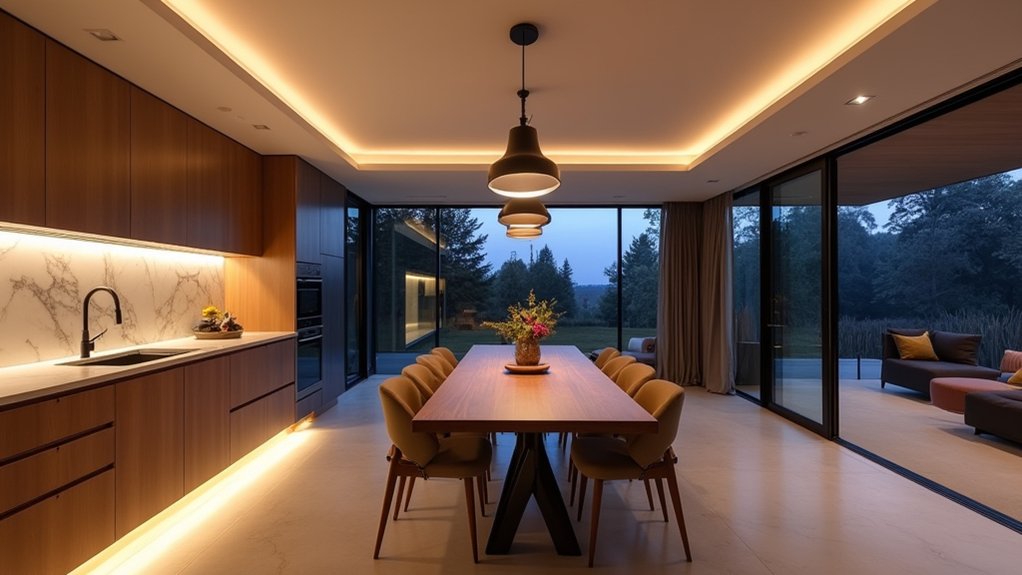

You’ll get the best results when you layer kitchen and dining lighting by purpose. Start with glare-controlled ambient ceiling fixtures in a warm 2700–3000K range, then add task lighting under cabinets and over the sink, stove, and table. Use accent lights to lift upper cabinets, shelving, or artwork, and put everything on dimmers for control. The key is knowing where to place each fixture so the space feels effortless, not busy…
Layer Kitchen and Dining Lighting by Purpose
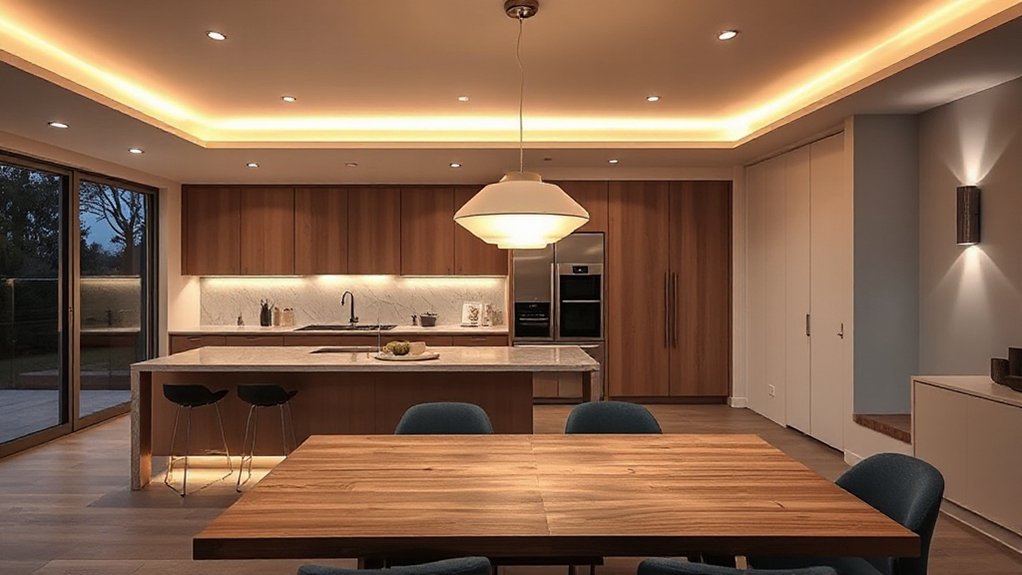
Because kitchens and dining areas do more than one job, you’ll get the best results by layering lighting based on purpose—ambient light for overall visibility, task light for prep and cleanup, and accent light to add depth and highlight design features.
Start with even, glare-controlled ambient light that matches your ceiling height and finish reflectance, so the room feels comfortable from every angle. Then add accent lighting to emphasize cabinetry lines, art, or architectural details, shaping a warmer, more intentional atmosphere for dining.
Use Decorative fixtures as focal points, but choose finishes and scale that support the room’s proportions rather than overpower them.
For Energy efficiency, prioritize LEDs, dimmers, and warm-to-neutral color temperatures that stay consistent across layers, keeping the space cohesive and adaptable throughout the day.
Place Task Lights: Counters, Sink, Stove, Table
Once you’ve set your ambient and accent layers, place task lighting where your eyes and hands work hardest: counters, the sink, the stove, and the dining table.
For prep zones, prioritize Under cabinet illumination to eliminate shadows from upper cabinets; aim for continuous, glare-controlled strips and keep color temperature consistent across runs.
At the sink, mount a focused, shielded fixture forward of your head so you don’t block the beam, and choose a damp-rated trim.
Over the stove, use a high-output hood light or directional downlight that’s easy to clean and won’t flicker.
At the table, explore Pendant lighting options sized to the surface, hung low enough to define the setting yet high enough to keep sightlines clear. Dimmer control fine-tunes brightness for meals.
Choose Ambient Ceiling Fixtures for Even Light
After you’ve mapped task zones, choose an ambient ceiling fixture that spreads light evenly across the room so your counters and table don’t fall into contrasty pockets. Size the fixture to the space: in kitchens, use a low-profile flush or semi-flush for clear sightlines.
In dining areas, hang decorative chandeliers centered over the table with the bottom about 30–34 inches above the surface. Aim for dimmable, high-CRI LEDs (90+), around 2700–3000K for a warm, appetizing tone.
Calculate total lumens based on room size rather than guessing. If your ceiling allows it, add Cove lighting at the perimeter to wash walls and soften shadows, creating a calm, continuous glow without harsh hotspots.
Add Accent Lighting for Cabinets and Focal Points
Even ambient ceiling light sets the baseline, but accent lighting adds the depth that makes a kitchen or dining space feel designed. Use cabinet illumination to sharpen sightlines on counters and make prep zones feel cleaner. Mount slim LED strips under uppers, set them close to the front rail, and you’ll reduce shadows on the work surface.
Add lighting inside glass-front cabinets to showcase dishware and create evening glow without clutter. For focal point accenting, aim small directional fixtures at a feature—artwork, open shelving, a hutch, or a textured backsplash—so the room gains hierarchy.
Keep beams tight and positions hidden so you highlight materials, not hardware. Layer these accents sparingly, and your space reads intentional, not overlit.
Select Bulbs and Dimmers for Color and Control
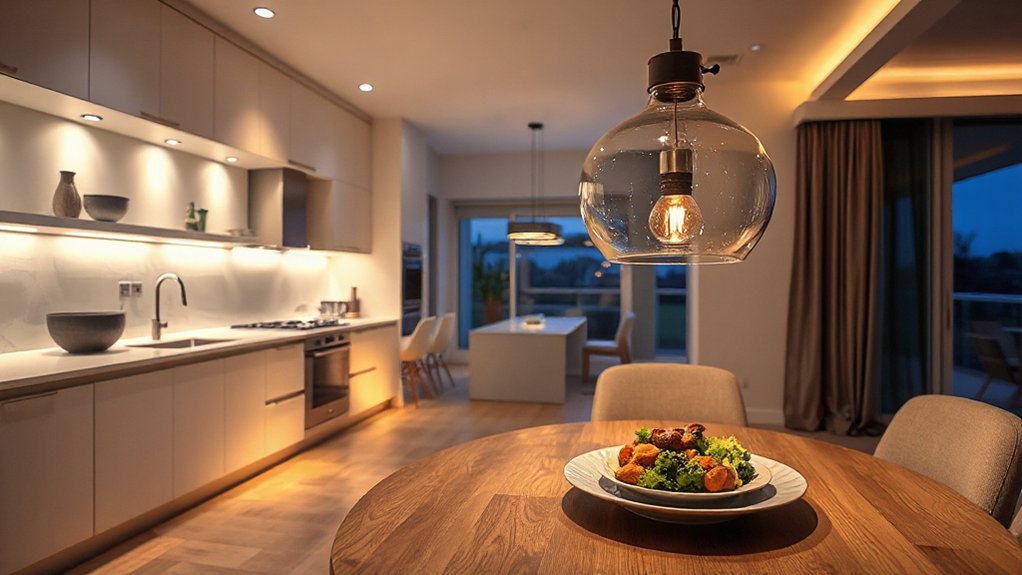
Because the bulb sets the room’s “white balance,” choose color temperature and dimming compatibility before you buy fixtures so your kitchen and dining lighting stays consistent and controllable.
Aim for 2700K–3000K in dining areas for warmth, and 3000K–3500K in kitchens for crisp task visibility.
Keep bulb color uniform across pendants, recessed cans, and under-cabinet strips so finishes and food look natural.
Confirm the lamp is labeled “dimmable,” then match it to the right dimmer type: LED-rated, forward-phase, or reverse-phase, depending on the driver.
Quality dimmer switches prevent flicker, dropouts, and buzzing at low levels.
Add a preset or smart dimmer so you can shift from bright prep light to soft dinner ambience instantly.
Conclusion
When you layer lighting by purpose, you turn your kitchen and dining area into a space that works as hard as you do. Start with glare-controlled ambient light for even coverage, add task lighting where you prep, cook, and serve, then finish with accent lights to elevate cabinets and focal points. Want the biggest upgrade for the least effort? Add dimmers. Like a well-staged room, lighting sets the mood—and makes every detail look intentional.