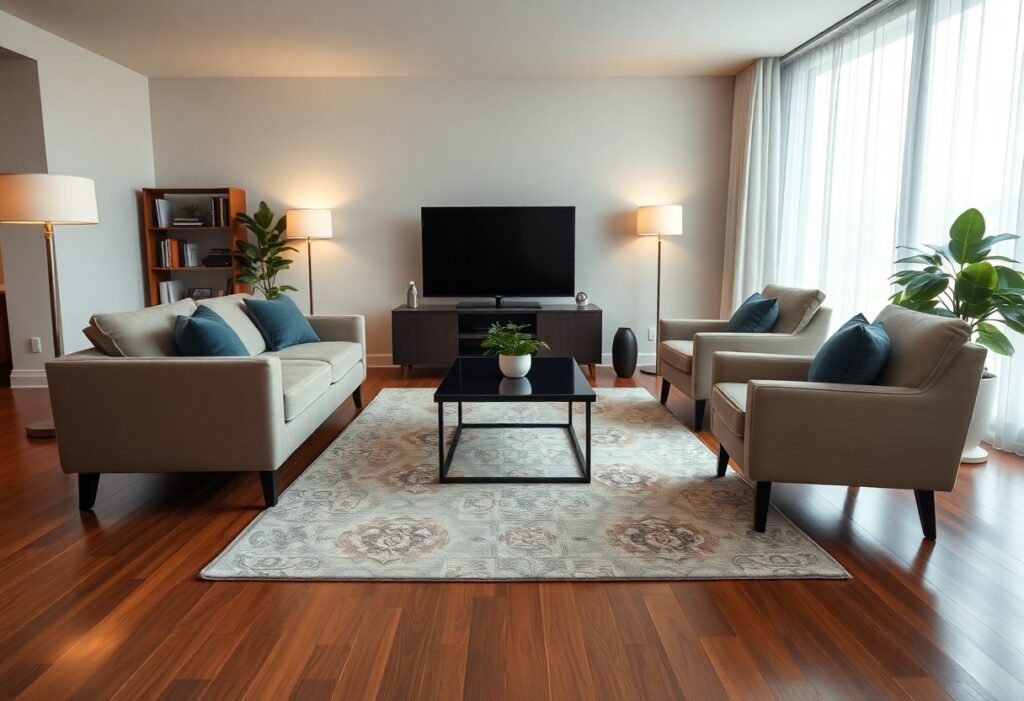

Let’s look at ways on how to arrange your living room furniture for comfort and flow, that’s not costing a fortune.
Comfort begins with how you position your furniture. Place your sofa facing the room’s focal point, like a fireplace or TV, and ensure clear pathways of at least 30 inches for smooth movement. Use area rugs to anchor seating groups and avoid blocking windows or doors-this maintains light flow and prevents a cramped feel. Symmetry enhances visual balance, making the space more inviting.
Key Takeaways:
- Arrange seating to face each other at conversational distances-typically 6 to 8 feet apart-to encourage easy interaction and create a welcoming atmosphere.
- Anchor the room with a focal point like a fireplace, TV, or large window, then position furniture around it to guide natural movement and maintain clear walking paths.
- Leave at least 18 to 24 inches of space around furniture edges to allow for comfortable traffic flow and prevent the room from feeling cramped.
Assessing Your Space: Key Factors for Layout Success
Understanding your living room’s potential begins with evaluating its dimensions, traffic flow, and focal point. Note door swings, window placements, and permanent fixtures that affect furniture positioning. Natural light and electrical outlets also influence seating choices. Perceiving
Measuring room dimensions and architectural features
Grab a tape measure and record the room’s length, width, and ceiling height. Note architectural details like columns, built-ins, or radiators. Accurate measurements prevent overcrowding and ensure clear walkways. Include door and window locations to maintain smooth traffic flow.
Identifying the primary focal point
Your room likely has a natural center of attention, such as a fireplace, large window, or TV wall. This focal point should anchor your seating arrangement. Position key furniture to face it, creating a cohesive and inviting layout.
A well-defined focal point draws people in and shapes how they experience the space. Whether it’s a stunning view, a statement piece of art, or a cozy fireplace, arranging seating around this feature enhances both comfort and visual balance. Aligning your furniture to highlight the focal point makes the room feel intentional and welcoming.
Essential Tips for Optimizing Traffic Flow
- Keep main pathways at least 30 inches wide for easy movement
- Align furniture placement with natural entry and exit points
- Allow clearance around doors and windows to prevent obstruction
- Use area rugs to define zones without blocking walkways
Knowing how people move through your space shapes smarter traffic flow, making your room feel open and functional.
Maintaining clear pathways and clearance
Clear paths should measure at least 24-36 inches depending on usage. Avoid placing side tables or ottomans where they interrupt movement. Safety and ease improve when you can walk through without stepping around objects.
Positioning furniture to avoid congestion
Furniture should guide movement, not block it. Keep seating arrangements open and avoid pushing every piece against walls. Flow suffers when conversation areas create bottlenecks near doorways or hallways.
Positioning furniture to avoid congestion means studying how you naturally walk from one room to another. A sofa placed perpendicular to a hallway can halt movement, while angling a chair away from high-traffic zones keeps the space inviting. Comfort depends on unobstructed access, so always test your layout by walking the route yourself.
How to Select Furniture Based on Scale and Proportion
Choosing furniture that matches your room’s dimensions ensures comfort and visual harmony. Oversized sofas in small spaces feel cramped, while tiny chairs in large rooms look lost. You should measure your space and leave at least 18-24 inches of walking room around each piece. Proper scale prevents overcrowding and supports smooth traffic flow.
Balancing large pieces with accent furniture
Large sectionals or entertainment units dominate a room if left unchecked. Pair them with smaller, complementary items like side tables, lamps, or ottomans. These accents break up mass and add visual interest. A well-balanced layout feels intentional and inviting, not overwhelming.
Utilizing rugs to anchor the seating area
Rugs define the conversation zone and tie furniture together. Place all front legs of your main seating on the rug to create cohesion. A rug that’s too small shrinks the space, while the right size grounds the arrangement and enhances comfort.
Size matters when selecting a rug-aim for one that extends at least 6-12 inches beyond your sofa on all sides. This ensures the seating area feels unified, even when people move around. A properly placed rug reduces noise, adds warmth underfoot, and creates a clear visual boundary that organizes the entire space. Choose a low-pile, durable material if you have high foot traffic.
Strategic Factors for Lighting and Ambiance
Lighting shapes how you experience your living room, influencing both mood and functionality. Consider natural light patterns, ceiling height, and wall colors when planning your setup. Use a mix of sources to create balance and avoid harsh contrasts. Thou can transform a flat space into one that feels dynamic and inviting.
Layering ambient, task, and accent lighting
A well-lit room combines ambient, task, and accent lighting to serve different needs. Ambient lighting provides overall illumination, while task lighting supports activities like reading. Accent lighting highlights artwork or architecture. Thou can eliminate dark corners and create depth with thoughtful layering.
Placing tables and lamps for maximum utility
Side tables and floor lamps should align with seating height and usage patterns. A lamp that’s too high or low strains the eyes and disrupts comfort. Keep surfaces within arm’s reach of the sofa or chair. Thou can enhance both convenience and visual harmony with smart positioning.
Positioning tables and lamps correctly ensures you can easily reach a drink, book, or light switch without stretching. Choose side tables that match the height of your sofa arms to maintain ergonomic flow. Place lamps so their shade sits at eye level when seated, reducing glare. Use warm-toned bulbs to maintain a cozy atmosphere. Thou can turn everyday routines into seamless, comfortable experiences with these small but powerful adjustments.
How to Incorporate Final Decorative Touches
You’ve arranged your furniture for comfort and flow-now refine the space with intentional details. A well-placed throw pillow, a textured rug, or a curated gallery wall can transform a room from functional to inviting. These finishing elements reflect your personality while reinforcing the harmony you’ve built.
Using mirrors to enhance perceived space
Position a mirror opposite a window to pull in natural light and create the illusion of depth. This simple trick makes compact living rooms feel more open and airy. Mirrors subtly expand your space without altering the layout, enhancing both comfort and visual flow.
Selecting functional storage solutions
Choose pieces that blend utility with style, like ottomans with hidden compartments or sleek media consoles. Clutter disrupts flow, so smart storage keeps necessarys within reach while maintaining a clean aesthetic. Well-chosen storage preserves comfort and order without sacrificing design.
Opt for storage that matches your room’s scale and purpose. A bulky cabinet in a small space overwhelms, while open shelves can add accessibility and display opportunities. Consider baskets for remote controls or coasters, and pick materials that complement your color scheme. Effective storage disappears into the design while solving real problems, making your living room both beautiful and practical.
Summing up
With this in mind, you create a living room that balances comfort and movement by positioning furniture to encourage conversation and easy access. You allow clear pathways, anchor pieces around a focal point, and maintain proportion to your space. Your choices shape how the room feels and functions, making thoughtful arrangement a key part of everyday enjoyment.