
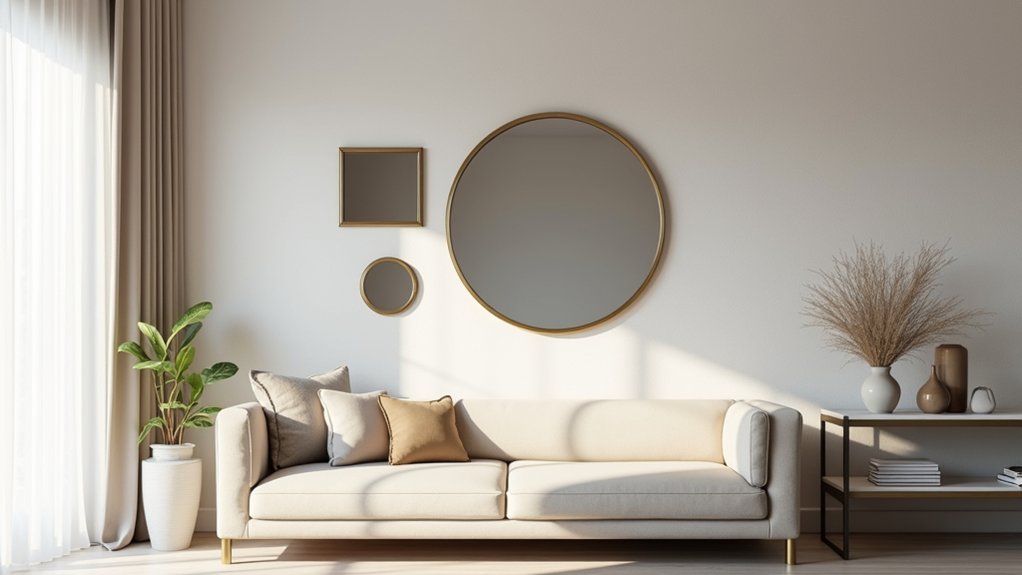

In a recent staging report, swapping one blank wall for a large mirror made a compact living room feel noticeably wider, like you’d pushed the walls back an inch. You can use mirrors as wall decor when you treat them as controlled light tools, not just reflective accessories. Place them to capture daylight, pick sizes that match the wall’s scale, and choose frames that repeat your metals or woods. But one wrong angle can broadcast clutter or glare, and that’s where it gets precise…
Where to Place Mirrors for Best Impact
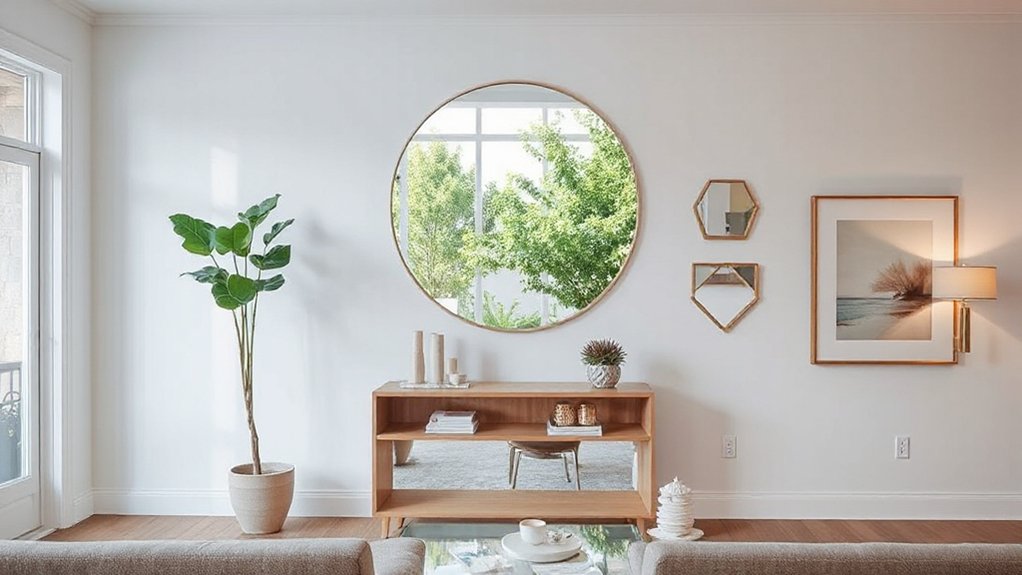
Although mirrors can look great almost anywhere, they perform best when you place them where they can amplify natural light, extend key sightlines, or intentionally frame a focal point. Start by mapping primary viewing angles from entries, sofas, and beds, then position the mirror so it reflects intentional “hero” elements like art, a fireplace surround, or a styled console.
Use Mirror placement techniques such as centering at 57–60 inches on-center, aligning top edges with adjacent casework, or stacking smaller mirrors in a grid to match furniture width. In tight zones, hang a tall mirror perpendicular to circulation to visually elongate halls without creating glare hotspots.
Pair Decorative frame choices to the room’s finish story—thin black metal for modern, warm wood for organic, or antiqued brass to echo hardware.
Bounce Natural Light With Smart Mirror Placement
Once you’ve identified the best sightlines and “hero” reflections, use mirrors as light tools by positioning them to redirect daylight deeper into the room. Place one on the wall adjacent to a window to capture side light, or opposite the glazing to double perceived brightness without glare. Tilt slightly to aim the reflected beam onto ceilings or pale walls for softer, diffuse lift.
In open-plan layouts, align mirrors with circulation paths so light “travels” visually between zones. Keep a clear strike path: avoid blocking reflections with tall plants or bulky furniture. Coordinate with decorative accessories in matte finishes so they don’t create competing hotspots.
Prioritize mirror maintenance—dust and smudges cut reflectance—so wipe weekly and check mounts stay level.
Choose the Right Mirror Size, Shape, and Frame
Where should your mirror sit on the wall, and what footprint will look intentional instead of “floating”? Match size to the anchor piece: go 2/3 to 3/4 the width of a console, mantel, or vanity, and hang the center at about 57–60 inches from the floor.
In tight zones, use a taller mirror to extend sightlines; in wide zones, use a horizontal or grouped shape to stabilize proportions.
Choose shape based on geometry: rounds soften sharp millwork; arches echo doorways; rectangles reinforce clean, modern grids.
Frame depth matters—thin metal reads contemporary, while chunky wood adds visual weight.
Verify mirror material (silvered glass vs. acrylic) for distortion and durability.
Plan mirror maintenance: sealed frames resist humidity, and beveled edges hide fingerprints.
Make a Statement With Mirror Wall Decor
When you want a mirror to read as decor—not just a utility—treat it like an art piece with a defined visual footprint and a clear focal point. Anchor it with surrounding negative space so the silhouette registers instantly, especially with bold mirror styles like arched, asymmetrical, or oversized round forms.
Build a mini composition: pair one hero mirror with two to four secondary elements, keeping spacing consistent (2–4 inches) for a gallery-grade rhythm. Echo the frame finish in your decorative accents—brass pulls, black hardware, or warm wood—to create material continuity.
For maximal impact, layer texture: fluted frames, antiqued glass, or beveled edges add depth without adding clutter. If you’re mixing mirror styles, standardize one variable—shape family, finish, or line weight—so it still feels intentional.
Avoid Glare, Awkward Reflections, and Bad Heights
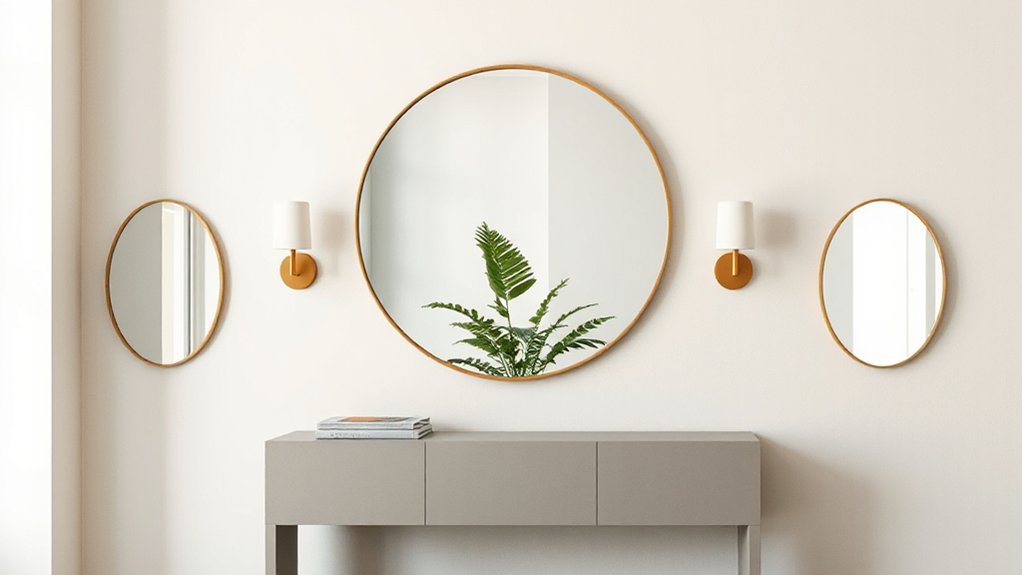
Although a mirror can visually double a room, poor placement will double your problems—glare hotspots, awkward sightlines, and reflections you didn’t plan for. Start with lighting considerations: don’t aim mirrors directly at south-facing windows or bare bulbs; angle them 5–10° off-axis to bounce light without specular flare, and pair with diffused fixtures or shades.
Check reflections from seated and standing positions so you don’t frame a TV, cluttered countertop, or doorway traffic. For height, align the mirror’s center near 57–60 inches from the floor, then adjust for your household’s eye line and furniture backs. Leave 6–8 inches above consoles for breathing room.
Add maintenance tips: choose low-iron glass, keep microfiber nearby, and avoid ammonia on antique finishes.
Conclusion
Treat mirrors like precision-tuned light engines: place them where they’ll catch daylight and throw it deeper into the room. Scale matters—oversized rectangles sharpen modern lines, while rounds soften hard edges like a lens flare. Match frames to your finishes (black metal, warm wood, antiqued brass) and add beveled or fluted texture for depth. Hang them at 57–60 inches, curate grids with intent, and dodge glare and awkward reflections.