
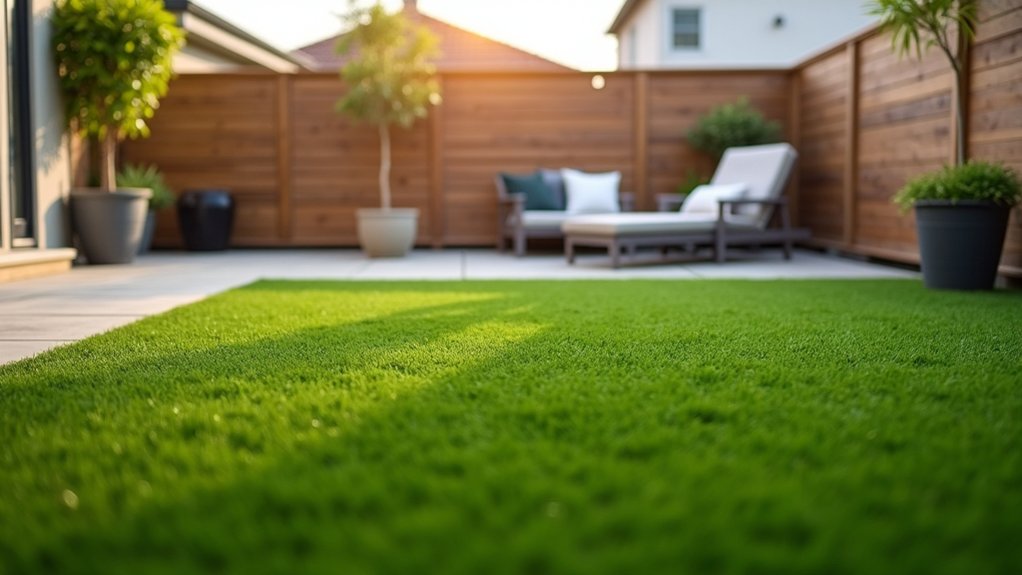

You want a backyard that looks lush every day, yet you don’t want weekends lost to mowing and watering. Artificial grass can give you consistent color, crisp lines, and a finished feel—especially in shade, on slopes, or over compacted soil where turf fails. Still, heat, drainage, and wear can undermine the result if you choose the wrong product or base. The key is knowing what matters most before you commit…
Is Artificial Grass Right for Your Backyard? (Use Cases + Dealbreakers)
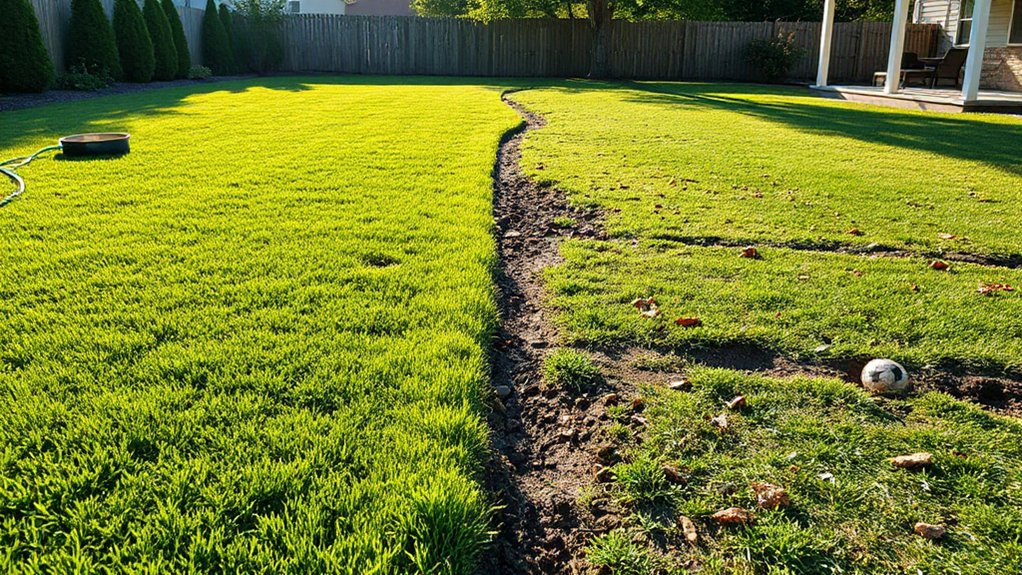
If you’re weighing artificial grass for your backyard, start by looking at how you actually use the space and what you’re unwilling to compromise on.
If you need a clean, always-ready play zone, a pet run with reliable drainage, or a crisp lounge backdrop that frames hardscape lines, synthetic turf can fit. It also works when shade, compacted soil, or steep grades make natural sod struggle.
Your dealbreakers typically sit in the Natural vs. synthetic tradeoff: you won’t get the smell, biodiversity, or seasonal variation of living lawn, and you’ll need to accept heat gain on sunny afternoons.
Check infill type, edge detailing, and base depth for comfort and drainage. Weigh Environmental impact, including materials, microplastics, and end-of-life removal.
Top Backyard Artificial Grass Benefits (What You’ll Notice Fast)
You’ll notice the upgrade immediately: artificial grass sharpens your backyard’s lines, boosts curb appeal, and makes the whole space feel more finished.
You won’t spend weekends mowing, edging, or patching bare spots, because maintenance stays minimal and predictable.
And you’ll keep a clean, consistently green surface year-round, even through heat, shade, and heavy use.
Instant Curb Appeal
Although landscaping improvements often take weeks to look “finished,” artificial grass delivers instant curb appeal the moment it’s installed—clean edges, consistent color, and a smooth, photo-ready surface that makes the entire backyard feel more intentional.
You’ll notice how it sharpens the geometry of patios, paths, and planting beds, creating crisp borders that read like a designed outdoor room. With today’s advanced yarns and realistic thatch, you get refined artificial grass aesthetics that photograph well in any light.
You can also align the upgrade with Artificial grass sustainability by choosing products made with recyclable materials and efficient manufacturing, so the visual lift doesn’t feel wasteful.
Add contrasting pavers, warm wood tones, and layered planters, and your yard instantly looks curated, polished, and cohesive.
Low-Maintenance Lawn Care
That photo-ready, perfectly edged look holds its shape because artificial grass strips lawn care down to the basics. You won’t schedule weekends around mowing, edging, or fertilizing, and you’ll stop tracking sprinkler runtimes to protect your yard’s finish.
An Artificial lawn stays consistent under foot traffic, so your paths, play zones, and seating areas read as intentional design elements, not worn patches.
With Synthetic turf, you handle upkeep with quick, predictable routines: rinse dust and spills, brush fibers to maintain upright texture, and clear debris before it mats.
You also reduce mud tracked indoors and minimize bare spots that invite weeds. The result is a cleaner perimeter line, sharper changeover at pavers, and a backyard that looks curated without constant tools, noise, or appointments.
Year-Round Green Surface
Even when weather swings from scorching heat to heavy rain, artificial grass keeps your backyard looking evenly green and composed. You’ll get a consistent visual plane that supports clean sightlines, defined edges, and a polished transition from patio to planting beds. Because the fibers don’t brown out or thin in shade, you can plan your layout around furniture zones and pathways without compensating for seasonal dieback.
With modern Eco friendly materials, you can specify a turf color and blade shape that complements your architecture rather than competing with it.
A well-built base, proper drainage, and infill selection reinforce synthetic turf durability, so high-traffic areas stay upright and uniform. You’ll notice fewer muddy patches, crisper borders, and a backyard that reads finished every month of the year.
Hidden Artificial Grass Drawbacks (Heat, Drainage, Odor, Wear)
Before you commit to artificial grass for a cleaner, always-green backyard, factor in a few less-obvious performance issues that can affect comfort and long-term appearance.
In direct sun, turf can run noticeably hotter than natural lawn, so you may need shade structures, lighter infill, or a cooling rinse to keep it usable.
Drainage depends on base prep; if the subgrade compacts or slopes poorly, you’ll see puddling, slow dry times, and sediment lines at edges.
Odor can build where organic debris and pet waste linger, so plan for routine rinsing and enzyme cleaners to support pet safety.
High-traffic paths can mat and show seam telegraphing, especially around furniture.
Also weigh the environmental impact of plastics, micro-shedding, and end-of-life disposal.
Artificial Grass Installed Cost: Typical Price Per Sq Ft?
You’ll typically see artificial grass installed pricing quoted per square foot, but the real number depends on your yard’s layout and finish level.
Your base cost covers turf and labor, while grading, base materials, drainage corrections, edging, and seam work can shift the price noticeably.
If you add premium pile height, pet-friendly infill, extra underlayment, or complex curves and cut-ins, you’ll pay more for the refined look and performance.
Key Cost Per Square Foot
One number frames the entire artificial turf decision: installed cost per square foot. You’ll typically see turnkey pricing quoted as a range, often about $8–$20 per sq ft, depending on market and installer.
Use this figure to compare bids apples-to-apples and to size your project budget fast: multiply your measured square footage by the quoted rate, then confirm it includes materials and labor.
A higher per-foot price can still make sense if it delivers cleaner seams, tighter edges, and a finished surface that supports natural aesthetics.
When you weigh it against ongoing lawn maintenance—mowing, edging, watering, fertilizing—you’re really pricing long-term simplicity and design consistency.
Ask each contractor to state the per-foot rate clearly in writing.
Price Drivers And Add-Ons
Although most bids start with a base installed price per square foot, the final number shifts quickly once you factor in the site-specific drivers and the add-ons that make a turf lawn look intentional rather than “rolled out.”
Your biggest cost levers are demolition and haul-off, grading to correct drainage, and the depth and compaction of the base rock. Tight access, slopes, tree roots, and existing hardscape edges slow crews and raise labor.
Material choices matter too: denser, taller synthetic turf with a realistic thatch blend typically costs more than entry-level rolls. Add-ons refine the finish—curved seams, hidden nailer boards, bender board edging, and integrated drains.
You can also choose eco-friendly options like low-dust infill, permeable backing, and recycled-content turf for greener performance.
What Drives Artificial Grass Cost the Most? (Turf, Base, Labor)
Because artificial grass is a layered system—not just a green surface—the final price usually comes down to three major drivers: the turf you choose, the base built beneath it, and the labor required to install it correctly.
Turf cost rises with denser face weight, taller pile, realistic color blends, and advanced backing; those upgrades sharpen Artificial aesthetics and support Artificial durability in high-traffic zones.
The base often becomes the hidden budget swing: you’ll pay more when your yard needs deeper excavation, drainage corrections, or additional compacted aggregate for a flat, stable plane.
Labor climbs with tight access, curves, seams, and detailing around patios, trees, and edging, since precision cutting, stretching, and fastening prevent ripples and visible joins.
These three layers define your installed cost most.
Is Artificial Grass Worth It vs Real Grass Long Term?
Now that you know what drives the installed price—turf quality, base build, and labor detail—the smarter question is whether that upfront spend pays you back over time.
Compared with real grass, you’ll trade recurring mowing, edging, fertilizing, seeding, and irrigation repairs for periodic brushing, debris removal, and infill top-ups. Your water bill typically drops, and you’ll avoid seasonal patching, muddy traffic lanes, and the visual inconsistency that can undermine crisp garden design.
Long term value shows up in predictable appearance, fewer service calls, and more usable outdoor space across droughts and shade.
If you’re weighing eco friendly options, factor reduced chemical inputs and lower fuel use from lawn equipment, balanced against material lifespan and end-of-life disposal.
Budget for drainage inspections and occasional seam checks too.
Best Artificial Grass Specs for Kids and Pets
When you’re choosing artificial grass for a family yard, prioritize specs that keep play surfaces comfortable, clean, and resilient under daily traffic from kids and pets.
Aim for a soft, upright pile around 1.5–2 inches with a dense stitch rate for cushioning and recovery.
Pick a durable fiber like polyethylene with UV stabilization to prevent fading and scratchiness.
Choose a perforated, antimicrobial backing to improve drainage and reduce odors after pet use.
Look for lead-free materials and low-VOC manufacturing for healthier air around play zones.
For refined garden design, select blended green and thatch tones to mask debris and paw prints.
Consider wildlife impact by choosing products that don’t shed microplastics easily and resist tracking into nearby habitat.
Artificial Grass Installation Checklist (Base, Seams, Infill, Edging)
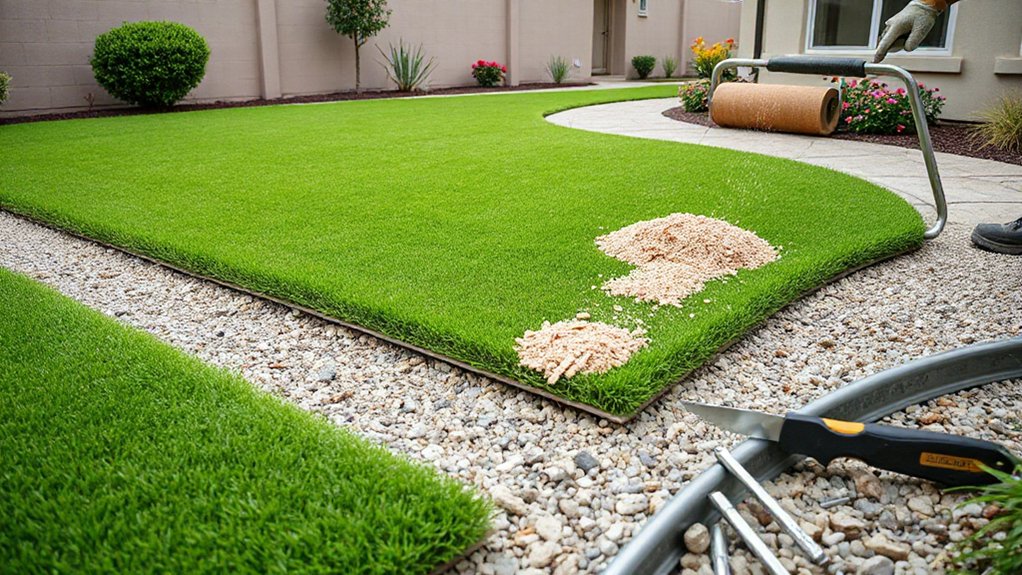
Even if you’ve picked premium turf, a clean, design-forward install determines whether it looks seamless and drains like a real lawn. Start with excavation and a compacted base: 3–4 inches of crushed rock, laser-leveled with a 1–2% slope and topped with a thin leveling layer. Add a weed barrier only where it won’t trap water.
Dry-fit the rolls, then seam with seam tape and adhesive, keeping grain direction consistent and joints tight. Use nails or staples only at the perimeter to avoid dimples. Brush in infill (silica sand or pet-safe blend) in multiple light passes for stability and upright fibers—critical for Synthetic playgrounds.
Finish with edging: bender board, concrete mow strip, or metal to lock lines and reduce lift, simplifying Artificial lawn maintenance.
How to Clean Artificial Grass and Keep It Realistic
A precise install sets the foundation, but smart cleaning keeps artificial grass looking like a tailored landscape feature instead of a worn mat. You’ll maintain realism by removing debris weekly with a leaf blower or plastic rake, then brushing against the grain to lift fibers and restore a natural, upright sheen.
Rinse dust and pollen with a light hose spray, focusing on edges where runoff settles. For spills, blot fast and use mild soap; choose Eco friendly alternatives like diluted vinegar for odors, avoiding harsh solvents that can dull blades and backing.
If you use infill, top up and redistribute it to prevent shine and flattening. Keep landscaping integration crisp by trimming borders, clearing drains, and spot-treating weeds along seams.
Conclusion
If you want a backyard that stays polished, pristine, and picture-ready, artificial grass can be a smart design move. You’ll trade mowing and mud for consistent color, clean lines, and controlled comfort—especially in shade, slopes, or compacted soil. Still, watch for summer surface heat, drainage details, and pet odor hotspots. Choose quality turf, a well-built base, and precise edging, and you’ll get durable, deliberate outdoor style year-round.