
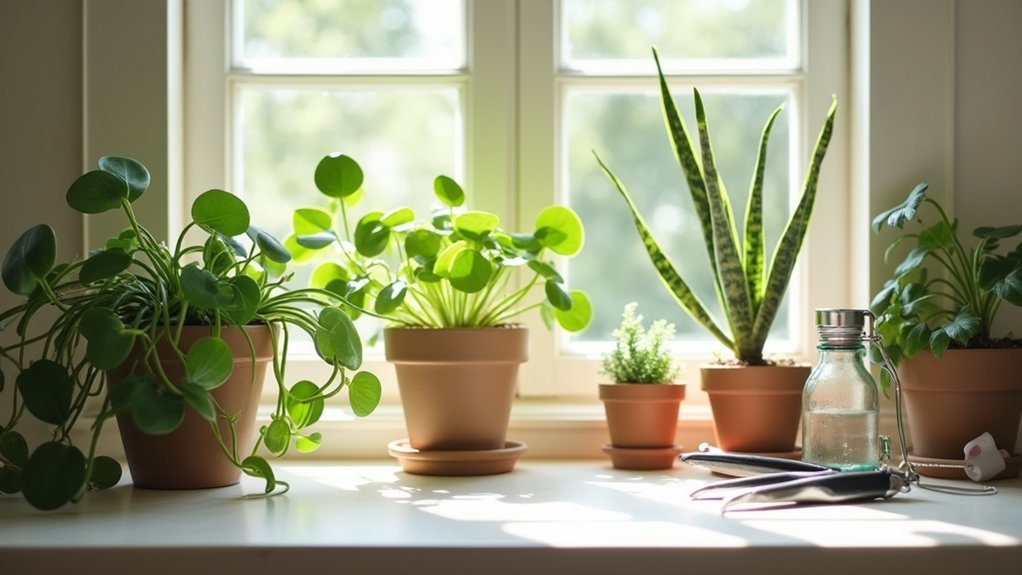

Think of low-maintenance houseplants as your home’s autopilot: they keep going even when you’re slammed. You don’t need a strict watering calendar, perfect light, or weekly fussing—just smart picks like snake plant, ZZ, pothos, or cast-iron plant that shrug off low light and missed waterings. Place them in indirect light, use a well-draining pot, and you’ll cut care to minutes. Next, you’ll match plants to your actual schedule and window setup…
What Counts as a Low-Maintenance Houseplant?
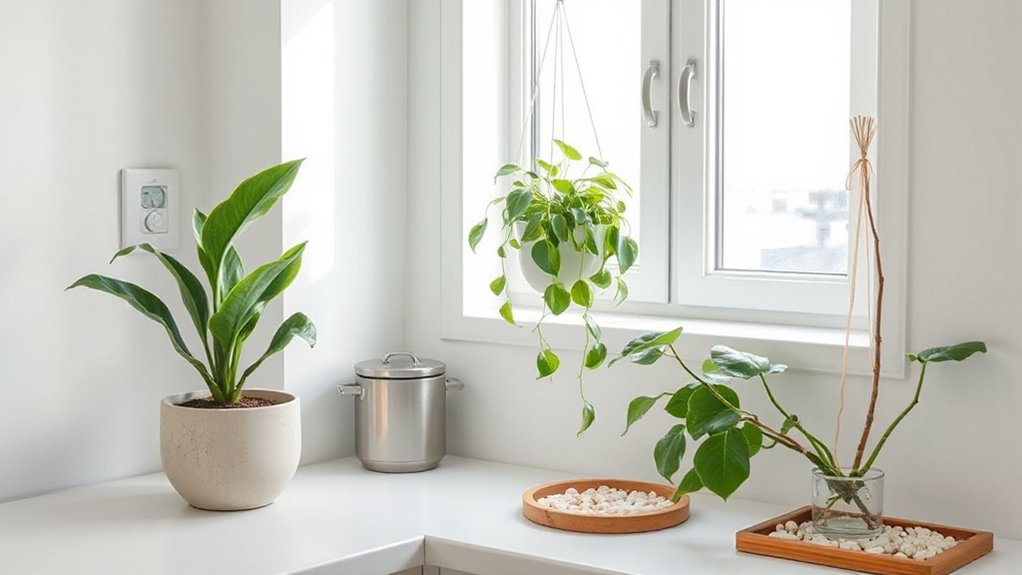
If you want plants that look good without turning into a weekly chore, “low-maintenance” usually means they tolerate missed waterings, average indoor light, and the occasional temperature swing.
You’re looking for plants with slower growth, thicker leaves or canes that store moisture, and resilient roots that don’t sulk after minor neglect. They also stay attractive without constant pruning, misting, or rotating for perfect symmetry.
Low-maintenance doesn’t mean “unkillable,” and Plant care myths create common misconceptions. You can’t fix a tough plant by watering on a rigid calendar, and “more sun” won’t always boost health.
Instead, you’ll judge by recovery speed: a truly easy plant bounces back after a dry spell, forgives a skipped feeding, and handles normal indoor humidity without drama.
Choose the Right Plant for Your Space (Light + Schedule)
Low-maintenance plants still need the right match, so start by sizing up your light and your routine. Check which windows you’ve got, when the sun hits them, and how far your shelves sit from glass.
Then plan Plant placement: brightest spots for sun-lovers, medium light for adaptable growers, and deeper corners only if you can add a lamp.
Next, be honest about your schedule. If you travel or forget, pick plants that tolerate wider watering frequency gaps and prefer drying out between waterings.
If you’re home often, choose options that like evenly moist soil and won’t punish you for weekly check-ins.
Match pot size and soil mix to that rhythm, too: faster-draining blends buy you forgiveness, while larger pots hold moisture longer.
Best Low-Maintenance Houseplants for Low Light
Even when your home runs dim—think north-facing windows, shaded apartments, or rooms set back from the glass—you can still keep plants that look intentional with minimal effort. Try snake plant for upright structure, ZZ plant for glossy “always fine” foliage, and pothos for trailing shelves; all tolerate missed waterings.
Cast-iron plant stays tidy in corners, while Chinese evergreen adds patterned leaves that read designer without extra work.
For Indoor garden design, group similar growers in matching cachepots and use a light-colored wall or mirror to bounce ambient light.
Water only when soil dries, rotate monthly for even growth, and wipe leaves to help photosynthesis.
For pest prevention, quarantine new plants, check undersides weekly, and rinse foliage if you spot sticky residue.
Best Low-Maintenance Houseplants for Bright Light
If you’ve got a sunny windowsill or bright, indirect light all day, you can lean on plants that thrive on extra rays without constant attention.
Start with sun-loving succulents that prefer drying out between waterings, then balance the look with bright-light foliage favorites that keep their color and shape in high light.
You’ll get a clean, modern setup that stays polished with simple routines: light checks, sparse watering, and an occasional rotation.
Sun-Loving Succulents
When your brightest window gets hours of direct sun, succulents deliver a clean, modern look without demanding daily attention. Choose rosette types like echeveria, architectural aloe, or a trailing string-of-pearls to match today’s minimalist shelves and sunny sills.
You’ll get the best results with a gritty cactus mix and a pot with drainage; let soil dry fully, then water deeply. Rotate weekly for even growth and tighter forms.
For plant propagation, snip offsets or take leaf cuttings, then let them callus before setting on dry mix. Prioritize pest prevention by keeping leaves dry, quarantining new plants, and checking crevices for mealybugs. If you see them, dab with isopropyl alcohol and improve airflow.
Avoid overfertilizing; light feeding in spring is enough.
Bright-Light Foliage Favorites
Although succulents thrive in full sun, bright-light foliage plants give you that lush, designer “green volume” look on shelves and in sunny corners with far less fuss than you’d expect. Try a rubber plant for glossy drama, a bird of paradise for bold vertical lines, or a money tree for an airy, modern canopy.
Set them 2–6 feet from a south or west window, then rotate weekly so growth stays even. Water only when the top 2 inches dry, and use a fast-draining mix to prevent soggy roots.
Wipe leaves monthly; cleaner foliage photosynthesizes better and supports indoor air quality. For seasonal plant care, cut watering in winter, pause fertilizer, and bump humidity if heat runs.
Repot every 2–3 years.
Hard-to-Kill Houseplants That Rarely Need Water
If you want plants that thrive on neglect, you can’t beat drought-tolerant picks like snake plant, ZZ plant, jade, and aloe—today’s go-to “set it and forget it” lineup.
You’ll get better results by waiting until the potting mix dries out fully, using fast-draining soil, and choosing pots with drainage holes.
Don’t sabotage them with the most common mistake—watering on a schedule—plus watch for sneaky overwatering triggers like oversized pots, low light, and water pooling in saucers.
Drought-Tolerant Plant Picks
Even with a busy schedule and a less-than-perfect watering routine, you can keep a space looking lush by choosing drought-tolerant houseplants that store moisture and bounce back from missed waterings. Start with drought resistant varieties like snake plant, ZZ plant, haworthia, and jade; they thrive on neglect and look sharp in modern, minimalist rooms.
For a trailing option, pick string of pearls or burro’s tail and place them in bright, indirect light.
Use water conserving strategies that fit your routine: choose terracotta for faster dry-down, add a gritty cactus mix for airflow, and size pots snugly to reduce excess moisture.
Group plants by light needs, rotate weekly for even growth, and dust leaves so they photosynthesize efficiently.
Watering Mistakes To Avoid
When you choose hard-to-kill, low-water houseplants, the fastest way to lose them isn’t underwatering—it’s “helpful” overwatering.
Overwatering pitfalls usually start with a calendar routine instead of a soil check. Stick a finger in; if the top 2 inches are dry, water. If it’s cool or damp, wait.
Don’t leave pots sitting in a saucer of runoff; dump it after 10 minutes for Root rot prevention.
Use a gritty mix and a pot with drainage—trendy cachepots are fine, but keep the nursery pot inside.
In winter or low light, cut watering in half.
Skip misting succulents and ZZ plants; it raises humidity without helping roots.
When in doubt, delay a day.
A 5-Minute Weekly Routine to Keep Plants Thriving
Although low-maintenance houseplants don’t demand much, a simple 5-minute weekly check-in keeps growth steady and prevents small issues from turning into plant emergencies. Set a timer and do a quick scan: rotate pots a quarter turn for even light, then lift each container to gauge moisture by weight.
If it’s light, water thoroughly and dump saucer runoff. Next, wipe dusty leaves with a damp cloth to boost photosynthesis and spot early pests—your easiest Pest prevention step. Check stems and undersides for webbing or sticky residue, and isolate anything suspicious.
Finally, pinch leggy tips and save healthy cuttings in water or perlite for Plant propagation. Top-dress with fresh soil if roots peek out. Log notes on your phone for consistency.
Conclusion
You don’t need a green thumb—just smart choices. Match plants to your light and your calendar, then let hardy picks like snake plant, ZZ, pothos, and cast-iron do the heavy lifting. They handle low light, missed waterings, and real-life temperature swings like a champ. Stick them in sleek cachepots, group them for a styled look, and give them a five-minute weekly check (water, wipe leaves, rotate). Your home stays lush with minimal fuss.