
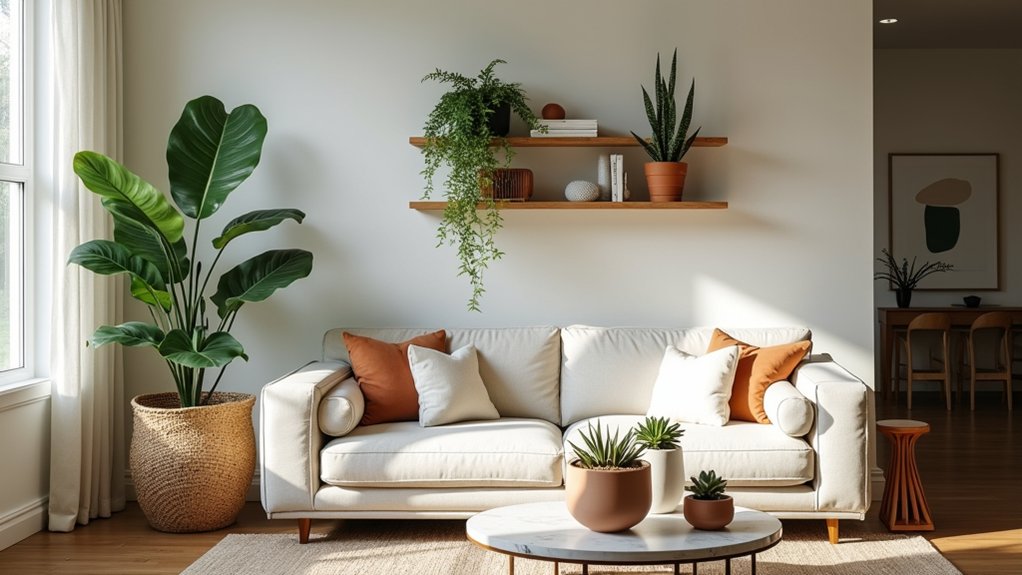

You choose plants for shape, you choose pots for texture, you choose placement for balance. Start by matching foliage silhouettes to your furniture lines—spiky for crisp modern rooms, trailing for softer, layered spaces. Then echo your palette with planters in matte stone, warm terracotta, or brushed metal. Finally, size each plant to the room’s scale and light so it looks intentional, not accidental. The key move most people miss is where you place the first one…
Choose Houseplants for Your Interior Style
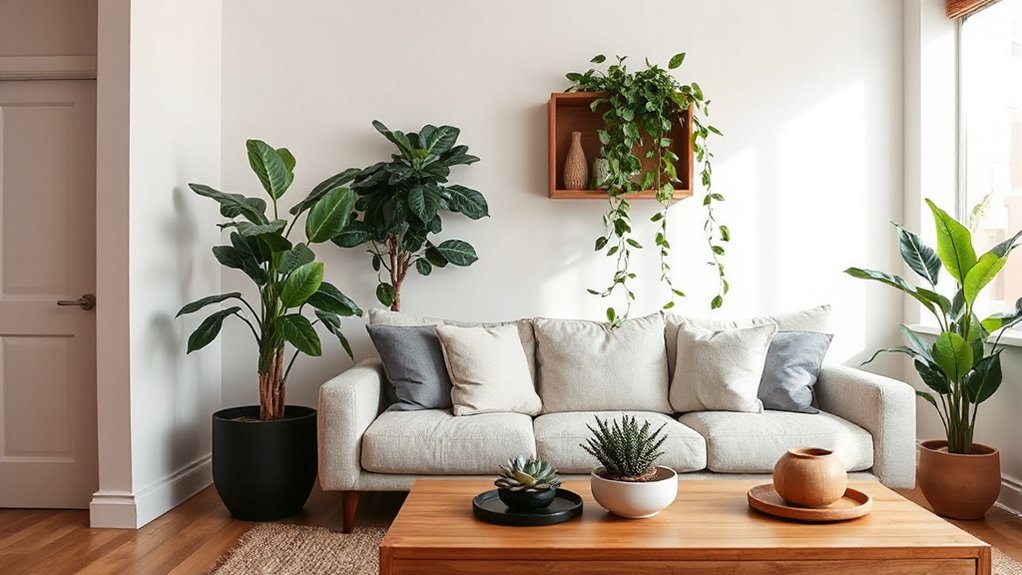
Whether you’re styling a calm Scandi nook or a bold maximalist living room, the right houseplants should echo your interior’s shapes, colors, and mood. Match silhouettes first: spiky sansevieria sharpens modern lines, trailing pothos softens curved furniture, and sculptural ficus complements architectural decor.
Use plant color coordination to tie the palette together—silver-leafed varieties amplify cool neutrals, deep greens ground earthy schemes, and burgundy foliage riffs on terracotta, walnut, or jewel-tone textiles.
Keep containers on theme: matte stone for minimalism, ribbed ceramic for retro, brass or smoky glass for glam.
Lean into seasonal plant choices, swapping in flowering accents or warmer-toned foliage when your throws and artwork shift, so your space feels refreshed, not redecorated.
Pick Houseplants by Room Light and Layout
Start by reading your room’s natural light—note window direction, hours of sun, and any shade from buildings or curtains.
Then match plants to your layout so greenery supports circulation and sightlines, whether you’re styling a narrow entry, an open-plan living area, or a cozy corner.
Finally, plan placement and scale: anchor the space with a tall statement plant, layer medium pots at eye level, and tuck small accents where they’ll look intentional, not cluttered.
Assess Natural Light Levels
Before you fall for a plant’s sculptural leaves or Instagram-ready silhouette, take a quick read on your home’s natural light—because light is the real design brief.
Stand where you’d place the plant and watch the space through a full day: bright morning beams, muted afternoon glow, or consistent shade. Note window direction—south is strongest, north is softest, east is gentle, west is intense late-day.
Check for obstructions like trees, соседние здания, and deep eaves that filter sun. Use a simple phone lux app or the “shadow test”: crisp shadow means high light, fuzzy means medium, barely there means low.
Getting this right protects plant health and keeps your styling looking intentional, not stressed.
Match Plants To Layout
Once you’ve clocked your light levels, match plants to the way you actually move through the room—because layout determines what thrives and what looks curated. In open-plan spaces, choose architectural silhouettes that read clean from multiple angles, like snake plant, rubber tree, or upright philodendron.
In tight rooms, go for compact forms and tidy habits—pothos trained neatly, peperomia, or mini ferns—so they don’t feel chaotic.
Use your furniture lines as your design cue: mid-century pieces pair well with glossy, bold leaf texture; softer, curved rooms suit finer, feathery fronds.
Let Plant color support your palette: deep greens for calm minimalism, variegation for modern contrast, and red-tinged leaves to echo warm woods or brass.
Plan Placement And Scale
After you’ve matched plant types to your layout, lock in placement and scale so each piece looks intentional and grows well. Start by reading light: put sun lovers at bright windows, medium-light plants a few feet back, and low-light picks in corners, but keep them in your sightline.
Use scale rules: one tall floor plant anchors blank walls, clusters of three small pots style shelves, and a trailing plant softens hard edges. Leave airflow and watering access, and avoid blocking walkways.
Sync container textures with your room—ribbed ceramics for modern, woven baskets for warm minimalism, matte terracotta for earthy trends.
Finally, edit plant color schemes: echo foliage tones with textiles, or contrast deep greens against pale neutrals for a crisp, curated look.
Match Houseplant Scale and Silhouette to Space
Even if you’ve nailed your color palette and planters, a plant that’s too big—or too spindly—can throw the whole room off balance. Aim for plant scale that supports the furniture: tall, upright growers beside low sofas; mid-height, fuller forms near consoles; compact plants on narrow ledges.
Then chase silhouette harmony. In minimalist rooms, choose clean, architectural shapes like snake plant or rubber tree to echo crisp lines. In softer, layered spaces, go for airy, cascading foliage to mirror drapery and rounded seating.
Watch negative space: a dense, wide plant needs breathing room, while a sparse plant looks best grouped near larger shapes. Finally, match leaf size to viewing distance—bold leaves read well across a room; fine textures shine up close.
Use Planters and Stands as Décor Accents
With the plant’s size and silhouette working for your room, let the container finish the look. Treat Decorative plant containers like you’d treat vases or lamps: choose finishes that echo your palette—matte black for modern, warm terracotta for earthy, glazed white for coastal, or brushed brass for a luxe note.
Use texture to add depth: ribbed ceramic, woven seagrass, raw concrete, or smoked glass. Keep proportions crisp; the rim should frame foliage, not fight it.
Then elevate with plant stand styles that reinforce your vibe. Hairpin legs feel midcentury, slim black steel reads minimalist, and chunky wood brings Scandinavian warmth.
Use stands to add airiness and protect floors. If you mix materials, repeat one element—color, metal tone, or weave—to keep it cohesive.
Style Shelves, Corners, and Tables With Houseplants
When you treat houseplants like styling objects—not just greenery—you can make shelves, corners, and tables feel intentional instead of cluttered. Start with a simple rule of threes: one trailing plant, one upright silhouette, one sculptural accent piece.
Use Plant color coordination by echoing leaf tones with book spines, ceramics, or art—deep green with walnut, silver foliage with chrome, burgundy with warm terracotta.
On shelves, stagger heights and leave negative space so each pot reads like décor. In corners, anchor the floor with a tall plant, then add a small side table for a lower companion.
On coffee tables, group a compact plant with a tray and candle for a styled vignette.
Consider Indoor humidity management: cluster plants near a diffuser or humid zone for cohesive placement.
Keep Houseplants Tidy, Healthy, and Intentional
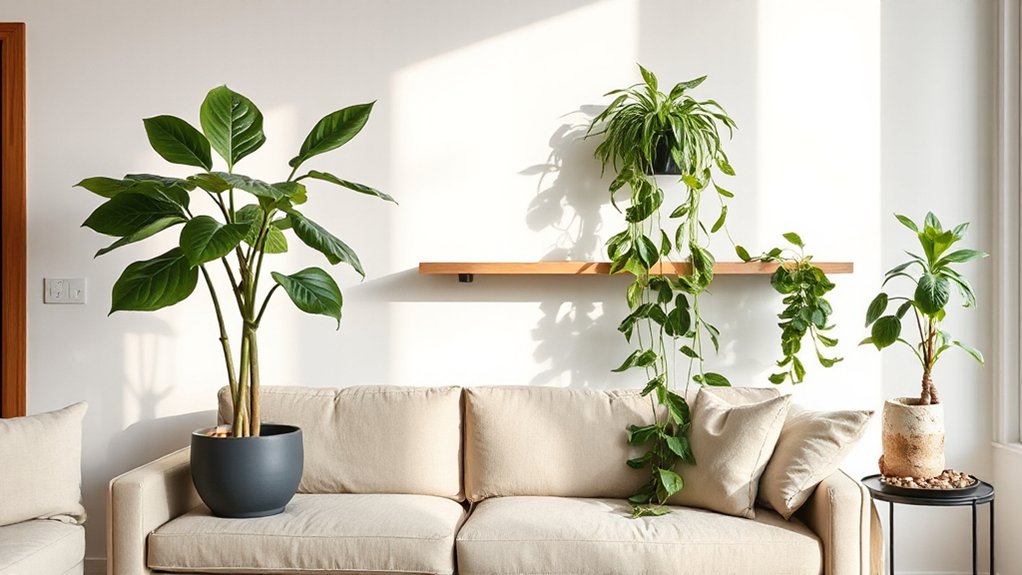
If your plants look a little wild, your whole room can start to feel untuned. Treat plant care like styling: prune leggy growth, wipe leaves, and rotate pots so silhouettes stay balanced. Pull yellowing foliage fast, and top-dress soil to keep surfaces clean and boutique-hotel neat.
Choose saucers that match your palette, and hide nursery pots inside cachepots for a finished, intentional look.
Lock in simple maintenance routines: water on a set day, check moisture with your finger, and fertilize lightly in the growing season. Group plants by light needs so you’re not constantly moving them.
When a plant outgrows its spot, repot or swap locations instead of letting it crowd the vignette. Clean tools, clean lines, calm rooms.
Conclusion
When you treat houseplants like design pieces, your rooms feel finished, not cluttered. Stick to varieties that suit your light and echo your style—bold, upright forms for clean lines; soft trailers for warmth. Repeat planters and stands in your palette so everything reads intentional. Vary heights, group in odd numbers, and give corners a focal moment. With regular pruning and dusting, your greenery looks like jewelry for the space.