
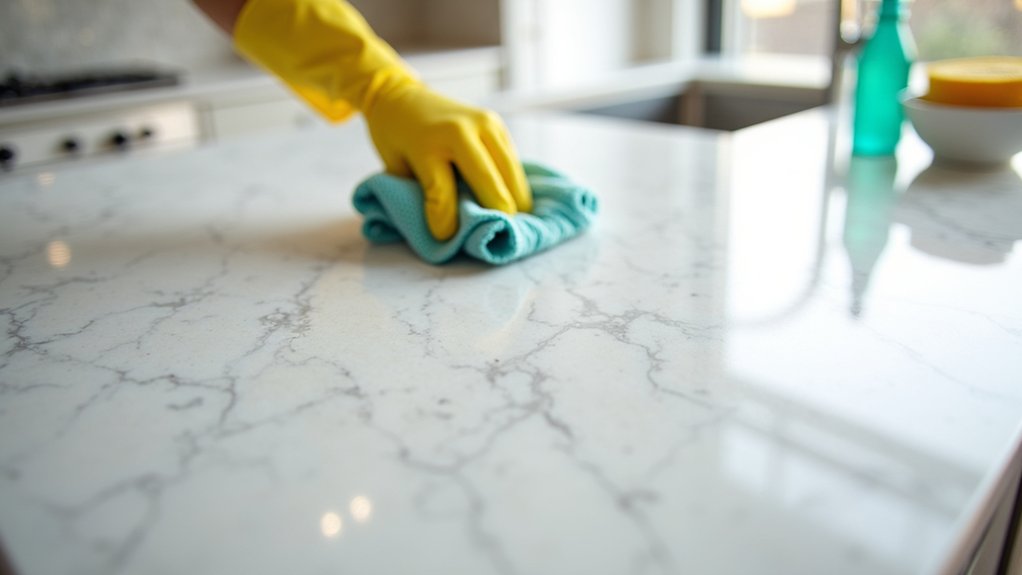

Your quartz countertop is like a tailored suit—sleek, resilient, and easy to ruin with the wrong touch. You’ll keep it looking crisp by wiping daily with warm water, a few drops of pH-neutral dish soap, and a microfiber cloth, then rinsing and drying to stop water marks. But disinfecting, tackling sticky residue, and lifting oil or rust stains takes a different approach—and one common “safe” cleaner can quietly cause trouble.
Daily Quartz Countertop Cleaning (Safe Steps)
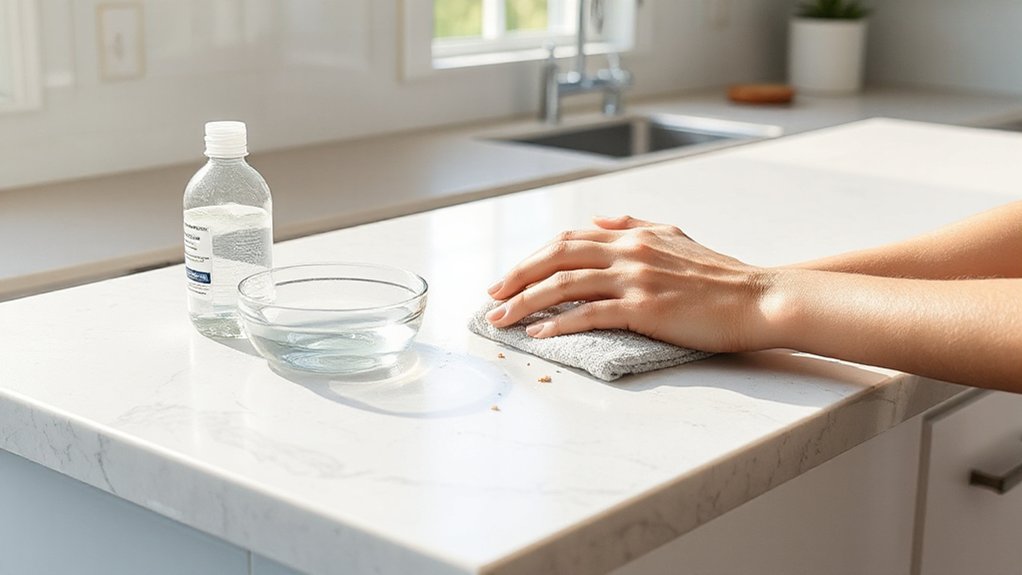
Even if your quartz looks spotless, a quick daily wipe prevents oils, crumbs, and dried-on splashes from turning into stubborn buildup. Clear the surface, then sweep grit away with a dry microfiber so you don’t drag it like sandpaper.
Follow with a damp microfiber and a light, even pass, working from backsplash to edge. Rinse the cloth often, and swap it when it feels greasy. Dry immediately with a second towel to keep water marks and dull films off high-gloss finishes.
Wipe spills as they happen, especially coffee, wine, oils, and citrus, before they tint or etch the sheen. Skip heavy pressure and abrasive pads; let the cloth do the work.
Quartz sealing and countertop sealing aren’t your daily tasks.
What Cleaner Is Safe for Quartz Daily?
Although quartz resists stains better than many natural stones, you should still stick to gentle, residue-free cleaners for daily care. Your safest go-to is warm water with a few drops of mild dish soap, wiped on with a soft microfiber cloth and followed by a clean-water rinse.
If you prefer a ready-made option, choose a pH-neutral, non-abrasive stone or quartz cleaner that leaves no film and contains no bleach, ammonia, or citrus solvents.
Skip scouring powders, abrasive pads, and “degreasers” that can dull the finish over time. For sticky spots, use a plastic scraper and a damp, soapy wipe rather than harsh chemicals.
Consistent Quartz maintenance preserves countertop aesthetics and keeps the surface looking crisp without buildup.
How to Disinfect Quartz Without Damaging It
Daily soap-and-water cleaning keeps quartz looking sharp, but disinfecting calls for a little more care so you don’t haze the finish or weaken the resin binder.
Use a nonabrasive cloth and an EPA-registered disinfectant labeled safe for nonporous stone, or a 70% isopropyl alcohol solution. Lightly mist the surface—don’t flood seams—and let it dwell for the label’s contact time, usually 1–5 minutes.
Wipe with clean water, then buff dry to prevent streaks and reduce the need for countertop polishing later.
Skip bleach, oven cleaner, and high-alkaline sprays; they can dull gloss and discolor.
You don’t need Quartz sealing, but you do need gentle chemistry and quick drying. Keep good ventilation too.
How to Remove Sticky Residue From Quartz
When sticky residue clings to your quartz, you’ll get the best results by starting with safe solvent options like warm soapy water, isopropyl alcohol, or a quartz-approved adhesive remover.
Let the solvent sit briefly to soften the mess, then wipe with a nonabrasive cloth so you don’t dull the finish.
If anything remains, use gentle scraping techniques—hold a plastic putty knife or old credit card nearly flat and push lightly to lift the residue without gouging the surface.
Safe Solvent Options
If sticky residue clings to your quartz after labels, tape, or spills, you can lift it safely with a few gentle solvents that won’t dull the finish. Start with Natural remedies: warm water plus a drop of dish soap, or a 50/50 mix of water and white vinegar for light tackiness.
For oily adhesives, rub on a small amount of cooking oil, let it sit 5–10 minutes, then wipe clean and rewash with soap and water.
When you need Chemical alternatives, choose isopropyl alcohol (70%+) on a microfiber cloth, working in small sections and rinsing afterward. A quartz-safe adhesive remover can work too—spot-test first and follow label dwell times.
Don’t use acetone, paint thinner, or bleach; they can weaken resin and leave haze.
Gentle Scraping Techniques
Although quartz resists scratches better than many surfaces, you’ll get the cleanest results by pairing a softening step with careful, low-pressure scraping.
After you’ve loosened residue with warm water or a quartz-safe solvent, reach for a plastic putty knife, old credit card, or nylon scraper—never metal.
Hold the edge nearly flat (about 15–30 degrees) and push forward in short, controlled strokes, working from the outside of the spot toward the center.
Keep the area damp so residue lifts instead of smears.
For tight seams, wrap a microfiber cloth around the scraper to cushion it.
These scraping techniques prevent haze and micro-marring.
Finish with a pH-neutral cleaner, then rinse and dry for a streak-free sheen.
How to Remove Stains From Quartz (Oil, Dye, Rust)
Because quartz resists stains but doesn’t ignore them, you’ll get the best results by matching your cleanup method to the stain type—oil/grease, dye-based spills (wine, coffee, makeup), or rust from metal cans and tools.
For oil, lay on a mild degreasing dish-soap solution, let it dwell 5–10 minutes, then wipe and rinse; repeat until the sheen looks even.
For dye, apply a baking-soda-and-water paste, cover lightly to keep it moist, wait 10 minutes, then wipe clean and rinse thoroughly.
For rust, use a targeted quartz-safe rust remover on a soft cloth, treating only the spot, then rinse and dry.
These stain removal cleaning techniques work best when you blot fast, rinse well, and finish with a dry microfiber buff.
What to Avoid on Quartz (Products + Tools)
Getting stains off quartz is mostly about using the right cleaner at the right strength; keeping quartz looking new is just as much about what you don’t put on it.
Skip abrasive scrubbers, steel wool, and scouring powders—they can dull the sheen and leave faint swirls. Avoid bleach cleaners and any high-alkaline or highly acidic products (oven cleaner, drain cleaner, paint stripper, grout haze remover) because they can discolor resins and etch the finish over time.
Don’t use solvent-heavy spotters like acetone or lacquer thinner unless your manufacturer explicitly allows it. Steer clear of waxes, polishes, and “shine boosters”; they build a cloudy film that attracts smudges.
Choose pH-neutral dish soap, a soft microfiber cloth, and a non-scratch sponge instead.
Prevent Heat and Scratch Damage: and When to Call a Pro
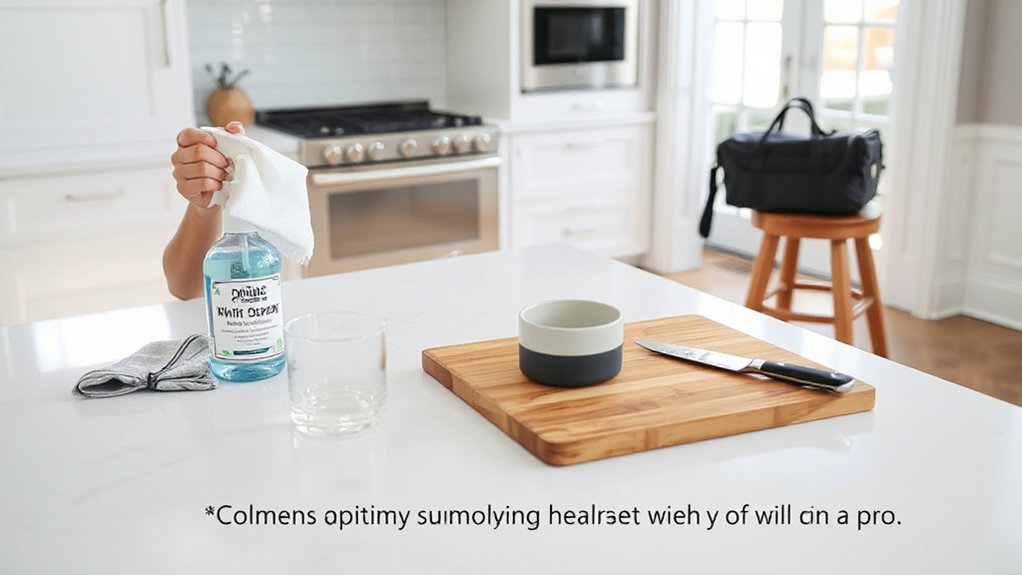
Protect your quartz by parking hot pans on trivets or heat-resistant mats instead of setting them straight on the surface. Keep scratches off the finish by using cutting boards and avoiding sliding heavy cookware, small appliances, or grit-covered items across the countertop.
If you notice chips, cracks, loose seams, or stubborn scorch marks, don’t DIY it—call a countertop pro to assess and repair it properly.
Use Trivets And Mats
Even though quartz countertops handle daily wear well, hot cookware and gritty debris can leave permanent marks faster than you’d expect. Make heat protection part of your routine: keep a trivet within arm’s reach of the cooktop, and set it down before the pan leaves the burner.
For smart Trivet placement, center heavy pots on a stable, non-slip trivet and avoid dragging it across the surface. Use silicone mats under countertop appliances that run hot, and slide them into place rather than shoving.
Prioritize Mat maintenance: shake out crumbs, wipe mats daily, and wash weekly so trapped grit doesn’t abrade the finish. If you spot dulling, discoloration, or a heat outline that won’t lift with gentle cleaning, call a stone pro for assessment.
Prevent Scratches With Boards
Although quartz resists everyday scuffs, knives, grit, and small-dragged appliances can still scratch the resin binder and leave haze you can’t buff out at home.
Make Board protection your default: keep a cutting board out, not tucked away, so you’re never tempted to slice citrus, bread, or packages directly on the surface. Choose boards with nonslip feet and smooth undersides; trapped crumbs beneath a board can act like sandpaper when you reposition it.
For Scratch prevention, lift appliances instead of sliding them, and park heavy mixers, air fryers, and canisters on a board or tray that spreads weight and blocks grit. Rotate boards and wipe both sides daily to prevent residue transfer and to keep your quartz looking crisp.
Call Pros For Repairs
When a hot pan leaves a dull shadow, a seam starts to lift, or a scratch cuts through the glossy finish, you’ll get better results by calling a pro instead of trying to “fix” quartz with DIY fillers or aggressive abrasives. A fabricator can color-match resin, re-polish without haze, and reset edges so the surface looks intentional again.
To prevent repeat damage, keep trivets by the range, add a landing zone for cookware, and use felt pads under small appliances. Smart kitchen organization protects your counters and supports Quartz countertop styling, too—clear, uncluttered runs read cleaner and hide less wear.
Call for help if you see heat rings, chipped corners, deep gouges, or shifting seams; these issues worsen fast and often void warranties.
Conclusion
Keep your quartz looking showroom-new by wiping it daily with warm water, a few drops of pH-neutral dish soap, and a microfiber cloth—then rinse and dry. Disinfect with a quartz-safe product, tackle residue with gentle scraping, and spot-treat stains with a baking-soda paste. Skip abrasives, bleach, and harsh solvents. Protect it from heat and scratches with trivets and pads. Fun stat: nearly 80% of U.S. homeowners choose quartz for kitchens.