
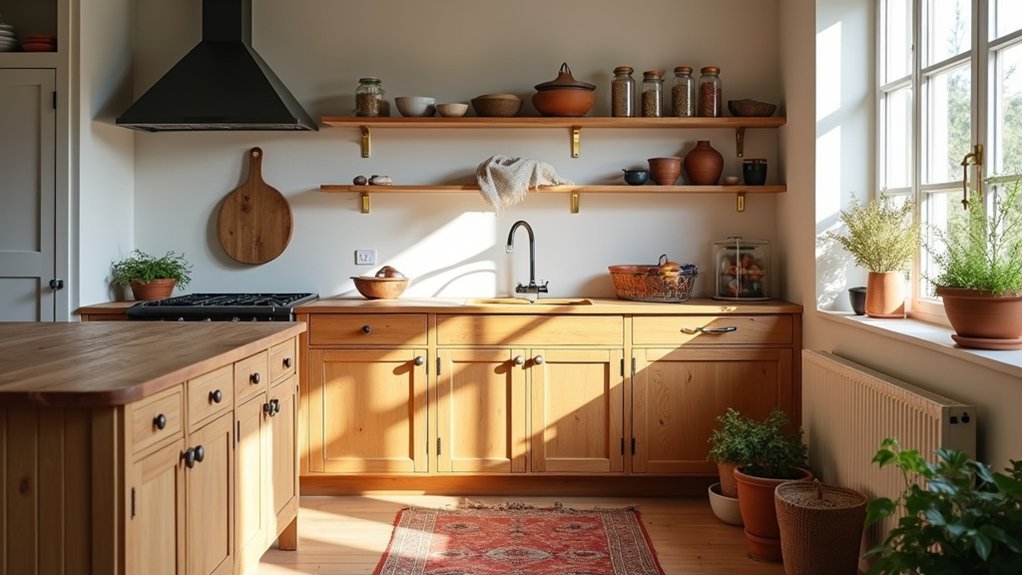

The fastest way to make a kitchen feel warmer isn’t new cabinets—it’s the glow and the layers you build around it. You’ll get there by switching to 2700K–3000K, high-CRI bulbs, adding dimmable lighting, and pairing that warmth with wood accents, cozy paint tones, and brass or copper hardware. Then you soften the hard surfaces with a rug and linens and finish with vintage pieces that look collected, not staged—but start with one change first.
Use Warm Kitchen Lighting and Bulbs (2700K–3000K)
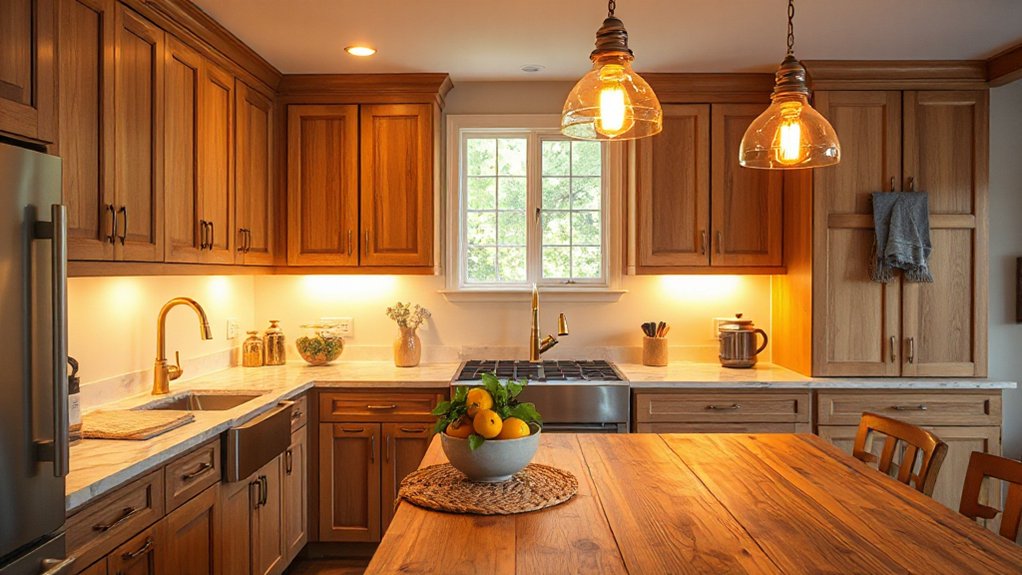
If your kitchen feels a little stark, start with the light you’re bathing it in: swap to warm-white bulbs in the 2700K–3000K range to instantly soften surfaces and make wood tones, brass, and paint colors look richer. Check bulb temperature on the box; 2700K reads cozy, while 3000K stays warm but slightly crisper for task zones.
Mix layers for better lighting ambiance: use warm under-cabinet strips to eliminate harsh shadows on counters, then add a dimmable ceiling fixture so you can shift from prep to dinner.
Choose high CRI (90+) LEDs so food and finishes don’t look flat or gray. Aim for consistent Kelvin across fixtures to avoid a patchy, mismatched glow.
Swap Kitchen Hardware for a Warmer Finish Fast
Wondering what makes a kitchen feel warmer almost overnight? Try a hardware upgrade. Swapping pulls, knobs, and faucets takes an hour, costs far less than new cabinets, and instantly shifts the mood toward cozy.
Focus your finish selection: brushed brass, aged bronze, copper, or warm nickel read softer than stark chrome or matte black. Keep it cohesive—match the undertone across drawers, doors, and lighting mounts, or intentionally mix two warm metals (like brass and bronze) for a layered, current look.
Measure existing hole spacing (center-to-center) so new pulls fit without drilling. Choose slightly thicker profiles or gently rounded edges for a handcrafted feel. Finish with matching screws and tight, even alignment throughout.
Choose Cozy Kitchen Paint Colors for Walls or Cabinets
After you’ve warmed things up with new hardware, paint is the fastest way to make the whole kitchen feel cozier. You’ll get the most mileage from warm neutrals on the walls—think creamy off-white, soft greige, or sand—because they flatter wood tones and warm metals.
For extra character, pick an earthy cabinet color like muted sage, clay/terracotta, or deep mushroom, and keep the finish in satin or semi-gloss for easy cleanup.
Warm Neutrals For Walls
Although bright whites and stark grays have had their moment, warm neutrals are what make a kitchen feel inviting and lived-in—especially under mixed lighting. Start with Neutral palettes that lean creamy, greige, or soft taupe so morning sun and evening pendants both flatter the space.
Test large swatches on two walls, then check them beside countertops, backsplash tile, and flooring at different times of day. Choose finishes strategically: eggshell hides scuffs yet stays wipeable; matte looks modern but needs higher-quality paint for durability near sinks and ranges.
If your kitchen feels flat, add interest through Wall textures—think subtle limewash, a gentle plaster effect, or a low-sheen paint over fine orange peel. Pair with warm LEDs (2700–3000K) to keep undertones cozy.
Earthy Cabinet Color Ideas
When you want a kitchen that feels grounded instead of sterile, reach for earthy cabinet colors that borrow from nature’s muted spectrum. Start with warm olive or moss green; they read modern when paired with matte black pulls and pale Natural stone counters.
Try clay or terracotta on lower cabinets and keep uppers creamy to avoid heaviness. If you like a calmer look, choose mushroom taupe or putty; they bridge stainless appliances and wood floors without turning gray.
For a bolder, cozy twist, go with deep cocoa or smoked navy in a satin finish. Keep your sheen low and your undertones warm, then layer Rustic textures—rattan stools, linen shades, and aged brass—to make the color feel intentional, not trendy.
Add under-cabinet lighting for depth.
Add Wood Accents for Instant Kitchen Character
If your kitchen feels a little flat or too “all-new,” wood accents add warmth and character fast without requiring a full remodel. Start small with a white oak or walnut floating shelf to break up tile and show off wood grain. Swap in a butcher-block prep zone or a wood-topped island cart for a budget-friendly hit of texture.
Lean into rustic accents without going theme-y: try reclaimed beams as a simple range-hood surround, or add slatted wood panels to the island face. Update hardware, too—mixed metal with wood pulls feels current.
Keep tones consistent: pair warm woods with creamy whites, sage, or clay cabinets, and avoid over-matching by mixing one dominant species with a secondary finish. Seal surfaces with a matte, food-safe oil for durability.
Warm Up the Kitchen With Rugs and Soft Linens
Since hard surfaces dominate most kitchens, rugs and soft linens instantly dial up warmth, quiet echo, and make the room feel lived-in. Start with a washable runner along the sink or range to boost flooring comfort and reduce fatigue while you prep. Choose low-pile or flatweave styles so doors clear and crumbs vacuum easily, then add a nonslip pad for safety.
Swap stiff towels for textured linen or waffle cotton, and keep a couple of oversized tea towels within reach for quick drying. For window treatments, skip fussy drapes and pick tailored café curtains, Roman shades, or bamboo shades to soften light without stealing function.
Stick to warm neutrals, muted stripes, or vintage-inspired patterns to add character without overwhelming your cabinets. Rotate pieces seasonally for effortless refresh.
Style Shelves and Countertops With Lived-In Layers
Soft textiles set a warmer baseline, and the next step is giving your open shelves and countertops the same lived-in ease.
Start by grouping everyday items you actually use: a stack of plates, two mugs, a small bowl for lemons. On open shelving, work in odd-number clusters, vary heights, and leave breathing room so it doesn’t read cluttered.
On countertops, corral the “always out” essentials on a tray: olive oil, salt, and a pepper mill. Add one tactile element, like a wood cutting board leaned against the backsplash, then one or two decorative accessories, like a stoneware crock for utensils.
Keep finishes mixed but consistent—matte ceramic, warm wood, brushed metal—and edit weekly so it stays intentional.
Add Kitchen Personality With Art and Vintage Finds
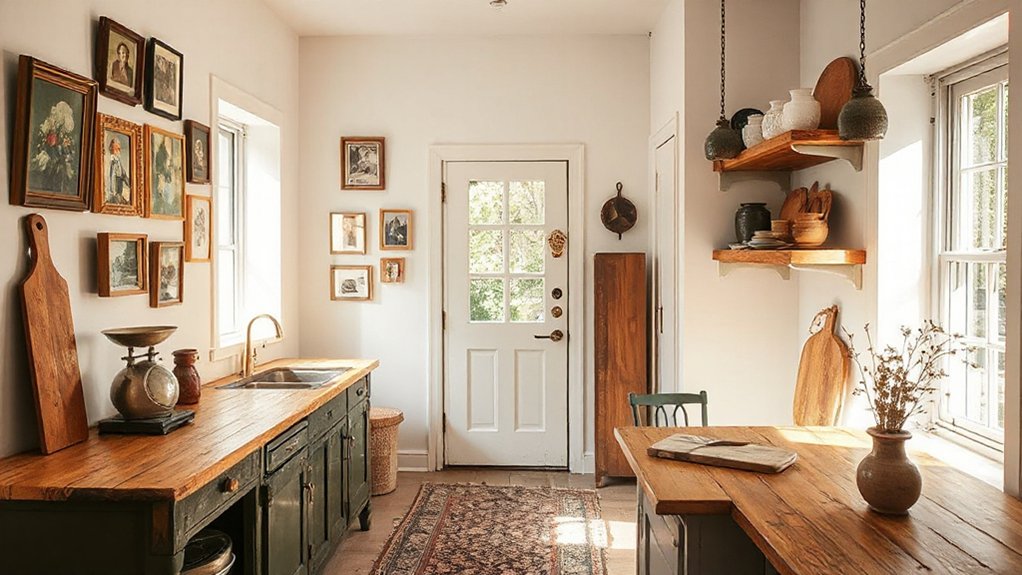
You can give your kitchen instant personality by curating eclectic wall art—think a tight gallery of thrifted prints, food sketches, and framed textiles that tie into your cabinet and hardware tones.
Then showcase vintage kitchen treasures like enamelware, brass utensils, or a patinaed cutting board on open shelves where they’re both useful and decorative.
Keep it cohesive by repeating one finish or color family, and mix frames and eras for that collected-over-time feel.
Curate Eclectic Wall Art
Even if your cabinets and counters lean classic, eclectic wall art instantly gives the kitchen a lived-in, collected feel. Start by choosing a tight color thread—especially if you love Modern minimalist or monochrome palettes—then mix formats for contrast: a small framed print, a graphic tea towel in a frame, and one bold, oversized piece.
Hang art where you’ll actually see it, not where it’s “supposed” to go: above open shelving, beside the pantry door, or on that blank strip near the fridge.
Keep sightlines clean by aligning top edges or spacing frames 2–3 inches apart. Use acrylic glazing for splash zones, and pick wipeable frames.
Finally, add a picture light or warm LED puck to make the display feel intentional.
Showcase Vintage Kitchen Treasures
Although your kitchen may be full of hardworking basics, a few vintage treasures add instant character and make the space feel collected rather than cookie-cutter. Start by editing what you display: choose two or three pieces with patina, not a cluttered shelf.
Hang Antique utensils on a slim rail near the range so they read as functional décor. Corral Retro cookware—enameled saucepans, copper pots, or a well-worn cast-iron skillet—on open shelving, stacking by size for a tidy, styled look.
Use a glass-front cabinet for colorful mixing bowls, and light it with a warm LED strip. Keep finishes cohesive: pair brass with walnut or black iron with oak. Rotate pieces seasonally so your kitchen always feels fresh.
Conclusion
When you add warmth and character, your kitchen stops feeling like a work zone and starts feeling like home. Swap in 2700K–3000K, high-CRI lighting on dimmers, then layer in brass or copper pulls, warm neutrals, and a touch of wood—shelves or a butcher-block top. Anchor it with a washable rug and soft linens, and finish with art or vintage pieces. Since you’ll spend over 400 hours a year cooking, make those hours cozier.