
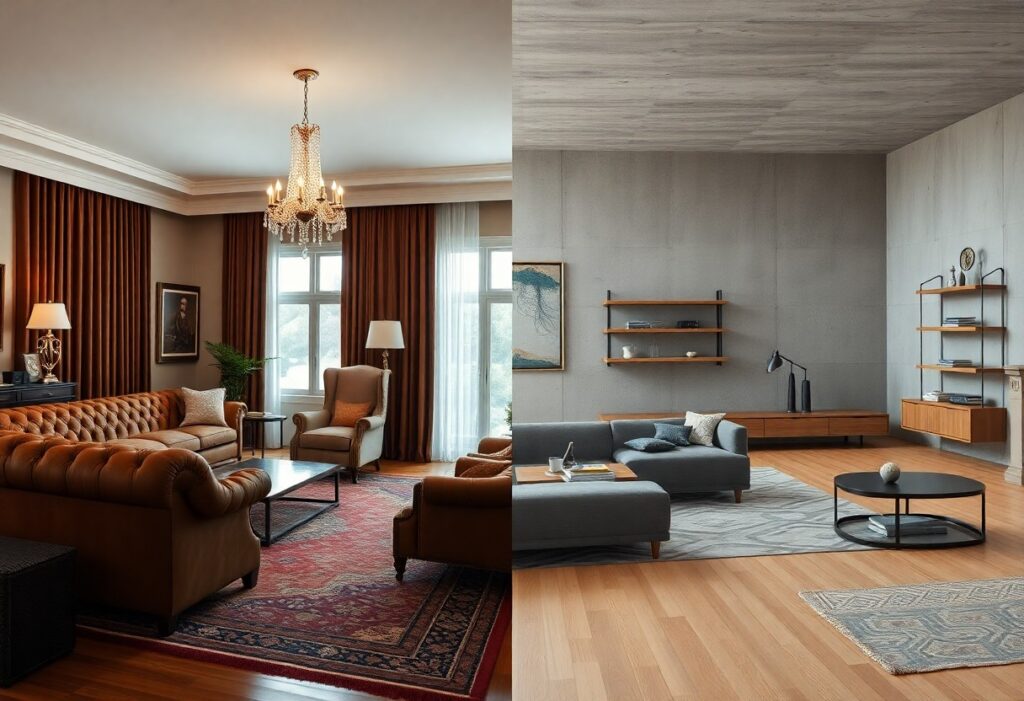

Most homeowners face a defining choice when designing their living space: classic Vs. modern living room furniture. Choosing the wrong style can disrupt your home’s harmony and reduce long-term satisfaction. Classic pieces offer timeless elegance and rich details, while modern designs emphasize clean lines and functional simplicity. Each style impacts comfort, value, and daily usability-your lifestyle should guide the decision.
Key Takeaways:
- Classic living room furniture emphasizes ornate details, rich wood finishes, and timeless silhouettes, making it ideal for homes with traditional or formal aesthetics.
- Modern furniture focuses on clean lines, minimal ornamentation, and functional design, suiting contemporary spaces that prioritize simplicity and open layouts.
- The choice between classic and modern styles depends on your home’s architecture, personal taste, and how you use the space-balancing comfort, durability, and visual harmony.
The Sleek Allure of the Now
You’re drawn to clean lines and uncluttered spaces that reflect a modern lifestyle. Today’s furniture favors minimalism, with smooth finishes and neutral palettes that create a calm, open atmosphere. Function often drives form, resulting in pieces that are as practical as they are stylish-perfect for homes that value simplicity and efficiency.
The Geometry of Boredom
Sharp angles and rigid symmetry define many contemporary designs, but they can feel cold if overused. Too much repetition in shape-endless rectangles and flat planes-may drain warmth from your space. Balance these forms with texture or organic accents to keep your room inviting.
The Transparency of Glass
Glass tables and shelving make rooms feel larger by allowing light to move freely. This illusion of space is especially valuable in smaller living areas. While sleek and modern, glass requires regular cleaning to stay spotless and maintain its elegant effect.
When you choose glass elements, you’re not just selecting furniture-you’re shaping how light and sightlines flow through your home. Tempered glass offers enhanced safety and durability, making it a smart choice for homes with children or high activity. Its reflective quality can highlight artwork or views, turning functional pieces into subtle design features that enhance your room’s depth and character.
The Clash of Comfort and Form
You feel the difference the moment you sit down. Classic furniture wraps you in familiar softness, while modern designs prioritize clean lines over cushion depth. Your comfort often takes a backseat to aesthetics in today’s minimalist pieces, creating a tension between how a room looks and how it lives. Style shouldn’t come at the cost of sitting well, yet many contemporary sofas sacrifice support for sleek profiles.
The Softness of Tradition
Traditional seating invites you in with plush cushions, rolled arms, and deep seats built for lingering. You’re meant to sink into these pieces, surrounded by warmth and craftsmanship. Upholstery in rich fabrics like velvet or tapestry adds both comfort and character, making classic furniture a natural fit for homes centered on relaxation and connection.
The Rigidity of Progress
Modern furniture often favors hard edges, low profiles, and firm cushions that look sharp but can feel unforgiving. You may admire the sleek silhouette of a steel-framed sofa, yet find yourself shifting uncomfortably after minutes. Form dominates function here, and the minimalist aesthetic sometimes comes at the expense of everyday ease.
Materials define the experience in contemporary designs-cold metals, polished woods, and tight-back cushions resist the natural urge to sprawl. You’re expected to sit *properly*, not lounge freely. While these pieces create striking visual impact, their structural discipline can make long evenings less inviting. The lack of give in many modern frames and fillings turns relaxation into a compromise, challenging the idea that beautiful design must also be livable.
Space and the Art of Placement
You shape your living room’s rhythm not just with furniture, but with the silence between pieces. Classic styles often fill space deliberately, anchoring a room with symmetry and presence. Modern design embraces negative space as a feature, using minimal forms to create balance. How you place each item defines how freely you move-and breathe-within the room.
The Fear of the Vacuum
Many feel uneasy with empty walls or open floors, rushing to fill every corner. This instinct can overcrowd a room, especially with classic furniture that demands attention. Resisting the urge to decorate every inch prevents visual chaos and lets key pieces stand out with purpose and clarity.
The Luxury of Absence
Leaving space unfilled isn’t neglect-it’s intention. Modern design honors stillness, allowing light and sightlines to flow. Empty areas become active elements, enhancing calm and focus. You gain room to think, move, and connect without distraction when absence is treated as an asset, not a flaw.
Choosing to leave space open shifts how you experience your home. The luxury of absence means fewer surfaces cluttered with decor, fewer bulky frames pressing in from the walls. Clean lines and open floors don’t feel cold when balanced with texture and warmth. This restraint invites mindfulness, turning your living room into a sanctuary where simplicity supports daily life instead of complicating it.
The Marriage of Eras
You can blend classic and modern furniture to create a living room that feels both timeless and current. Mixing a vintage Chesterfield with a sleek glass coffee table introduces depth without chaos. When done right, the union of styles adds character and unexpected sophistication to your space.
The Anarchy of Anachronism
Clashing styles without intention leads to visual noise. Placing a baroque armoire beside a minimalist sofa might seem bold, but without balance, it feels disjointed and confusing. Your room risks looking accidental rather than curated.
Harmonious Contradictions
Contrast becomes compelling when guided by purpose. A mid-century armchair beside a tufted Victorian sofa works if linked by color, texture, or proportion. These pairings create dynamic yet cohesive spaces that reflect thoughtful design.
Harmonious Contradictions thrive on deliberate choices, not random mixing. You anchor the room with one dominant style, then introduce contrasting pieces that echo key elements-like pairing a wrought iron detail in a classic lamp with the leg design of a modern side table. This subtle repetition creates rhythm, turning potential conflict into visual harmony that feels both intentional and inviting.
Choosing Your Domestic Stage
You shape your living room not just with furniture, but with intention. Every piece reflects how you live, host, and unwind. Whether drawn to the clean lines of modern design or the rich warmth of classic styles, your choice sets the tone for daily life. The right selection aligns with your habits and home’s character, creating a space that feels authentic and lived-in.
The Mirror of the Self
Style reveals more than taste-it broadcasts who you are. A room filled with antique armchairs speaks of tradition and depth, while a sleek sectional suggests a forward-thinking mindset. Your furniture becomes an extension of your identity, silently telling the story of your values, memories, and aspirations every time someone walks in.
The Vanity of Choice
Trends shift fast, and showrooms overflow with options promising perfection. Yet too many choices can lead to second-guessing and mismatched pieces. Chasing what’s fashionable often sacrifices long-term satisfaction. Instead of following every new style, focus on what truly fits your life-not just your Instagram feed.
Endless variety tempts you to believe the next purchase will finally “complete” the room, but this mindset risks creating a disjointed, impersonal space. Designers warn that prioritizing novelty over cohesion can result in a living room that feels staged, not lived-in. Sticking to a clear vision-whether classic or modern-brings lasting harmony and prevents costly, impulsive decisions that dilute your home’s authenticity.
Final Words
As a reminder, your living room reflects your personal style and daily habits. Classic furniture offers timeless elegance and durability, while modern pieces provide clean lines and functional design. You choose based on your space, taste, and lifestyle. Both styles have strengths-your home determines which one truly fits.
FAQ
Q: What are the main differences between classic and modern living room furniture?
A: Classic furniture often features rich wood finishes, ornate carvings, rolled arms, and soft, luxurious fabrics like velvet or silk. Pieces tend to be larger and more detailed, drawing from traditional European styles such as Victorian, Rococo, or Colonial. Modern furniture focuses on clean lines, minimal ornamentation, and functionality. It uses materials like metal, glass, and molded wood, with neutral or bold accent colors. The shapes are geometric and uncluttered, reflecting design movements from the mid-20th century onward. The overall feel of classic furniture is warm and formal, while modern design leans toward simplicity and openness.
Q: How do I know which style fits better with my home’s existing decor?
A: Look at your home’s architecture and color palette. Houses with crown molding, hardwood floors, and traditional details often pair well with classic furniture, which enhances the timeless atmosphere. If your space has open layouts, large windows, and a neutral or monochromatic scheme, modern furniture can complement the light and airy feel. Think about how you use the room. Classic pieces create a cozy, inviting environment ideal for conversation and relaxation. Modern setups prioritize open space and ease of movement, which works well in busy households. Walk through your living area and ask: does the room feel more like a heritage home or a contemporary loft? Your answer will guide the best fit.
Q: Can I mix classic and modern furniture in the same living room?
A: Yes, blending both styles can create a unique and personalized space. Start with a cohesive color scheme to tie different pieces together-warm woods from classic furniture can balance cool metals in modern designs. Use a modern sofa with a classic wooden coffee table, or place a vintage armchair beside a sleek media console. The key is balance. Avoid overcrowding by choosing one style as the dominant theme and using the other for accents. Rugs, lighting, and artwork also help unify the look. A well-placed chandelier above a minimalist seating area, for example, adds elegance without clashing. The goal is harmony, not uniformity.