
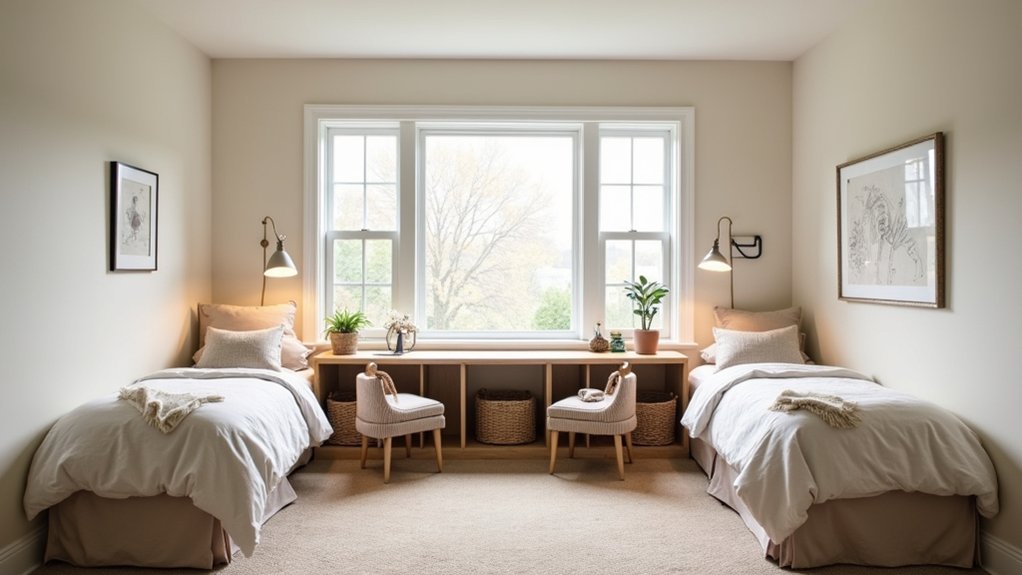

You can make a shared kids’ room work when you start with measurements, ages, and daily routines, then plan zones that reduce clutter and conflict. You’ll map windows, outlets, and traffic paths before choosing bunks, a trundle, or a loft that fits safely. Next, you’ll pair shared toy storage with personal cubbies so cleanup stays simple and fair. But the real challenge is balancing privacy with equal space, and that’s where your layout choices matter most…
Start With Measurements, Ages, and Routines
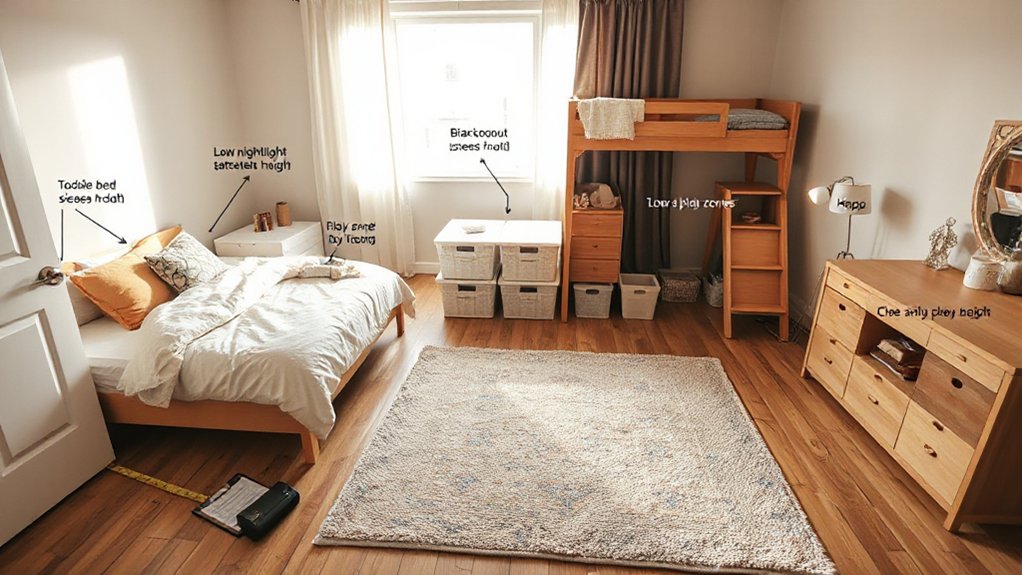
Before you pick bunk beds or paint colors, measure the room’s full footprint (including closet depth, door swing, and window clearance). Then factor in each child’s age and daily routine.
Mark a simple floor plan and note where light hits, where outlets sit, and where traffic naturally flows so you don’t block paths.
Next, map schedules: who naps, who reads late, who needs early-morning quiet. Place noisy play zones away from sleep zones, and reserve a shared landing spot for backpacks and shoes to cut clutter.
Adjust storage to ages: low bins for toddlers, labeled drawers for school kids.
Use color coordination to assign personal areas without walls, and choose decor themes both kids accept, so updates stay easy as they grow.
Pick Space-Saving Beds (Bunks, Trundles, Lofts)
Once you’ve mapped the room’s traffic flow and sleep schedules, choose a bed setup that frees floor space without sacrificing safety or comfort. Bunk beds work best when both kids are old enough for the top bunk; pick full-length guardrails, a sturdy ladder, and a low profile for calmer nights.
If bedtime differs, a trundle lets one child sleep earlier while the second rolls out later, then tucks away by morning.
For older kids, a loft bed opens play or homework space beneath—just keep ceiling height, window access, and fan clearance in mind.
Tie beds into your color schemes with matching quilts, and reinforce decor themes through headboard shape, bedding prints, and coordinated lighting.
Keep circulation paths clear, always.
Add Shared + Personal Storage for Easy Cleanup
With the right bed setup in place, storage becomes the next tool for keeping the floor clear and the room easy to share. Start with one shared “drop zone” bin for fast pickups, then add labeled cubes or baskets by category to simplify Toy organization. Keep labels picture-based so even pre-readers can reset the room without help.
Give each child a personal drawer, lidded box, or lower cubby that’s theirs alone. You’ll cut fights because nobody’s stuff “disappears” into a sibling’s pile.
Use under-bed rolling bins, slim book ledges, and over-door pockets to capture small items without stealing play space. Finish with a tiny shelf or peg rail per kid for Personal decor, keeping favorites visible but contained. Rotate toys monthly to stay tidy.
Create Shared Kids’ Room Zones for Sleep and Study
Even if your kids share every square foot, you can cut noise and chaos by setting clear zones for sleep and study. Place beds on one side, desks on the other, and keep the path between them open for easy morning traffic. Use a low bookshelf or curtain panel as a soft divider that doesn’t shrink the room.
Anchor each zone with lighting: a dimmable lamp or sconces for bedtime, and a bright task light for homework. Use color coordination to signal purpose—calm blues or neutrals for sleep, crisp whites or energizing accents for study.
Make theme selection work double-duty with matching bedding and desk accessories so the room feels united. Add labeled bins near each desk for pencils, papers, and chargers, and keep bedtime books in a wall pocket.
Balance Privacy and Fairness With Smart Design Choices
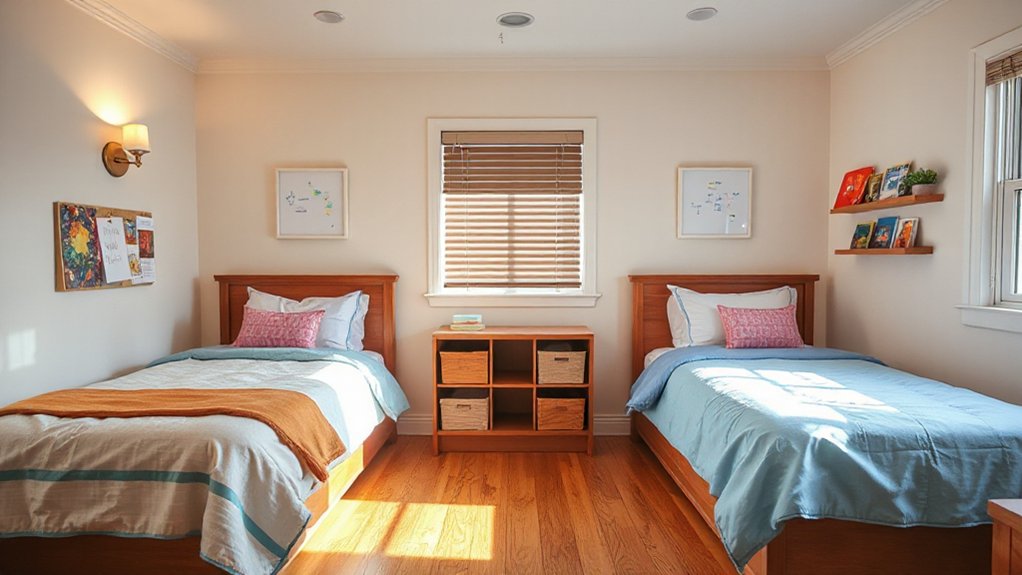
If your kids share a room, you can protect everyone’s sense of space by building in small privacy wins and keeping the setup visibly fair. Use simple Privacy solutions like a curtain on a loft bed, a slim bookshelf as a divider, or peel-and-stick panels that create a “my side” boundary without shrinking the room.
Give each child a personal bin, hook, and bedside caddy so essentials stay close and off the floor. Apply fairness strategies that kids can see: match storage volume, mirror lighting, and assign identical wall space for art. If one gets the window, balance it with the better desk or extra shelf.
Rotate “choice privileges” weekly to prevent scorekeeping and keep peace.
Conclusion
Congrats—you’ve just become the CEO of a tiny, loud startup called “Shared Bedroom.” Measure first, because guessing is how you end up with a bunk bed wedged into a closet. Match beds to ages and safety, then stash chaos with shared bins plus personal cubbies (yes, everyone gets one). Zone sleep, play, and study like a miniature city plan. Add curtains or dividers for “privacy,” aka five minutes of peace. Keep it fair, flexible, and easy to clean.