
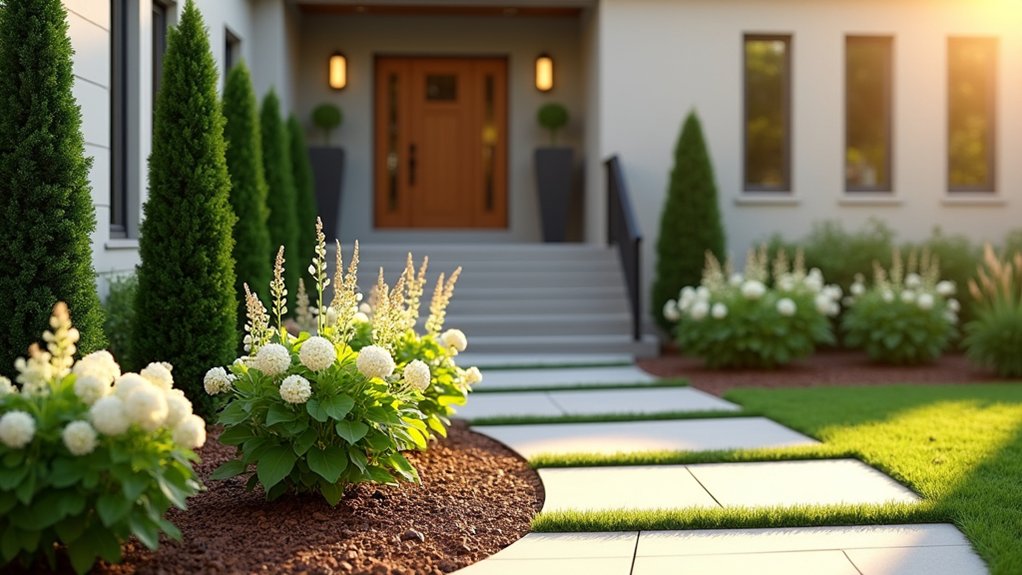

Is it really true that a garden makeover improves your home’s first impression more than any quick exterior update? You can test it by planning your front-yard layout, then knocking out a weekend cleanup—weed, prune, mulch—and finishing with crisp edging that makes everything look intentional. Add a path upgrade, season-smart plant layers, and subtle uplighting, and you’ll notice how the entry starts to feel curated—but one small detail often decides whether it looks polished or just busy…
Plan a Front-Yard Garden Makeover That Fits Your Home
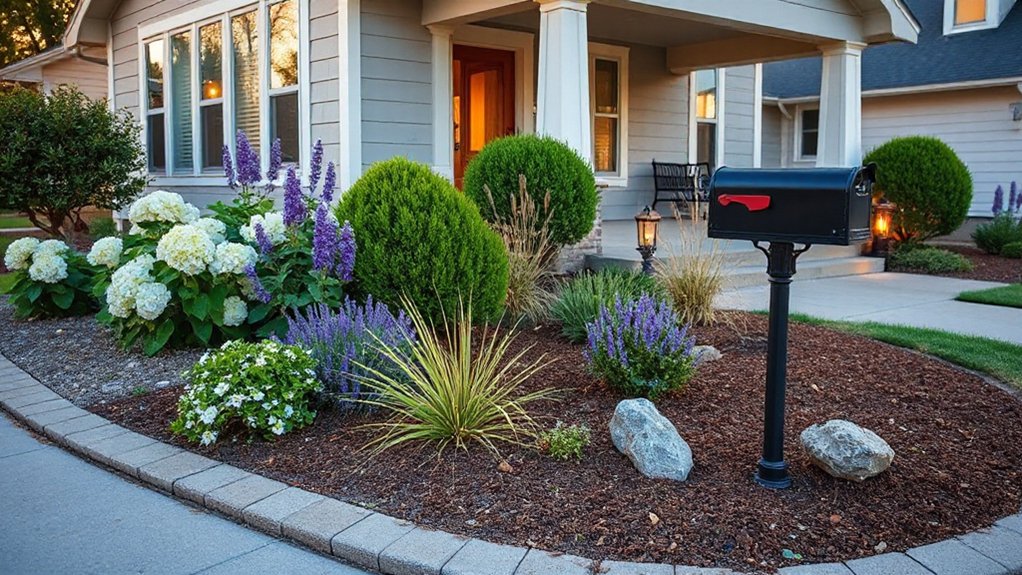
Before you buy a single plant, take a hard look at your home’s architecture, scale, and sun exposure so your front-yard garden makeover feels intentional—not improvised.
Map a garden layout that echoes your lines: soften modern angles with clean drifts, or complement a traditional façade with layered symmetry. Anchor the view with one focal element—small tree, sculptural shrub, or a tall grass mass—then repeat forms to create rhythm.
Keep bed edges crisp and proportional to your walkway and porch depth. For plant selection, prioritize climate-fit performers with a long season of interest, mixing evergreen structure, pollinator-friendly perennials, and restrained color accents.
Choose textures that read from the street and avoid overcrowding, leaving room for mature spread and easy access.
Do a Weekend Curb-Appeal Cleanup (Weed, Prune, Mulch)
Once you’ve got a front-yard plan in mind, a focused weekend cleanup gives your curb appeal the crisp, “maintained” look buyers and neighbors notice first. Start by hand-pulling weeds and spot-treating stubborn growth so beds and walkways read tidy from the street.
Prune shrubs to open sightlines to your entry, remove deadwood, and keep shapes natural—today’s trend favors airy, layered structure over hard shearing.
Rake leaves, clear gutters, and sweep the porch for a clean threshold. Refresh mulch in a thin, even layer to unify plantings and cut down on splash and evaporation.
Finish with targeted power washing on the drive, front steps, and path. If panels wobble or nails pop, prioritize quick fence repair to signal care.
Crisp Beds and Edging for a Clean Garden Makeover
With weeds pulled, shrubs shaped, and mulch refreshed, the next step is giving your planting areas a sharp outline that reads polished from the curb. Recut bed lines with a spade, keeping curves smooth and consistent, then rake debris away so the edge stays crisp.
Install edging that matches your home’s style—steel for a modern look, stone for classic, or composite for low-maintenance. Set the edging flush to prevent trip hazards and mower scalping.
A defined border boosts garden aesthetics by creating clear contrasts between turf and plantings, making color and texture pop. It also supports pest control by reducing hiding spots for slugs and ants and improving airflow around stems.
Finish by topping mulch to just below the edge, so it won’t spill onto the lawn.
Upgrade the Front Walk, Steps, and Path Materials
Although landscaping sets the stage, your front walk and steps often deliver the strongest “quality signal” because buyers and guests feel them underfoot. If yours are cracked, uneven, or mismatched, you’ll undermine the whole façade.
Upgrade with pavers, natural stone, brick, or poured concrete that fits your home’s architecture and climate. Prioritize material durability: choose freeze-thaw rated pavers, slip-resistant finishes, and properly compacted bases to prevent heaving.
Keep design consistency by repeating tones found in your siding, trim, or roof, and aligning joint patterns with the entry’s geometry. Add wide, low-rise steps for safer approach, and finish edges with steel or stone restraints.
Include subtle path lighting sleeves now, even if you’ll wire later.
Choose Curb-Appeal Plants by Height, Color, and Season
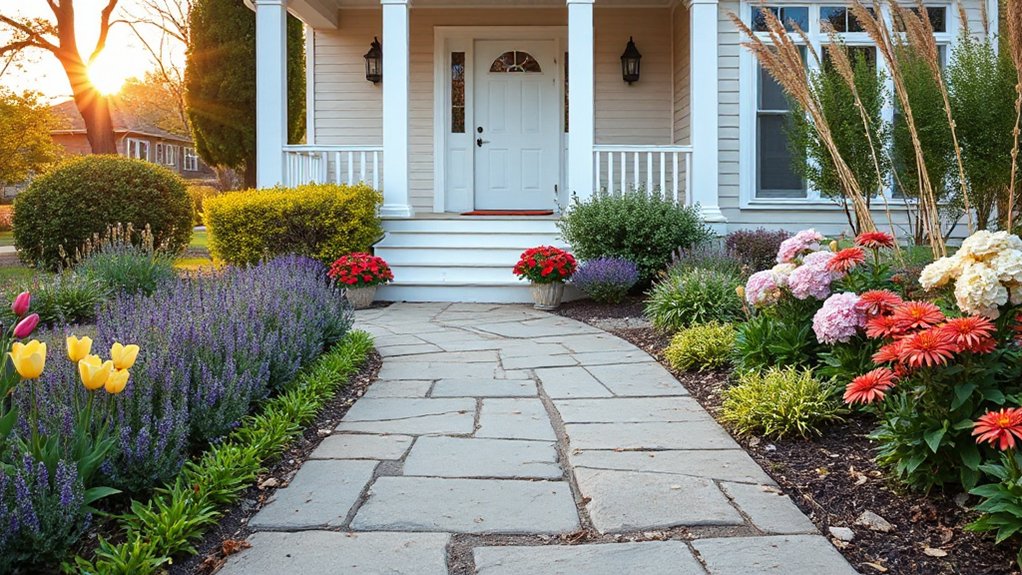
Because your eye scans a front yard in layers, you’ll get the cleanest curb-appeal payoff by choosing plants based on height, color harmony, and seasonality rather than impulse buys. Start with Plant height variations: anchor the back line with upright evergreens or small trees, build a mid-layer of flowering shrubs, then finish with low edging perennials and groundcovers to frame the walk.
Next, plan Seasonal color schemes that look intentional in every quarter. Choose a spring bulb palette, summer bloomers that repeat key hues, and fall performers with foliage color or berries. Keep one “signature” color in two to three spots, then add neutrals—white, silver, deep green—to prevent visual noise.
Finally, match sun and soil needs so your design stays crisp, not patchy.
Add Path and Uplighting to Highlight Your Garden Makeover
Once your planting layers look intentional, lighting turns that daytime curb appeal into an after-dark focal point. Start with path lighting that guides guests safely from sidewalk to door. Space fixtures evenly, aim them down, and choose warm 2700K LEDs for a high-end, welcoming look. Keep glare low by shielding lenses and tucking lights behind edging or groundcovers.
Next, add uplighting to showcase structure: wash a textured facade, graze a specimen tree’s trunk, or frame architectural columns. Use adjustable, low-voltage spots so you can fine-tune beam spread and avoid lighting bedroom windows.
For cohesive garden illumination, repeat fixture finishes (matte black or bronze) and keep brightness consistent. A smart timer or photocell ensures it runs reliably, nightly.
Keep Your Garden Makeover Sharp in Every Season
To keep your garden makeover sharp in every season, you’ll rotate plantings so your beds stay color-forward and texture-rich as trends shift.
You’ll stick to a year-round pruning schedule that maintains clean lines, boosts blooms, and prevents overgrowth from blurring your curb appeal.
You’ll also refresh mulch and monitor soil health to lock in moisture, suppress weeds, and support consistent, high-performance planting.
Seasonal Planting Rotation
Even if your hardscaping stays the same, your curb appeal rises or falls with what’s blooming right now, so a seasonal planting rotation keeps your garden makeover looking intentional in every quarter.
Map your beds by sun, moisture, and sightlines from the street, then assign each zone a spring, summer, fall, and winter anchor.
Prioritize native species for reliable performance and lower inputs, and mix in a few trend-forward accents like dark-leaf annuals or ornamental grasses for texture.
Stagger bloom times, swap containers for quick color updates, and refresh mulch to frame new plantings.
Rotate plant families year to year to support pest control, and pair flowers with aromatic herbs to confuse pests without harsh sprays.
Year-Round Pruning Schedule
While your seasonal planting rotation delivers the color, a year-round pruning schedule keeps the structure crisp and camera-ready from the curb.
In late winter, you’ll shape deciduous shrubs and small trees before buds break, using clean bypass cuts to define lines and remove crossing wood.
In spring, you’ll deadhead and pinch soft growth to push fuller silhouettes without sacrificing blooms.
Summer calls for light Seasonal trimming: shear hedges sparingly, lift sightlines near walkways, and thin dense evergreens to improve airflow.
In fall, you’ll cut back perennials once they fade and selectively reduce storm-prone branches.
Keep your Pruning techniques consistent—sanitize tools, cut to outward buds, and respect each plant’s bloom timing—so your makeover stays sharp in every season.
Mulch And Soil Care
Because curb appeal lives or dies in the details, mulch and soil care act as your “finish coat” that keeps beds looking intentional long after the planting and pruning are done. Start with soil testing every 2–3 years so you’re not guessing at pH or nutrient gaps, then amend with targeted fertilizers only where results justify it.
Refresh mulch each spring and top up in fall, keeping a 2–3 inch layer for moisture control and weed suppression, but pull it back from stems and trunks to prevent rot.
Prioritize compost application as your baseline upgrade: top-dress 1–2 inches around perennials, work it lightly into annual beds, and let earthworms do the mixing.
After heavy rain, rake displaced mulch back into crisp edges to maintain that clean, modern look.
Conclusion
When you plan with purpose, clean up fast, sharpen edges, and layer plants by height and season, you turn your front yard into a confident first hello. You’ll notice how upgraded paths and subtle lighting guide the eye and make the space feel intentional after dark. And it matters: research shows strong landscaping can boost perceived home value by up to 15%, so your weekend effort pays back in pride and market appeal, season after season.